
These tips for poinsettia plant care will ensure your beautiful holiday plant continues to delight you all through the holiday season and into next year.
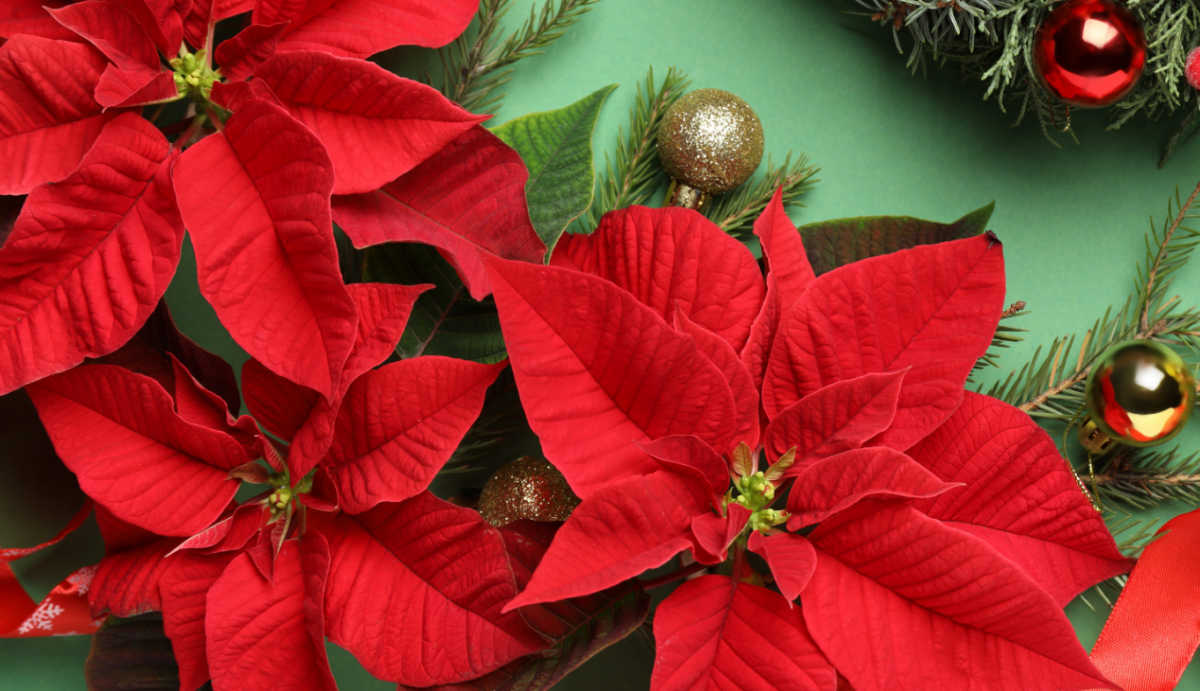
More poinsettia plants are sold during November and December than the yearly sales of all the other potted plants, other than orchids. There is a good reason for this popularity – the plant has colorful leaves, which are actually bracts, and it is useful both as an indoor plant and also for decorating through the holiday season.
The plant is so popular, it even has its own National Day! December 12 is celebrated annually as National Poinsettia Day.
If you have purchased poinsettia plants in the past, you may have discovered that they are somewhat finicky when it comes to care. The plants have a fw special needs to hold on to their blooms.
Please continue reading to learn how to grow poinsettias, allowing you to continue to enjoy their beauty throughout the season and beyond.
Growing poinsettia plants overview
Here is a quick guide to the care of poinsettia plants:
- Botanical name: Euphorbia pulcherrima
- Family: Euphorbiaceae (spurge)
- Common names: lobster flower, flame leaf flower, Christmas star, poinsettia
- Native to: the Pacific slope region of Mexico and Guatemala.
- Plant type: tender perennial, commonly grown as a Christmas plant
- Sunlight needs: outdoors – 4 to 6 hours of sunlight a day outdoors; indoors – bright, filtered light
- Soil requirements: well-draining, slightly acidic soil
- Watering needs: evenly moist soil
- Mature size: 10 – 15 feet tall
- Bloom time: Thanksgiving through Christmas
- Flower color: yellow with red buds in the center; normally grown for its colorful red bracts
- Temperature needs: 65-74° F (18-24° C.)
- Humidity requirements: between 50-75%
- Hardiness zones: 9-11
- Toxicity: ASPCA lists it as toxic to dogs, cats, and horses (causes mouth irritation)
Caring for poinsettia plant (indoor or outdoor)
The key to how to care for a poinsettia plant is to ensure the plant has the right sunlight, water, and humidity. Here are some tips for basic poinsettia plant care, both indoors and outdoors.
Do poinsettias need full sun?
When grown outdoors, poinsettia plants like part sun for 4-6 hours a day. Indoors, place the plant in a window that gets bright filtered light.
A south, east, or west window works best. Avoid northern-facing windows, which get very little light, particularly in the winter months.

Temperature requirements for poinsettias
Poinsettias grow best when they have an indoor temperature range of 65-74° F. (18-24° C.)
Be careful where you place your poinsettia plants. Avoid cold or hot drafts, such as heating ducts, fireplaces, and window sills near icy windows.
Poinsettias will suffer damage if the temperature drops below 50°F. (10°C.) Freezing temperatures can be fatal to a poinsettia plant.
Some of the links below are affiliate links. I earn a small commission, at no extra cost to you if you purchase through an affiliate link.
Soil, fertilizing, and watering needs for poinsettia
Poinsettia plants thrive in a well-draining and slightly acidic soil. Adding peat moss or perlite to your potting soil will allow it to retain water without becoming compacted or waterlogged.
If you don’t plan on keeping your poinsettia after the holidays, there is no need to repot it from the container in which it was purchased.
Watering a poinsettia correctly involves keeping the soil moist and being sure the pot drains freely.
Many holiday poinsettias come with a decorative foil wrapper. Remove this when watering, since it will hold water, which can be transferred back to the soil.
Water the soil when the surface feels dry to the touch. If the pot feels light when lifted, the soil is most likely too dry.
Allowing the soil to dry out will cause the poinsettia to wilt and can cause it to drop its bracts.
Fertilizing is not needed for specimens that will only be used as holiday plants. If you intend to keep your plant for another year, fertilize monthly at half strength with an all-purpose plant fertilizer when new growth is noted.

Humidity needs for poinsettia plants
Poinsettias are grown in greenhouses where ideal temperatures and high humidity can be maintained. These conditions are difficult to match indoors at home.
The plants like humidity levels between 50-75%. You can raise the humidity of your plants by placing the pot on a tray of pebbles with water in the base.
Placing the plant near a humidifier will help greatly, as will misting the plant often.
The poinsettia flower
“When do poinsettias bloom?” is a common question from readers.
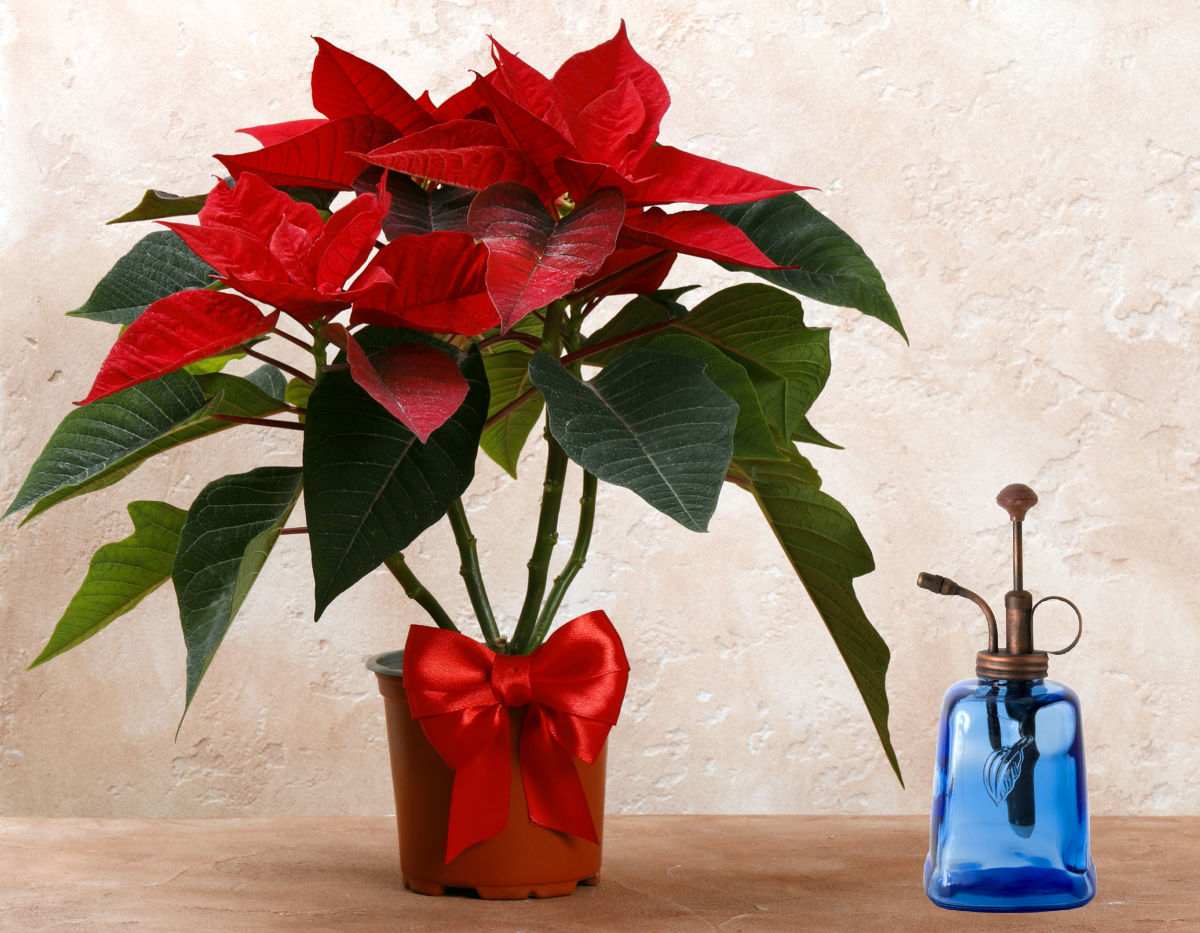
The colorful red parts of the poinsettia that are often referred to as the blooms or flowers are actually colorful leaves known as bracts. These leaves change color in response to shorter winter days. (Christmas cactus is another holiday plant that blooms when the days are short and cool.)
For poinsettia, this process is called photoperiodism. When there is a lack of sunlight, which happens in late fall and winter, the leaves turn from green to red or one of the other shade variations.
In nature, the bracts of poinsettias are meant to provide protection to the small flowers and to attract insects. The actual flowers of poinsettias, called cyathia, are not the vibrantly colored red petals, but are tiny, yellow and red buds in the center of the bracts.
Once the plant has been pollinated, the bracts will drop off. A successful holiday poinsettia is one where the bracts last as long as possible.
Wilting and leaf dropping are indications that the bloom time is done; this happens in spring.
Poinsettia bracts come in several colors – from red, pink, white, yellow, and purple, to salmon and multi-colored versions.

How to get a poinsettia to bloom for the holidays
Poinsettia plants typically bloom when they experience long and cool nights. The process for getting it to bloom is similar to that of a Thanksgiving cactus and a Christmas cactus.
Starting in the fall, move the plants into a closet overnight for 14 hours.
Move them to the light in the morning for up to 10 hours. Continue this procedure for 10 weeks, and you should have the colorful poinsettia bracts by Christmas.
Although poinsettia plants are finicky at best, by following these care tips, you will be able to enjoy your plant this holiday season and into next year.
Propagating poinsettia
If you enjoyed your poinsettia over the holidays, you may enjoy learning how to propagate the plant to enjoy it next year, too. Unfortunately, even if you practice the best poinsettia care tips, poinsettia plants may still not be very long-lasting.
Fortunately, it is relatively easy to grow new plants. The most common method of plant propagation is with cuttings from the live plant.
While poinsettias can also be grown from seed, taking cuttings and rooting them is a way to ensure that the plant is like the parent plant.
How to root poinsettia cuttings
To root cuttings, cut a stem from a healthy plant. The best time to do this is when parent plants send out new growth in the spring.
Use a rooting powder to aid in rooting success. Insert the cutting into moist potting soil or sand.
Place the cuttings in a location where the pot receives bright indirect sunlight. A plastic bag over the cuttings will increase the humidity and help the cuttings root.
You can expect to see results within approximately 1 month. Continue watering your poinsettia through the spring and summer.
Can you plant poinsettias outside?
The holidays are over. Should you place your poinsettia plant on the compost pile, or can it be grown outside next spring and summer?
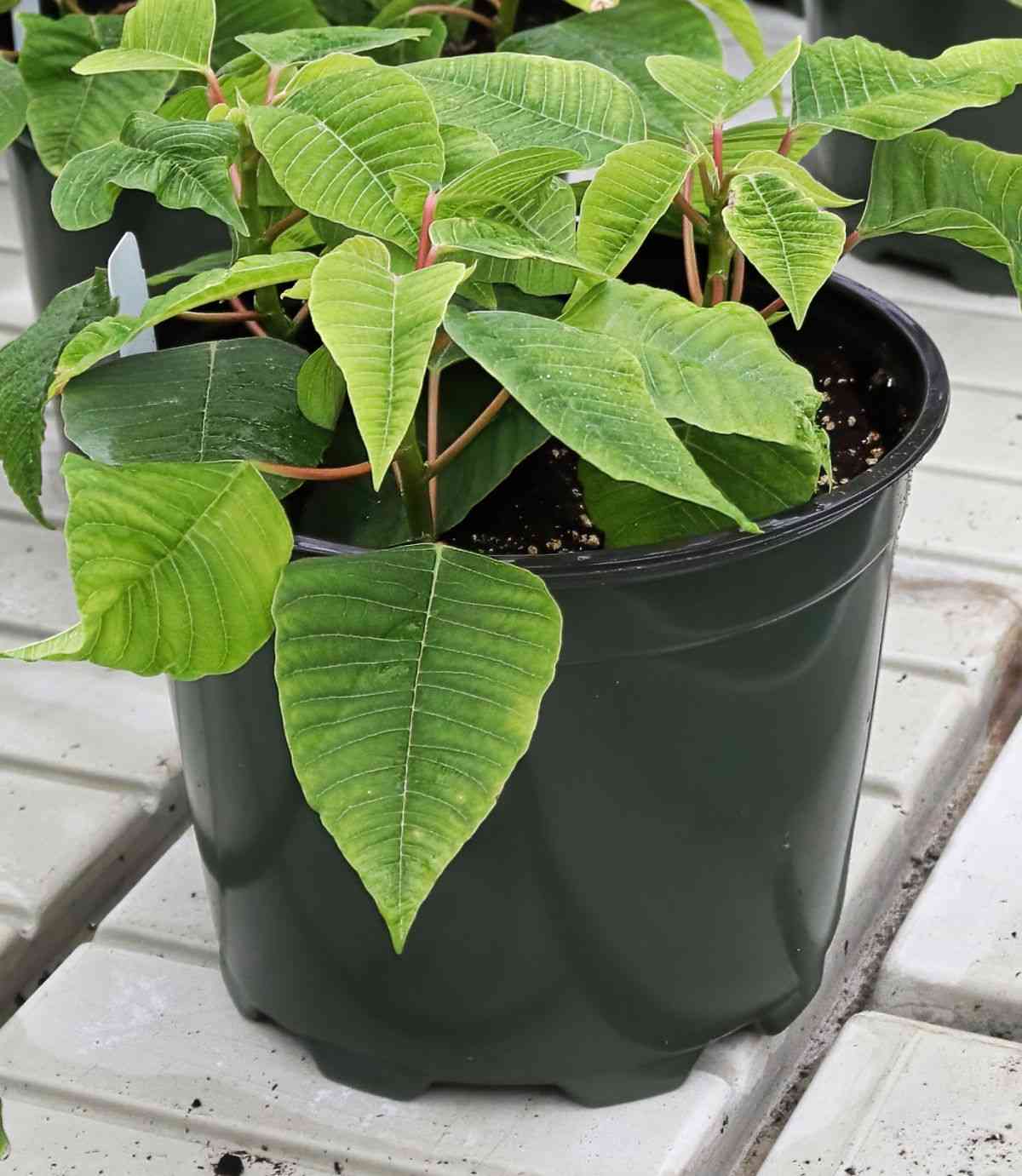
If you have enjoyed growing this beautiful plant indoors in a pot, you will love growing poinsettias outdoors, too. Transplanting poinsettias outdoors can be done in spring or early summer, either in a pot or in the ground in a semi-sunny garden bed.
Your hardiness zone plays a role in deciding which to do, since freezing temperatures will kill poinsettias.

Is poinsettia annual or perennial?
If you live in zones 9-11, poinsettia is considered a tender perennial that will overwinter in the ground easily, so your indoor holiday specimen can be planted directly in your garden.
Be sure to add compost to the soil and till it well. Select a location that gets 4-6 hours of sunlight a day.
You can also plant poinsettias outdoors if you live in cooler zones, but be aware that you need to treat the plant as an annual since it won’t survive the winter outside.
The best of both worlds, in this case, is to plant your holiday plant in a larger container and enjoy it on your deck or patio. Amend the soil in the pot with organic matter, ensuring it drains well.
Whether you choose to grow poinsettias in a pot or plant them directly in the garden, be sure to water the plants well after transplanting.
How big do poinsettias get?
In their native environments, poinsettias can grow into trees, some reaching 10-15 feet. If you have a poinsettia plant in your yard, you can control its size by pinching back the growing tips.

Is poinsettia poisonous?
The rumor mills have long stated that poinsettias are toxic houseplants, but there is some dispute about this claim. The ASPCA states that poinsettias are toxic to dogs, cats, and horses.
However, they also state that signs of toxicity are irritation in the mouth and stomach, which sometimes causes vomiting. They also state that poinsettia is overrated in toxicity.
The University of Illinois Extension has an informative page about the toxicity of poinsettia. They report numerous studies that show that poinsettias are not poisonous.
They further state that “a study at Ohio State University showed that a 50-pound child would have to eat more than 500 leaves to have any harmful effect.”
For absolute safety, one should exercise caution with poinsettias around children and pets, since ingesting them does cause some discomfort, and the sap may produce a rash.

Share this post for growing poinsettia on X
If you enjoyed learning how to care for a poinsettia plant, be sure to share these tips with a friend. Here is a post to get you started:
Poinsettia plants are one of the most popular potted plants, but can be finicky to grow. Head to The Gardening Cook to get some care tips and find out about the plant's toxicity and how to propagate it. #poinsettia #holidayplants Share on XPin this post for poinsettia plant care
Would you like a reminder of this post on how to grow poinsettia plants? Just pin this image to one of your gardening boards on Pinterest so that you can easily find it later.
You can also watch our video for poinsettia plant care on YouTube.

Admin note: This article on growing poinsettias first appeared on the blog in October 2022. This post has been updated with all new photos, a poinsettia care printable, and a slideshow video.
Poinsettia Plant Care Printable
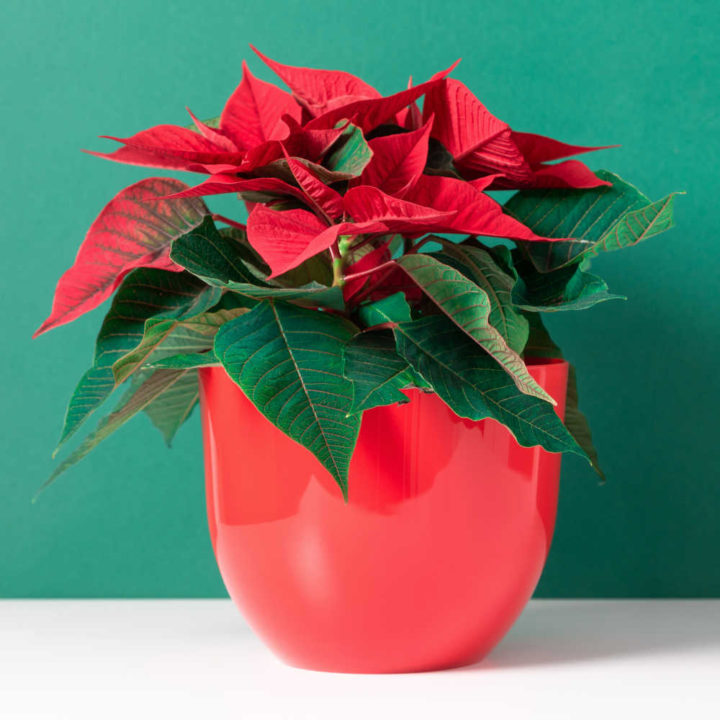
Poinsettia plants are gorgeous holiday plants that will brighten any room for Christmas. To make the most of your plant, print out these care tips and save them to make caring for it easy.
Materials
- 1 poinsettia plant
- All purpose plant fertilizer
Tools
- Watering can
- Plant mister or pebble tray
Instructions
- Choose a healthy plant with dark green leaves and brightly colored bracts. Avoid any plants with yellowed leaves.
- Remove the foil outer wrapper and place the pot on a saucer.
- Place the plant near a bright east, south, or west-facing window.
- Water the soil when it feels dry to the touch.
- Mist often or place the pot on a layer of pebbles with water below them for extra humidity.
- Fertilize monthly with half-strength fertilizer in spring when new growth appears.
- To get the plant to bloom again for Christmas, place the plant in a closet each night starting in the fall. Remove the plant during the daylight hours.
- Get new plants by taking cuttings in spring.
- If you live in USDA zones 9-11, you can grow your poinsettia outdoors year-round.
- In colder zones, the plant is normally grown as an annual.