
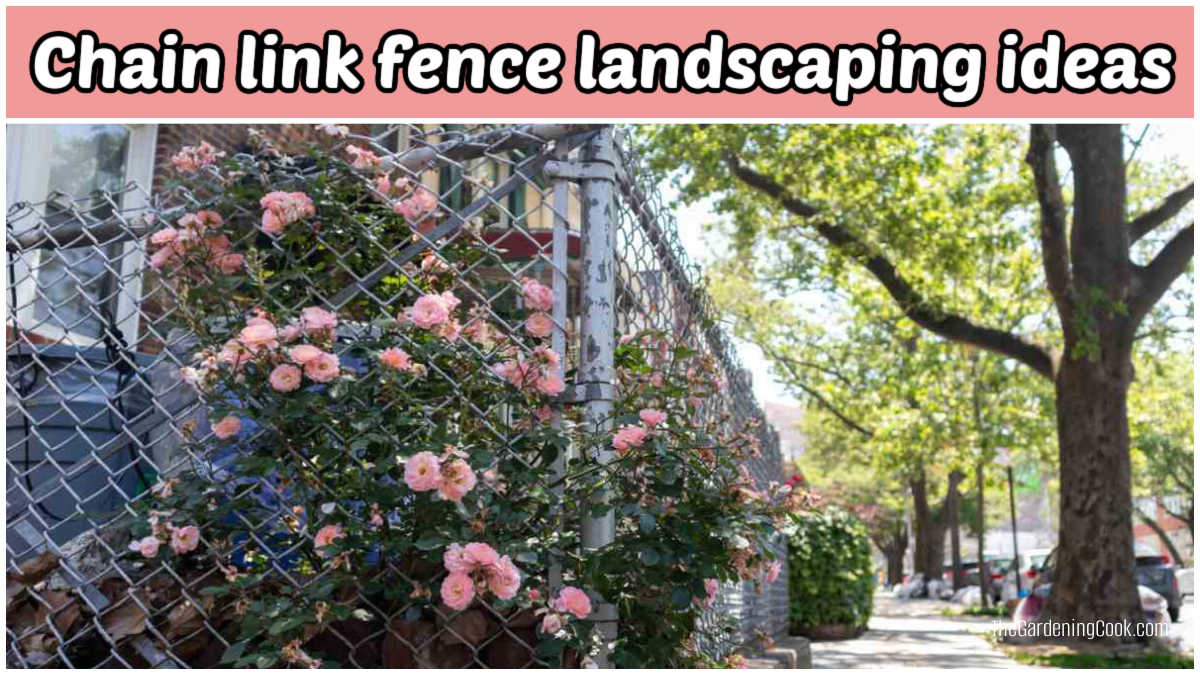
Your chainlink fence doesn’t have to be just a boundary – it can become a part of your landscape with the right plants and design. These ideas for landscaping along a chain link fence will help you add privacy, color, and curb appeal to your yard.
From fast-growing vines and flowering shrubs to evergreens and low-maintenance greenery, you can create structure, coverage, and year-round visual interest.
In this guide, we’ll explore the best options for hiding a chain link fence. You’ll find photos and quick-reference details such as sunlight needs, mature size, and hardiness zones, so you can easily choose what works in your garden.
Whether you want to hide an ugly fence, add privacy, or create a visually appealing garden border, this guide will help you turn your chain link fence into an attractive landscape feature.
While plants are one of the most effective ways to transform a chain link fence, there are also a few quick covering ideas worth considering before you start planting.
Some of the links below are affiliate links. I earn a small commission, at no additional cost to you, if you purchase through an affiliate link.
Chain link fence covering ideas (beyond plants)
Plants are not the only way to cover a chain link fence. They’re an attractive and long-lasting solution, but several methods can also soften or disguise your fence, depending on your budget and maintenance preferences.
Before we choose plants, let’s consider these options, too:
- Fence slats or privacy strips: For quick and affordable coverage.
- Outdoor fabric or mesh screens: Provide instant privacy with minimal effort.
- Wood panels or bamboo privacy screens: These add warmth and texture.
- Artificial greenery panels: A low-maintenance, instant “green” look.
- Climbing vines and flowering plants: A natural way to soften the look of your chain link fence.
Among these options, plants offer the most natural and versatile way to transform a chain link fence, adding privacy, seasonal beauty, and lasting curb appeal.
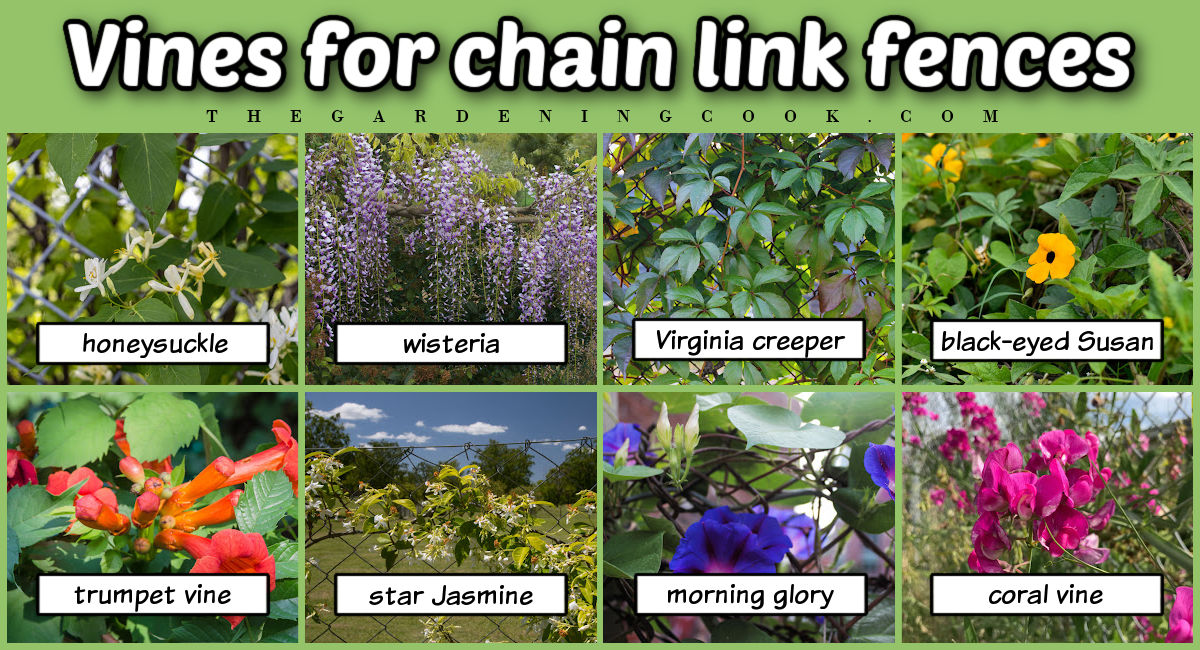
Climbing vines for chain link fences
Climbing vines are one of the fastest and most effective ways to cover a chain link fence, adding both privacy and lush vertical interest to your landscape. Some vines are grown for their flowers, while others are valued for their dense foliage and ability to create a solid green screen.
Choosing the right type of vine will give you the look and coverage that suits your preferences.
- Flowering vines – Add seasonal color and visual interest along the fence line.
- Foliage vines – Create a dense green backdrop for a more natural look.
- Annual vines – Grow quickly and provide fast coverage, but need replanting each year.
- Perennial vines – Return year after year and offer long-term coverage.
- Evergreen vines – Keep their leaves year-round for continuous privacy.
- Deciduous vines – Lose their leaves in winter but often grow back vigorously in spring.
Here are a few to try:
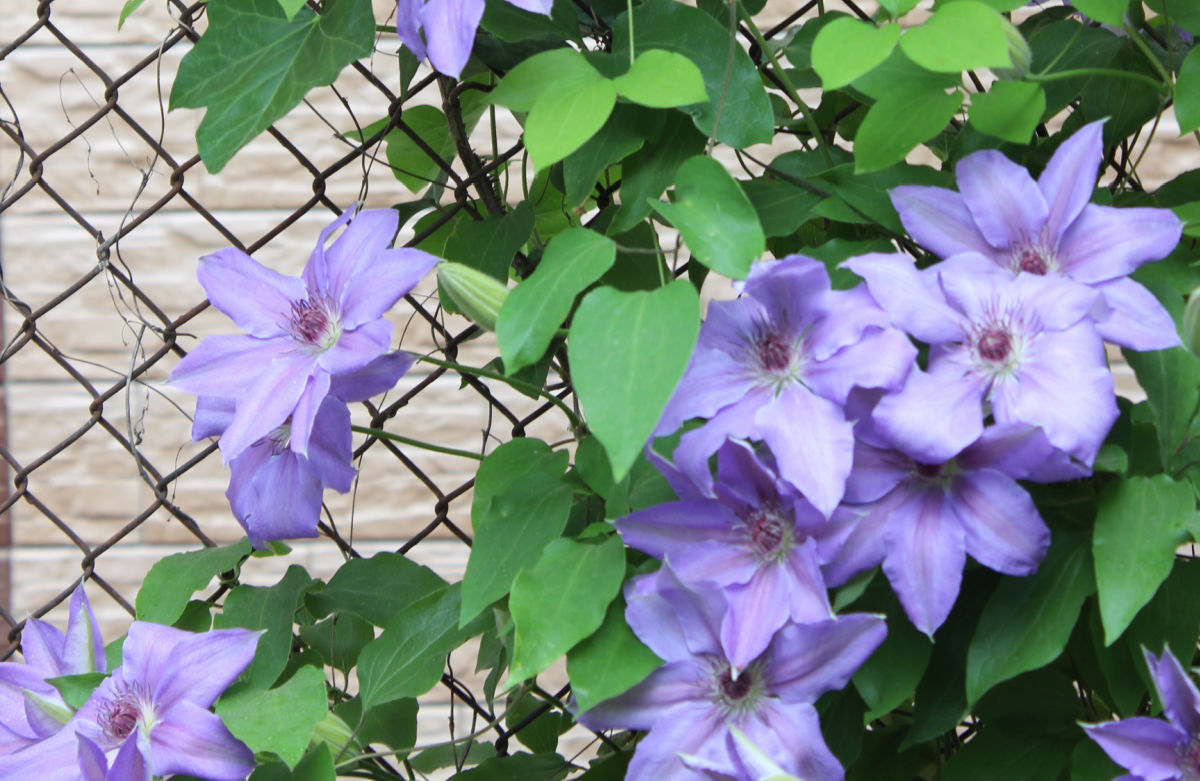
Clematis (Clematis L.)
This lush flowering vine is known as the Queen of climbers. Several types of clematis bloom from spring to fall.
- Plant type: Perennial climbing vine
- Sunlight: Full sun
- Mature size: 5-20 feet (1.5 – 6 meters)
- Hardiness zones: USDA 4-9
Buy clematis flowering vines here.
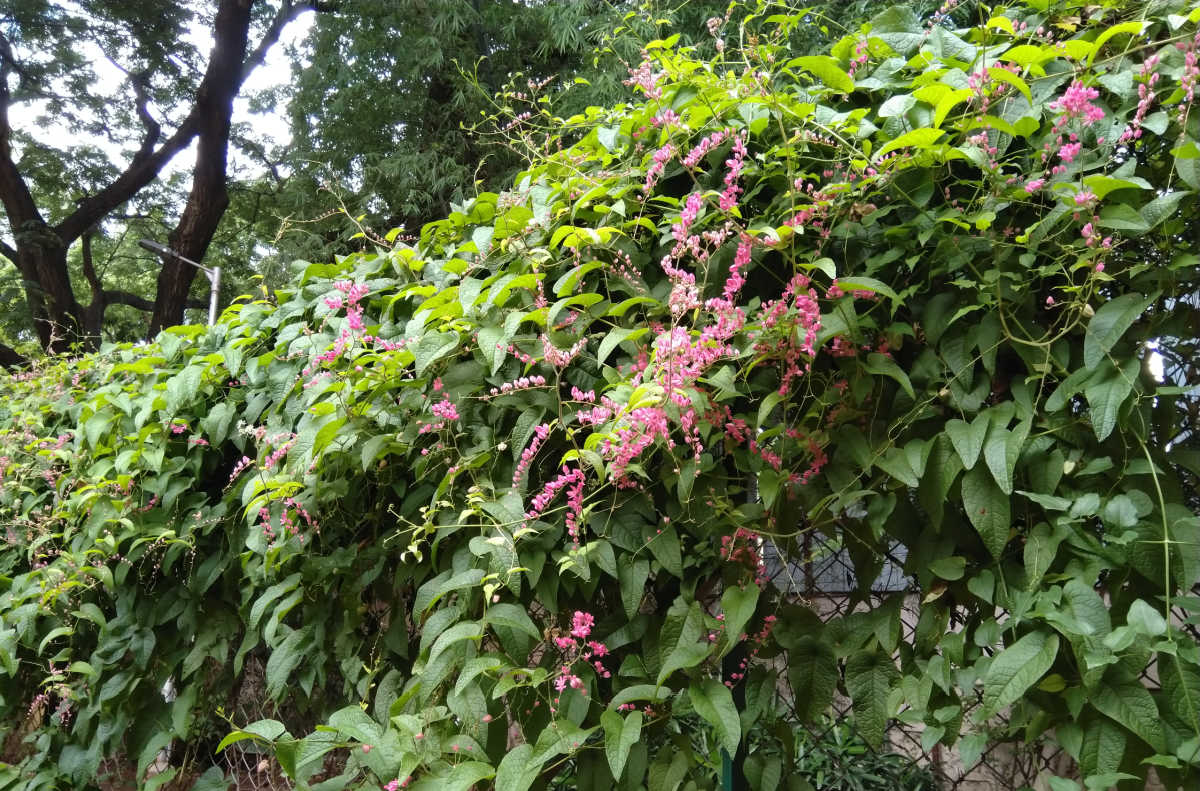
Coral vine (Antigonon leptopus)
Coral vine attracts pollinators, and its flowers are edible. This flowering vine can be invasive in many tropical and subtropical areas, and spreads quickly via underground tubers.
- Plant type: Perennial climbing vine
- Sunlight: Full sun
- Mature size: 20-40 feet (6-12 meters)
- Hardiness zones: USDA 8-11
Get coral vine to hide a chain link fence here.
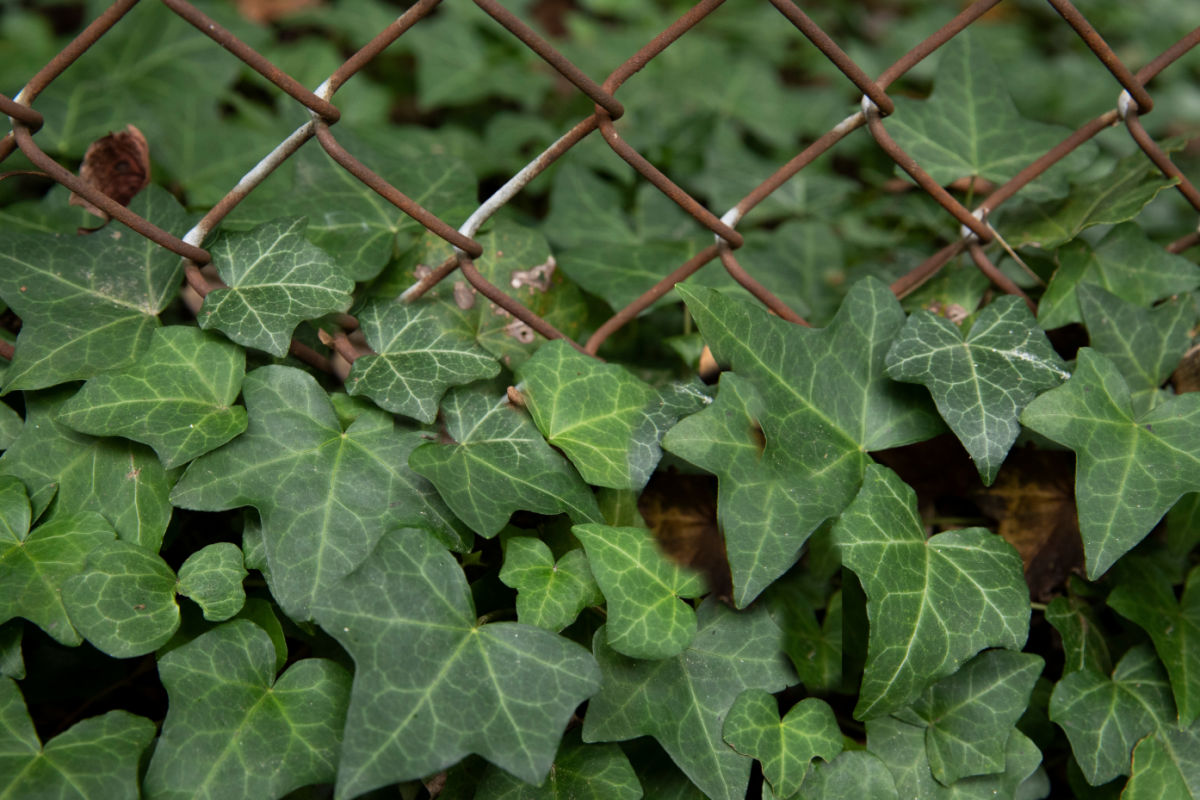
English ivy (Hedera Helix)
Shade-loving English ivy grows aggressively to give dense coverage, but it can become invasive. If you grow this foliage vine, you will need to prune it regularly to keep its size under control.
- Plant type: Woody perennial vine
- Sunlight: Indirect sunlight to full shade
- Mature size: 20-80 feet (6 – 24 meters)
- Hardiness zones: USDA 4-11, best in zones 5-9
Purchase English ivy for chain link fence landscaping here.
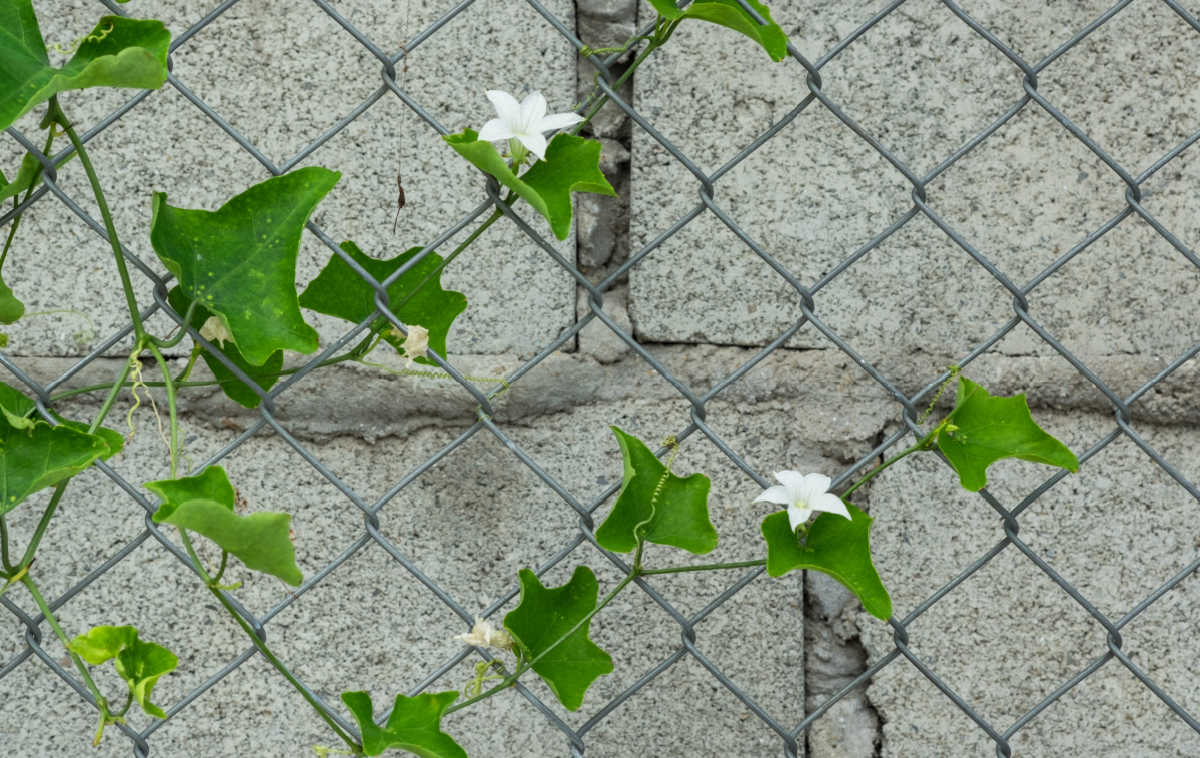
Ivy gourd (Coccinia grandis)
This flowering vine features star-shaped white flowers and small, smooth fruit that start green with white stripes and turn bright red when ripe. It grows from tuberous roots that allow it to survive dry periods, making it a low-maintenance vine for your chain link fence.
- Plant type: Tropical perennial vine
- Sunlight: Full sun
- Mature size: 10-65 feet (3-20 meters)
- Hardiness zones: USDA 9-11
Etsy has ivy gourd to cover an ugly fence here.
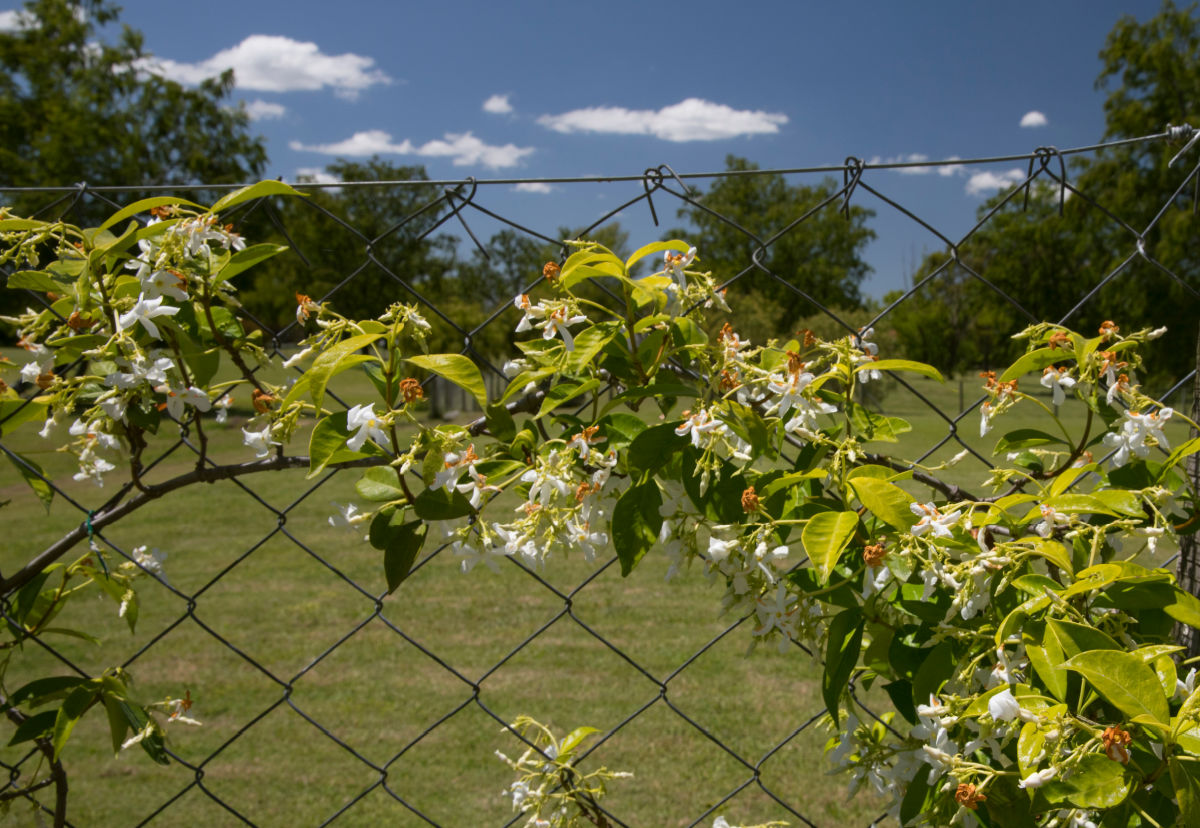
Star Jasmine (Trachelospermum jasminoides)
The flowers of star Jasmine are star-shaped with a very intoxicating fragrance. Its shiny, dark-green foliage turns bronze in autumn.
- Plant type: Evergreen, woody perennial vine
- Sunlight: Full sun to partial shade
- Mature size: 10-20 feet (3-6 meters)
- Hardiness zones: USDA 8-10
Buy the climbing vine star Jasmine here.
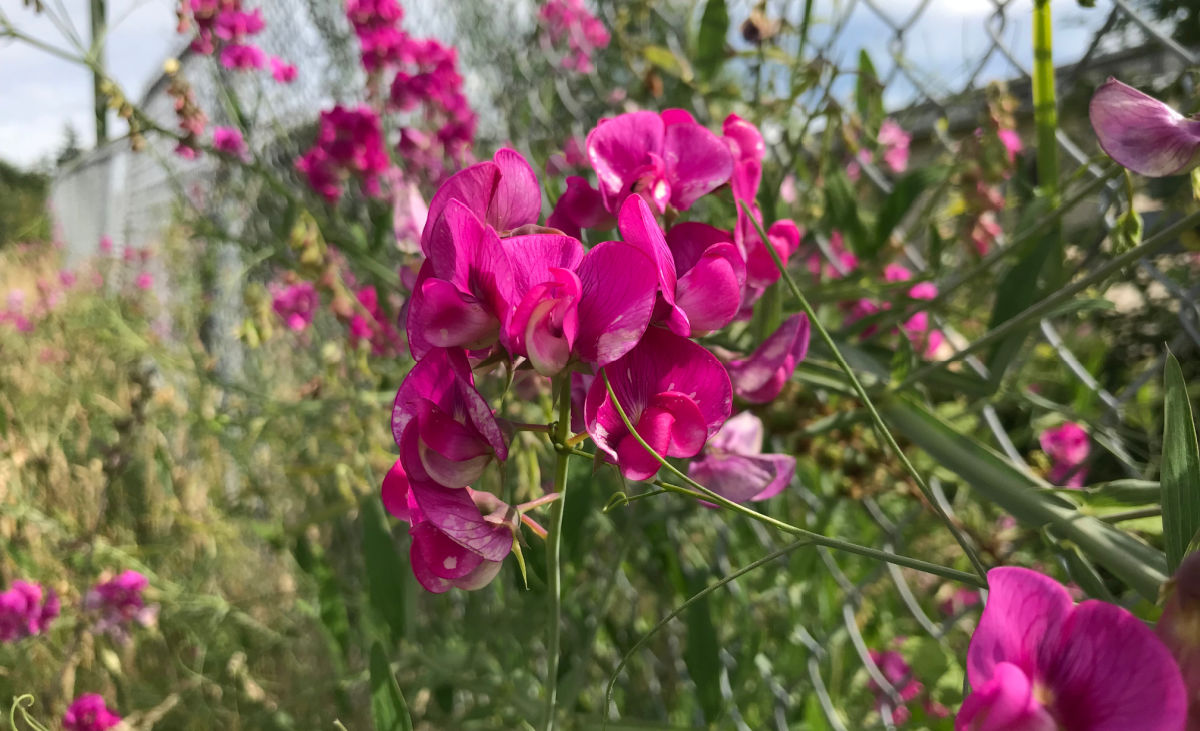
Sweet pea (Lathyrus odoratus)
Popular in cottage gardens, the climbing vine sweet pea is known as the “Queen of Annuals”. They bloom from spring to summer. While they look similar to edible snap peas, sweet peas are highly toxic if ingested in large amounts.
- Plant type: Annual climbing vine
- Sunlight: Full sun (likes afternoon shade in hot climates)
- Mature size: Up to 8 feet (2.5 meters)
- Hardiness zones: USDA 2-11 (only cold-hardy in zones 3-8)
Get a mix of sweet pea seeds in various colors here.
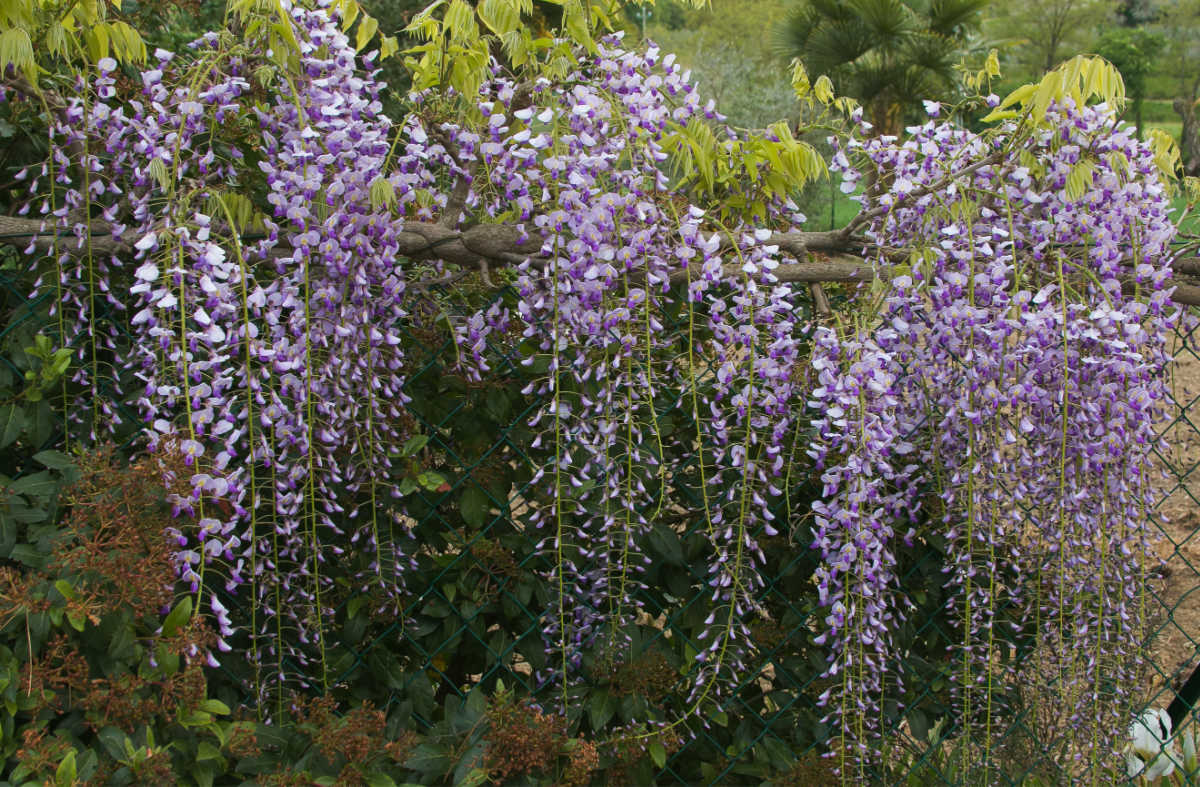
Wisteria (Wisteria sinensis)
This fragrant climbing vine has masses of violet-blue flower chains that bloom in spring before the leaves fully emerge. It is widely grown on arbors, pergolas, and fences and gives rapid, long-lived growth.
- Plant type: Deciduous, woody perennial vine
- Sunlight: Full sun
- Mature size: 25-40 feet (7.5-12 meters)
- Hardiness zones: USDA 5-9
Purchase wisteria for chain link fence cover-up vines.
Fast-growing vines for chain link fences
Some of the vines above, such as wisteria and coral vine, can grow quickly, but the following options are especially fast for covering a fence in just one or two seasons.
If your goal is to hide a chain link fence as quickly as possible, try one of these fast-growing vines.
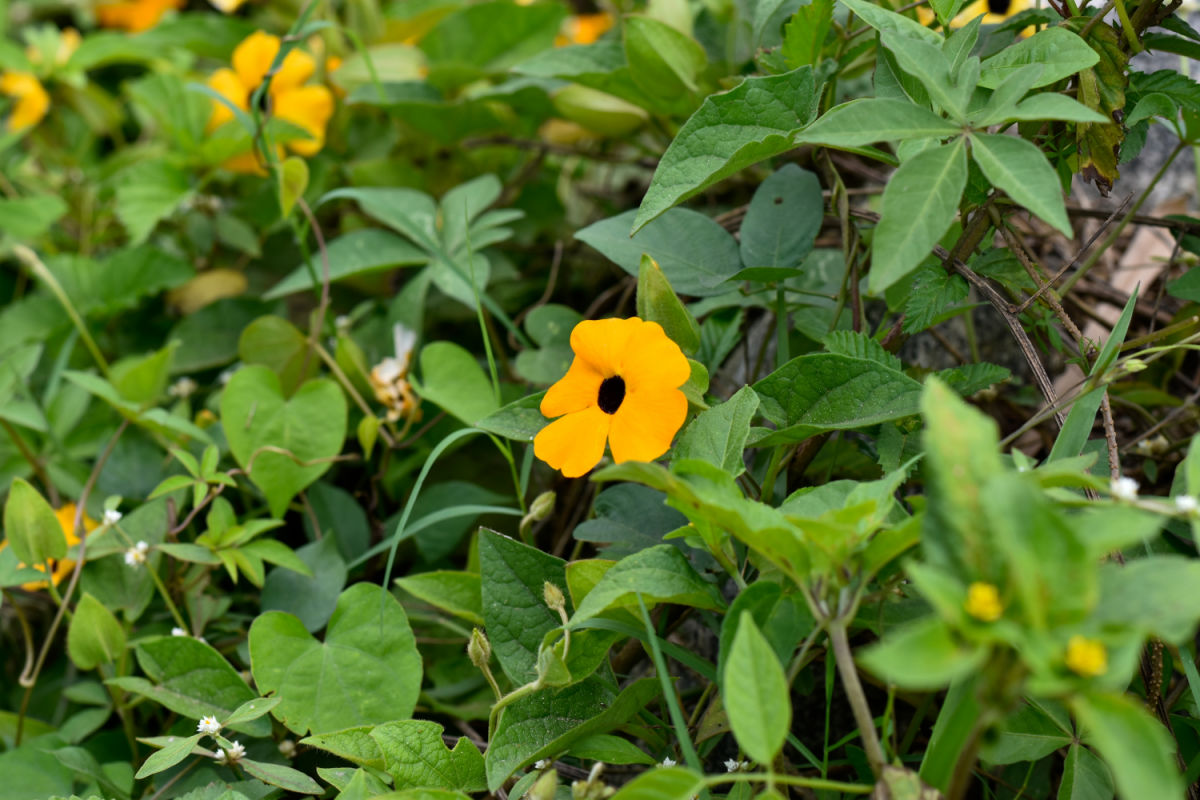
Black-eyed Susan vine (Thunbergia alata)
The cream, orange, and yellow flowers of the black-eyed Susan vine contrast beautifully with the dark centers. This climbing vine makes a magnificent show from spring to fall, but must be planted each year in cold climates.
- Plant type: Fast-growing tender perennial vine
- Sunlight: Full sun
- Mature size: 10-20 feet (3-6 meters)
- Hardiness zones: USDA 10-11 (grown as an annual in cold climates)
Shop for black-eyed Susan vine to hide a chain link fence.
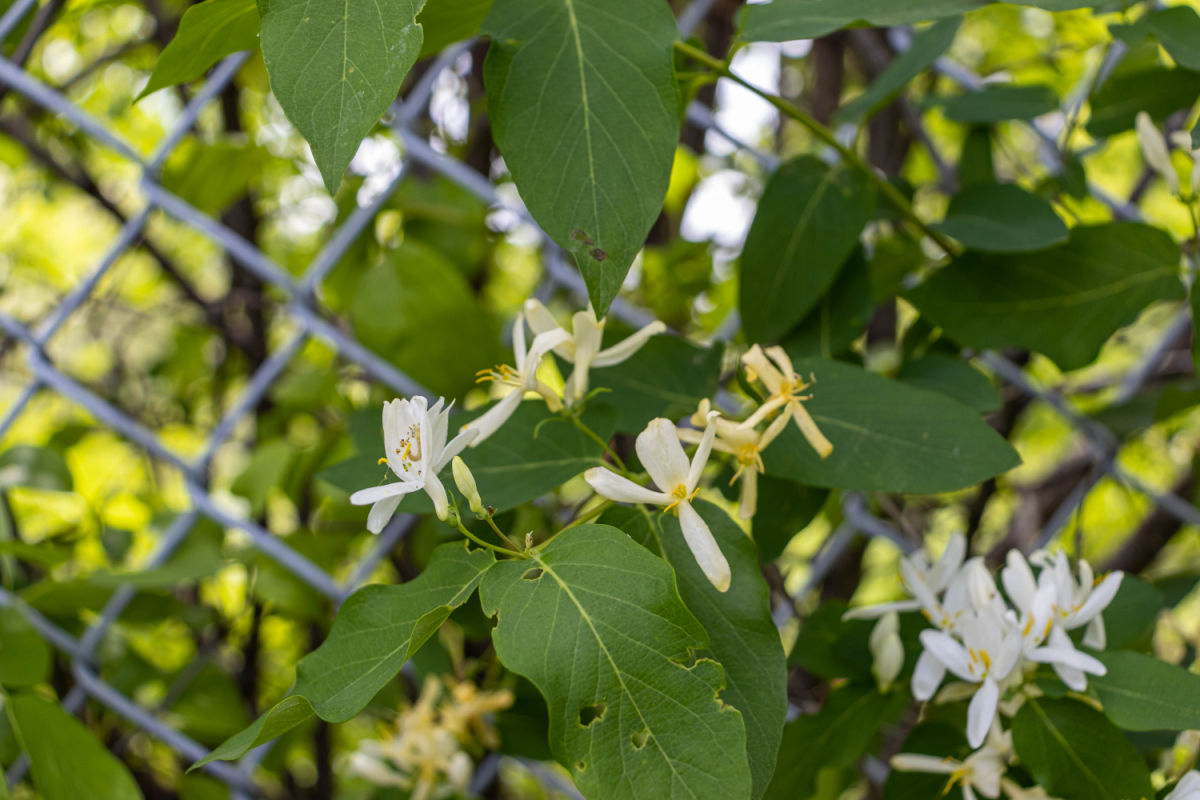
Honeysuckle (Lonicera)
Honeysuckle on chain link fences is a fast-growing way to provide a dense privacy screen. It is great for hiding an ugly fence with attractive, fragrant flowers that attract pollinators.
- Plant type: Perennial climbing vine.
- Sunlight: Full sun to partial shade
- Mature size: 6-20 ft (1.8-6 meters)
- Hardiness zones: USDA 4–9
Etsy sells honeysuckle for chain link fence line landscaping.
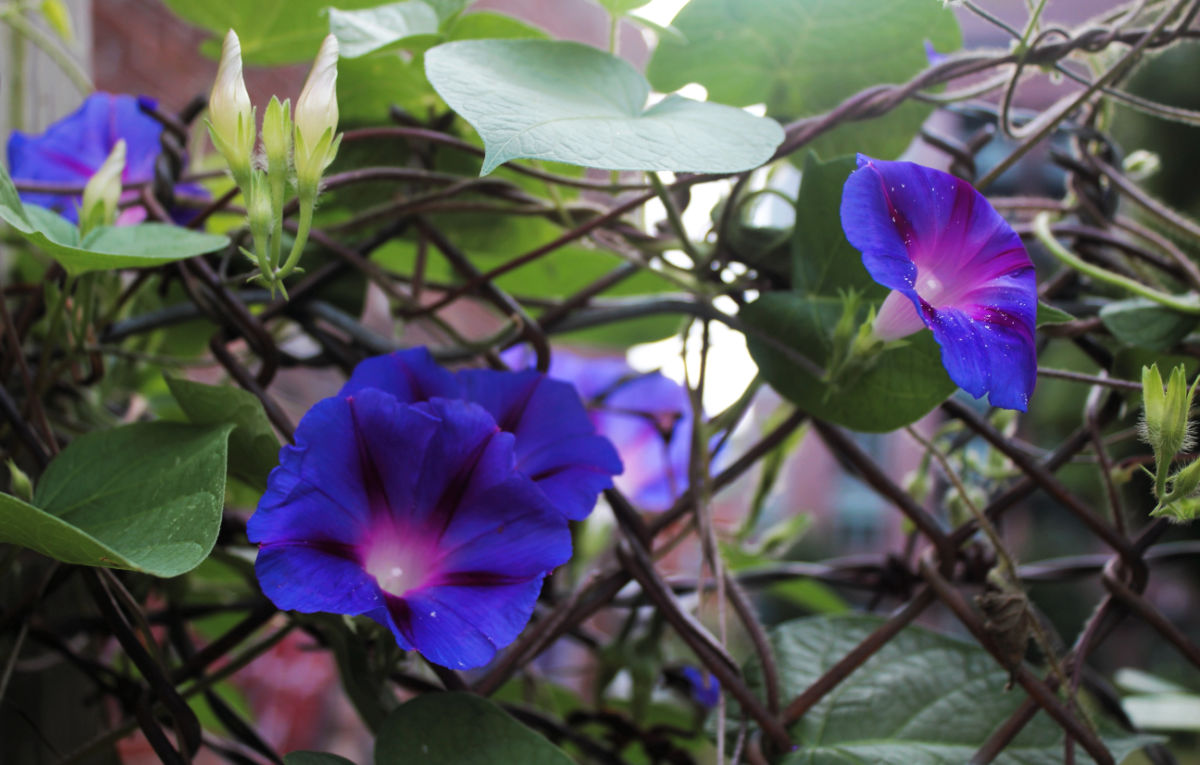
Morning glory (Ipomoea purpurea)
Morning glories can grow over 10 feet in one season, making them great privacy plants for chain link fences. Their trumpet-shaped flowers bloom at dawn and wilt by afternoon. They will grow in most areas but must be planted each year in zones colder than 9. dense
- Plant type: Annual flowering vine
- Sunlight: Full sun
- Mature size: 8-15 feet (2.5-4,5 meters)
- Hardiness zones: USDA 9-11 (can be grown as annuals in colder climates)
Buy morning glory vine plants to cover a chain link fence.
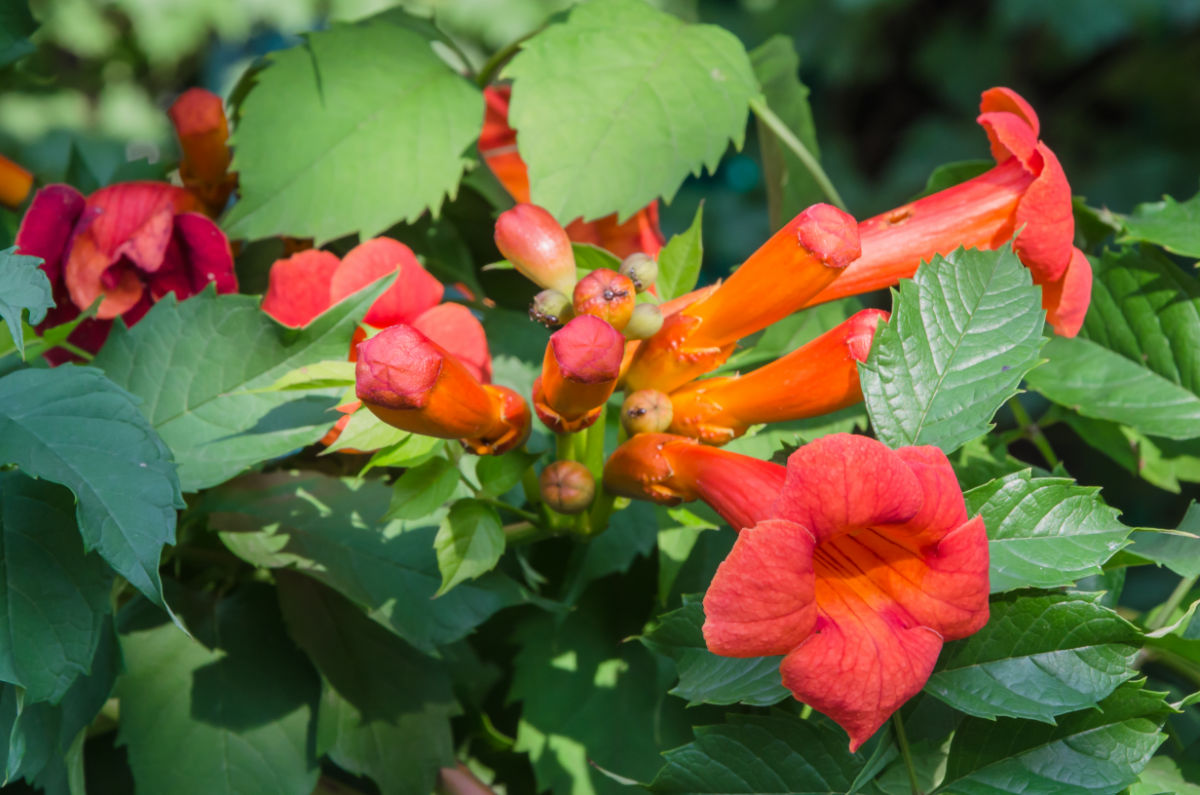
Trumpet vine (Campsis radicans)
The orange-red flowers of trumpet vine do a great job of attracting hummingbirds to your yard. It is sometimes called “cow-itch vine” because it can cause a skin irritation similar to poison ivy.
- Plant type: Deciduous perennial vine
- Sunlight: Full sun
- Mature size: 20-40 feet (6-12 meters)
- Hardiness zones: USDA 4-10
Get trumpet flowering vine for your fence line here.
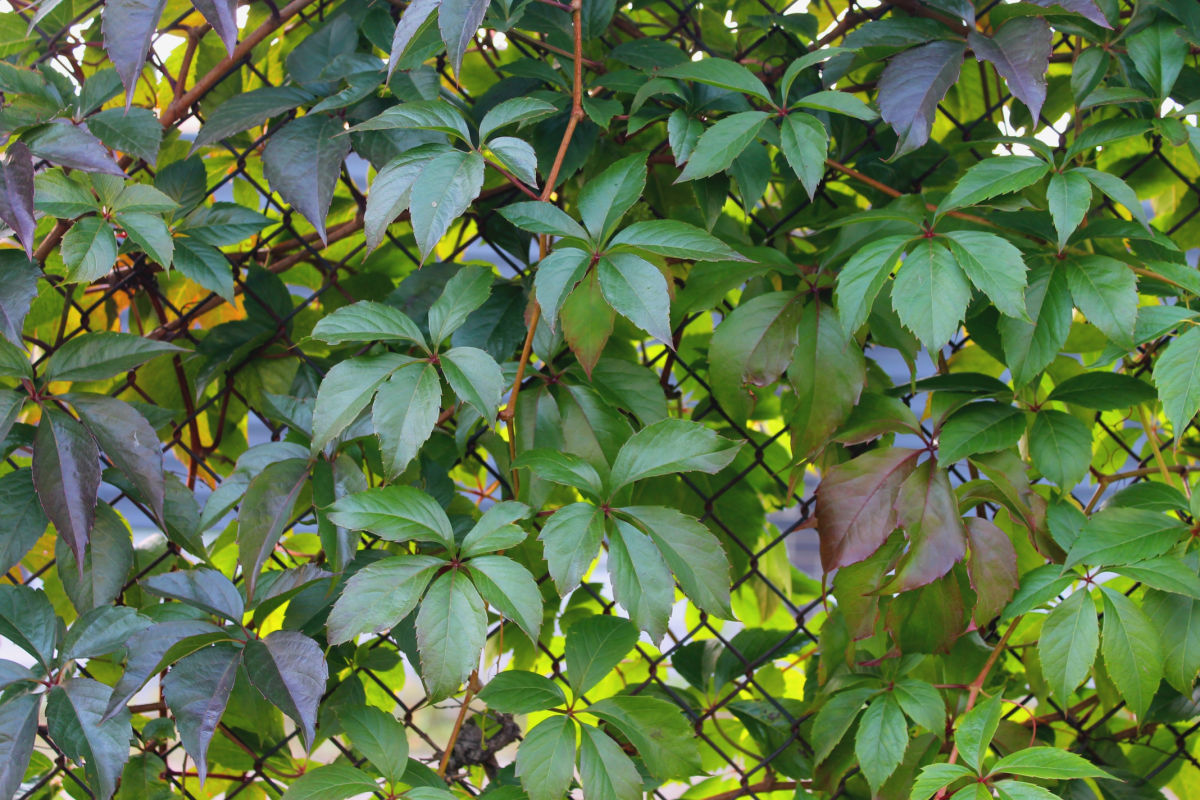
Virginia creeper (Parthenocissus quinquefolia)
This perennial vine climbs by producing tendrils with small adhesive pads that act like glue. It is an extremely fast-growing vine that can grow up to 20 feet in one year. It is often mistaken for poison ivy, but it has 5 leaves instead of 3.
- Plant type: Perennial, deciduous woody vine
- Sunlight: Full sun to full shade
- Mature size: 30-50 feet (9-15 meters)
- Hardiness zones: USDA 3-10
Purchase Virginia creeper evergreen vine to cover ugly fences here.
Climbing roses on chain link fences
While climbing roses are not true vines, they can be trained to grow along a chain link fence for a similar effect. Some varieties, often called rambling roses, grow more vigorously and are ideal for covering larger sections of a fence.
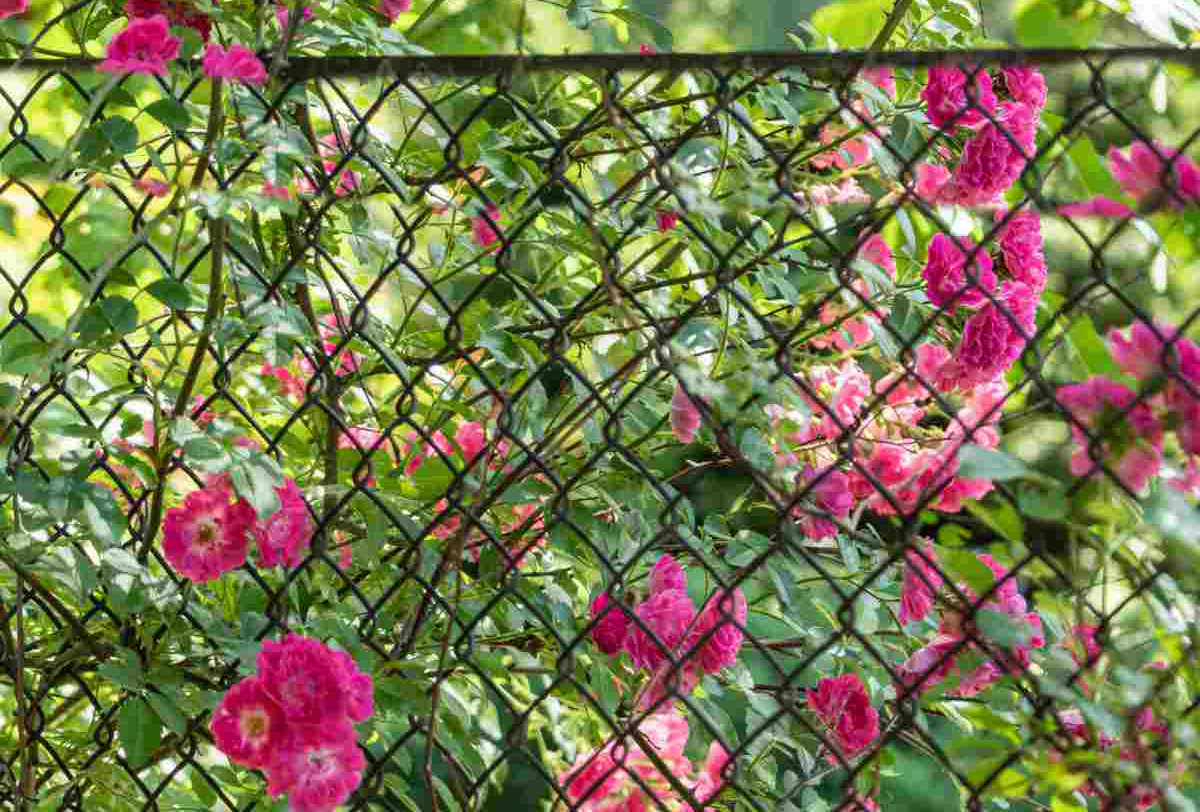
Climbing roses (Rosa setigera)
For the best coverage on your chain link fence, use trellises or wire supports for climbing roses, and prune them annually. Their pink flowers are spectacular from late spring to early summer, and they often fade to a pale pink or white as they age.
The flowers of climbing roses are
- Plant type: Perennial, deciduous native shrub
- Sunlight: Full sun
- Mature size: 4-10 feet (1.2-3 meters) wide
- Hardiness zones: USDA 4-8
Shop for climbing roses to use as screening plants here.
Low-maintenance ornamental grass to cover a chain link fence
An effective way to hide a chain link fence (and my favorite way) is to plant ornamental grasses. Ornamental grasses are very low-maintenance. They need to be cut down to 6 inches above the ground in spring and are very drought-tolerant.
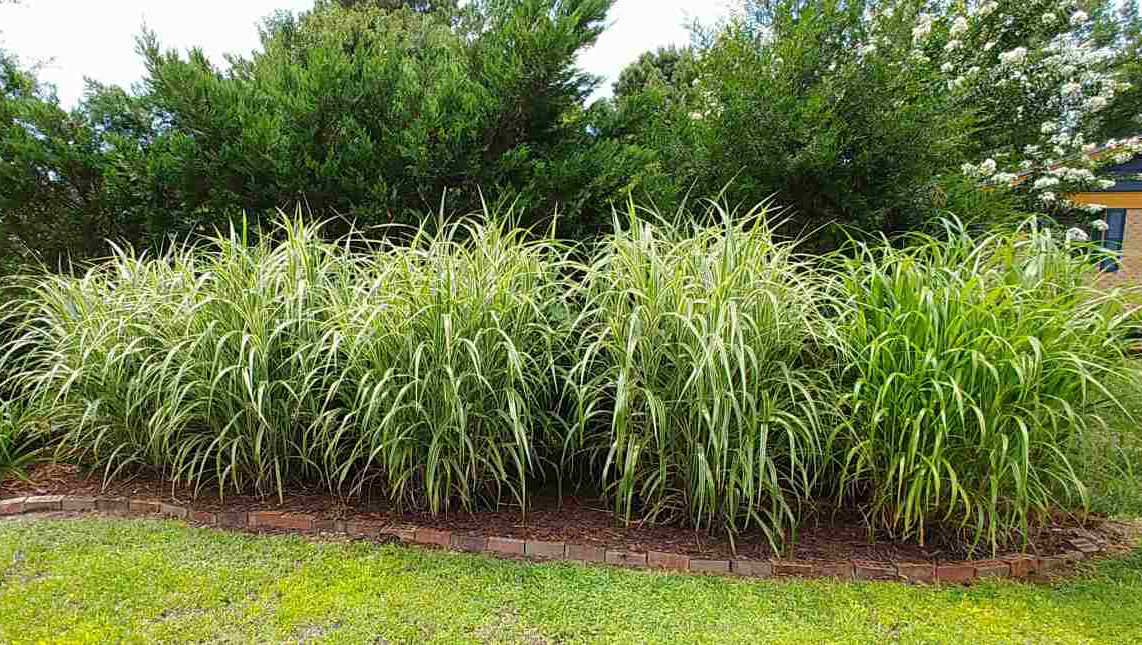
Japanese silver grass (Miscanthus sacchariflorus)
Japanese silver grass grows quickly and is easy to care for. It fills in quickly along a fence line and features feathery seed heads in fall, which sway in the wind and provide food for winter birds.
- Plant type: Perennial
- Sunlight: Full sun
- Mature size: 4-12 feet (1.2-3.5 meters) tall
- Hardiness zones: USDA 3-9
Buy Japanese silver grass for landscaping to hide chain link fences.
Other ornamental grasses for privacy
- Purple fountain grass: Features elegant flower spikes that are deer resistant.
- Porcupine grass: Has yellow variegated foliage. Also deer-resistant.
- Pink muhly grass: Features pink cloud-like plumes in fall.
- Pampas grass: This grass can rise to 8 to 12 feet.
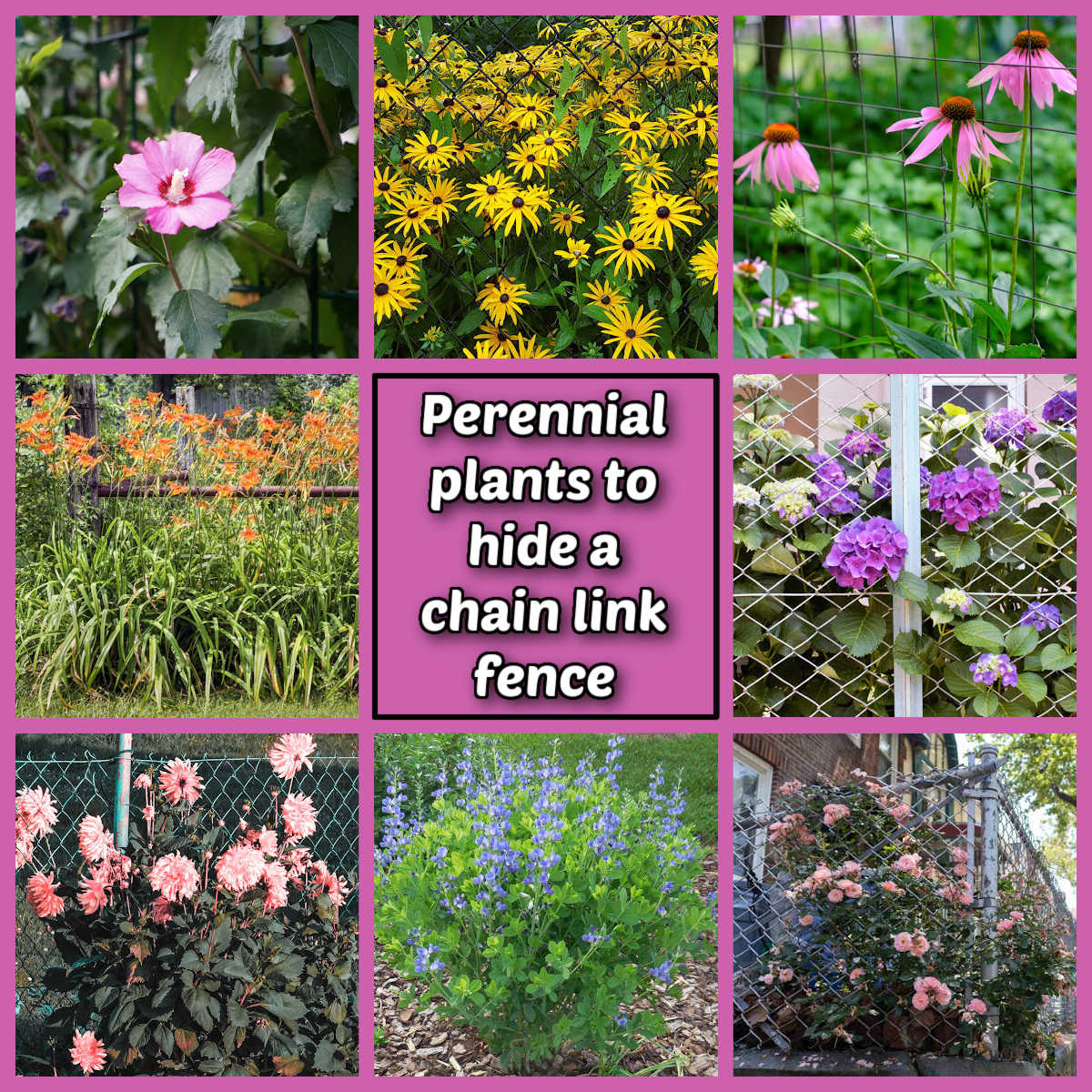
Flowering plants for colorful fence borders
If you are looking for inexpensive ways to hide a chain link fence, perennial plants are a great option. You plant them once, and they come back every year and get larger.
Many perennial plants and shrubs are large enough to use as flowering plants for fence lines. These chain link fence plants will cover portions of the fence and can be combined for a colorful display in borders next to your chain link fence.
Protip: When landscaping along a chain link fence, don’t place your plants too close to the fences. Check the mature size for each plant, and leave at least half that distance between the plant and the fence. This allows maintence and ensures the plants have room to grow.
The list below features some of my favorite chain link fence screening plants.
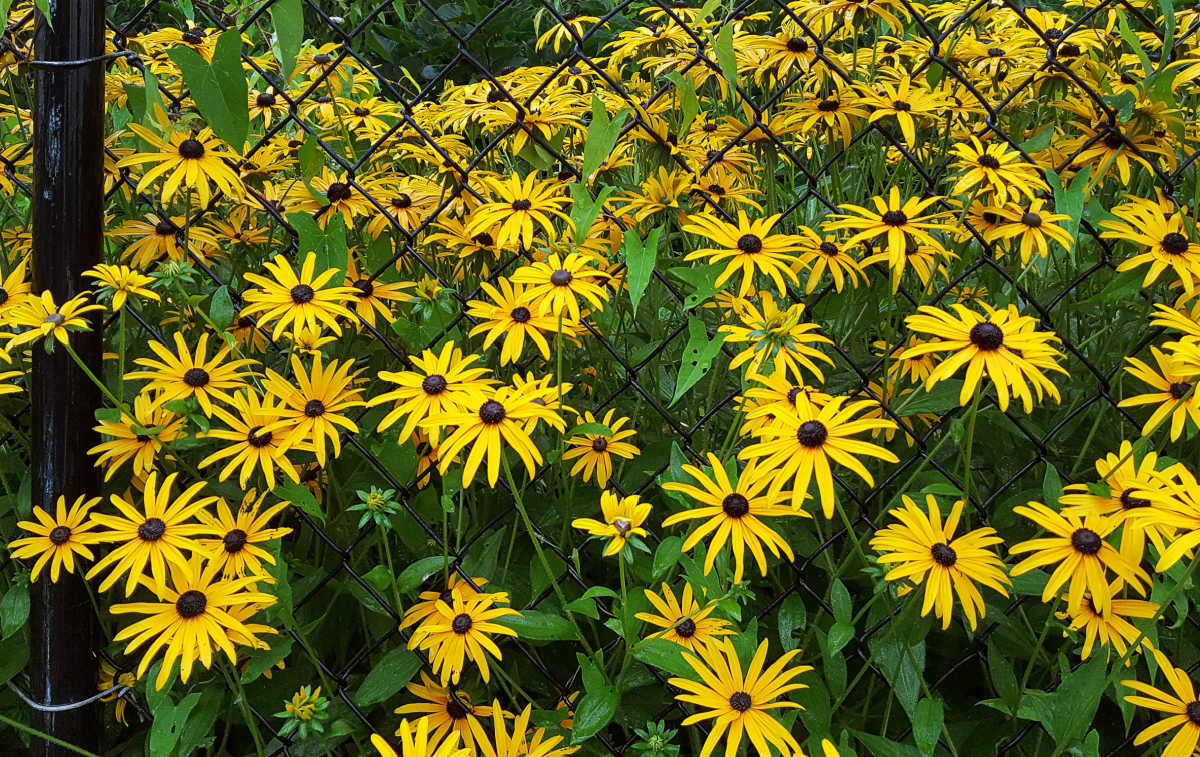
Black-eyed Susan (Rudbeckia fulgida)
The center cone of the black-eyed Susan flower is actually made up of tiny dark, fertile flowers. They eventually form into a seed head that attracts birds in winter.
- Plant type: Perennial
- Sunlight: Full sun
- Mature size: 2-3 feet (60-90 cm) tall and 1- 2½ feet (30-75 cm) wide
- Hardiness zones: USDA 3-9
Etsy has black-eyed Susans to use as climbing plants for fences.
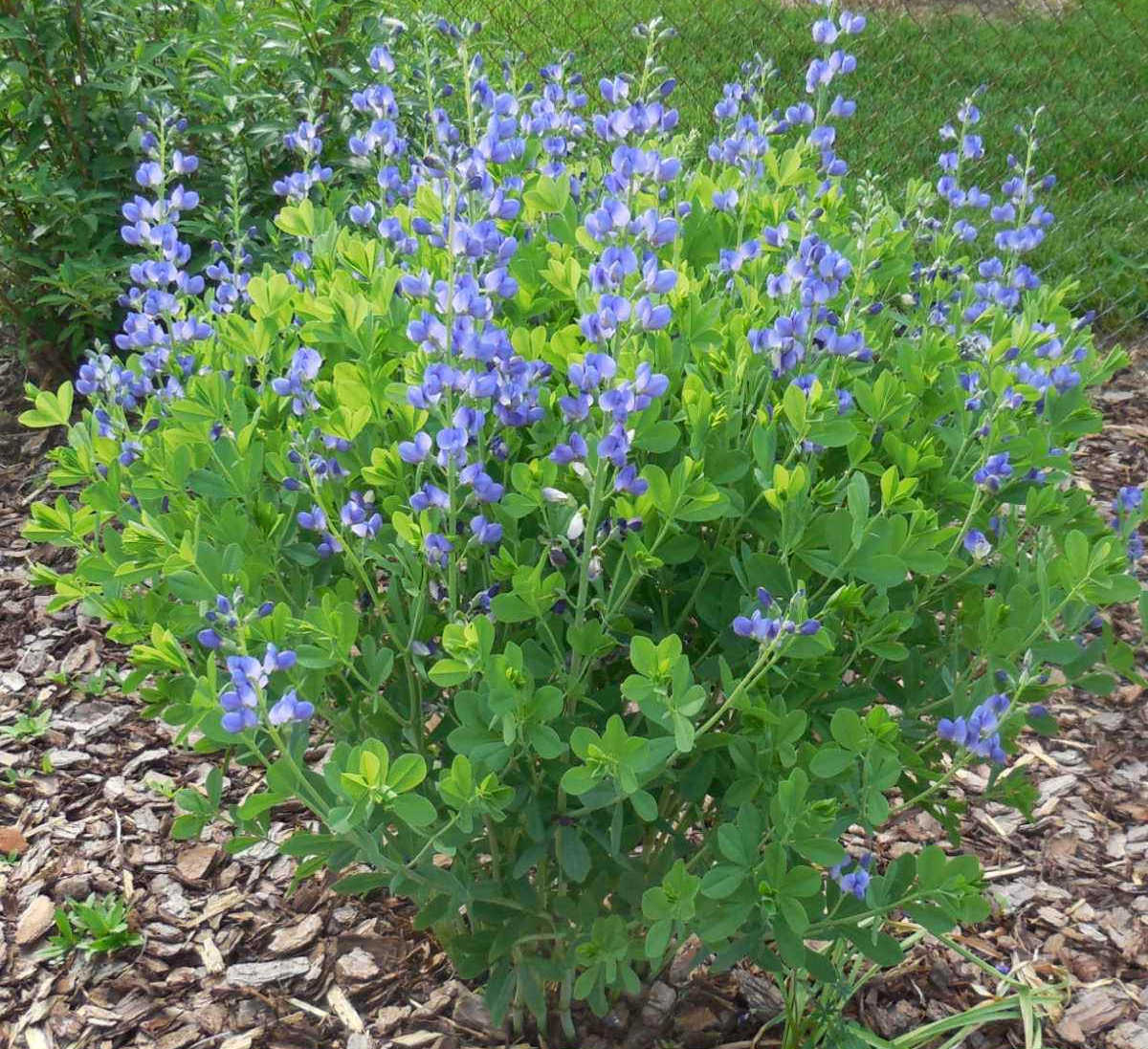
Blue false indigo (Baptisia australis)
Baptisia australis has blue flowers in spring, and forms black seed pods that rattle in the wind. It is often referred to as “rattlesnake plant.” My plants grew almost as tall as the railing of my chain link fence and provided soft, lush coverage.
- Plant type: Perennial
- Sunlight: Full sun
- Mature size: 3-4 feet (90-120cm) wide and tall
- Hardiness zones: USDA 3-9
Buy false blue indigo for landscaping near fences.
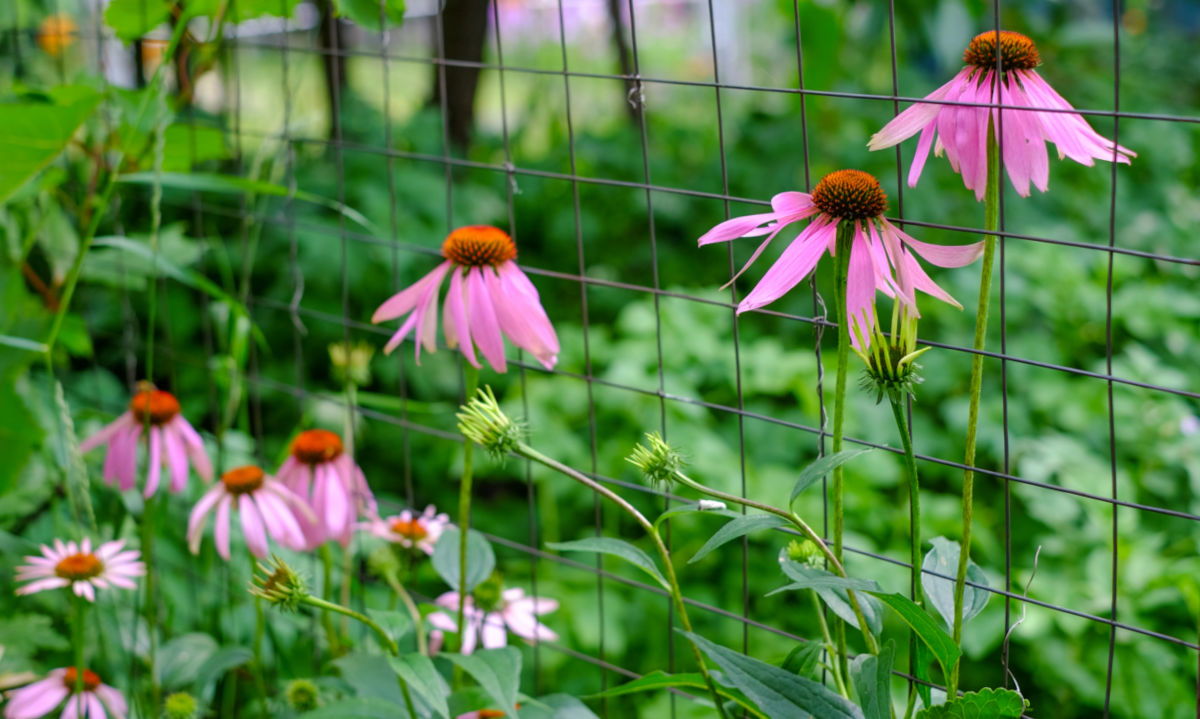
Coneflower (Echinacea)
Native Americans have long used this drought-tolerant perennial to treat pain, cough, snakebites, and toothache. Coneflowers are pollinator magnets, attracting bees, hummingbirds, and butterflies. This low-maintenance fence plant adds a natural softness to the metal of the fence.
- Plant type: Perennial
- Sunlight: Full sun
- Mature size: 2-5 feet (60-150 cm) tall and 1 ½ – 2 feet (45-60 cm) wide
- Hardiness zones: USDA 3-9
Get coneflowers to use for landscaping chain link fence lines.
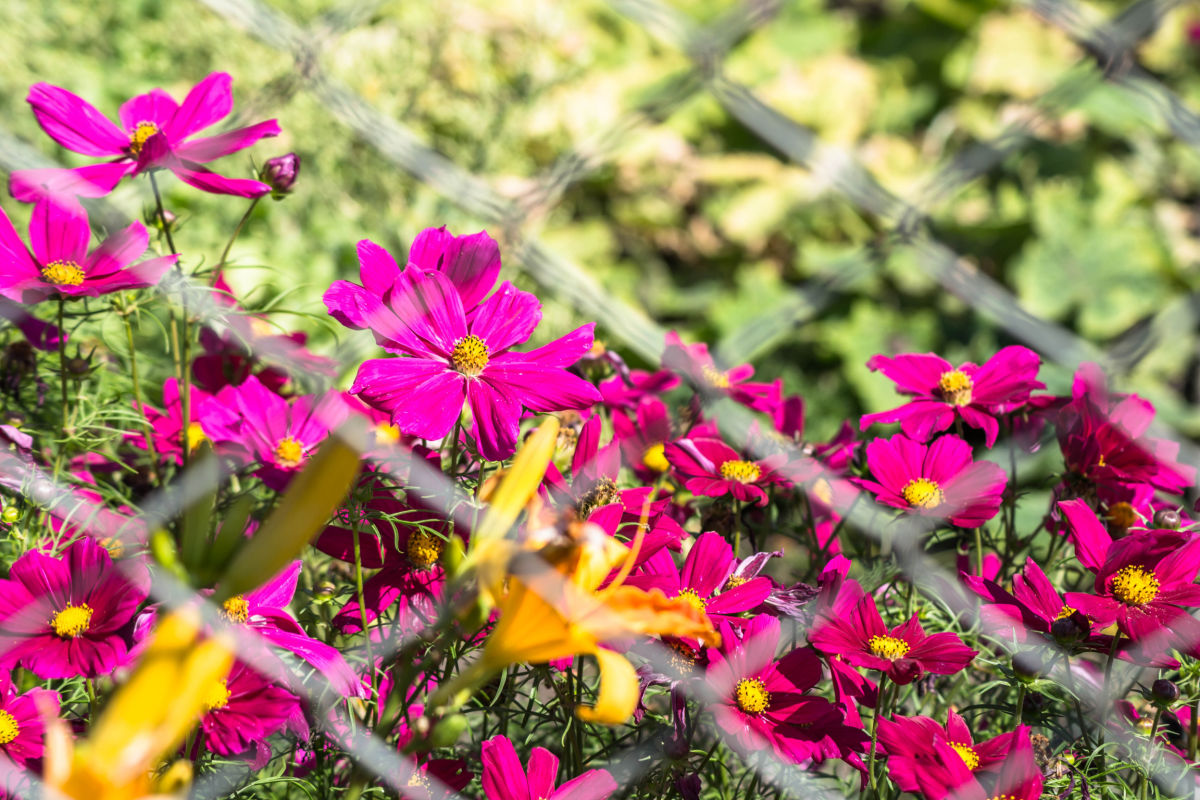
Cosmos (Cosmos bipinnatus)
Cosmos is frost-tender in zones other than 9-11, but it self-seeds readily. If you let the flowers die naturally, you will likely get more flowers the following year. Their tall height makes them ideal flowering plants to hide a fence.
- Plant type: Tender perennials
- Sunlight: Full sun
- Mature size: 1-6 feet (30-180 cm) tall and 2-4 feet (60-120 cm) wide
- Hardiness zones: USDA 9-11 (can be grown as annuals in most zones
Get cosmos to use as plants for chain link fences.
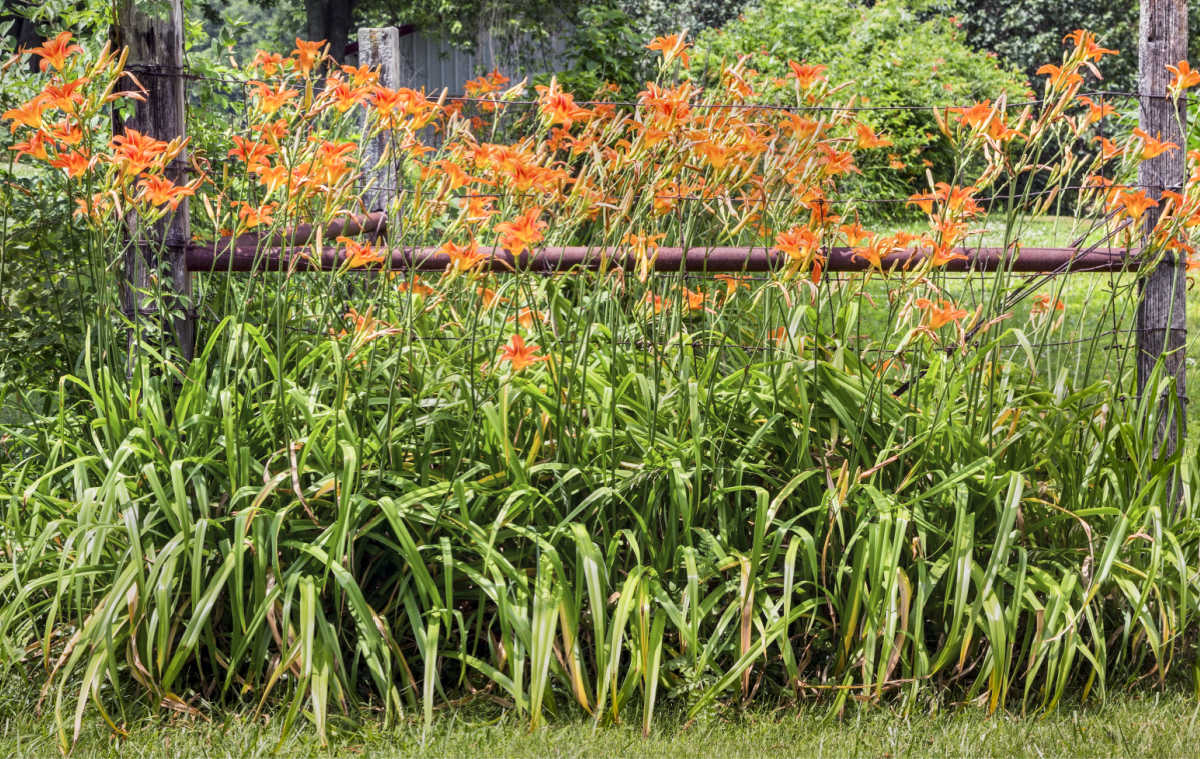
Daylilies (Hemerocallis)
Daylilies have tall flower stalks and lush foliage. Planting them along a fence line softens the metal and adds color, soft texture, and season-long interest.
If you’re looking for more height and dramatic blooms, Oriental and Asiatic lilies are also excellent choices for planting along a fence line. These taller varieties add vertical interest and bold color, making them a great complement to daylilies. (See how they compare here.)
- Plant type: Perennial bulb
- Sunlight: Full sun
- Mature size: up to 4 feet (120 cm) tall and wide
- Hardiness zones: USDA 3-9
Purchase daylilies for landscaping along chain link fences here.
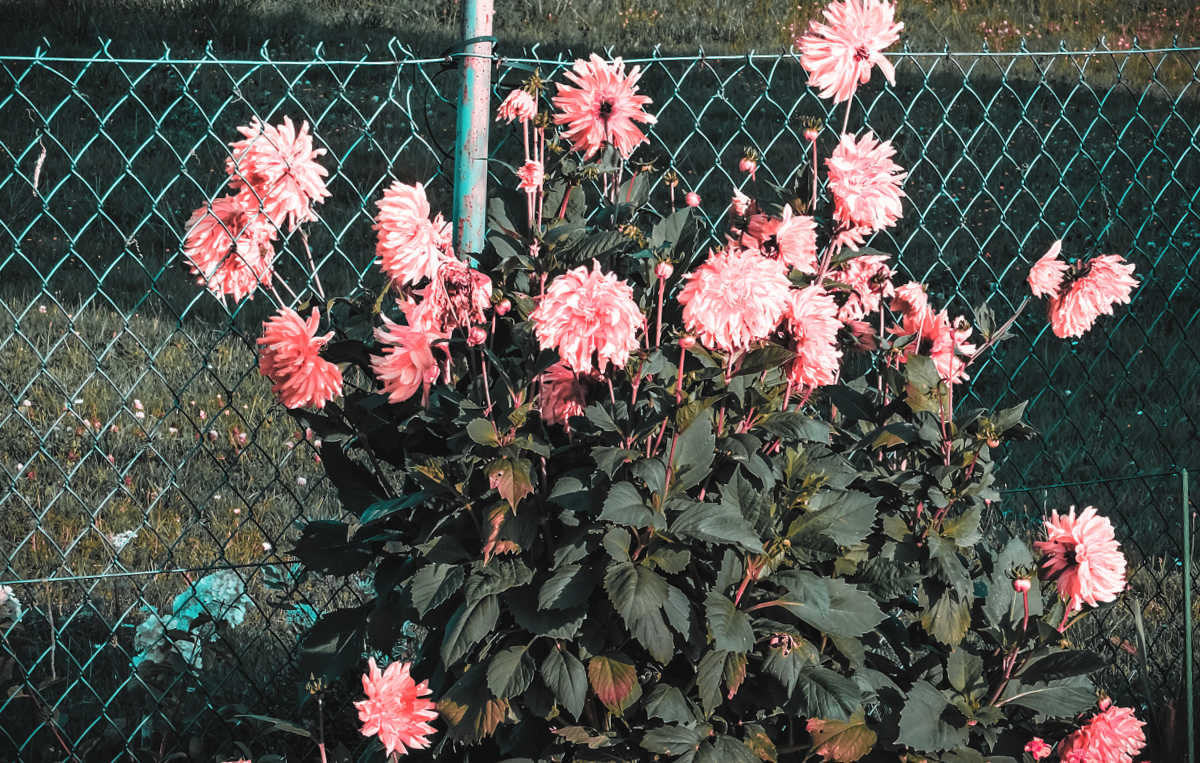
Dahlias (Dahlia spp.)
All types of dahlias grow into very tall flowering plants. Some, such as dinner plate dahlias, feature very large blooms that can grow up to 12 inches (30 cm) in size. This makes them ideal chain link fence screening plants.
In warmer zones, 8 and above, they will overwinter and come back the following year. In cooler zones, you can dig up the tubers before frost, or plant them again in spring.
- Plant type: Herbaceous perennials
- Sunlight: Full sun
- Mature size: 3-6 feet (90-180 cm) tall
- Hardiness zones: USDA 8-11
Etsy has mixed lots of dahlia tubers here.
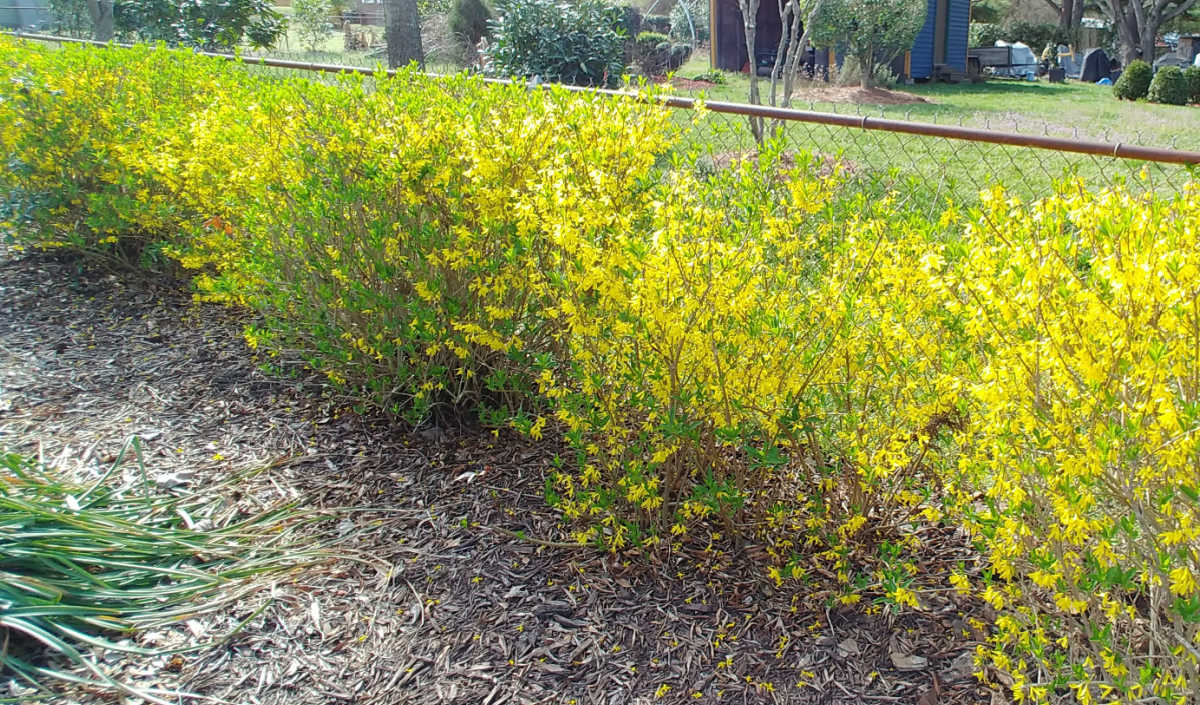
Forsythia (Forsythia x intermedia)
One of my favorite shrubs for hiding a chain link fance is forsythia. This fast-growing perennial shrub can be planted 6 feet apart and will completely cover the fence in just a few seasons. It can be pruned into a hedge to give full, dense coverage.
- Plant type: Perennial shrub
- Sunlight: Full sun to partial shade
- Mature size: 6-10 feet (1.8-3 meters) tall
- Hardiness zones: USDA 5-8
Buy forsythia shrubs to plant along fence lines.
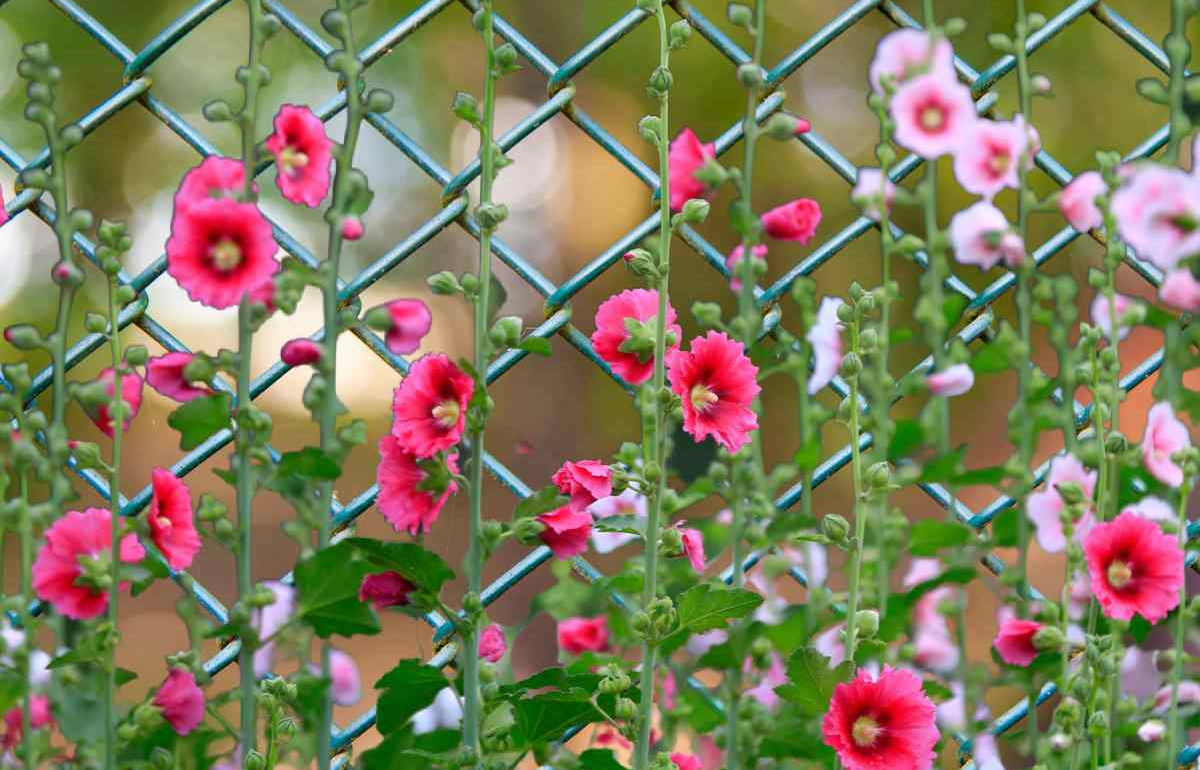
Hollyhock (Alcea rosea)
Planting hollyhocks next to a chain link fence is a natural way to soften the industrial look of the fence. These colorful perennials act as a living screen, giving privacy to your yard. The fence can be used to provide support to the blooms, keeping them from falling over when it’s windy.
- Plant type: Biennial
- Sunlight: Full sun
- Mature size: 5-8 feet (1.5-2.5 meters)
- Hardiness zones: USDA 3-9
Get holly hocks to transform a chain link fence.
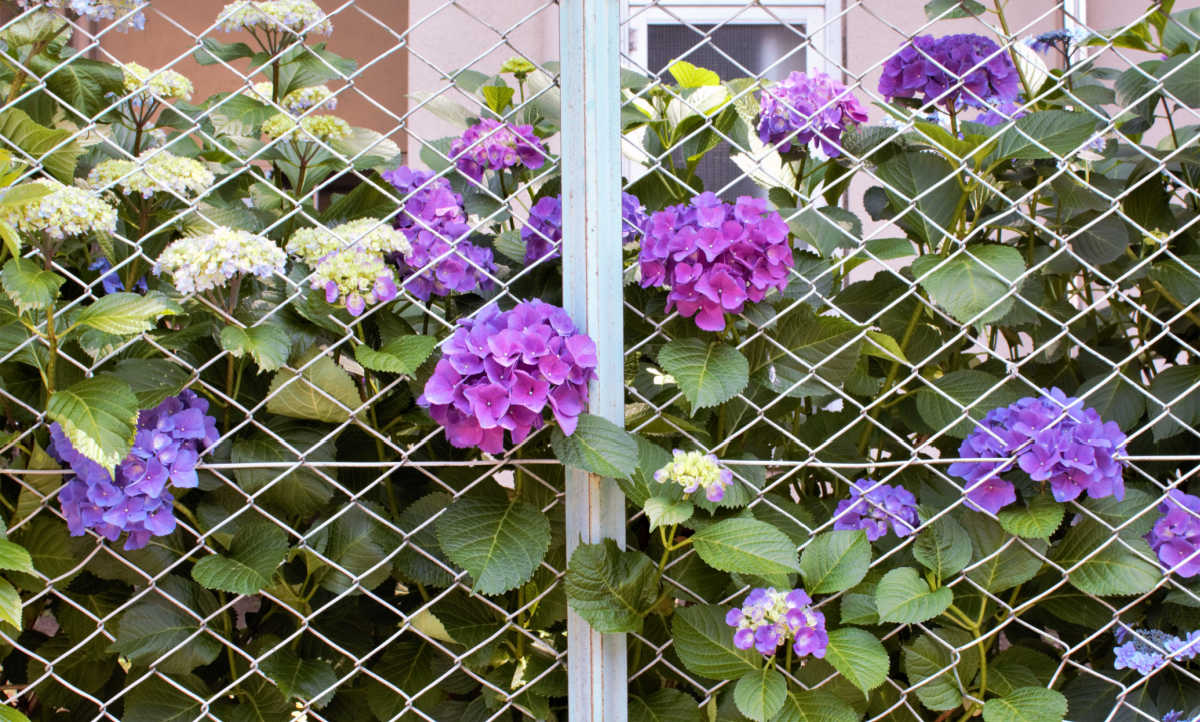
Hydrangea (Hydrangea macrophylla)
When planted in a row, hydrangea shrubs will create a dense privacy screen to block views from neighbors. The lush, large leaves and big blooms cover the industrial look of the fence and make the yard look more inviting.
- Plant type: Perennial
- Sunlight: Filtered sun to partial shade
- Mature size: 3-6 feet (90-180 cm) tall
- Hardiness zones: USDA 6-9
Transform a chain link fence with hydrangea shrubs from Etsy.
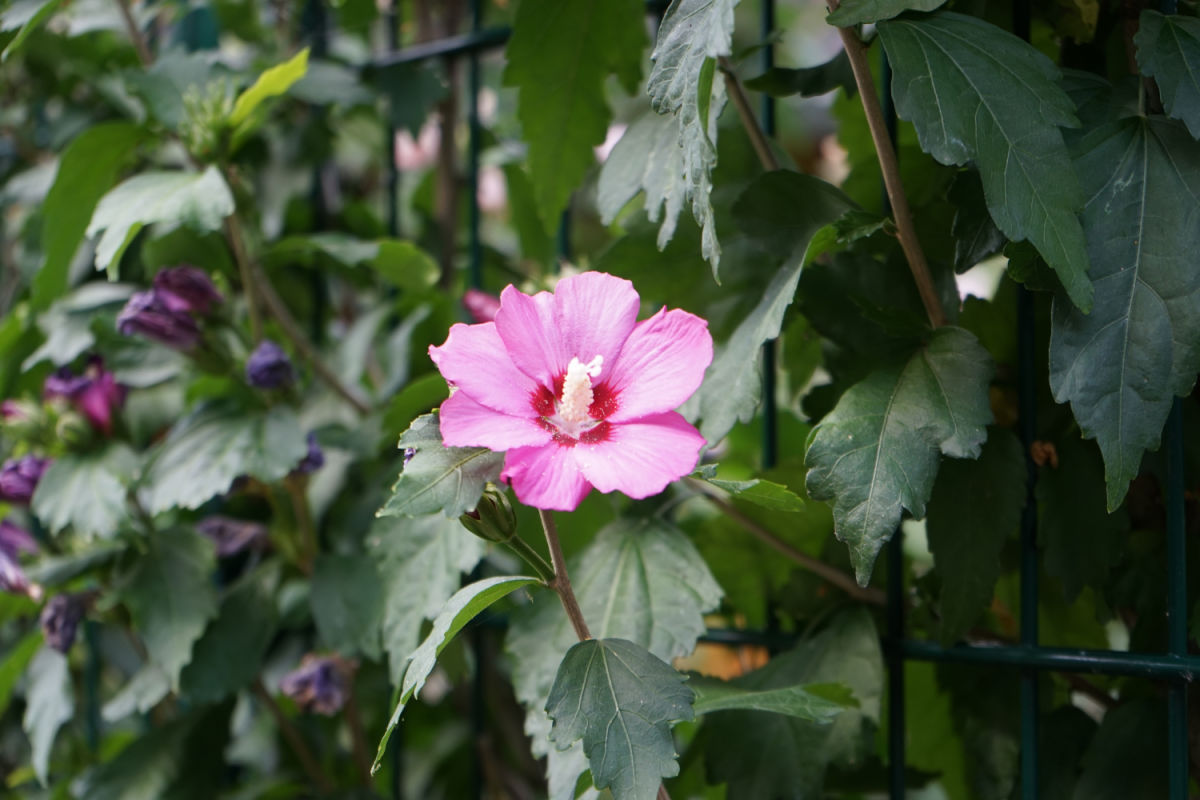
Rose of Sharon (Hibiscus syriacus)
Planting the cottage garden plant, Rose of Sharon, along a chain link fence is a popular choice. The shrub will grow to 12 feet tall and, if planted in a row, it forms a tall hedge that hides the metal fence.
- Plant type: Perennial shrub
- Sunlight: Full sun to partial shade
- Mature size: 6-12 feet (2.8-3.5 meters)
- Hardiness zones: 5-9
Etsy has Hibiscus syriacus perennial for sale.
Protip: For bold summer color, tall annuals like sunflowers can add height and visual interest along a chain link fence. While they won’t fully hide the fence, they create a striking seasonal backdrop when planted behind or between shrubs.
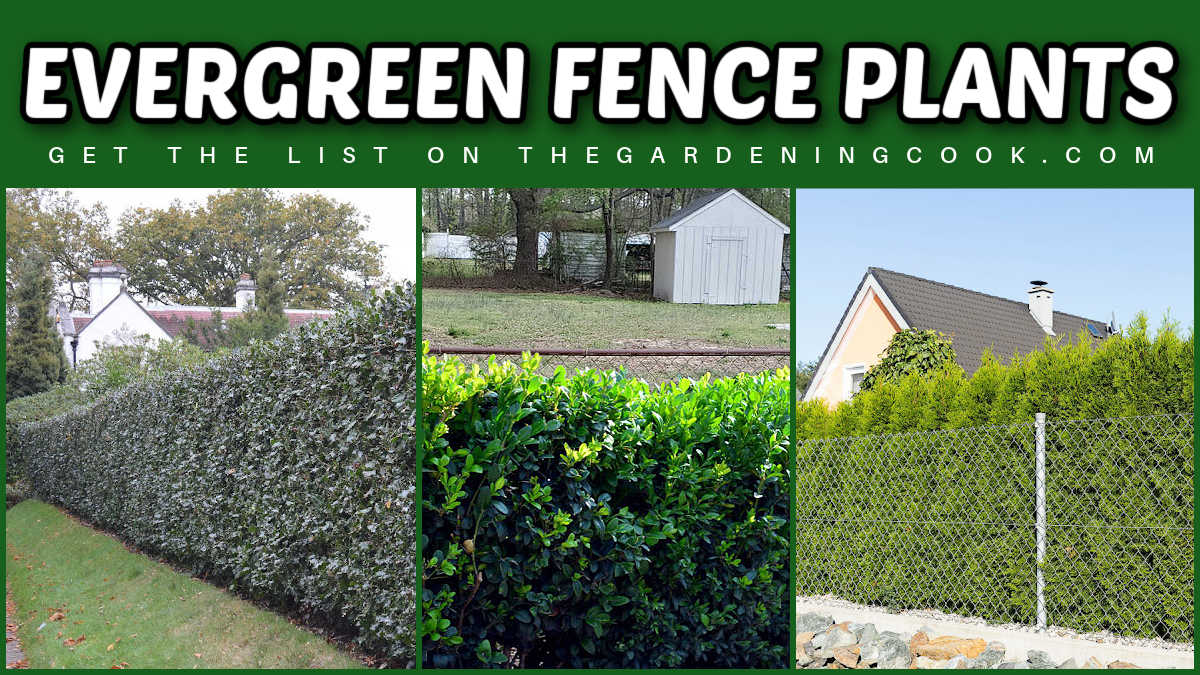
Evergreen fence plants for year-round privacy
In addition to climbing vines, many other shrubs can be used as privacy plants for chain link fences. Here are a few of my favorites.
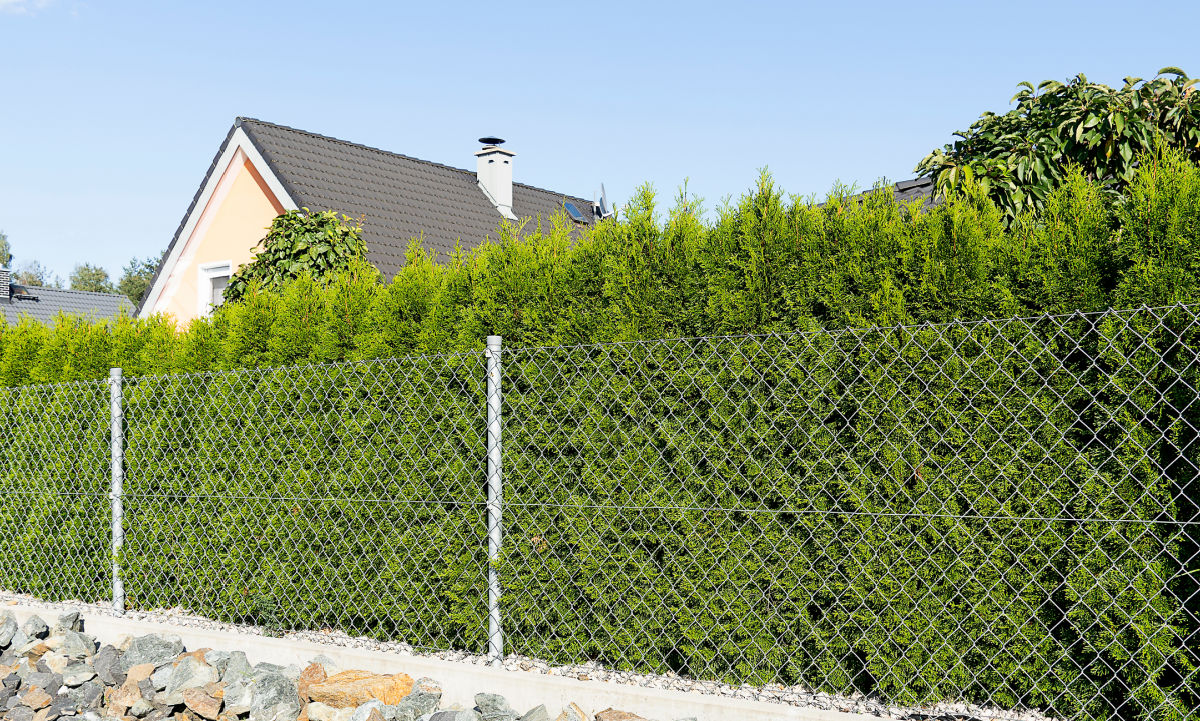
Arborvitae (Thuja occidentalis)
If you are looking for an evergreen privacy screen, arborvitae are great shrubs to plant along fence lines. They provide year-round dense coverage and act as a windbreak. Mature size varies by cultivar; most hedge varieties stay around 10–15 ft tall and 3–6 ft wide.
- Plant type: Evergreen shrub
- Sunlight: Full sun
- Mature size: 10-15 feet (3-4.5 meters)
- Hardiness zones: USDA 3-7
Buy arborvitae to hide your fence line here.
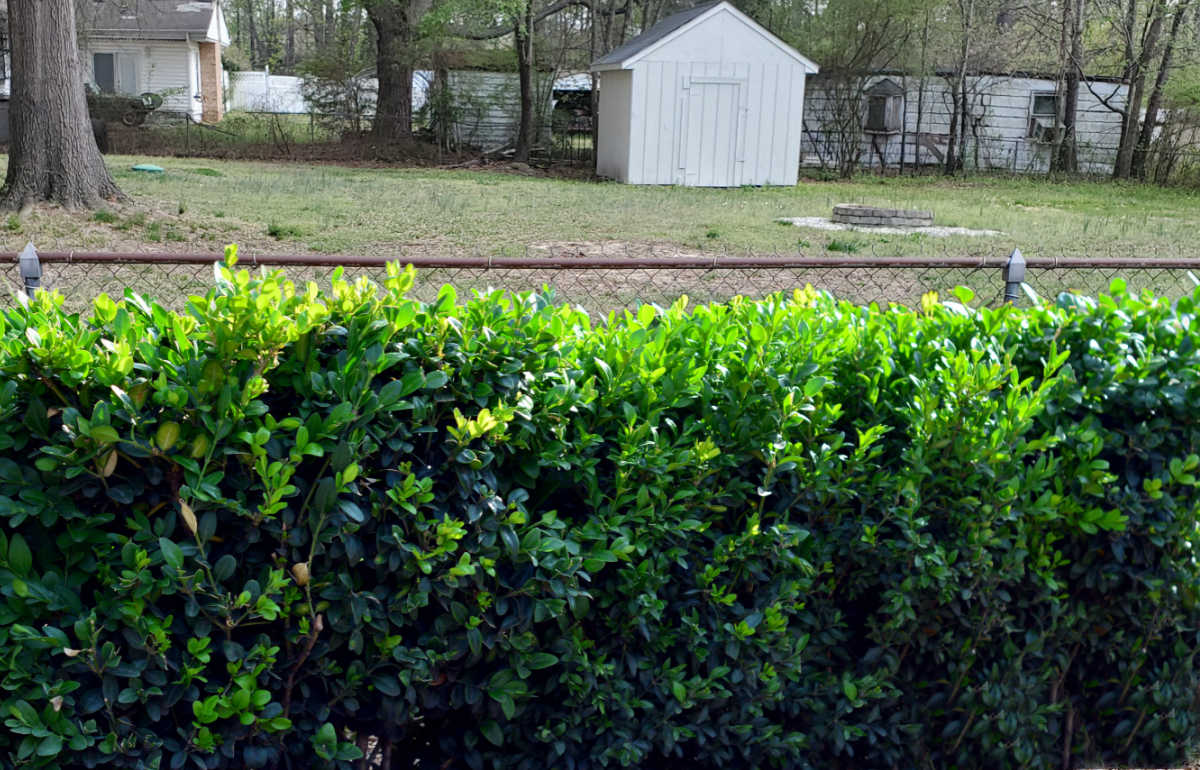
Boxwood (Buxus sempervirens)
Planting boxwoods next to a chain link fence transforms it into a lush, private, and attractive wall of green. Boxwood shrubs create a dense, green barrier that hides the fence and prevents neighbors from seeing through.
- Plant type: Perennial shrub
- Sunlight: Full sun to partial shade
- Mature size: 2-8 feet (60-250 cm) tall and wide
- Hardiness zones: USDA 5-9
Get boxwood shrubs for fence screening here.
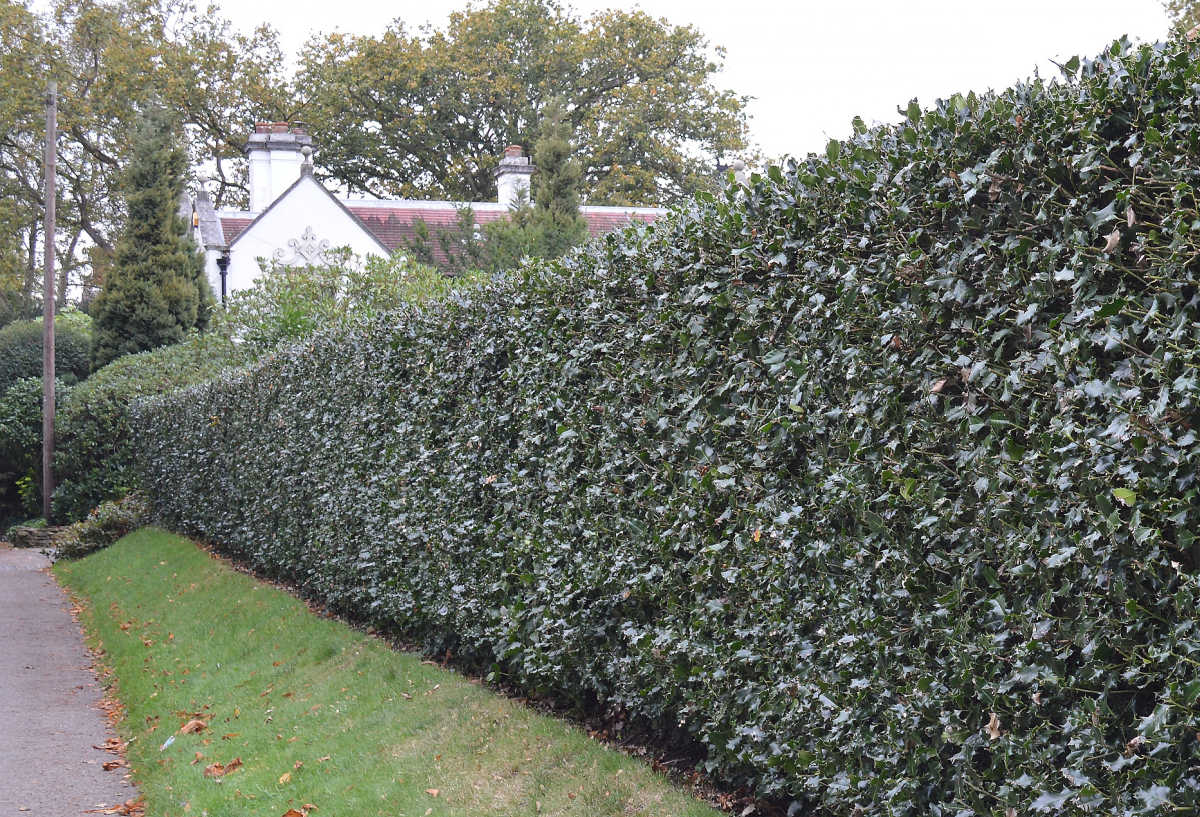
Holly (Ilex aquifolium)
Planting holly bushes next to chain link fences is a great way to create a dense privacy screen. Their thorny foliage acts as a natural deterrent against pets and intruders. They produce winter berries for wildlife, and keep their green foliage year-round.
- Plant type: Perennial shrub
- Sunlight: Full sun to partial shade
- Mature size: 6-25 feet (2-7.5 meters)
- Hardiness zones: USDA 5-9
Purchase holly to plant along your fence line here.
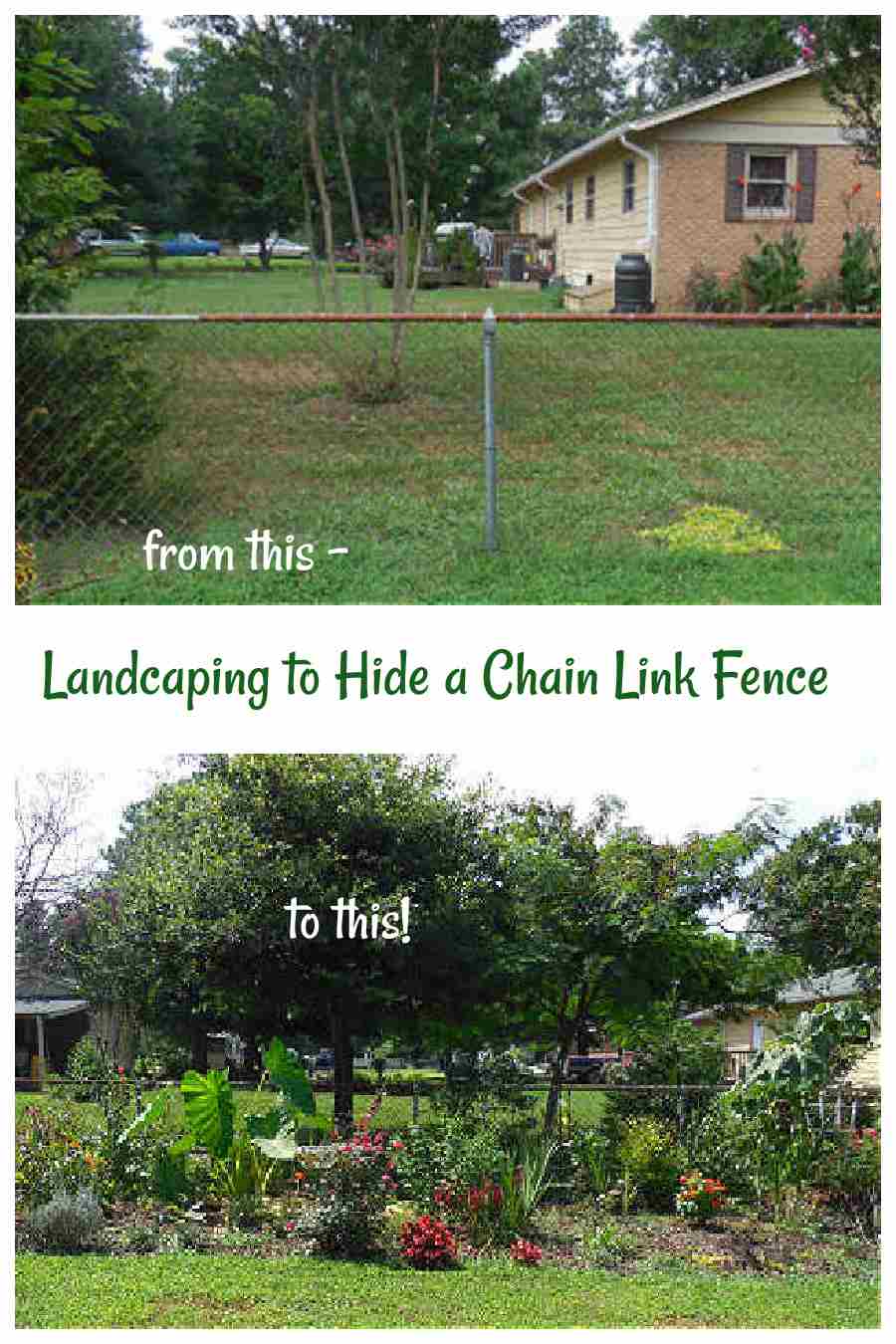
How to make a chain link fence look nice by combining plants
Now that you have seen the best options for vines, flowering plants, evergreens, and low-maintenance grasses, it’s time to think about how to combine them.
Creating a cohesive look along your chain link fence is about more than picking plants – you’ll want to consider spacing, growth habits, and seasonal interest to achieve a year-round landscape that adds privacy, color, and texture along your chain link fence.
Mix heights and textures
- Place taller plants like arborvitae or rose of Sharon toward the back or in corners.
- Layer medium and low plants (daylilies, black-eyed Susans, Baptisia australis) in front for depth.
- Combine fine and coarse foliage for visual interest.
Plan for seasonal color
- Rotate flowering plants to ensure blooms across spring, summer, and fall.
- Evergreen and low-maintenance plants provide constant greenery.
- Include both deciduous and evergreen varieties for texture changes through the seasons.
Consider sunlight and soil needs
- Group plants with similar sunlight requirements together.
- Match plants to soil types (well-drained, clay, sandy) to reduce stress and maintenance.
Use fast-growing vines strategically
- Fast climbers like morning glory or trumpet vine can fill gaps quickly.
- Avoid planting aggressive vines too close to slower-growing shrubs to prevent overcrowding.
Maintain space for growth
- Leave enough room for mature size to prevent overcrowding.
- Prune regularly to maintain shape and access.
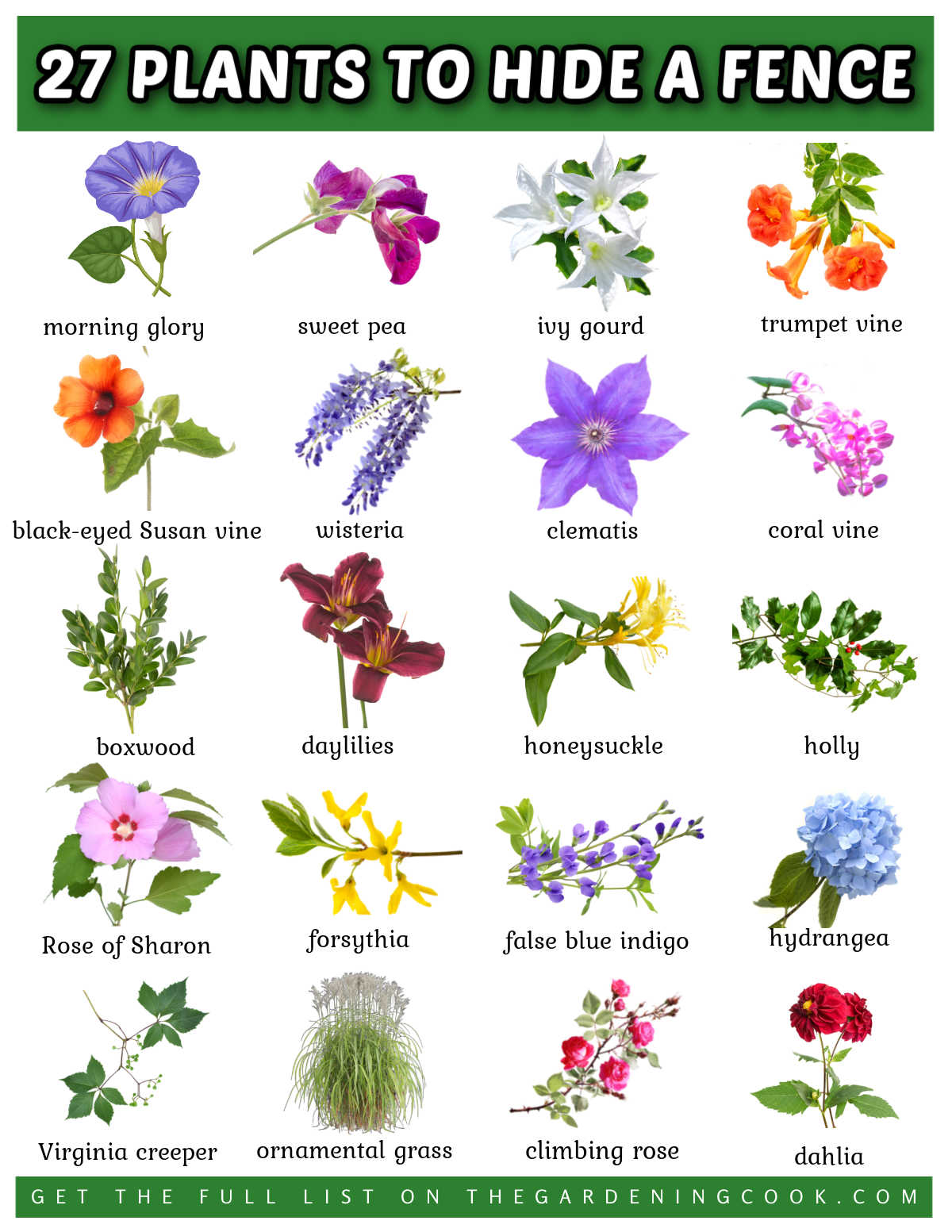
Plants to hide a fence printable
You can print the chain link fence landscaping printable as high-resolution JPGs or PDFs by using the links below:
- Get the high-resolution fence screening plants printable (JPG)↗
- Get the PDF fence screening plants printable (PDF)↗
Printing instructions:
- Select portrait orientation and “fit to page” on your printer settings for a full-page printout.
- You can also print out the chain link fence landscaping printable from the project card at the bottom of this page. Scroll down to the card and press “print.
Related landscaping ideas and garden inspiration
Looking for more ways to enhance your fence line? These related posts offer plant ideas, real-life transformations, and practical tips to help you create a more beautiful and cohesive garden.
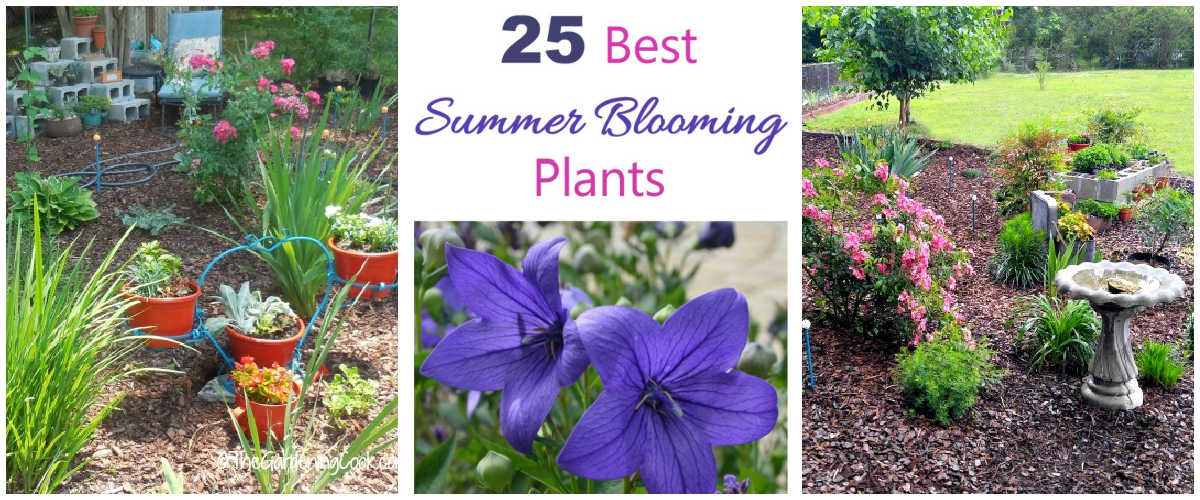
- Garden makeover before and after for transformation ideas
- Summer blooming plants for vibrant seasonal color
- Summer garden tips and a garden tour for real-life inspiration
Share these chain link fence landscaping ideas on X
If you enjoyed learning about landscaping along a chain link fence, why not share this guide with a friend?
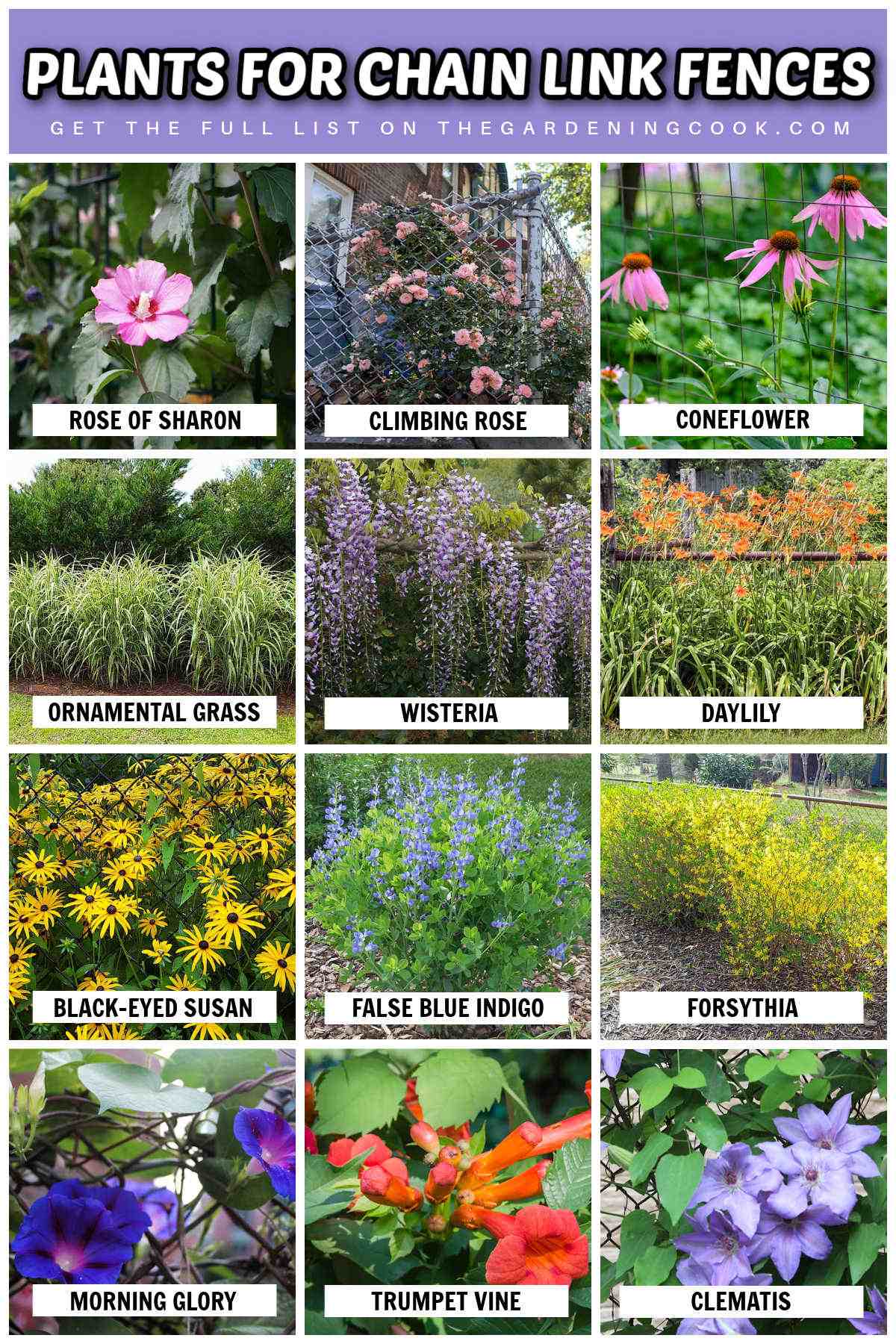
Turn that chain link fence into a beautiful garden feature 🌿✨Discover the best plants for privacy, color, and year-round interest—plus easy landscaping ideas to transform your fence line 🌸🌼#Gardening #Landscaping #GardenDesign… Share on XPin these tips for landscaping to hide a chain link fence
Would you like a reminder of these ideas to cover ugly fences? Pin this image to one of your gardening boards on Pinterest so that you can easily find it later.
Admin note: This article about how to hide a chain link fence with plants first appeared on the blog in August 2013. This post has been updated with new photos, more chain link fence landscaping ideas, and a slideshow video.
Landscaping Plants for a Chain Link Fence (Printable Guide)
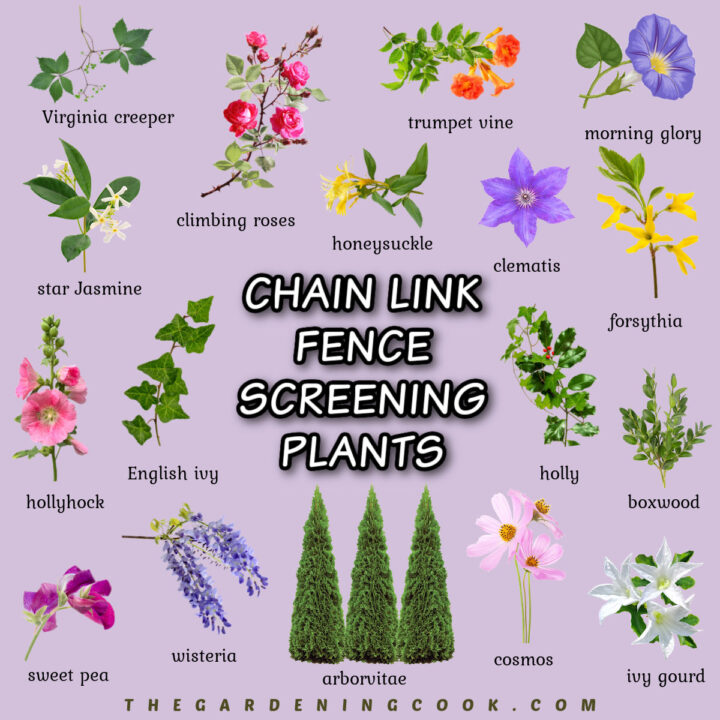
Plan your fence line with ease using this printable guide to the best plants for covering a chain link fence. Includes vines, shrubs, evergreens, and flowering plants with helpful details to choose the right options for your garden.
Materials
- Computer paper
Tools
- Computer
- Printer
Instructions
- Load your paper into your printer.
- Using the print function on this card will give you a fence screening plants printable that fills about ¾ of an 8.5 x 11-inch sheet of paper.
- Choose portrait layout and, if possible, "fit to page" (or 125%) in your settings.
- Prefer full-page printing? You can also print the guide as a high-resolution file using your browser’s print feature: (PDF) | (JPG).
- Please note that creating free printables takes a long time. This chain link fence plants guide is for personal use only. If you are sharing it (and thank you for that!), please link directly to this post, rather than to the actual image. We appreciate your help in supporting the site.
- This guide may not be used for any retail purpose or for mass distribution.
Notes
Recommended Products
As an Amazon Associate and member of other affiliate programs, I earn from qualifying purchases.
-
 Ornamental Grass, Silver Feather Grass, Outdoor Planting, Decorative Garden, 3 Root Divisions, Zones 4-9
 -
 Four Pack of Lynwood Gold Forsythia Bushes - Yellow Flowering Shrub - Live Plants Shipped 3 Feet Tall by DAS Farms
 -
 (4) - Emerald Green Arborvitae (Thuja) - Live Plant - (1 QT) (4 Live Plants) to hide chain link fences
Syed Munazim
Friday 20th of December 2024
Your post on "Landscaping Along a Chain Link Fence – Ideas for Hiding an Ugly Fence" is absolutely brilliant! Chain link fences can often be an eyesore, but your creative ideas, like using climbing plants and adding decorative panels, really transform them into beautiful, functional spaces. I especially loved the idea of incorporating trellises—it’s such an elegant solution!
Your post has given me some amazing inspiration for future projects. Thank you for putting together such practical and visually appealing ideas!
Looking forward to more of your incredible tips and gardening advice. 😊
Tricia
Thursday 19th of January 2023
Your article is great, but you've listed a load of invasives and no natives. Invasives turn our wildernesses into ecological wastelands when they spread, and most get there by escaping from our gardens. For the love of God, no bamboo, no exotic roses, and NO honeysuckle! I live in Arkansas and have given up on hiking or camping. What do I see? Honeysuckle, honeysuckle, honeysuckle--and not much else, because it's been smothered by honeysuckle. Might as well suggest kudzu. Or bamboo. Do some research and plant something that's good for our fellow creatures. Forsythia is lovely for 15 minutes but turns a muddy green for the rest of the season and offers nothing whatsoever to wildlife that natives could do better--not just shelter, but food.
And please, no nandina. Its berries are so full of cyanide that any hungry bird dies within a half hour of eating one.
Heather
Wednesday 1st of March 2023
@Tricia, can you please suggest plants (bushes, flowers, vines)that’s great cover for chain link fence and great for wildlife?!? That would help a lot and save me $$ thank you
Jackie
Sunday 3rd of January 2021
I am starting a similar project this spring. I love what you have done.
Bob
Tuesday 6th of August 2019
I like your tip about putting rose bushes in front of the chain-link fence. It might also be a good idea to put vines over the top. I'll have to consider getting plants to cover up my fence.
l
Monday 25th of March 2019
thank you looks great