
Mandevilla is a tropical flowering vine known for its large trumpet-shaped blooms and vigorous climbing habit. If you’re wondering how much sun it needs, whether it comes back each year, or how to keep it blooming, this guide covers the essentials of mandevilla care.
This plant thrives in warm, humid summer conditions and is commonly grown in containers or trained on trellises in home gardens.
Keep reading to learn how to grow and care for this beautiful plant.
Some of the links below are affiliate links. I earn a small commission, at no additional cost to you, if you purchase through an affiliate link.
What is a mandevilla?
Mandevilla (Mandevilla spp.) is a genus of flowering vines that are often seen in tropical or subtropical climates. The blooms are highly attractive to hummingbirds and butterflies.
The plant is native to North America, the West Indies, Central America, and South America.
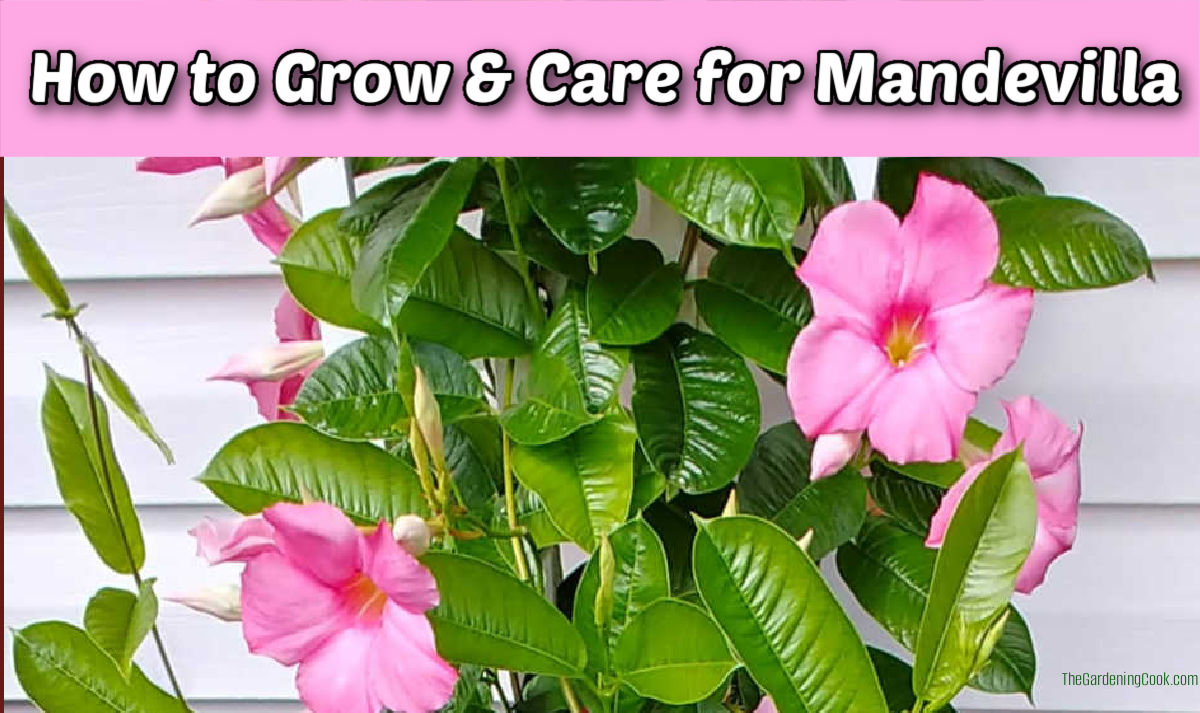
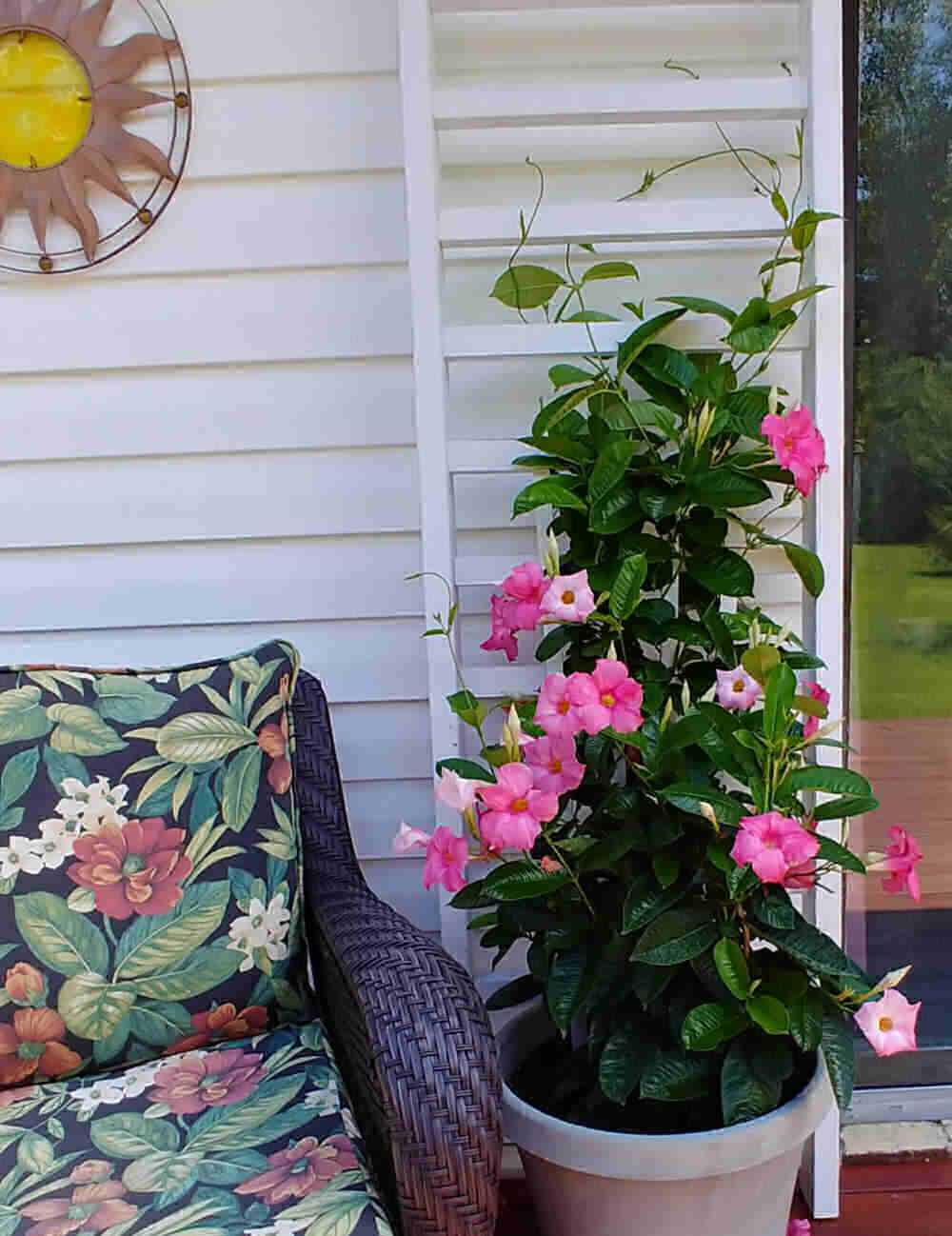
I grow Mandevilla in a large pot on my back patio. By mid-summer, it is covered in blooms!
Is Mandevilla a perennial?
In warm hardiness zones, mandevilla vines are grown as perennials. Those in colder climates can enjoy mandevilla as an annual if you plant it directly in the garden.
Mandevilla is only cold-hardy in USDA zones 9-11. In colder climates, you will need to practice mandevilla winter cane, which means bringing the plant indoors. For me, in zone 7b, this means growing mandevilla vine in pots.
This tropical plant will not tolerate temperatures that fall below 45 to 50°F. (7-10C).

Mandevilla care at a glance
Here is a quick overview for growing mandevilla.
- Common name: Mandevilla
- Botanical name: Mandevilla spp.
- Family: Apocynaceae
- Plant type: Tender perennial vining plant
- Sunlight needs: Full sun
- Soil requirements: Well-draining soil
- Watering needs: Consistent moisture
- Mature size: Can grow up to 2o long
- Bloom time: Late spring through summer
- Flower color: White, pink, red, and purple
- Humidity requirements: Likes high humidity
- Hardiness zones: USDA 9-11
Mandevilla care tips
Mandevilla vines are easy to grow as long as you give them lots of light, warmth, and moisture. These tips will help to make your experience with growing mandevilla vines a success.

Mandevilla soil requirements
It’s important that the soil you use drains well. Mandevilla does not like wet feet!
- Adding compost helps with drainage and also adds extra nutrients to the soil, which promote flowering.
- Fertilize with a balanced formula, slow-release fertilizer at planting time.
- Mandevilla enjoys a neutral soil pH of 7.
Growing mandevilla in pots is my favorite way to enjoy this plant. Be sure to choose the right size pot. The vine should have enough room for the roots to spread out a little.
I have my mandevilla vine in a container that is 16 inches wide and 16 inches tall. If the flowers are any indication, this size seems perfect for it!
Sun needs for mandevilla
Mandevilla blooms best when it receives plenty of direct sunlight. In my North Carolina garden, plants grown in full sun consistently produce more flowers than those placed in shadier locations.
- Mandevilla needs full sunlight to bloom well. This means at least 6 hours of direct sunlight every day.
- The plant will tolerate some shade and will even appreciate it as the hot days of summer arrive.
- One of the advantages of growing mandevilla vine in pots is that you can move the container to a shadier spot if the need arises.
- Mandevilla vines love warm temperatures and prefer high humidity. The temperature should be at least 60°F during the day and no lower than 50°F at night.
Watering requirements for the mandevilla vine

Mandevilla likes consistent moisture. I find that pushing my finger into the soil about an inch down tells me when it’s time to water. If the soil is dry there, I get out my hose.
- It works best if you allow the soil to be mainly damp but never let the plant sit with wet feet.
- Water well, but slowly, to allow the soil time to soak up the moisture.
- Spraying the foliage at watering time helps keep pests away and raises the humidity around the upper part of the plant.
Pruning mandevilla vine
The vines of mandevilla will grow all over the place if you allow them to. (My plant is trying to get around the corner and into the house right now!)
- To make the plant more bushy and keep those wandering vines from taking over, pinch back the stems in early spring.
- Even plants grown with a trellis can benefit from some regular pinching of the growing tips to keep the size manageable.
Mandevilla pests and diseases
Pests and diseases are not normally a problem for a mandevilla plant.
- Spraying the foliage with water at watering time is very helpful in keeping pests away.
- Keep a lookout for spider mites, scale, aphids, and whiteflies. Treat with insecticidal soap if you do find an infestation.
Does mandevilla climb?
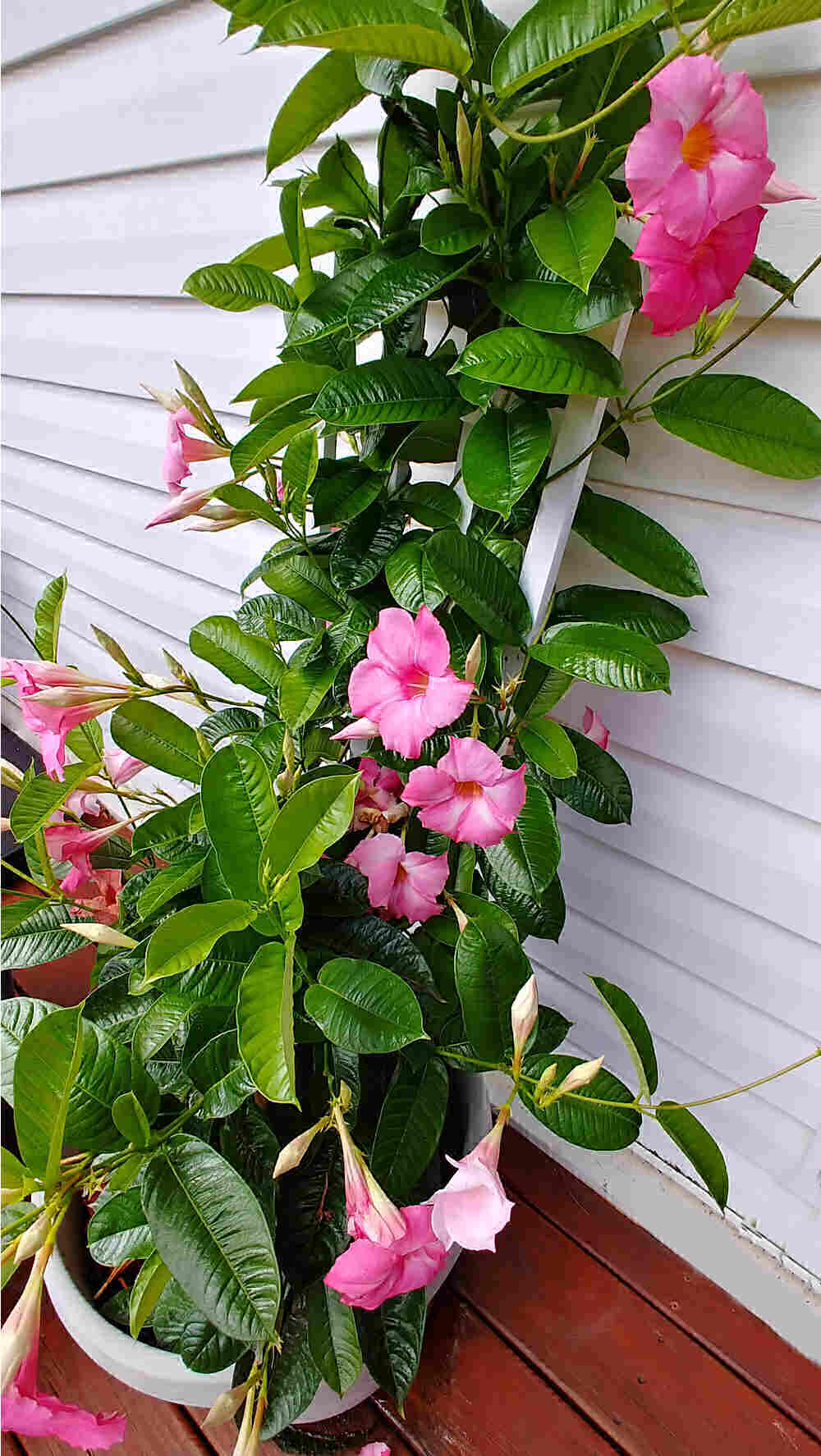
Since this is a vining type of plant, it will need some type of support for the vines to grow on. A trellis set into the pot behind the plant is ideal. However, make it a big one!
I grow my mandevilla vine on a five-foot trellis, and by early summer, the vines have already overtaken the trellis.
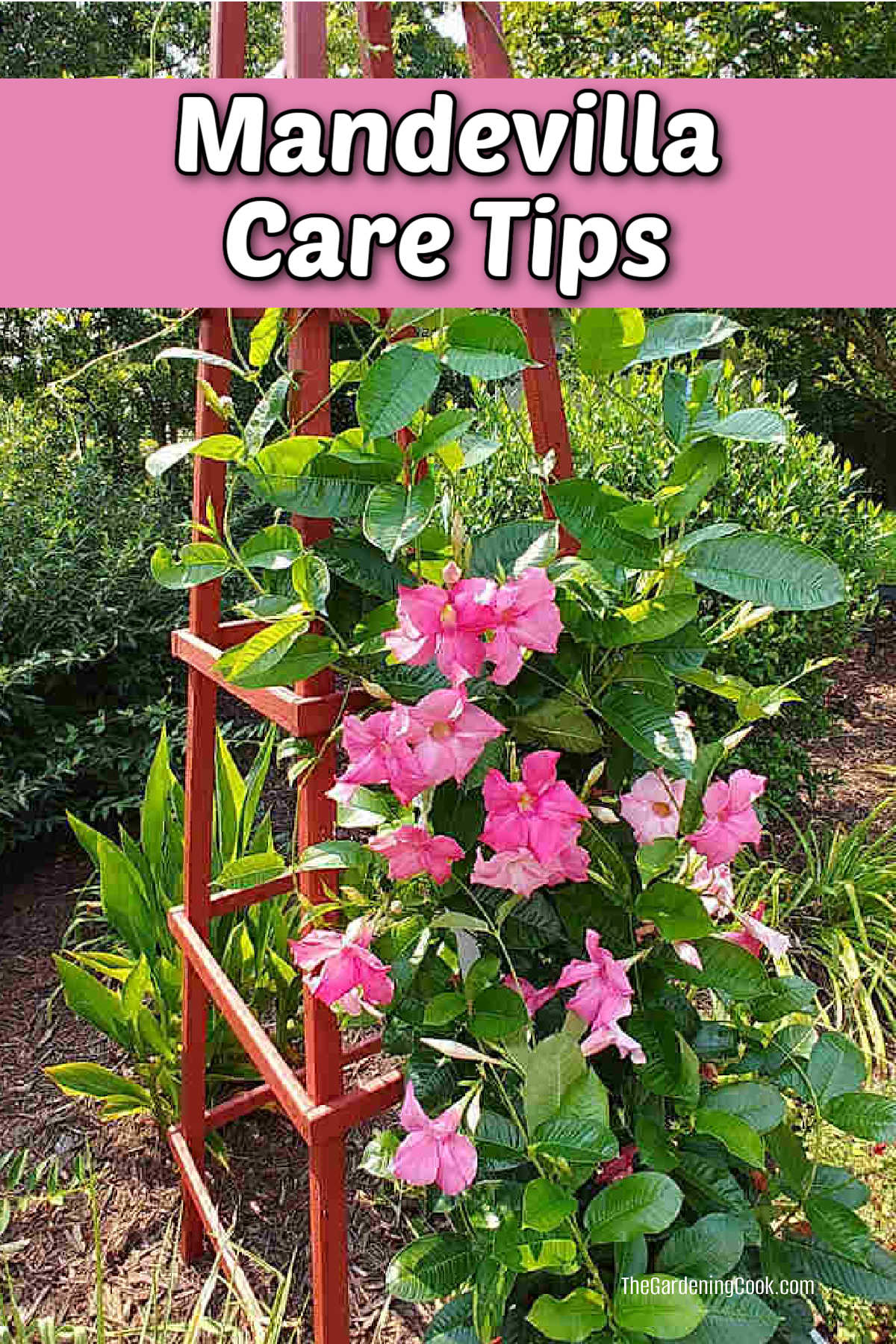
Another idea is to use a garden obelisk for the vines to climb on. I did this later in the summer, and it looks glorious now!

Mandevilla varieties

The Mandevilla genus has over 100 species. Some of the more popular types of mandevilla are:
- Mandevilla sanderi – also known as Brazilian jasmine. Fast-growing with showy pink-red blooms.
- Mandevilla laxa – has the nickname Chilean jasmine. Has highly scented white flowers.
- Mandevilla boliviensis – also called white mandevilla. Highly prized for its white blooms.
- Mandevilla splendens – lovely pink flowers that change to a deep rose color as they mature.
- Mandevilla Summer romance– a hybrid with double pink flowers that blooms most of the summer.
Mandevilla flowers and foliage
A mandevilla plant has trumpet-shaped, five-petal flowers that are fragrant and very showy. They come in lshades, from red, white, and purple to pink like my variety. Some flowers have yellow throats.
- The flowers bloom all summer, and often flower well into early fall.
- In the right conditions, mandevilla will flower right up to the first frost in the fall.
- In warm temperature hardiness zones, they can bloom year-round.
- The foliage of mandevilla is a glossy green color, and the leaves are large and deeply veined.

Mandevilla vines will grow up to 20 feet tall and just as wide in nature. Most container varieties can be managed to stay around the 3-5 feet tall size with consistent pruning.
A benefit of the trumpet-shaped flowers is that the mandevilla vine will attract hummingbirds and beneficial insects. Of all the varieties, Mandevilla laxa is considered a more deer-resistant variety.

Is the mandevilla vine poisonous to dogs?
The ASPCA doesn’t list mandevilla as a toxic plant for pets, and the flowers are not edible.
However, mandevilla belongs to the dogbane family, which also consists of members such as oleander and periwinkle, so it would be advisable to keep your pets away from mandevilla just in case.
Propagating mandevilla

You can get new plants for free by taking cuttings of mandevilla.
- Use sharp pruners to take stem cuttings of 4-6 inches long.
- If you are growing the plant as an annual, fall is a good time to take cuttings. You can grow them indoors until next spring.
- You can also propagate mandevilla from seed. Note that many mandevilla vines have been grown from hybrid seeds, so if you collect their seeds and plant them, the offspring may be different from the parent.
Where to purchase a mandevilla vine
Your local Farmer’s market is a good place to look. Big box hardware stores also stock it in early spring.
I found my mandevilla at a local nursery that also sells fruits and vegetables.
You can also find mandevilla online. Here are some places to look:
- Varieties of mandevilla on Etsy – Sellers there have many varieties, including my type of mandevilla and others.
- Find mandevilla on Amazon – Lots of colors and sellers here.
- Buy mandevilla on Garden Crossings – Good prices and nice variety.
Share this guide to mandevilla care on X
If you enjoyed learning how to grow and care for a mandevilla vine, why not share this post with a friend?
It's been a blooming year for my #mandevilla this season. Find out how to grow mandevilla vines to enjoy these blooms in your backyard. The Gardening Cook will show you how to grow her favorite flower! #flowers #prettyflowers 🌺🌺🌺 Share on XPin this post for growing mandevilla vine
Would you like a reminder of this post with mandevilla care tips? Just pin this image to one of your gardening boards on Pinterest so that you can easily find it later.
Admin note: This post for mandevilla first appeared on the blog in June of 2015. I have updated the post to add new photos, more information about growing mandevilla, and a video for you to enjoy.
How to Grow and Care for a Mandevilla Vine

Follow these simple Mandevilla care tips to grow healthy plants with vibrant blooms. Learn about sunlight, watering, soil, pruning, and support for climbing mandevilla vines.
Materials
- Mandevilla plant
- Slow release fertilizer
- Organic matter or compost
- 16 inch pot
- Trellis
Tools
- Watering can or hose
Instructions
- Add well draining soil to a 16 inch pot.
- Amend the soil with compost or other organic matter.
- Dig a hole and place the mandevilla plant in the pot.
- Water well and add slow release fertilizer.
- Choose a spot that gets at least 6 hours of sun a day
- Water regularly but don't allow the soil to be too wet.
- Spray the foliage at watering time to keep insect pests away and keep the humidity high.
- Add a trellis behind the plant for the vines to climb on.
- Pinch the growing tips to make the plant bushy.
- Flowers bloom from summer through to late fall.
- Only hardy in zones 9-11 USDA.
- In colder zones, treat as an annual or bring inside over the winter.
Notes
Mandevilla belongs to the dogbane family which also consists of members such as oleander and periwinkle, so it would be considered advisable to keep your pets away from mandevilla just in case of toxicity.
Recommended Products
As an Amazon Associate and member of other affiliate programs, I earn from qualifying purchases.
-
 Sandys Nursery Online Red & White Mandevilla Climbing Shrub, Stars & Stripes Flower, 3 Inch Pot
 -
 Costa Farms Live Mandevilla Outdoor Plants (4-Pack), Pink Flowering Vines in 1.5 Pint Pots, 12-14 Inches Tall
 -
 RED Mandevilla Dipladenia Tropical Vine Live Plant Brazilian Jasmine Starter Size 4 Inch Pot Emerald TM