
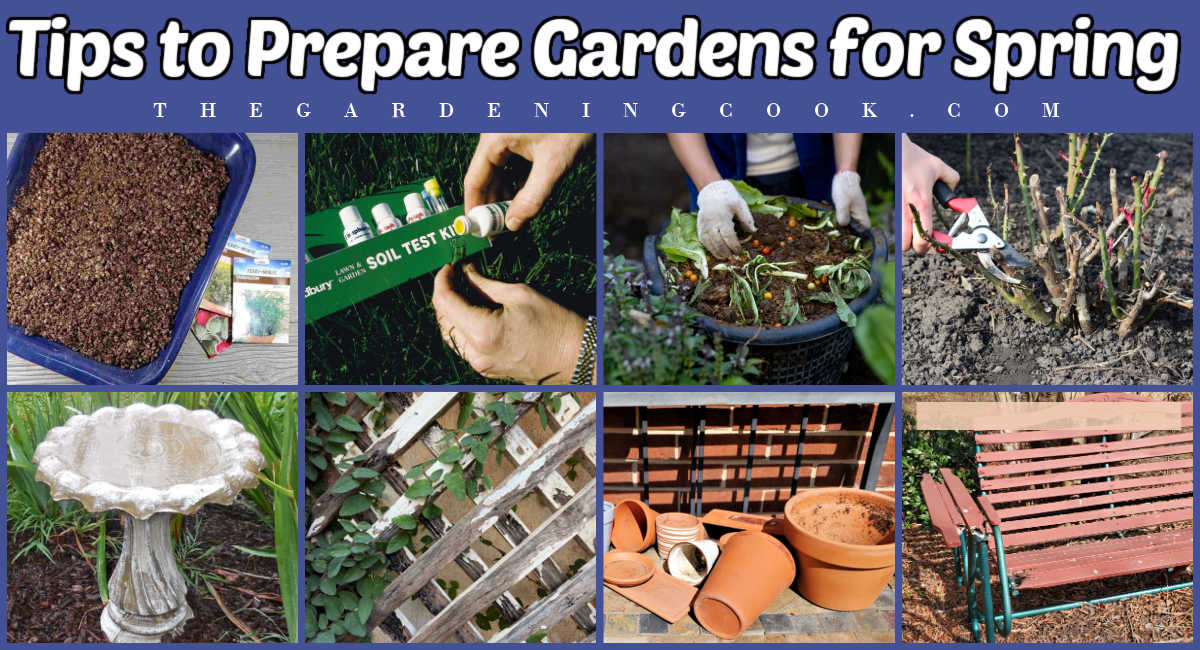
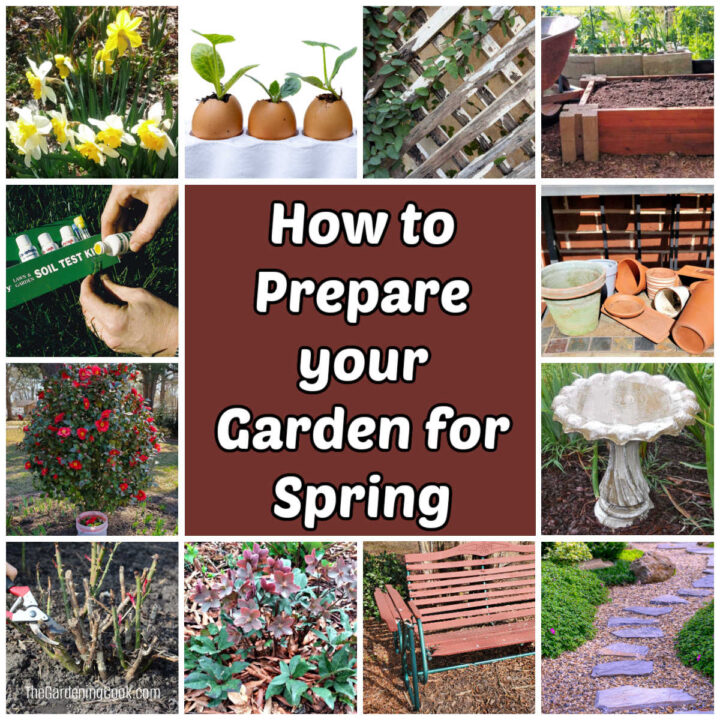
Spring is here! Let’s get ready by going through some tasks to prepare your garden for spring.
Winter is hard on your garden, and spring brings a host of things that need attention. The good news? After a winter of no gardening, they don’t seem like chores at all!
Whether you’re getting your vegetable garden ready for planting or tidying up your spring-blooming flowers, this spring garden checklist will guide you.
Keep reading for spring garden preparation tips that will have your garden thriving in no time!
Some of the links below are affiliate links. I earn a small commission, at no additional cost to you, if you purchase through an affiliate link.
When to prepare your garden for spring
Late winter or very early spring is the ideal time to start preparing your garden for the growing season. In warm regions, this could be February or March. In cold climates, the ground might not begin to thaw until April.
There are several steps you can take before you begin working directly with plants.
- As soon as the ground is no longer frozen, start cleaning winter debris, testing your soil, and adding compost.
- The USDA Plant Hardiness Zone Map estimates your last frost date and determines when outdoor planting can begin.
- Spring garden planting: Now is a good time to plan your garden if you’re considering any major changes for the upcoming season.
Tips for starting seeds in spring
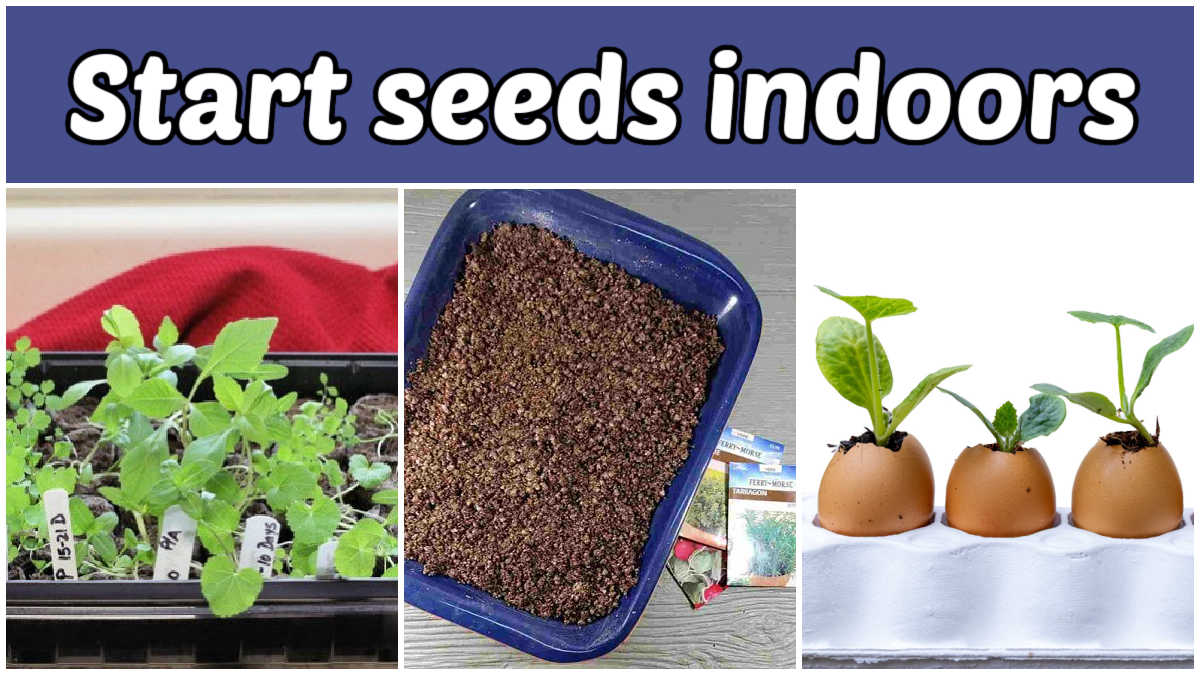
One of the best ways to save money on your garden is to start flowers and vegetables from seed. You’ll get dozens of plants for less than the price of one perennial!
- Start early. Plant flower and vegetable seeds indoors 6–12 weeks before your last expected frost.
- Make sure you have trays, peat pots, or small containers to start your seeds.
- This DIY seed-starting mix is the ideal medium for planting tender seeds.
Pro tip: There are lots of household items that can be recycled to start seeds indoors instead of using retail pots. Check out this list of creative seed starting containers.
Early garden inspection
Before you start planting, walk around your garden and inspect everything that may have been damaged over winter.
Another smart way to prepare garden for spring is to ensure that tools and garden structures are in good condition. You can repair or replace items before the busy growing season begins.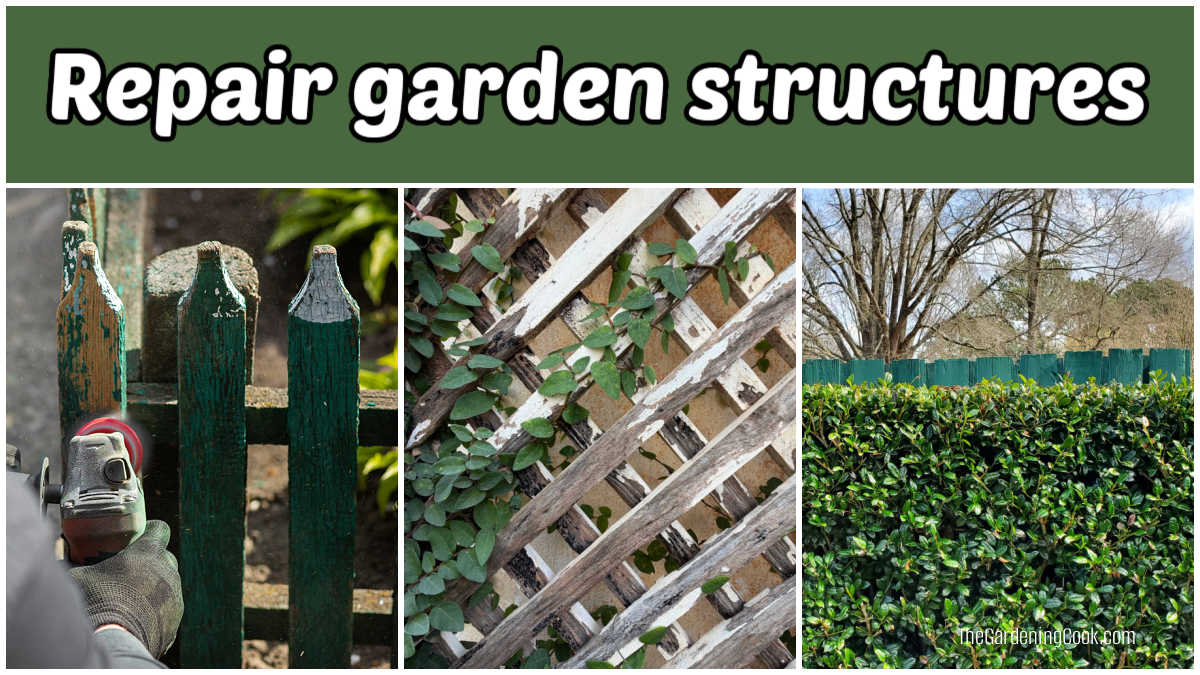
Check your fences and trellises
- Have they started to break or splinter from the moisture? Now is the time to mend them.
- If you plant vines or a hedge to cover a chain link fence, make sure they aren’t overtaking the fence.
- Prune hedges now, if the shrubs near them are ready.
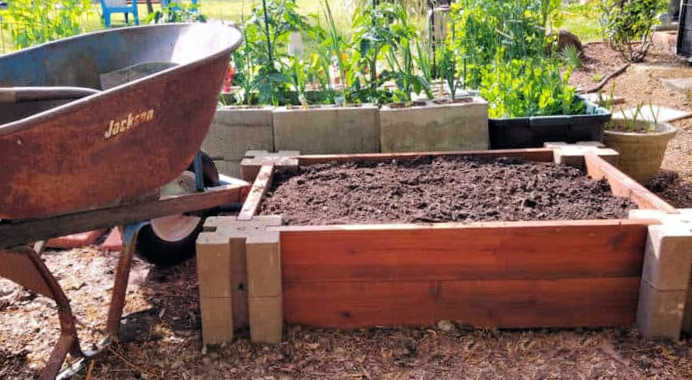
Look over your raised beds
- Check the sides. Are they bowing? Are the joints coming apart? If so, fix them now.
- Remove any winter crops that have finished and loosen the soil in your raised beds.
- Add compost to the soil to enrich it for the coming season.
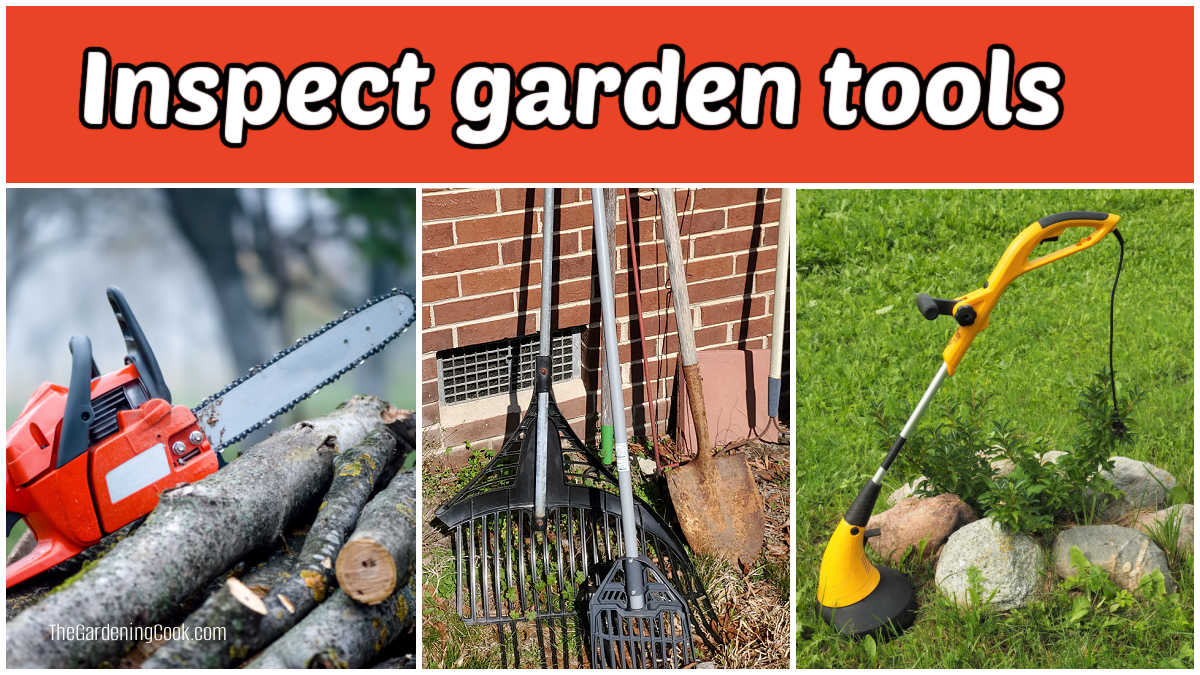
Inspect your garden tools
- Replace broken tools that can’t be repaired.
- Clean and inspect your power tools to make sure they are in working order.
- Check small hand tools for rust, and sharpen or replace any that are dull.
Pro tip: The Dollar store is a great place to buy inexpensive garden gloves and small hand tools. I got through these by the buckets once I start gardening.
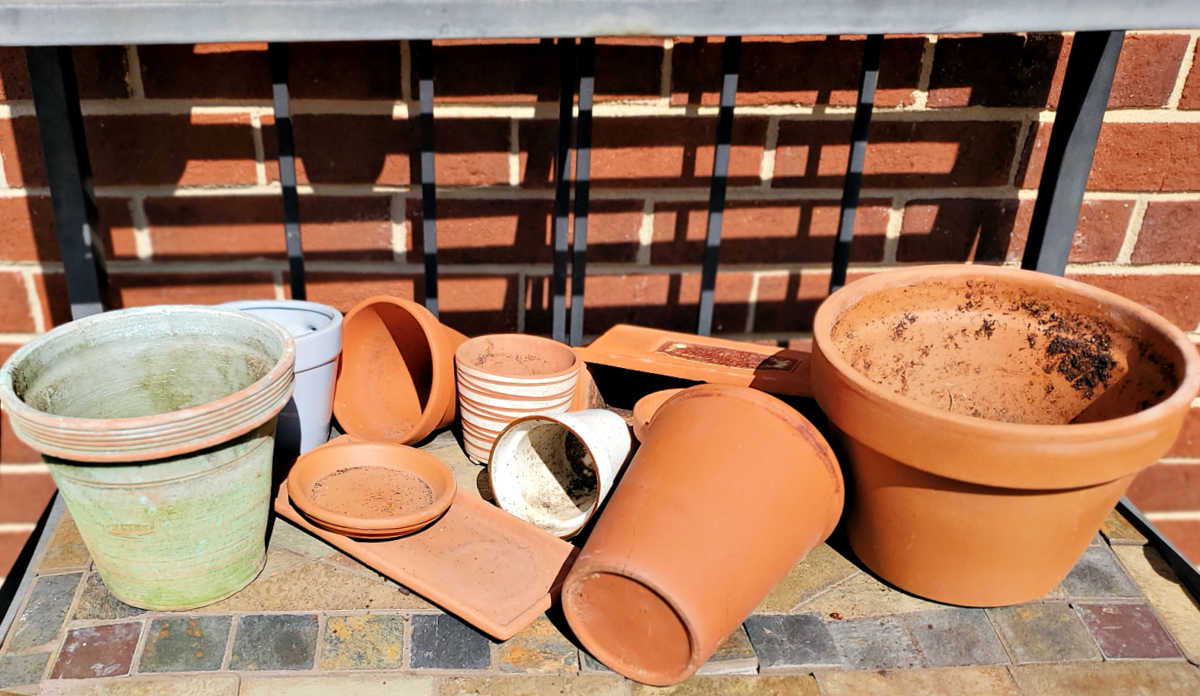
Take stock of your pots and planters
- Inspect clay pots for cracks.
- Replenish soil for new plantings.
- Discard any broken pots.
- Add fresh paint to ceramic pots that need this.
- Clean salt deposits on clay pots with baking soda and vinegar.
- Sanitize your potting table for the new season.

Check your bird houses and birdbaths
- Give your bird bath a thorough cleaning.
- Clean your birdhouses and replace the feed and bedding for the birds.
- Give your hummingbird feeder a good cleaning and make a stock of fresh hummingbird nectar.
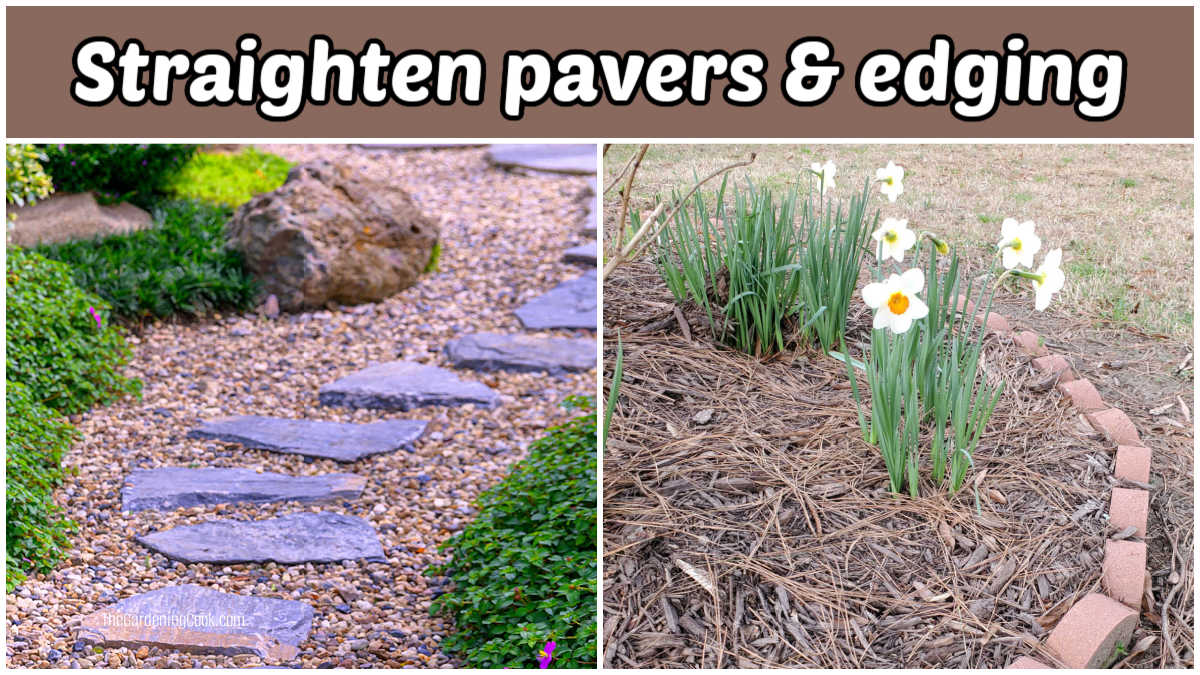
Straighten your pavers and edging
- Check your garden bed edging. Dig a new straight edge if your beds need it.
- Straighten any pavers that have become displaced over the winter months.
Pro tip: Taking care of this now means that the weeds won’t start growing into your beds when the lawns are growing. It’s also much easier to dig when the temperatures are cooler!
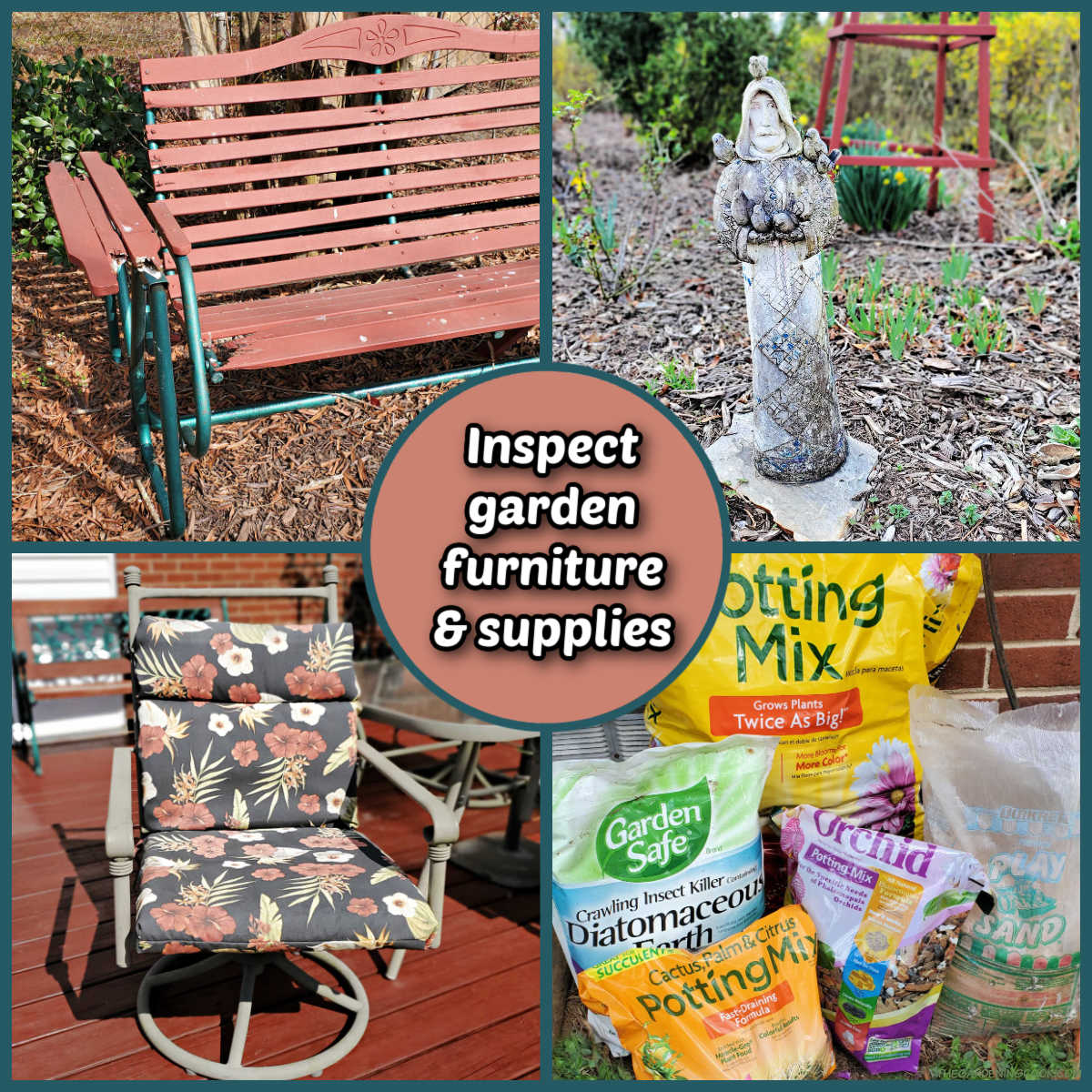
Inspect garden furniture and supplies
Start by checking the structures and supplies you rely on throughout the growing season.
- See if your patio chairs need new cushions. Snow and rain can damage them.
- Inspect your wooden obelisks and furniture to see if wood needs to be repaired.
- Power-wash garden statues and ornamental items.
- Check your potting soil and buy more if you’re running low.
- Replace fertilizer or make some DIY natural plant fertilizers.
- Check drip irrigation and soaker hoses.
An advantage of doing this now is that prices are lower than if you tend to these problems in mid-season!
Spring garden cleanup tasks
No matter how well you weeded last fall, there will still be debris in your garden beds in spring. Now is the time to remove it.

Remove debris from garden beds
- Clean around the top of perennials to remove last year’s dead growth.
- Remove winter mulch if needed.
- Prune dead branches.
- Remove any visible weeds.

Cut back ornamental grasses
Ornamental grasses are usually left intact for winter interest. They need to be tidied before new growth starts in spring.
- Cut these grasses down to about 3-6 inches from the ground.
- Use twine to tie the leaves of large plants together for easy trimming with hedge shears.
- New growth will cover the cut-off area over the next few weeks.
- Divide these plants every few years; they tend to get a dead area in the center.
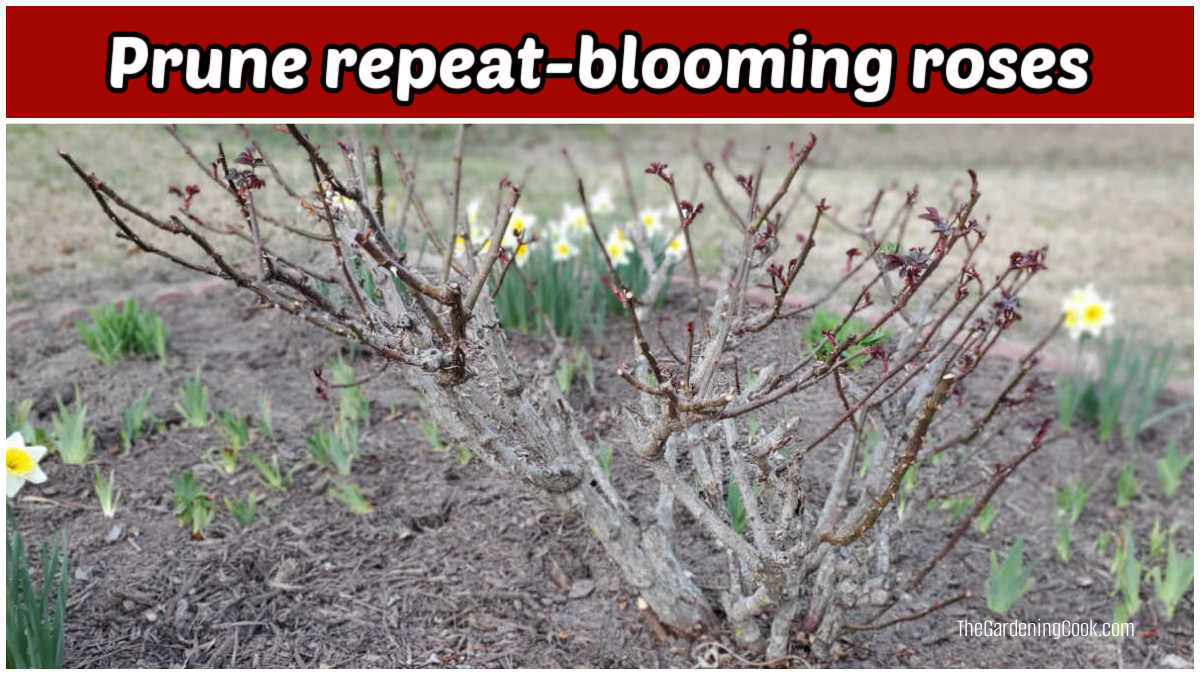
Prune repeat-blooming roses
- Spring is the time to prune repeat-blooming roses.
- Prune them when the buds are swelling before the leaves start to expand.
- Cut stems on an angle above the outward-facing buds.
- Remove dead stems and crossing stems.
Pro tip: Roses that only bloom once are pruned right after flowering, not late winter or early spring.

Prune shrubs and trees
Trees and shrubs that bloom on new wood need to be pruned in late winter or early spring. Some common ones are:
- Rose of Sharon
- Butterfly bush
- Smooth hydrangea
- Boxwood
- Holly
- Crape Myrtle

Divide perennials in early spring
Now is the time to divide overgrown perennials. You’ll get more plants for free, and they will be less stressed if you divide them now while it’s cooler.
- Any perennials that have overgrown their spots.
- Avoid dividing any plants that are currently blooming.
Pro tip: If you miss your chance at dividing perennials now, you’ll have another opportunity in fall before frost sets in!
Soil preparation & garden bed work
After tidying up the garden beds from winter debris, it’s time to have a look at your soil. Good soil is a necessity in any garden. Improving soil is one of the most important steps to prepare garden for spring planting.
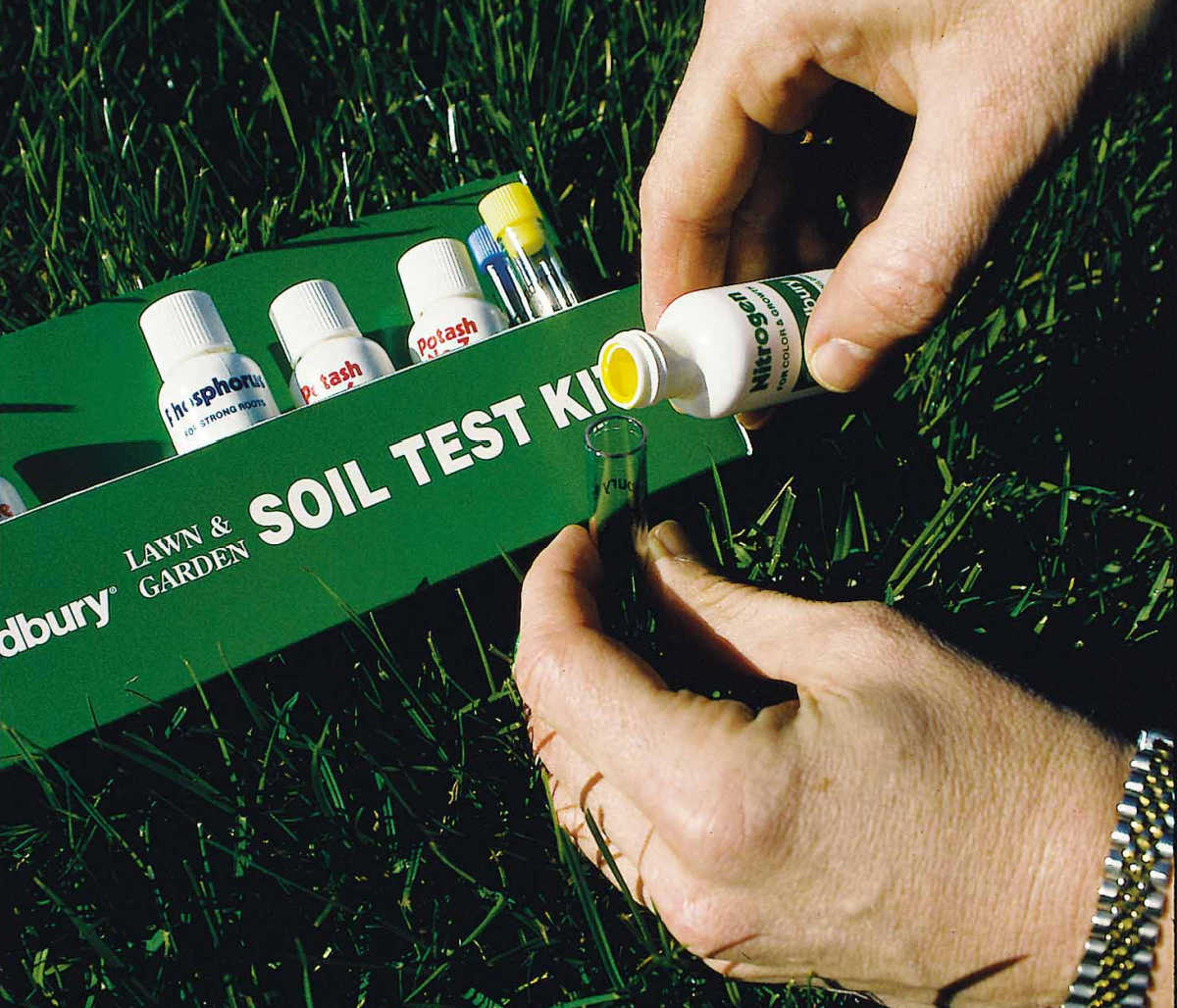
Test soil pH
Knowing the balance of nutrients in your soil and its pH is important. This gives you a gauge about whether you need to amend it.
- Test your soil using a test kit.
- Alternatively, you can contact your State Department of Agriculture. Many state departments will test your soil for free.
- If you have acid soil, add lime or wood ash to reduce acidity.
- If you have alkaline soil, add sulfur, iron sulfate, or organic matter such as compost to increase the acidity.

Make compost
Compost added to soil enriches it and helps it to drain well.
- If you don’t have a compost pile, a compost tumbler takes up little room.
- Add finished compost to your garden beds at planting time.
- You can also purchase compost online or at home and garden stores.

Vegetable garden prep for spring
A vegetable garden has a few extra tasks that you should do before you plant.
- Prepare your planting rows.
- Add compost and till it into the soil.
- Consider installing drip irrigation to make watering easier.
- Plan for crop rotation: This enhances soil health, increases yields, and breaks pest/disease cycles.
- Order seed labels if you will be planting seeds in the ground.
- Make sure you have stakes, cages, or trellises. Many vegetables need to be staked.
Pro tip: A handy bean teepee has supported my climbing beans for several years. See how to make this bean teepee here.
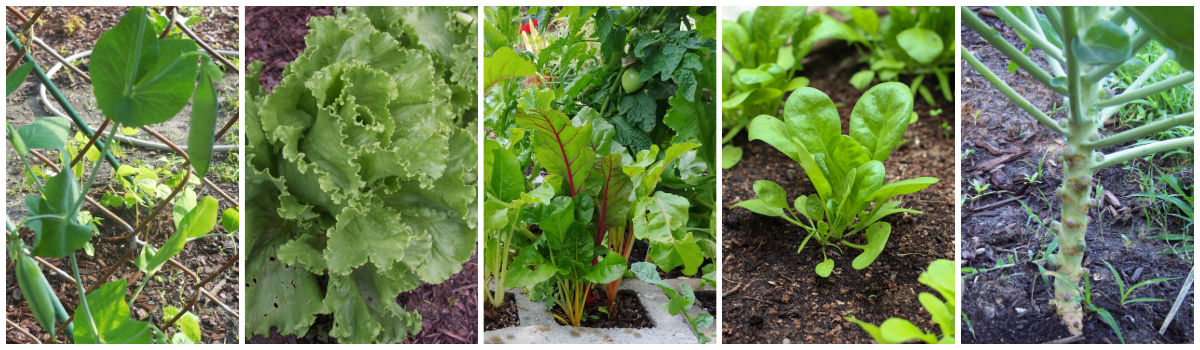
Cool-season vegetables to plant
Some vegetables love the cooler temperatures of early spring. Here are some to plant now:
- Peas
- Lettuce and other greens
- Swiss chard
- Spinach
- Brussels sprouts

What to plant in early spring
There are several flowers and bulbs that also do well in cool temperatures. Try growing these:
Pro tip: Figure out which plants will need staking as they grow and insert the stakes now. It’s much easier to put in a plant stake when you don’t have masses of growth later.

Lawn care in spring
Lawns need some TLC in spring, too. Here are a few tasks to consider:
- Gently rake: This prepares the lawn for new growth.
- Test the soil: Apply lime to acidic soil and sulfur to alkaline soil.
- Inspect for pests or diseases: Grubs, snow mold, and larvae can cause damage.
- Overseed: Apply extra grass seeds in bare patches.
- Aerate your lawn: Only necessary if your soil is compacted.
- Fertilize: Also add a pre-emergent herbicide to prevent weeds.
Get yourself a new garden tool
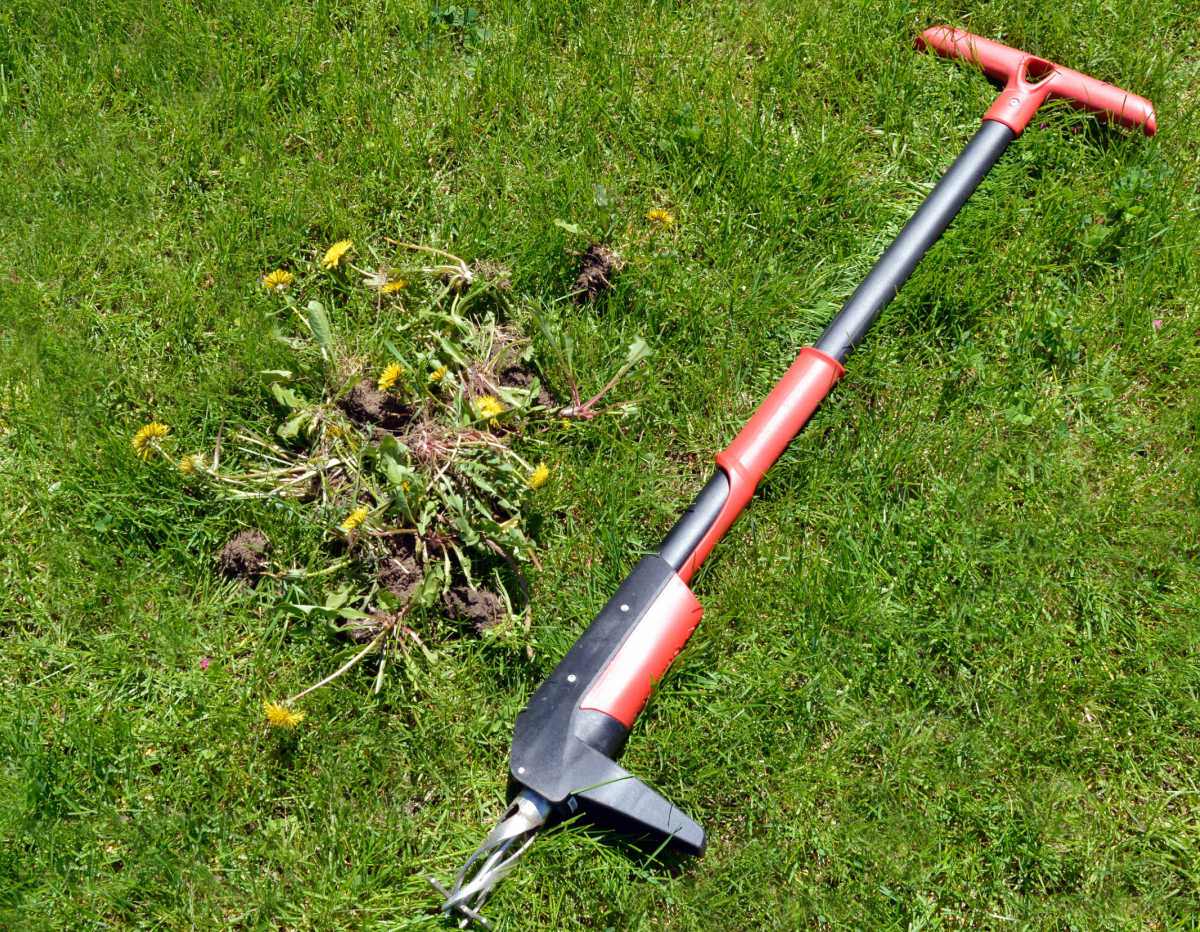
I saved this tip for last because it is the most fun. Treat yourself to a new garden tool each spring.
For me, this year, it’s a stand-up weed puller. What will your new tool be this year?
Spring gardening checklist (Printable)
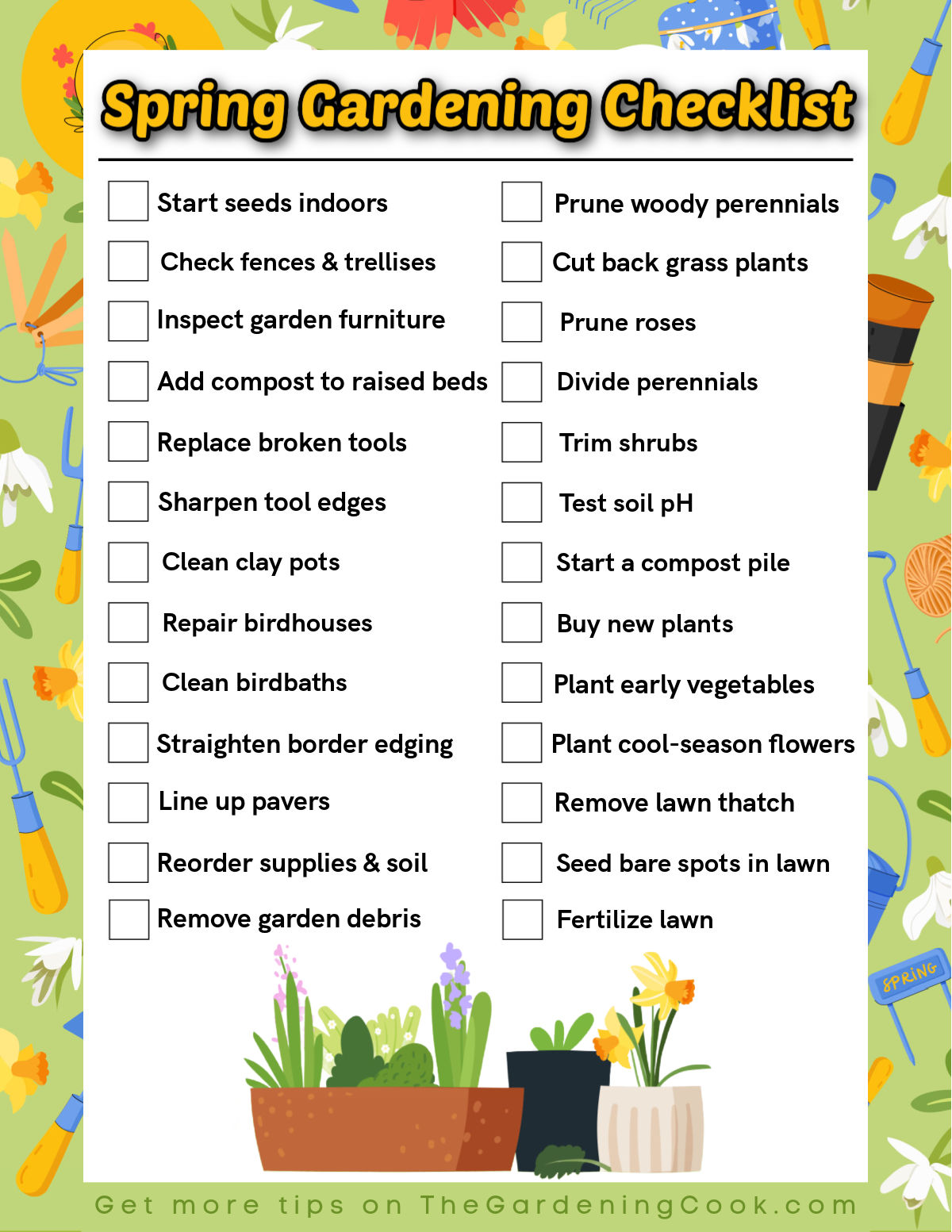
You can print this spring gardening checklist as a high-resolution JPG or PDF by using the links below.
Printing instructions:
- Select portrait orientation and “fit to page” on your printer settings for a full-page printout.
- You can also print a separate checklist with even more tasks in a simple text version from the project card at the bottom of this page. Scroll down to the card and press “print
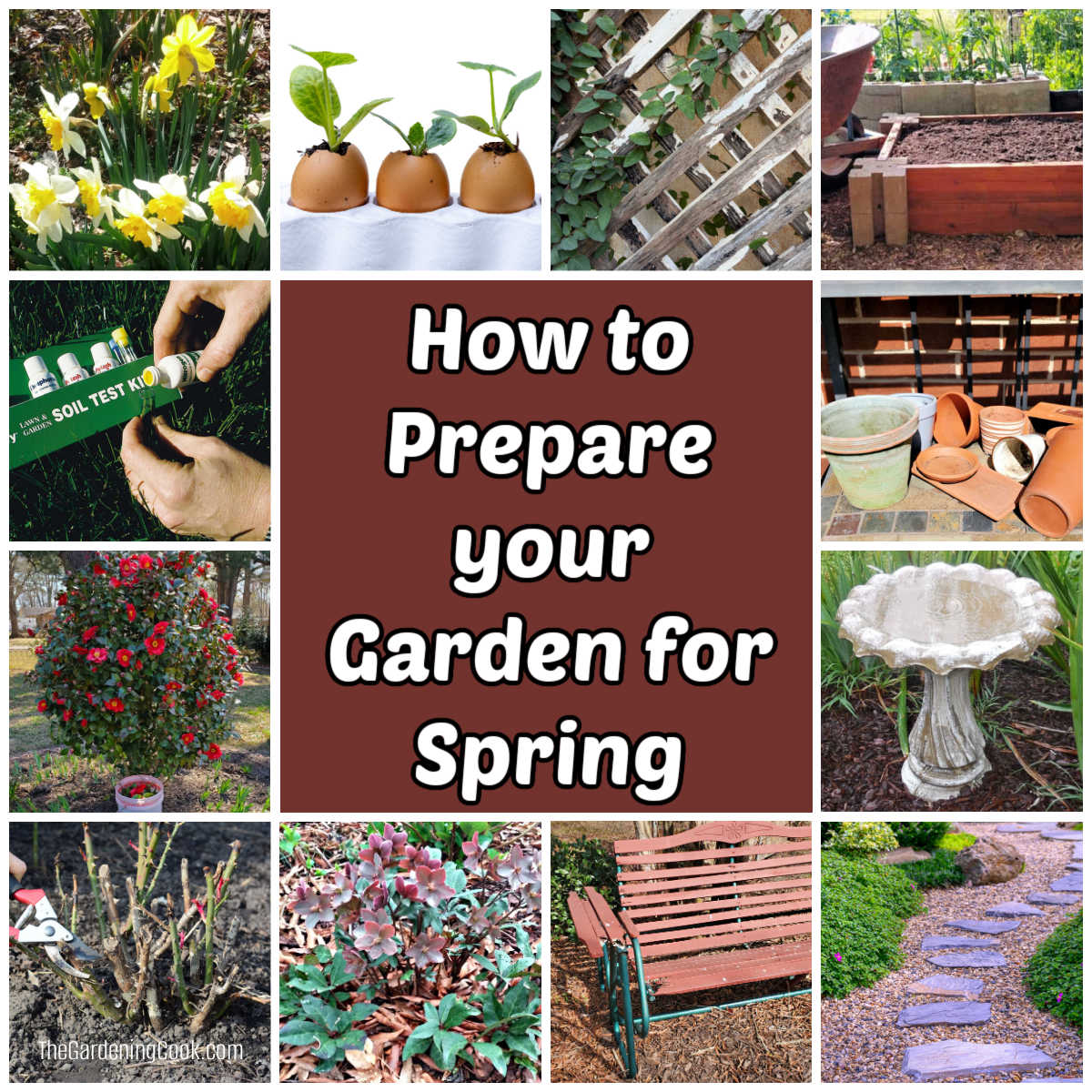
Share these tips for spring garden preparation on X
If you enjoyed learning how to get your garden ready for spring, why not share this guide with a friend?
🌱 Ready to wake up your garden after winter? These spring garden prep tips will help you clean up beds, improve soil, prune plants, and get everything ready for a healthy growing season. Grab a printable spring gardening checklist… Share on XPin these gardening tips for spring
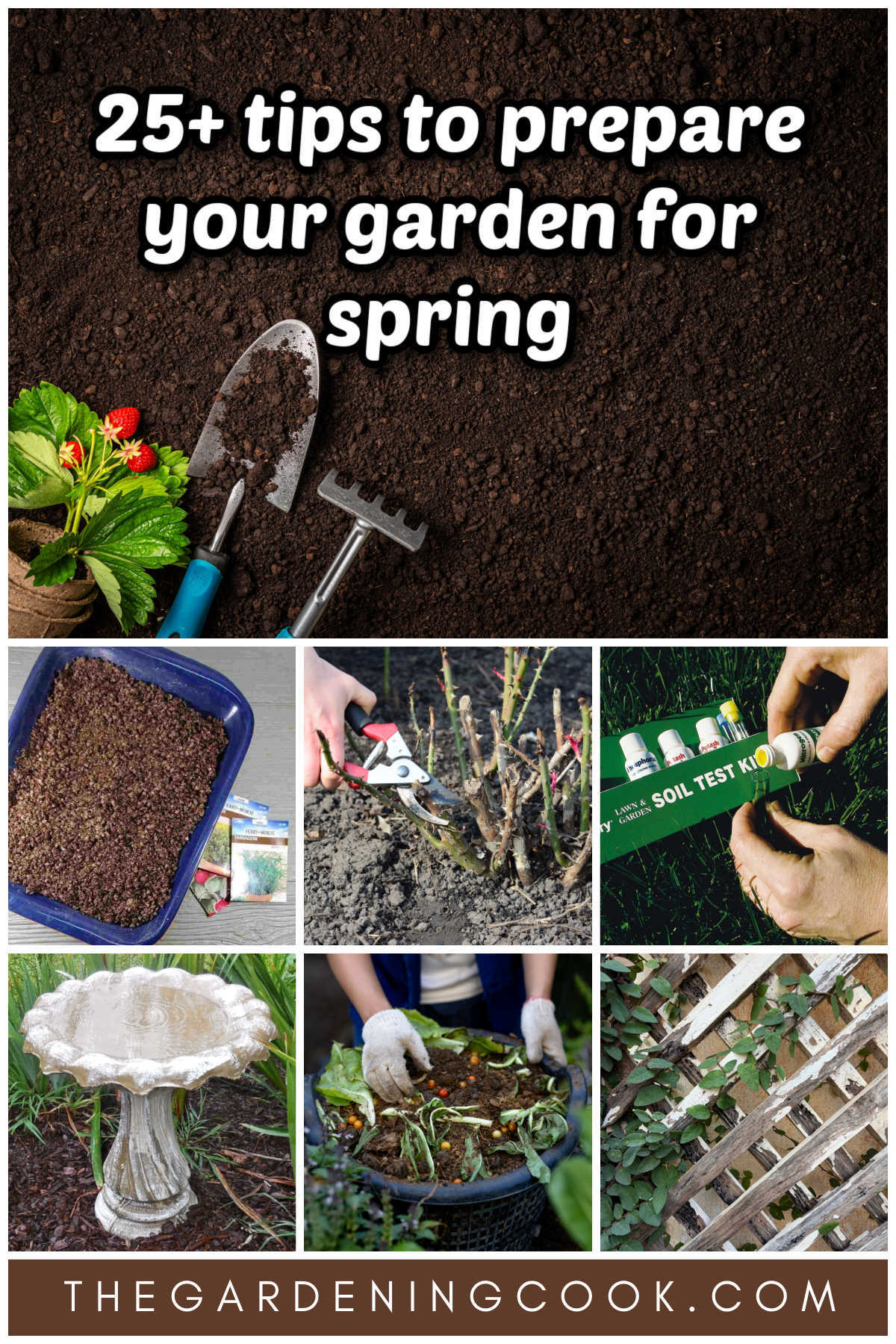
Would you like a reminder of these spring garden planning and preparation tips? Just pin this image to one of your gardening Boards on Pinterest so that you can easily find it later.
Admin note: Prepare garden for spring tips first appeared on the blog in March of 2015. I have updated the post with new information, new photos, a spring garden checklist printable, and a slideshow video featuring spring garden care for you to enjoy.
Spring Garden Preparation Checklist - (37 Tasks)
This prepare garden for spring checklist includes 37 practical tasks to help you get your garden ready for the growing season. The tips are organized by category so you can easily work through soil prep, planting, pruning, and garden maintenance.
Materials
- Computer paper
Tools
- Computer
- Printer
Instructions
To print so that it fills the paper, choose portrait layout and, if possible, "fit to page" (or 125%) in your settings.
GENERAL INSPECTION. LOOK OVER THESE ITEMS FOR DAMAGE
- ☐ Fences and trellises
- ☐ Raised garden beds
- ☐ Garden furniture
- ☐ Lawn edging
- ☐ Birdbaths and birdhouses
- ☐ Planters and pots
SPRING GARDEN PLANT CARE
- ☐ Remove winter weeds
- ☐ Clean up perennials
- ☐ Prune woody perennials
- ☐ Cut back grass plants
- ☐ Prune roses
- ☐ Prune trees and shrubs that need it
- ☐ Divide perennials
TOOL TIPS
- ☐ Inspect tools
- ☐ Sharpen edges
- ☐ Look over power tools
- ☐ Refill gas containers
- ☐ Purchases new tools if needed
GENERAL GARDEN TIPS FOR SPRING
- ☐ Add mulch
- ☐ Stake plants
- ☐ Divide perennials
SOIL TIPS:
- ☐ Inspect soil
- ☐ Test soil
- ☐ Check compost pile (or start a new pile)
- ☐ Fertilize plants or add compost to the soil
SPRING GARDEN PLANNING
- ☐ Buy new plants
- ☐ Think about growing native plants
- ☐ Dig new garden beds
- ☐ Order seeds
- ☐ Get seed containers ready
- ☐ Order plant labels
LAWN CARE IN SPRING:
- ☐ Rake and aerate lawns
- ☐ Repair patchy lawns with seed or sod.
- ☐ Edge lawns near garden beds
VEGETABLE GARDEN TIPS
- ☐ Get cold-hardy vegetables in early
- ☐ Plan crop rotation
- ☐ Add stakes for climbing vegetables
Notes
Three images in the collage below are used under Creative Commons licenses from Wikimedia Commons: wooden rake, compost heap, and Veratrum nigrum hosta.

Recommended Products
As an Amazon Associate and member of other affiliate programs, I earn from qualifying purchases.
-
 Scuddles 8-Piece Garden Tool Set with Bag, Stainless Steel Tools, Wooden Handles and Soft Poly-Cotton Gloves for Planting, Pruning and Home Gardening, Prepare garden for spring
 -
 Open Seed Vault |15,000 Heirloom Seeds | 32 Seed Types | Survival Seeds | 2026 Season | Non GMO Vegetable and Fruit Seeds | Planting Outdoor & Indoor Garden
 -
 200 Pack Plant Labels T-Shape, 4 Inch Potted Plant Name Tags Plastic, Seedlings Seed Markers Plant Stake Tag with Marking Pen for Outdoor Indoor Garden Patio Flower Vegetable
Mark
Wednesday 11th of August 2021
Thank you so much, that is wonderful advice.
Butler
Wednesday 23rd of September 2020
I have set up my garden using your method and I have even avoided lots of mistakes too and really help in setting up a beautiful garden
Robert Terry
Tuesday 1st of October 2019
Hey dear, Thanks a lot for sharing such great stuff on \\gardening tips. I have got some fantastic tips and ideas in your post. You have just noted an essential point, "Inspect your soil: To really get your garden ready for spring, start with the soil. One of the biggest mistakes that inexperienced gardeners make is to start planting and working the soil too early. " Most of the gardener does not know how to inspect soil properly. I do hope this post will be more useful for the new and old gardener.
Jane Anderson
Monday 27th of May 2019
Hello, this is such a pretty and unique way to get your garden ready for spring. This is something different work done by you. I appreciate it and also start to follow this. You are such a nice blogger. Thanks for sharing.
Jack
Friday 19th of April 2019
Great blog entry! Can't wait to start on my Spring garden. Glad to have found your blog while searching through tips for spring gardening. :)
Carol
Saturday 20th of April 2019
Welcome Jack. Glad you enjoy my blog.