
Cooking and baking without gluten doesn’t have to be difficult. With the right gluten substitutes, you can enjoy wheat-free versions of flour, pasta, sauces, and more without compromising flavor or texture.
Finding the right gluten substitute for baking can be tricky. Some flours affect texture, others change flavor, and not every replacement works 1:1. We’ll cover the best options for cakes, cookies, breads, and other baked goods to achieve consistently great results.
Gluten substitutes aren’t just for baking. From pasta alternatives to soy sauce replacements, thickening agents, and everyday meal ingredients, there are many ways to keep your meals wheat-free without compromising taste.
Below, you’ll find a quick-reference table of the top gluten substitutes, followed by detailed tips for baking, cooking, and kitchen swaps that make gluten-free cooking simple and reliable.
Some of the links below are affiliate links. I earn a small commission, at no additional cost to you, if you purchase through an affiliate link.
Best gluten substitutes at a glance
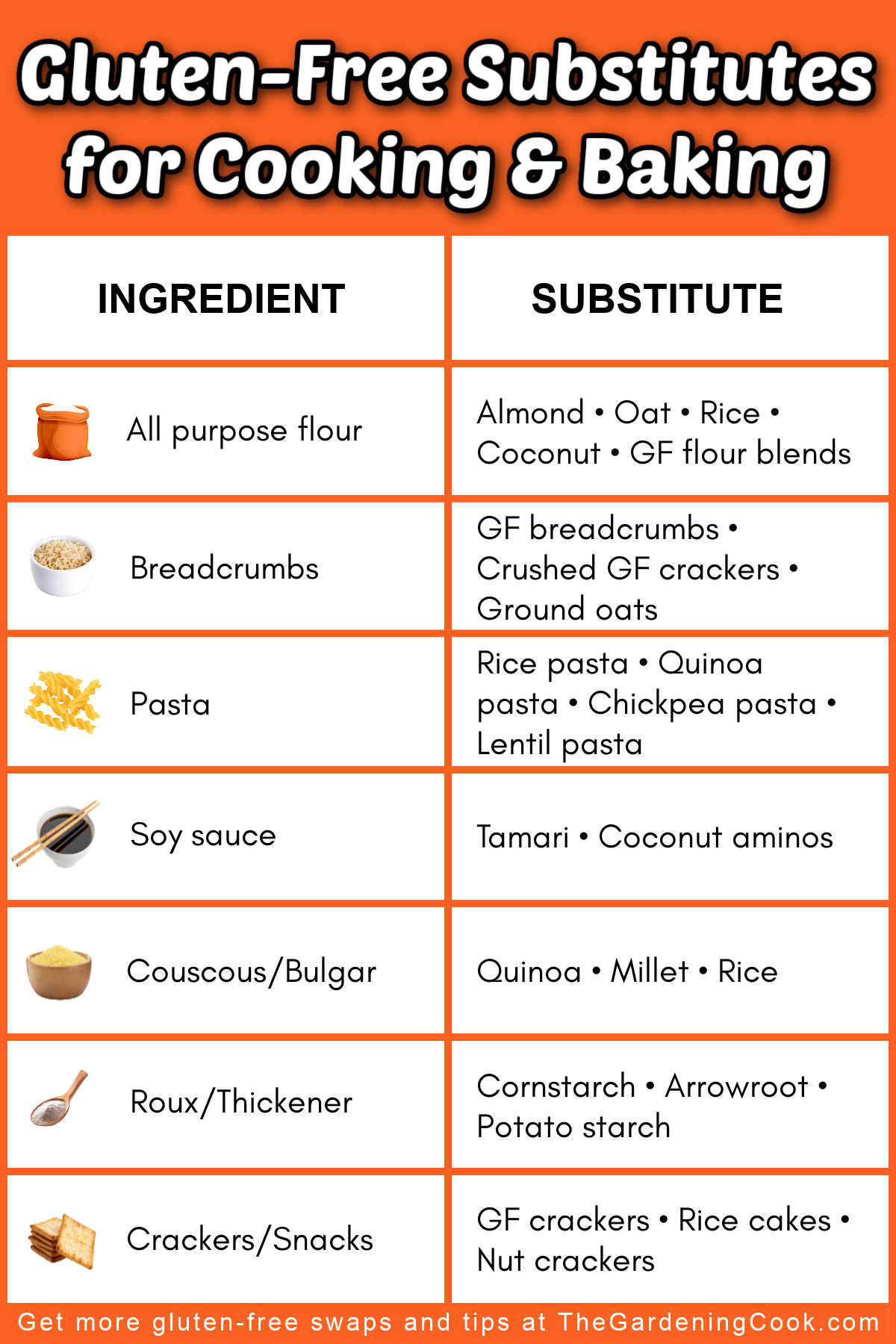
If you want to cook and bake without gluten, these substitutions make it simple and reliable. The quick-reference table below highlights the top swaps for flours, pasta, breadcrumbs, sauces, and more. You can print this graphic in the project card at the bottom of the post.
Start with the mobile-friendly summary below, then scroll down for the full guide with detailed notes and tips for each substitute.
Full list of gluten substitutes
Below is a complete list of ingredients and their best gluten substitutes, along with tips for baking, cooking, and everyday meals. Use this as your reference when swapping out wheat-based foods for gluten-free alternatives in any recipe.
All-purpose flour
- Substitutes: Almond flour • Oat flour • Rice flour • Coconut flour • Gluten-free flour blends
- Uses/Tips: Each flour behaves differently — coconut absorbs more liquid, rice is lighter.
Wheat flour
- Substitutes: Same as all-purpose flour
- Uses/Tips: Can combine flours for the best texture in baking.
Bread crumbs
- Substitutes: Gluten-free breadcrumbs • Crushed gluten-free crackers • Ground oats
- Uses/Tips: Works for coatings, meatloaf, or toppings.
Pasta
- Substitutes: Rice pasta • Quinoa pasta • Chickpea pasta • Lentil pasta
- Uses/Tips: Cook slightly less than the package instructions to avoid mushy pasta.
Soy sauce
- Substitutes: Tamari (gluten-free) • Coconut aminos • Liquid aminos
- Uses/Tips: Tamari is closest to traditional flavor.
Couscous
- Substitutes: Quinoa • Millet • Rice
- Uses/Tips: Use the same cooking ratios as couscous; adjust the liquid if needed.
Bulgur wheat
- Substitutes: Quinoa • Buckwheat groats • Rice
- Uses/Tips: Texture may vary slightly; flavor is neutral.
Roux/thickener
- Substitutes: Cornstarch • Arrowroot • Potato starch
- Uses / Tips: Mix with cold liquid before adding to hot dishes to prevent lumps.
Barley
- Substitutes: Gluten-free oats • Buckwheat • Rice
- Uses/Tips: Works well in soups and salads.
Crackers/snacks
- Substitutes: Gluten-free crackers • Rice cakes • Nut crackers
- Uses / Tips: Useful for toppings or snacking.
Gluten substitutes for baking
Baking without gluten is more than just swapping one ingredient for another. Gluten provides structure, elasticity, and moisture retention to recipes.
For this reason, the best gluten substitutes depend on what you plan to bake and how the ingredients interact with each other. Understanding which flours work best and when a 1:1 swap is realistic helps to get consistent results.
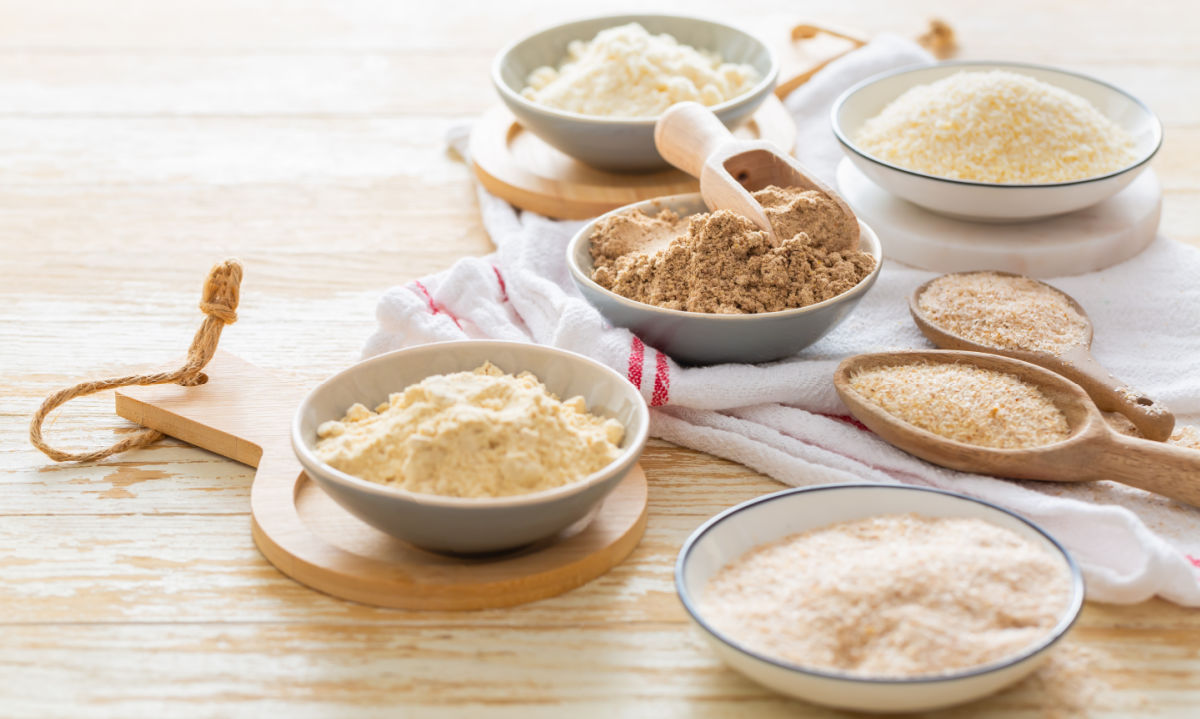
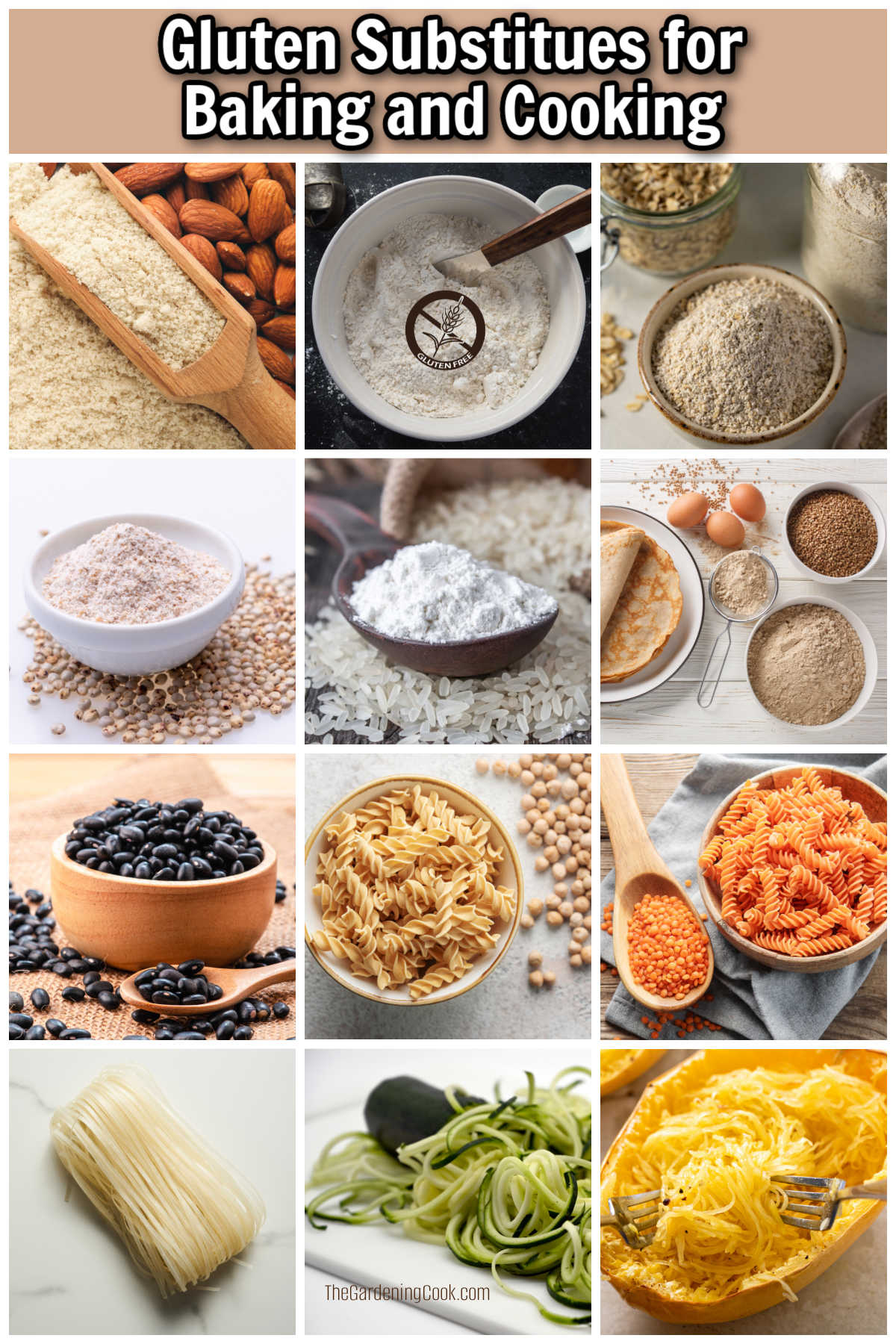
Here are the most common gluten substitutes for baking:
Gluten-free flour substitutes
Flour is one of the most challenging ingredients to replace when baking without gluten. Wheat flour provides structure and elasticity, so gluten-free flours behave differently depending on the recipe and the type of flour used.
Almond flour
A dense, moist flour that works well in brownies, cakes, and quick breads. It adds richness but can make baked goods heavier if used on its own.
Rice flour
Light in texture and mild in flavor. Often combined with other gluten-free flours to improve structure and prevent grittiness.
Oat flour (certified gluten-free)
Softens baked goods and adds a mild, slightly sweet flavor. Ideal for cookies, muffins, and snack cakes.
Gluten-free flour blends
The most reliable option for baking. These blends are designed to mimic wheat flour and often work as a 1:1 substitute in many recipes.
Here is a recipe card for a gluten-free flour, combining rice flour, tapioca starch, and potato starch.

Baking tip:
Gluten-free flour blends are the closest option to a 1:1 replacement, but single flours usually perform best when combined. Texture, moisture, and binding can vary significantly between flours.
Flour for brownies
As odd as it sounds, try using a can of black beans in your gluten-free brownie recipe. It is an easy way to avoid gluten and give yourself a dose of protein at the same time. And they taste great too. Try it!

Alternatives to wheat flour
Some baked goods work best with less common gluten-free flours, either alone or in combination with other flours. These flours aren’t always 1:1 swaps, so it helps to know how they behave.
When wheat flour is the ingredient being replaced, these options provide structure and flavor without gluten.
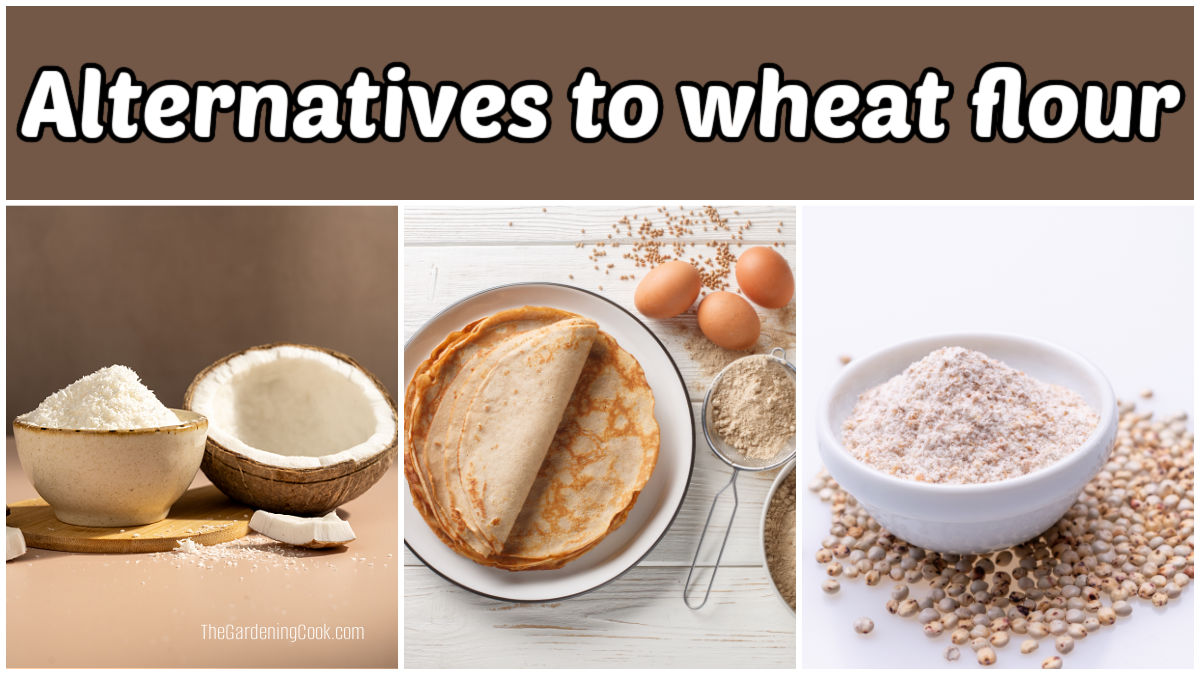
Coconut flour
This flour absorbs a lot of moisture, so recipes may need extra eggs or liquid. It adds a subtle coconut flavor and works well in cakes, muffins, and quick breads.
Buckwheat flour
Despite the name, buckwheat is gluten-free. It has a strong, nutty flavor and works well in pancakes, waffles, and breads. It is best combined with lighter flours to avoid dense textures.
Sorghum flour
This flour has a mild flavor, is slightly sweet, with a fine texture. Works well in combination with other flours for cookies, muffins, and cakes. Can replace part of wheat flour in a recipe to improve structure.
Baking tip:
These flours are often best combined with other gluten-free flours or blends to balance flavor, texture, and moisture. Coconut, buckwheat, or sorghum rarely work well alone for traditional baked goods.
For best results, follow recipes designed specifically for gluten-free baking or use blends that include binders like xanthan gum or psyllium husk.
Gluten substitutes for cooking
Cooking without gluten is simpler than baking, but it still helps to know which ingredients can replace wheat and other gluten-containing products. The right substitutes keep your sauces, soups, pasta, and everyday meals tasting great without compromising texture or flavor.
Here are some common gluten substitutes for cooking:
Gluten-free pasta alternatives
Pasta is a staple, but wheat-based noodles aren’t your only option. These gluten-free choices are versatile and easy to cook:
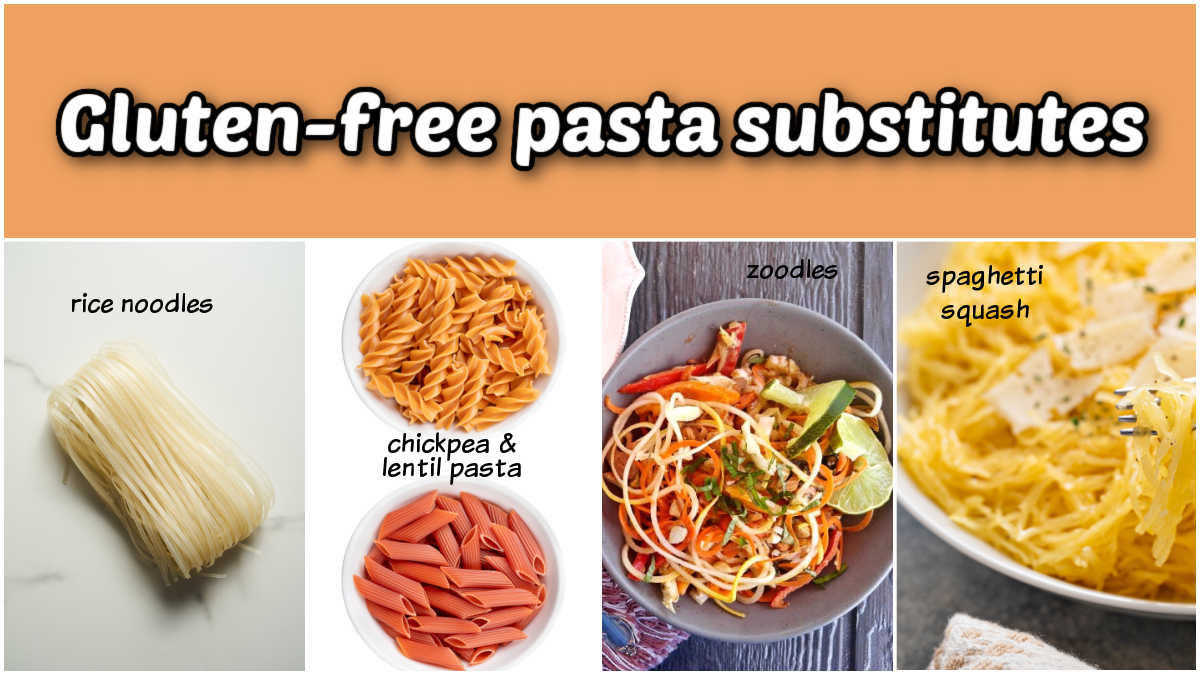
Rice pasta
Mild in flavor and widely available. Cook slightly less than the package directions to prevent mushy noodles.
Chickpea pasta
Adds protein and fiber. Works well in baked pasta dishes and salads.
Lentil pasta
Earthy flavor and firm texture. Great for hearty sauces.
Zoodles/vegetable swaps
Zucchini, carrots, and sweet potatoes make low-carb, gluten-free noodle alternatives.
Spaghetti squash
When roasted or microwaved, the flesh separates into noodle-like strands. Works well with tomato sauce, pesto, or baked pasta dishes. Adds mild flavor and extra nutrients.
Gluten-free soy sauce substitute
Many soy sauces contain wheat, but there are excellent alternatives that mimic its salty, umami flavor:
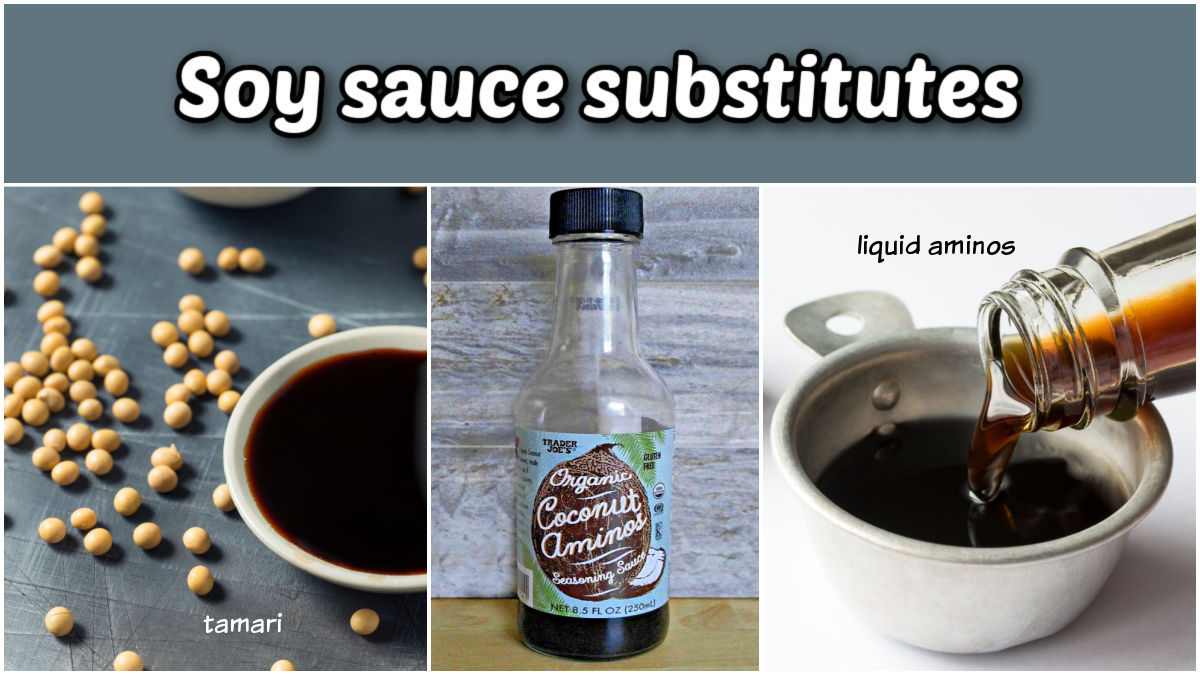
Tamari (gluten-free)
Closest in taste to traditional soy sauce.
Coconut aminos
Slightly sweeter, lower in sodium, soy-free.
Liquid aminos
Made from soy or coconut. Mild flavor, works in marinades and stir-fries. Check labels—soy-based products may contain gluten.
Gluten-free substitutes for thickening and breading
Thickening sauces, gravies, and soups can be tricky without gluten. The right substitute ensures your dishes have the perfect sauce without compromising flavor.
Use these substitutes to thicken sauces, gravy, and soups:
- Cornstarch – Mix with cold liquid before adding to hot dishes to prevent lumps; works well for clear sauces.
- Arrowroot – Neutral flavor, glossy finish; ideal for fruit sauces or stir-fries.
- Tapioca starch – Adds shine and thickens quickly; great for gravies and pie fillings.
Croutons, breadcrumb & coating substitutes
Breading ingredients in recipes are difficult if you can’t have gluten. Here are some breading substitutes that will giveyour recipes a crispy coating and nice texture.

- Gluten-free breadcrumbs – Works in meatloaf, coatings, and toppings.
- Crushed nuts – Almonds, pecans, or walnuts add crunch and flavor. Almond meal makes a particularly nice coating for chicken and other proteins.
- Gluten-free crackers – Great for breading chicken, fish, or as crunchy toppings.
- Nuts – Add larger nuts, such as Brazil nuts, almonds, walnuts, or pecans to your salad to mimic the crunch of croutons. You won’t miss the croutons at all and will get a boost of heart-healthy oils.

Looking for more ingredient swaps? Check out our guide to 100 cooking replacements — there is a whole section of gluten-free replacements in the post!
Wheat-free substitutes (When gluten isn’t the only issue)
Some people avoid wheat entirely, not just gluten. Wheat contains gluten, but gluten-free diets also allow barley, rye, and other grains, so it can help to clarify which ingredients are truly wheat-free.
Here are some common wheat-free options you can use in everyday cooking:
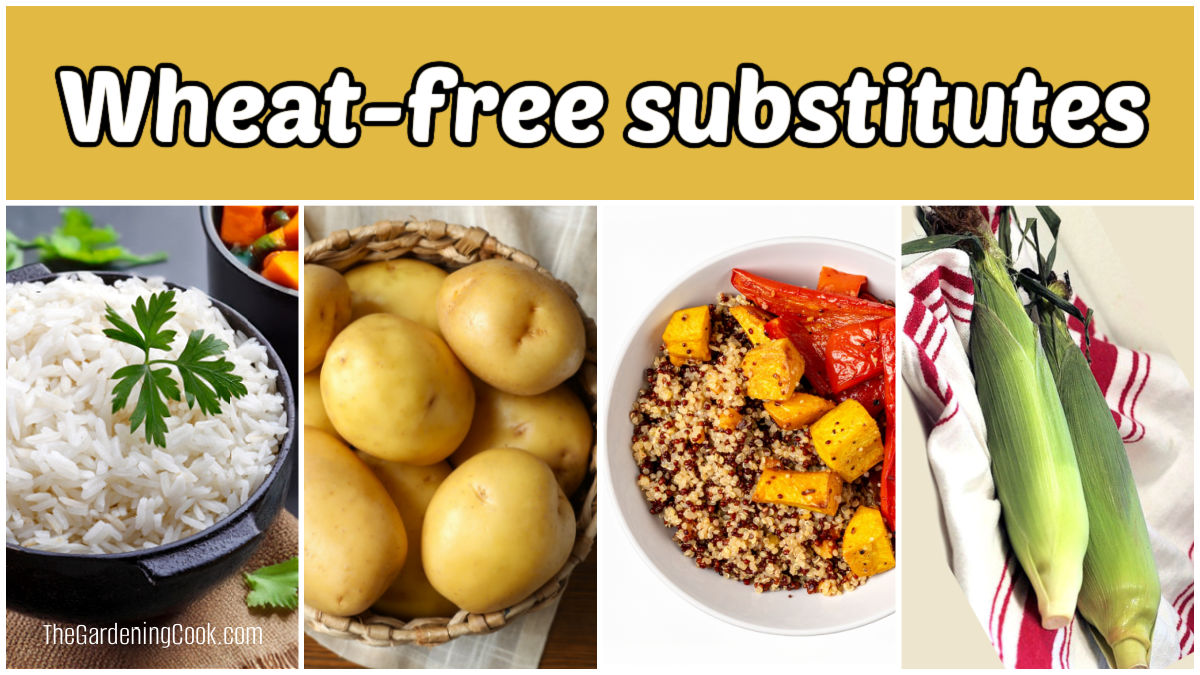
Rice
A versatile staple for side dishes, stir-fries, and baking. Works well as a base for stuffed peppers or grain bowls.
Quinoa
Light and protein-packed, quinoa is perfect for stuffed mushrooms, soups, or as a pasta alternative.
Potatoes
Great for mashing, roasting, or thickening soups and stews. Naturally wheat-free and easy to cook.
Corn
Cornmeal, polenta, and corn tortillas are excellent wheat-free alternatives for baking and cooking.
- Lettuce wraps – Instead of loading up on a carb-filled tortilla for your favorite tacos, scoop the fillings into rolled-up lettuce leaves. Cos or Romaine lettuce works well for these. They can be rolled up!

Tip: Most wheat-free ingredients can be substituted 1:1 in recipes that don’t rely on gluten for structure. For baked goods, a blend of wheat-free flours is usually needed for the best texture.
Common gluten substitution mistakes
Avoiding gluten doesn’t have to be frustrating—just keep these common pitfalls in mind:
- Assuming all gluten-free flours are 1:1 🥄
Different flours behave differently—some absorb more liquid, others change texture. - Skipping binders in baking 🥚
Gluten-free baked goods often need eggs, flax eggs, or xanthan gum to hold together. - Over-thickening with starches 🥣
Cornstarch, arrowroot, and tapioca can quickly make sauces or soups gummy if added in too large amounts. Mix with cold liquid first. - Ignoring flavor changes 🌿
Some gluten substitutes can alter flavor or sweetness. Taste as you go and adjust seasoning to keep recipes balanced.
Quick tips for gluten-free baking and cooking
- 🥣 Flour blends work best – Single gluten-free flours rarely mimic wheat on their own; combine flours for the best texture.
- ⚖️ 1:1 swaps aren’t universal – Almond, coconut, and oat flours behave differently depending on the recipe.
- 🍝 Pasta alternatives – Rice, chickpea, lentil, or zucchini noodles work, but adjust cooking times to avoid mushy noodles.
- 🥢 Soy sauce swaps – Tamari is closest to traditional soy sauce; coconut aminos are slightly sweeter and lighter in color.
- 🥄 Thickening agents – Cornstarch, arrowroot, or tapioca starch work for sauces, gravies, and soups; mix with cold liquid first.
- 🍞 Breadcrumb alternatives – Gluten-free breadcrumbs, crushed nuts, or crackers make great coatings and toppings.
Share this gluten-free substitutes guide on X
If you enjoyed learning what to swap for gluten, why not share this guide with a friend?
Cooking or baking without gluten? 🍞🚫This guide breaks down the best gluten substitutes for flour, pasta, breading, sauces & more — with real tips that actually work in recipes.👉 Get the recipe on The Gardening… Share on XPin these gluten-free substitutes for baking, cooking, and more!
Would you like a reminder of this guide to gluten alternatives? Pin this image to one of your healthy cooking boards on Pinterest so that you can easily find it later.
You can also watch this YouTube slideshow video about the best gluten substitutes!
Admin note: This article about alternatives to gluten first appeared on the blog in May 2015. This post has been updated with new photos, more gluten substitutes and a slideshow video about gluten alternatives.
The Best Gluten-Free Substitutes for Baking and Cooking
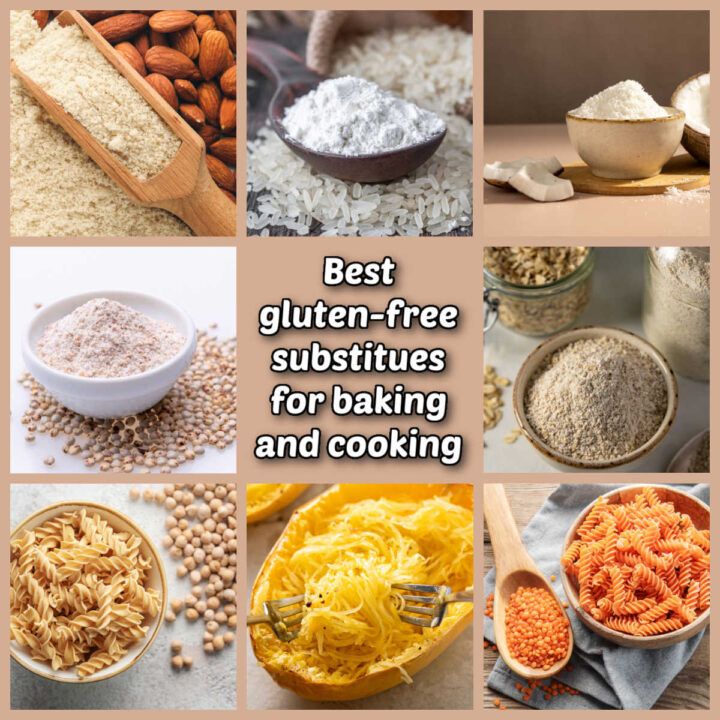
Are you looking for a list of gluten-free substitutes to use for baking and cooking? This printable organizes gluten alternatives into clear categories like flour, bread crumbs, pasta, soy sauce, couscous/bulgar, roux/thickeners, and crackers & snacks.
You can print it out in either PDF or JPG formats.
Materials
- Printer paper
Tools
- Computer
- Printer
Instructions
- Load your paper into your printer.
- Using the print function on this card will give you a gluten-free substitutes printable that fills about 3/4 of an 8.5 x 11-inch sheet of paper.
- Choose portrait layout and, if possible, "fit to page" in your settings.
- Prefer full-page printing? You can also print the guide as a high-resolution file using your browser’s print feature: Gluten alternatives printables: (PDF) | (JPG).
- After you print out this snacks for gluten-free guide, you can bring it with you when you go shopping.
- Please note that free printables can take a considerable amount of time to create. This gluten-free alternatives list is for personal use only. If you are sharing this list (and thank you for that!), please link directly to this post and not to the actual image. We appreciate your help in supporting the site. This guide may not be used for any retail purpose or for mass distribution.
Recommended Products
As an Amazon Associate and member of other affiliate programs, I earn from qualifying purchases.


kim
Thursday 23rd of March 2023
what a great resource! thank you so much for your time!
June
Tuesday 11th of August 2015
interesting info
admin
Tuesday 11th of August 2015
Thanks June. Glad you found the article useful.
Carol