
Are you looking for a way to get new forsythia plants inexpensively? Forsythia propagation is one of the easiest ways to get new shrubs from plants you already love!
Buying plants from garden centers is quick, but it’s also the most expensive option. Learning how to propagate forsythia by rooting healthy branches is far more cost-effective – and it’s also fun! All you need are a few basic supplies and a bit of patience.
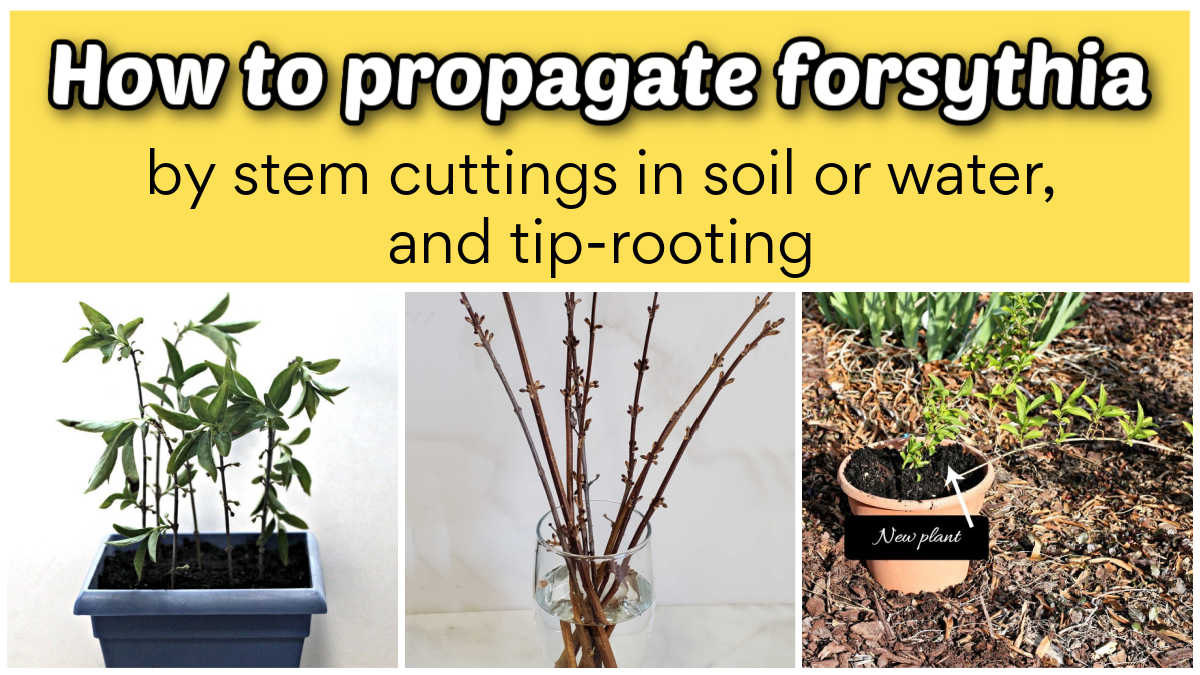
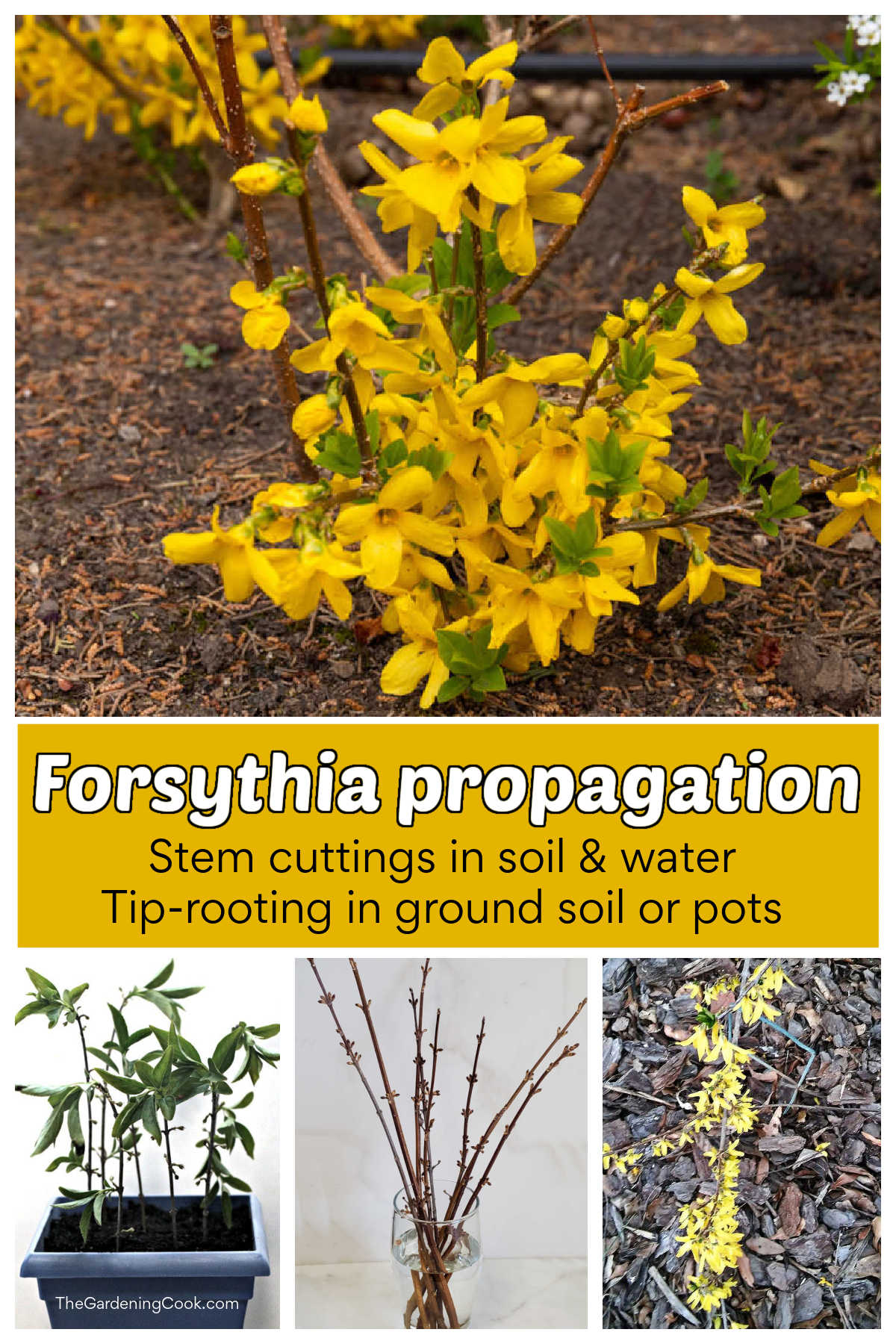
Forsythia shrubs can be multiplied in several simple ways. Stem cuttings in soil or water, and tip layering in soil are proven methods that even beginners can master.
Whether you want to share plants with friends, expand your forsythia plants into a hedge for privacy, or replace aging shrubs, this step-by-step guide will show you how to propagate forsythia successfully.
Some of the links below are affiliate links. I earn a small commission, at no additional cost to you, if you purchase through an affiliate link.
When to propagate forsythia
Forsythia propagation can be done at different times of the year, depending on the method you use.
Spring propagation (active growing season)
- Late spring to early summer, after flowering, when new green growth appears.
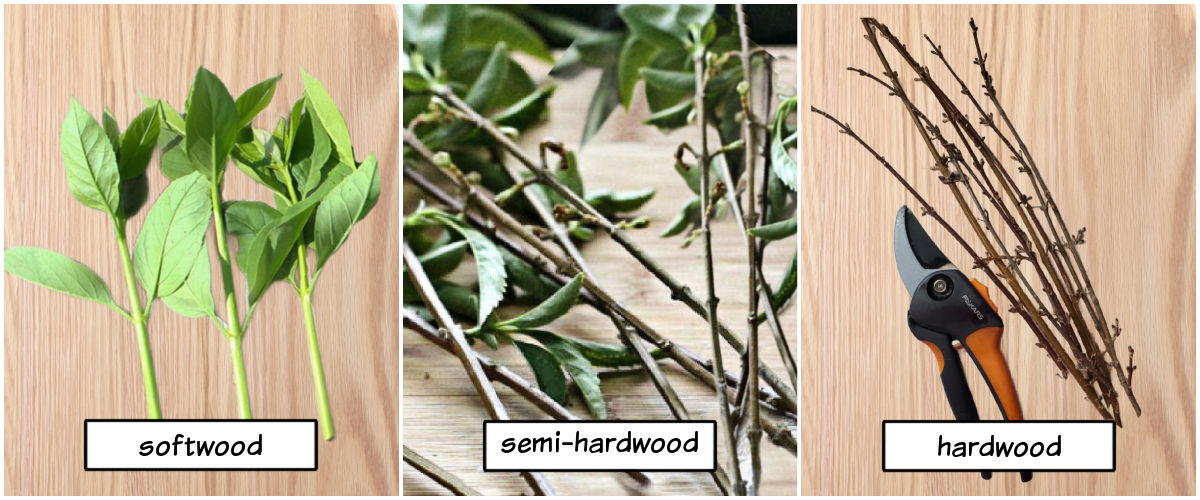
- This is the ideal time for softwood cuttings taken from flexible stems.
- Softwood cuttings root quickly and are the easiest method for beginners.
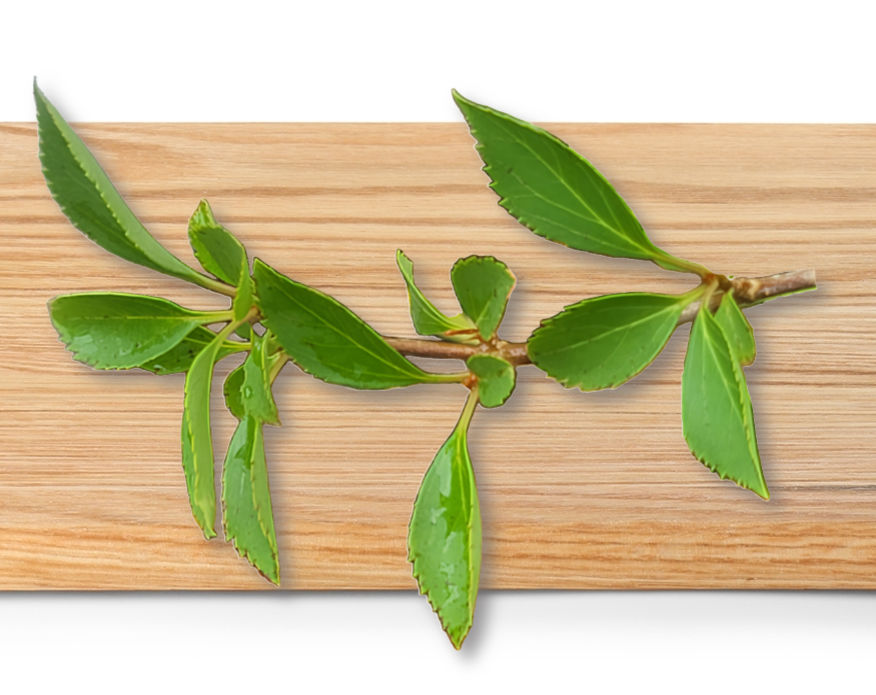
- Semi-hardwood cuttings can also be taken in mid-summer and rooted in pots or a shaded garden bed.
Winter propagation (dormant season)
- Late fall, after leaves drop, or very early spring before new buds swell.
- This method uses hardwood cuttings from mature, tan stems.
- Hardwood cuttings root more slowly but are very reliable.
Supplies for propagating forsythia cuttings
To propagate forsythia from cuttings, you’ll need these supplies:
- Forsythia cuttings – either softwood, semi-hardwood, or hardwood
- Rooting hormone powder (optional)
- Sharp pruning shears
- Seed starting soil
- Pots or a planter box
How to propagate forsythia cuttings in soil
Learning how to propagate forsythia from cuttings is simple when you follow these steps:
Select healthy stems
- Choose softwood cuttings in spring, semi-hardwood in summer, and hardwood in fall.
- Make a diagonal cut just below a leaf node.
- Cut 4-6 inch (10-15 cm) stems from the current season’s growth. (6-10 inch/15-20 cm for hardwood)
Note: Make more cuttings than you think you will want. Some cuttings may not root and if you have extra, you can use them for gifts.
Prepare the leaves for planting

- Remove the lower leaves from the cuttings.
- Dip the ends in rooting powder. (Optional, but it helps the cuttings root more quickly.)
Plant the cuttings

- Fill your pots or planter box with soil especially formulated for cuttings, or use a mixture of peat moss, perlite, and vermiculite.
- Moisten the soil and place the cuttings so that at least one node is below the soil level.
- Keep the soil consistently moist but not soggy.
- Place the container in bright, indirect light. Avoid strong sunlight, which can dry out the cuttings. An east-facing window is ideal.
- Once the roots are well established, plant directly in the garden or in larger pots.

Propagating forsythia in water
While the soil method is the most reliable, you can also root forsythia cuttings in water. A bonus is that the root growth will be easier to monitor.

- Take cuttings in late winter or early spring. Longer hardwood cuttings work best.
- Place the cuttings in a vase of water, adding fresh water every 3-4 days to prevent decay.
- Roots typically appear in 2-3 weeks.
- Once rooted, the cuttings can be planted in fresh potting mix.
Note: While water rooting is fun and easy to monitor, cuttings rooted directly in soil often transplant more successfully.
How long does it take for forsythia cuttings to root?
The time to develop roots varies, depending on the method used.
- Softwood cuttings: 2-4 weeks
- Semi-hardwood cuttings: 4-6 weeks
- Hardwood cuttings: Several weeks to several months
- Water-rooted cuttings: Typically 2-3 weeks.
Note: Hardwood cuttings take longer, but they make very dependable plants once established.
Tip-layering forsythia
Tip layering is the easiest and most reliable way to propagate forsythia because the branch remains attached to the parent plant while it develops roots.
This method involves securing a low-hanging, flexible branch to the ground so it can form roots while still attached to the mother plant. Since forsythia has an arching growth habit, this method is especially successful.

- Place a pot next to the mature plant, or choose a spot directly in the garden soil.
- Bend a flexible stem down and bury the tip a few inches deep.
- Secure it in place with a landscape pin or small rock.

- Water well and keep the soil moist.
- Roots will form where the tip touches the soil, usually within a few weeks.
- Once roots are established, cut the stem between the mother plant and the new plant.
- Transplant the new shrub during cool weather.
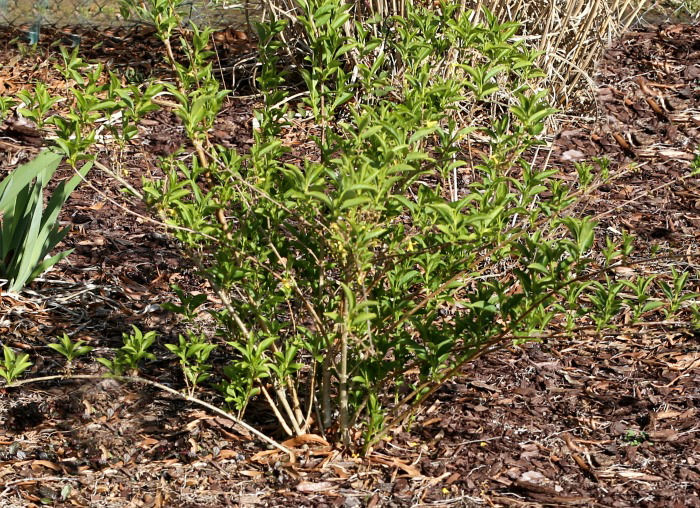
If you’re creating a hedge, you can secure multiple tips directly into the soil instead of using pots. This method helps a forsythia hedge fill in quickly and naturally.
Frequently asked questions about forsythia propagation
Here are answers to some common questions about growing new forsythia plants from your existing shrubs.
Can you propagate forsythia by dividing it?
Yes! Dig up a mature shrub in early spring or late fall, separate it into sections with roots, and replant them.
Does forsythia grow from seed?
Yes, forsythia can grow from seed, but it’s slow and unpredictable. Most gardeners prefer cuttings or tip layering for faster, more reliable results.
Why aren’t my cuttings rooting?
Cuttings may fail to root if they are too old or woody, not kept moist, or exposed to too much direct sunlight. Using fresh softwood or semi-hardwood cuttings and keeping the soil consistently moist usually solves the problem.
Can I propagate forsythia indoors?
Yes! You can root cuttings or do tip-layer indoors in a bright, indirect light area. Avoid direct sunlight and ensure good humidity.
How long before I can plant a new shrub outside?
Cuttings usually take 2-6 weeks or more to root. Tip-layered plants form roots in a few weeks as well. Once roots are established and the weather is cool, they can be planted in the garden.
Can I propagate forsythia from old, woody branches?
It’s much harder. Older hardwood cuttings root slowly and less reliably than softwood or semi-hardwood cuttings. Tip layering or using younger stems is usually more successful.
Will tip-layered plants bloom the first year?
Tip-layered forsythia may bloom in the first year if the branch is mature enough, but often it takes a full growing season for strong blooms to develop.
Related forsythia posts
Explore these posts to learn more about caring for your forsythia shrubs.
- Planting Forsythia – Everything you need to know to get new plants into the ground.
- Transplanting Forsythia – Learn how to move established shrubs safely, after propagation.
- Forsythia Hedge – A practical guide for expanding your garden and shaping new plants from cuttings.
Share this guide on the propagation of forsythia on X
If you enjoyed learning how to grow forsythia from cuttings, why not share this post with a friend?
Want more forsythia without buying new plants? 🌿✨ Learn how to propagate forsythia from cuttings, tip layering, and even water rooting. It’s easier than you think — and perfect for filling in a hedge or sharing with friends! Find… Share on XPin this post about forsythia propagation
Would you like a reminder of this post about how to propagate forsythia? Pin this image to one of your gardening boards on Pinterest so that you can easily find it later.
You can also watch this YouTube slideshow video about the propagation of forsythia!
Forsythia Propagation: From Cuttings to New Plants
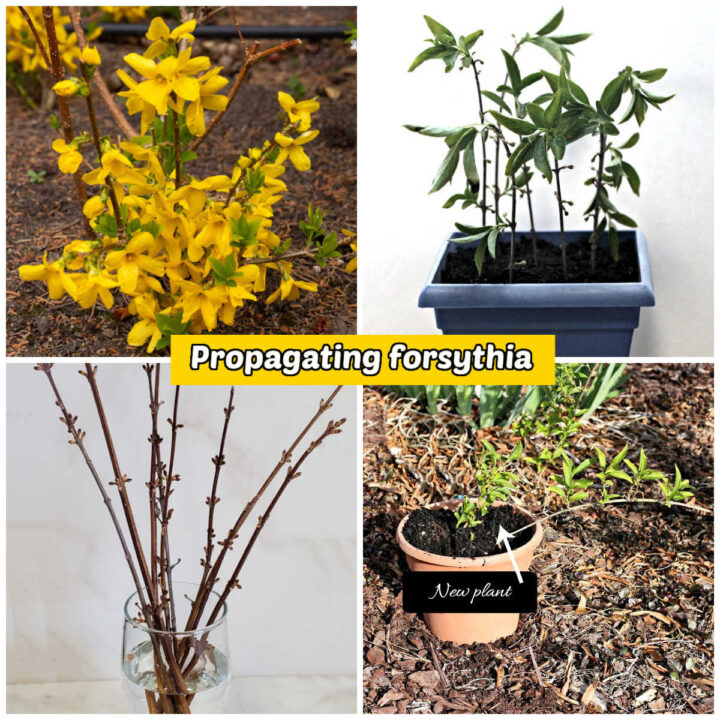
Discover easy methods to grow forsythia from cuttings or bushes. Tips for rooting in water and soil, plus tip rooting—perfect for gardeners!
Materials
- Forsythia cuttings (softwood, semi-hardwood, or hardwood)
Tools
- Sharp garden shears
- Seed starting potting soil
- Rooting hormone powder (optional)
- Pots or planter box
Instructions
- Propagation is done in late spring for softwood cuttings or late fall for hardwood cuttings.
- Using sharp pruning shears, make diagonal cuts just below a leaf node.
- Cuttings should be 4-6 inch (10-15 cm) stems from the current season’s growth. (6-10 inch/15-20 cm for hardwood)
- Remove the leaves from the lower two inches of the cutting.
- Dip the ends of the cuttings in rooting hormone powder. (optional, but makes rooting quicker)
- Plant the cuttings so that at least one node is below the soil line.
- Water well and keep the cuttings consistently moist but not soggy.
- Place in bright, indirect sunlight. (east-facing window is ideal)
- Softwood cuttings will root in 2-4 weeks. Hardwood cuttings can take several weeks to several months.
- Once rooted, transfer the cuttings to larger pots or outdoors in the garden.
Notes
Forsythia can also be propagated in water instead of soil, but soil propagation is more reliable.
Tip rooting is also possible with forsythia. To do this, pin the tip of a branch to the soil next to the mother plant with a landscape pin. When rooted, cut the stem between them and move the rooted tip to another location.
Recommended Products
As an Amazon Associate and member of other affiliate programs, I earn from qualifying purchases.
-
 2-Pack ofStainless Steel Gardening Scissors, Pruning Shears and Clippers for Gardening and Cuttings
 -
 Rustic Wooden Planter Box 17.3" L x 3.9" W x 3.9" H Brown Rectangular Planter with Removable Plastic Liner
 -
 Seed Starter Soil Mix - Peat-Free Organic Potting Mix for Seeds, Cuttings, or Germination & Propagation- 4qt