
Squash bugs are one of the most destructive pests for zucchini, pumpkins, and other squash plants, but they are often mistaken for stink bugs and other similar insects. Since treatment methods vary depending on the pest, it’s important to identify them correctly before trying to control an infestation.
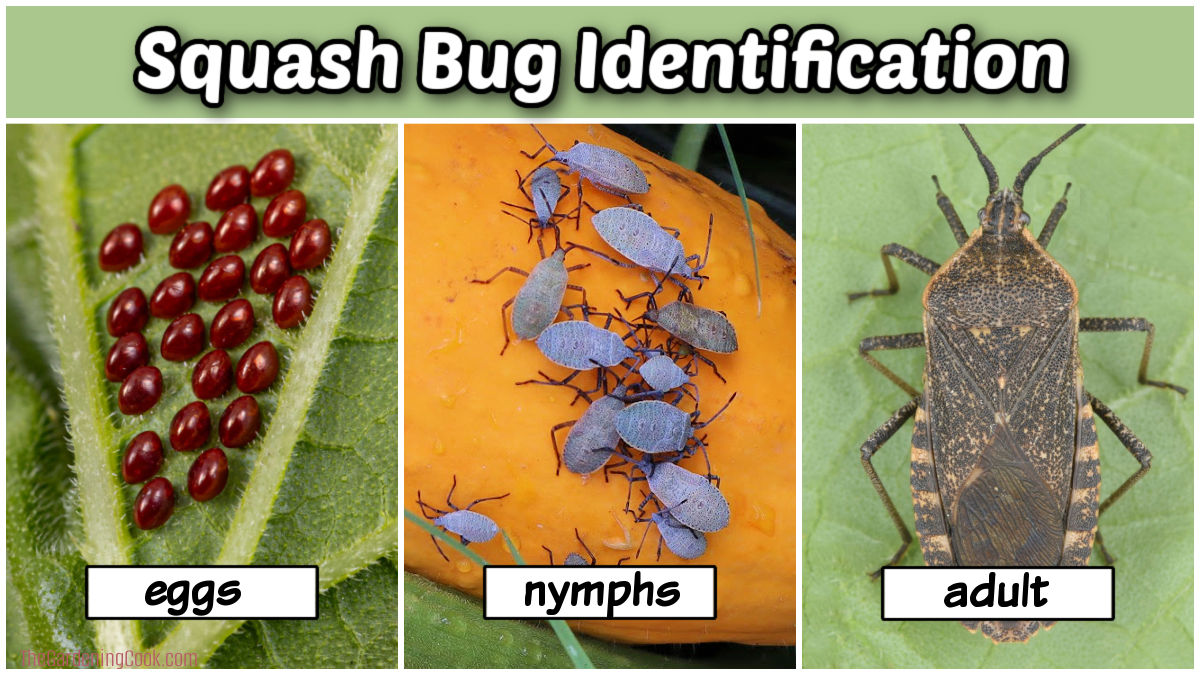
This guide explains how to identify squash bugs at every life stage, including eggs, nymphs, and adults. You’ll also learn how to tell squash bugs from stink bugs and other common look-alikes, and recognize squash bug damage.
If you have squash bugs in your garden, and you’re looking for treatment and prevention methods, see my complete guide to controlling squash bugs.
Some of the links below are affiliate links. I earn a small commission, at no additional cost to you, if you purchase through an affiliate link.
What are squash bugs?
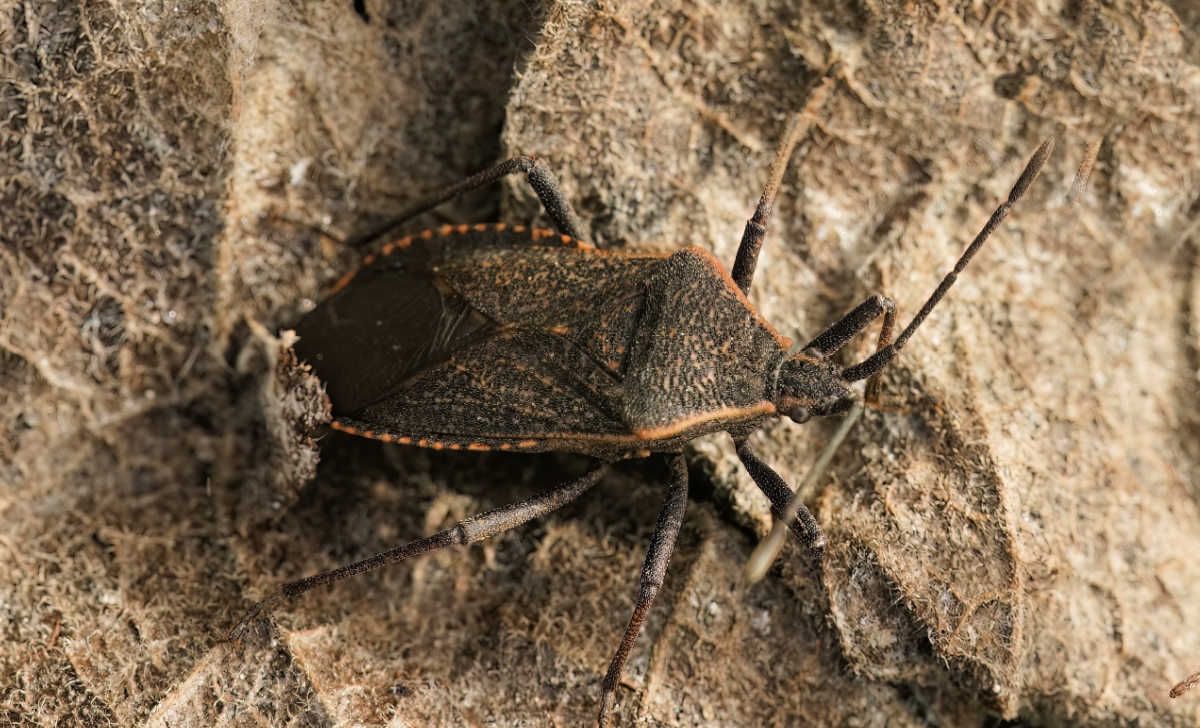
The squash bug (Anasa tristis) is a common garden pest in the United States that feeds on cucurbit plants and damages vegetable crops.
- Feeds by sucking sap from squash leaves and vines
- Causes wilting, yellowing, and plant decline
- Common hosts include squash, zucchini, pumpkins, and other cucurbits such as melons
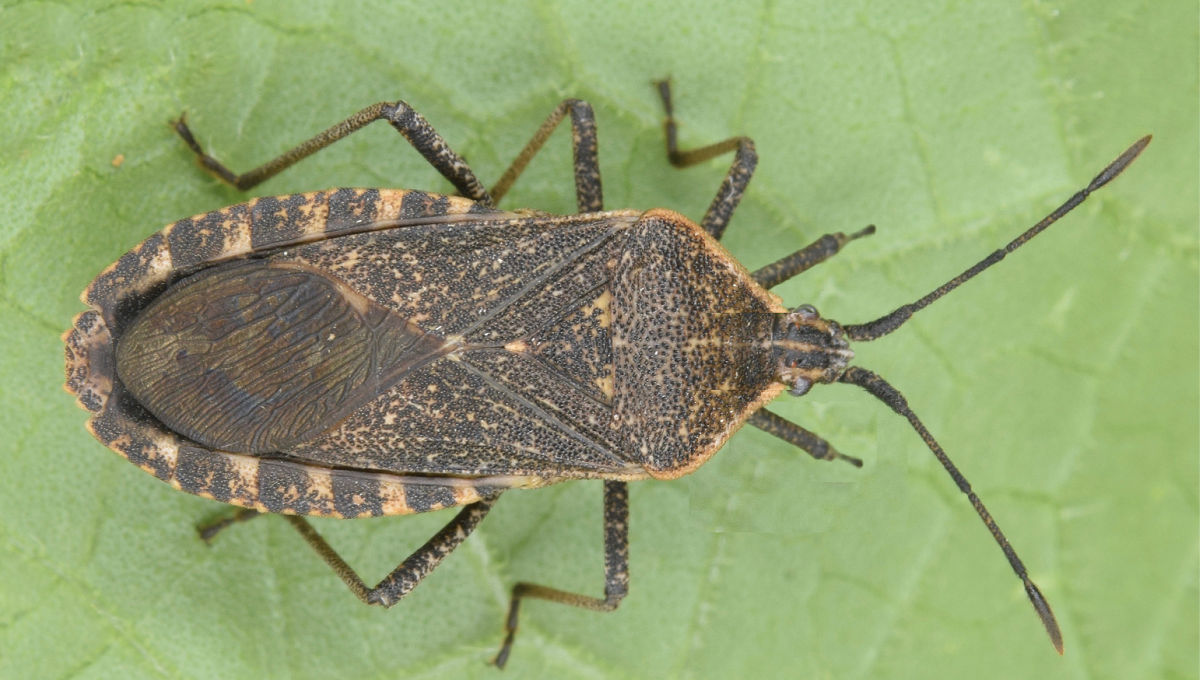
Photo credit: Wikimedia Commons – Creative Commons Attribution 2.0 Generic license. Photo altered slightly.
What do squash bugs look like?
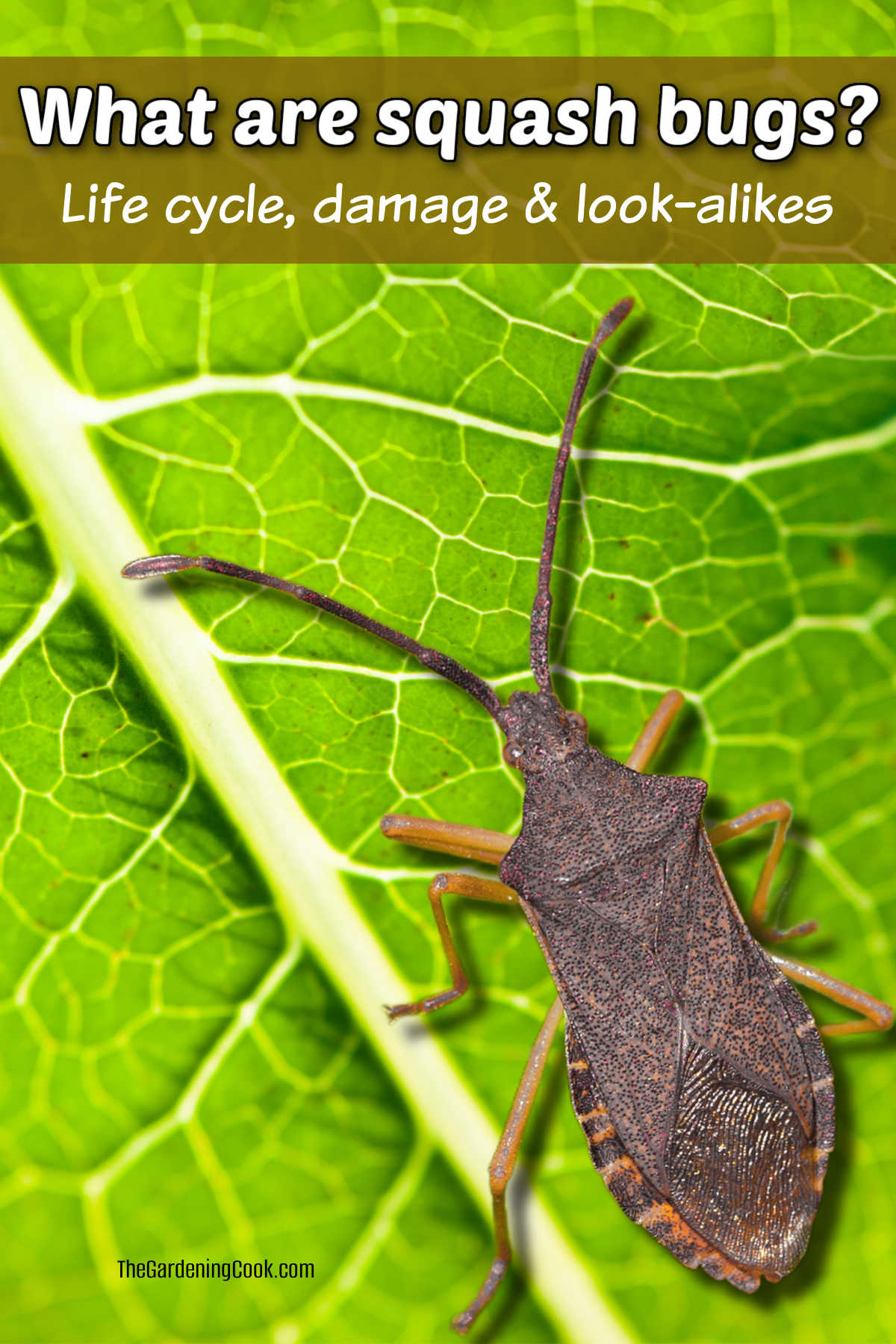
Squash bugs (also called pumpkin bugs or zucchini bugs) are flat, shield-shaped insects that are often mistaken for stink bugs, especially in gardens.
- Color: brown to gray with a matte appearance
- Legs: narrow hind legs without leaf-like extensions
- Shape: flat, shield-shaped body with rounded shoulders
- Size: about ½ to ¾ inch (12-19 mm) long
- Wings: overlap in the center to form an X-shaped pattern
- Markings: orange-brown stripes along the sides and underside of the abdomen
- Triangle: a small triangle plate visible on the back
Squash bug behavior and habits
Squash bugs are most active on host plants and tend to hide when disturbed.
- Use piercing, straw-like mouthparts to feed on plant sap
- Emit a strong, unpleasant odor when crushed or disturbed
- Often feed in large groups
Squash bug eggs and nymphs
Female squash bugs appear in early summer and lay eggs through mid-summer.
Egg characteristics
- Color: Bronze, copper, or reddish-brown
- Shell: Tough, shiny outer coating
- Size: Small, oval eggs about 1/16 inch (1.5 mm)
- Arrangement: Eggs are usually grouped closely together in neat rows or clusters
- Location: Found in clusters on leaf undersides, especially where veins form a V shape, and sometimes on stems
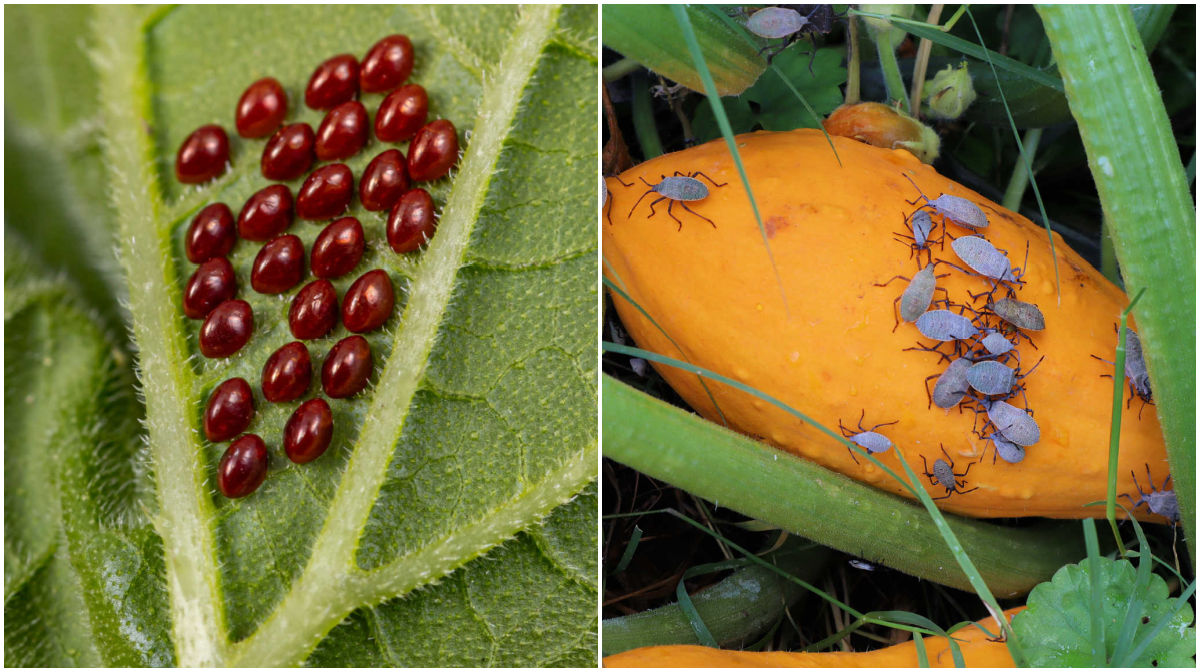
Squash bug nymphs
- Eggs hatch in about 7–14 days
- Newly hatched nymphs are pale green to light gray with black legs
- Nymphs darken as they mature and gradually develop wing pads
- Young squash bugs mature into adults in about 4–6 weeks
Squash bug life cycle quick summary
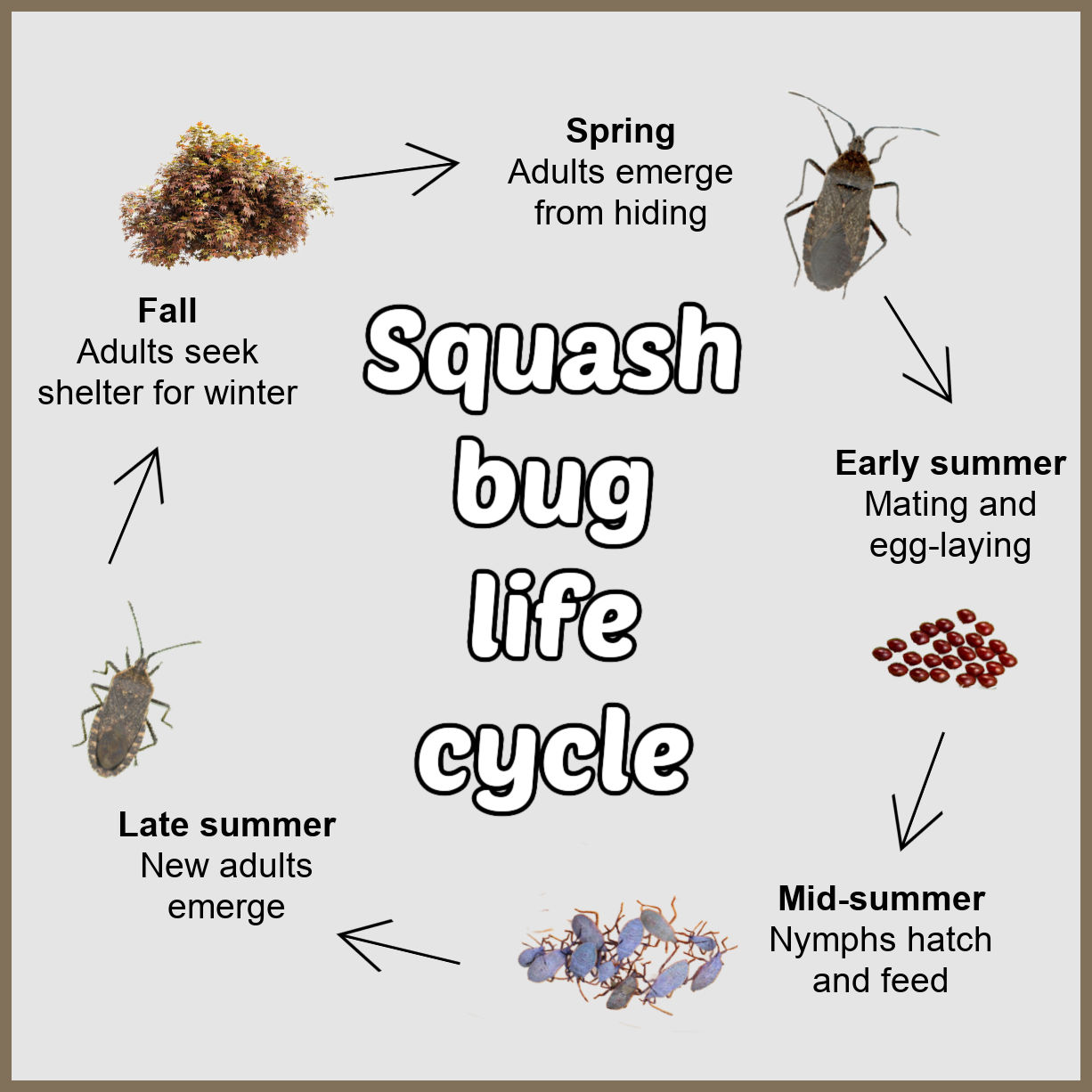
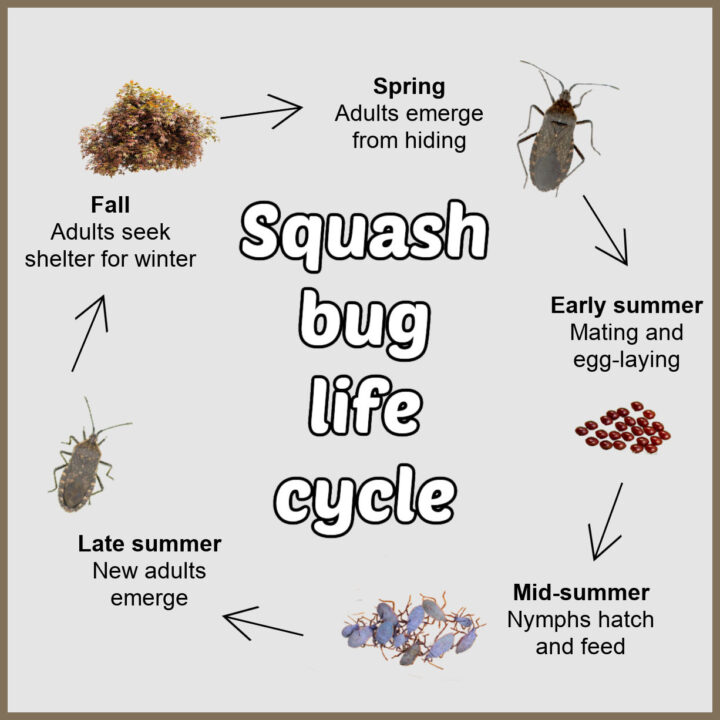
The squash bug completes its life cycle in approximately 6-8 weeks, passing through three life stages: egg, nymph, and adult. Understanding this life cycle is helpful when trying to prevent squash bugs from becoming established in your garden.
- Spring: adults emerge from hiding
- Early summer: mating and egg laying
- Midsummer: nymphs hatch and feed
- Late summer: new adults mature
- Fall: adults seek overwintering shelter
Seasonal squash bugs activity
- Adults overwinter in debris
- Emerge in late spring/early summer
- Most active when vines start growing
- Earlier emergence in warm climates
Egg-laying timeline
- Little red eggs are laid over several weeks
- Peak egg laying is early/mid-summer
- Eggs darken in color right before hatching
Nymph development stages
- Pass through five growth stages (called instars)
- Feeding damage increases as they mature
- Nymphs cluster at first and then become more independent
Adult stage and reproduction
- Feeding: Continue through the summer
- Mating cycle: Overwintered adults emerge in late spring to feed and reproduce
- Lifespan: Adults live several weeks
- Generations per year: 1-3 generations in warm climates; 1 in cooler zones
Overwintering behavior
- Hide in plant debris, mulch, and garden litter
- Don’t typically live in garden soil
- Adults survive the winter if sheltered
Squash bug vs stink bug

Stink bugs are often mistaken for squash bugs because some of their visual and behavioral characteristics are similar. However, the two insects also have several important differences.
Similarities
- Color: Both are usually shades of brown or gray
- Bodies: Both have flattened shield-shaped bodies
- Feeding: Use straw-like mouthparts to suck sap
Differences
- Width: Stink bugs are wider and rounder
- Antennae: Stink bugs have banded antennae, and squash bugs have mostly solid-colored antennae
- Back triangle: A stink bug’s triangle is larger
- Wings: Squash bugs’ wings overlap to form an X shape, while stink bugs’ wings lie flatter against the body
- Eggs: Stink bugs have light colored eggs, and squash bug eggs are darker
- Damage: Squash bugs do more damage in the garden
- Targets: Stink bugs feed on many plants, while squash bugs target mainly cucurbits
- Speed: Squash bugs are fast-moving, while stink bugs are sluggish
- Smell: Both release and odor when crushed, but stink bugs produce a much stronger scent
Squash bug look-alikes
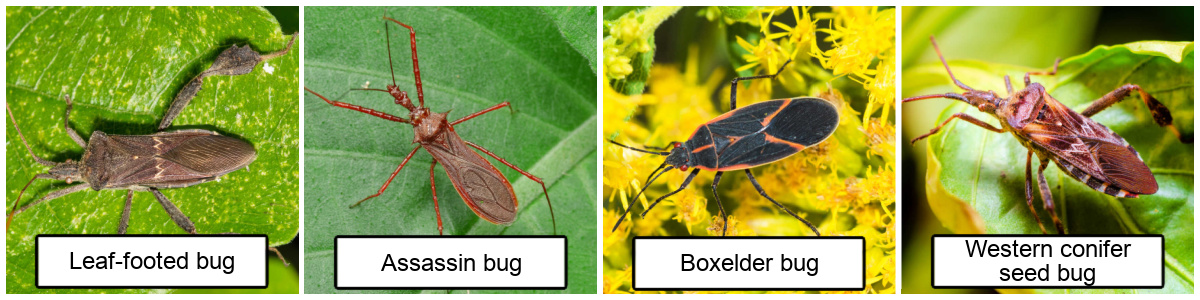
Squash bugs are often mistaken for several other common garden insects. These insects share similar shapes, colors, or behaviors, but they are different species with different impacts in the garden.
Some bugs that look like squash bugs are:
- Leaf-footed bug: Leaf-like extensions on the hind legs, and a much longer body type. They lay eggs in long lines.
- Assassin bug: Elongated head and narrow body with a more aggressive, predatory stance.
- Boxelder bug: Distinct red and black pattern – typically found in clusters on walls, trees, or seeds.
- Western conifer seed bug: Narrower body and distinct flattened hind legs that look “leaf-like”. White zigzag stripe across the wings.
What damage do squash bugs cause?
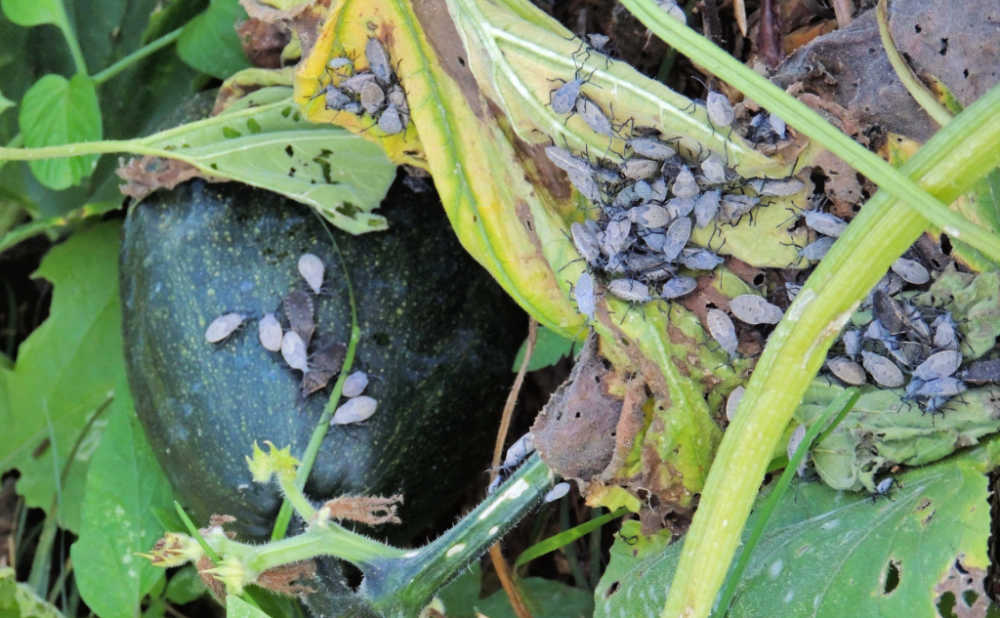
A squash bug infestation can cause significant damage to squash plants and other cucurbits.
- Feeding habit: Feed on leaves, vines, and developing fruit
- Sap loss: Suck sap from plant tissue, leading to yellow spots that gradually turn brown
- Wilting: Continued feeding causes leaves and vines to wilt and weaken
- Vine collapse: Runners and stems may dry out, become brittle, and die back
- Plant stress: Young plants are especially vulnerable, but mature plants can also be affected
- Disease association: Feeding activity can be linked to the spread of cucurbit yellow vine disease
- Certain plants can help: Squash bugs can be difficult to eliminate once populations become established, but preventive measures such as row covers and growing plants that repel squash bugs can help keep them under control.
Squash, zucchini, and pumpkins are the most commonly affected crops. Learn more about growing healthy squash plants here.
Are squash bugs harmful to humans or pets?
Squash bugs are considered a garden pest, but they are not harmful to humans or pets.
- Bites: Squash bugs do not bite people or animals
- Stings: They do not sting or inject venom
- Toxicity: They are not poisonous to humans or pets
- Risk: The main damage is limited to garden plants, especially squash and other cucurbits
Squash bug printable
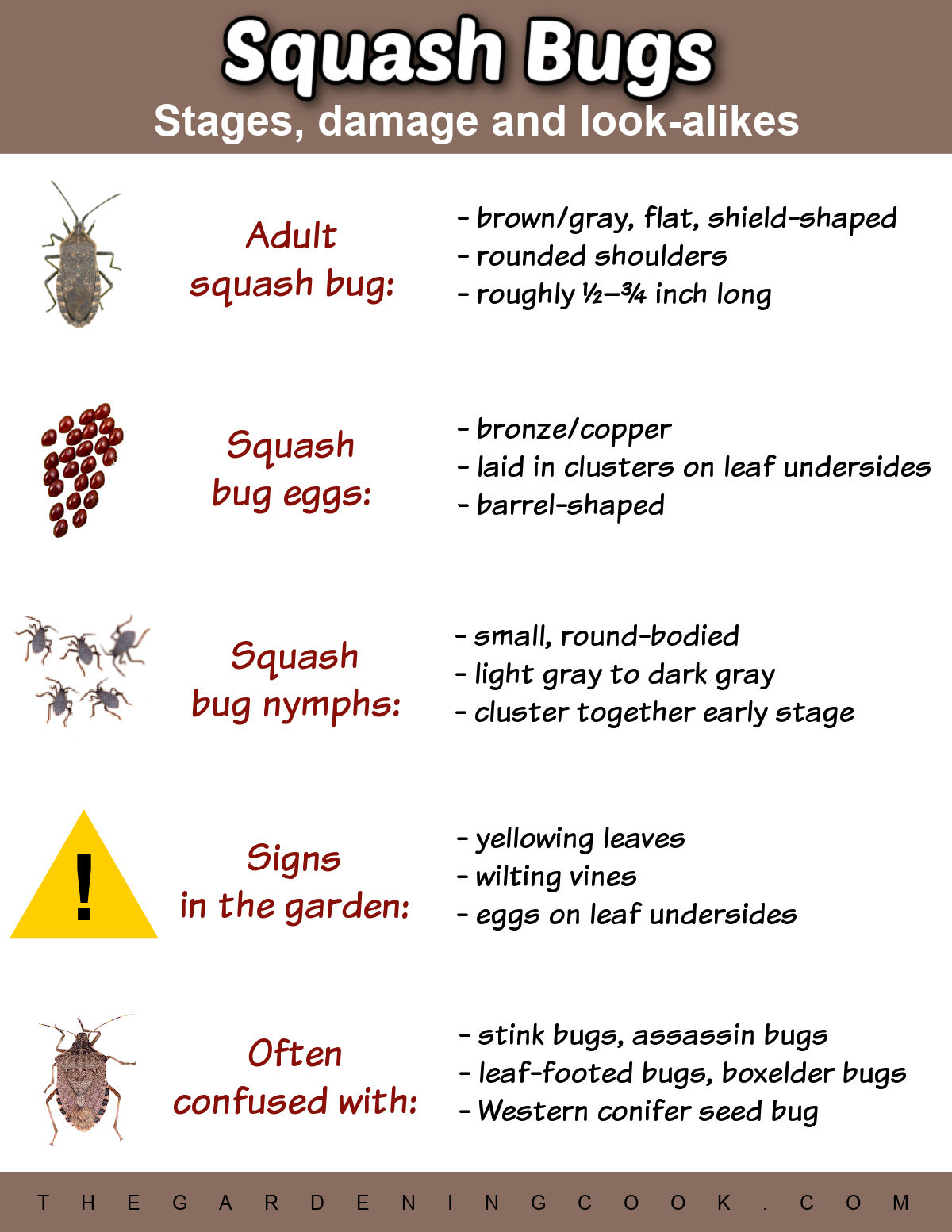
You can print the Anasa tristis identification printable as high-resolution JPGs or PDFs by using the links below:
Printing instructions:
- Select portrait orientation and “fit to page” on your printer settings for a full-page printout.
- You can also print out the printable from the project card at the bottom of this page. Scroll down to the card and press “print”.
Related Squash Bug Resources
- Plants That Repel Squash Bugs – Discover herbs, flowers, and trap crops that may help reduce squash bug problems.
- Squash Bug Control – Explore control methods for managing active squash bug infestations.
- How to Prevent Squash Bugs – Learn how to stop infestations before they start.
Share this identification guide to squash bugs on X
If you enjoyed learning more about squash bugs, why not share this post with a friend?
Meet the squash bug 🪳 It's one of the most destructive pests in the vegetable garden! Learn how to identify squash bugs at every stage: eggs, nymphs, adults. Discover the damage they cause and how to tell them apart from stink… Share on XPin this post for the squash bug life cycle
Would you like a reminder of this guide to identifying squash bugs? Pin this image to one of your gardening boards on Pinterest so that you can easily find it later.
You can also watch this YouTube slideshow video about Anasa tristis!
Squash Bug Identification Cheat Sheet (Printable + PDF)
Download a printable squash bug identification cheat sheet featuring eggs, nymphs, and adult stages. Includes a quick visual guide to help you identify squash bugs in the garden and distinguish them from similar insects.
Materials
- Computer paper
Tools
- Computer
- Printer
Instructions
- Load your paper into your printer.
- Using the print function on this card will give you a squash bug printable that fills about ¾ of an 8.5 x 11-inch sheet of paper.
- Choose portrait layout and, if possible, "fit to page" (or 125%) in your settings.
- Prefer full-page printing? You can also print the guide as a high-resolution file using your browser’s print feature: (PDF) | (JPG).
- Please note that creating free printables takes a long time. This squash bug guide is for personal use only. If you are sharing it (and thank you for that!), please link directly to this post, rather than to the actual image. We appreciate your help in supporting the site.
- This printable may not be used for any retail purpose or for mass distribution.
Notes
Recommended Products
As an Amazon Associate and member of other affiliate programs, I earn from qualifying purchases.
-
 Pest Control Log Book: Stay Organized with Detailed Tracking and Extermination Records
 -
 Foam Garden Kneeling Pads, Ultra Soft Cushion Kneeling Pads for Gardening, examining garden pests
 -
 Magnifying Glass with Light, Handheld Large Magnifying Glass 18LED Cold and Warm Light for identifying garden pests