
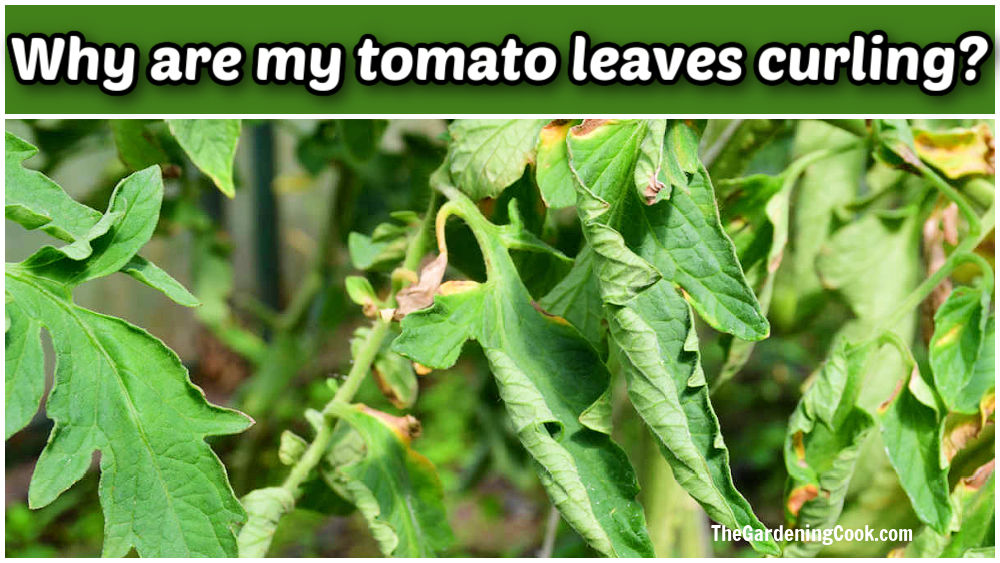
Tomato leaf curl can show up in several ways. The leaves may curl upward, downward, inward, or become twisted, and each pattern can point to a different problem. In many cases, curled tomato leaves are caused by environmental stress such as heat, watering issues, transplant shock, or excess fertilizer. Sometimes pests or diseases are involved.
Before assuming the worst, take a close look at how the leaves are curling and what changes have occurred recently in your vegetable garden. The direction of the curl and the overall condition of the plant often provide useful clues.
This guide will help you identify the most common causes of tomato leaf curl and decide what action, if any, your tomato plants need.
Some of the links below are affiliate links. I earn a small commission, at no extra cost to you if you purchase through an affiliate link.
What are my tomato leaves curling?
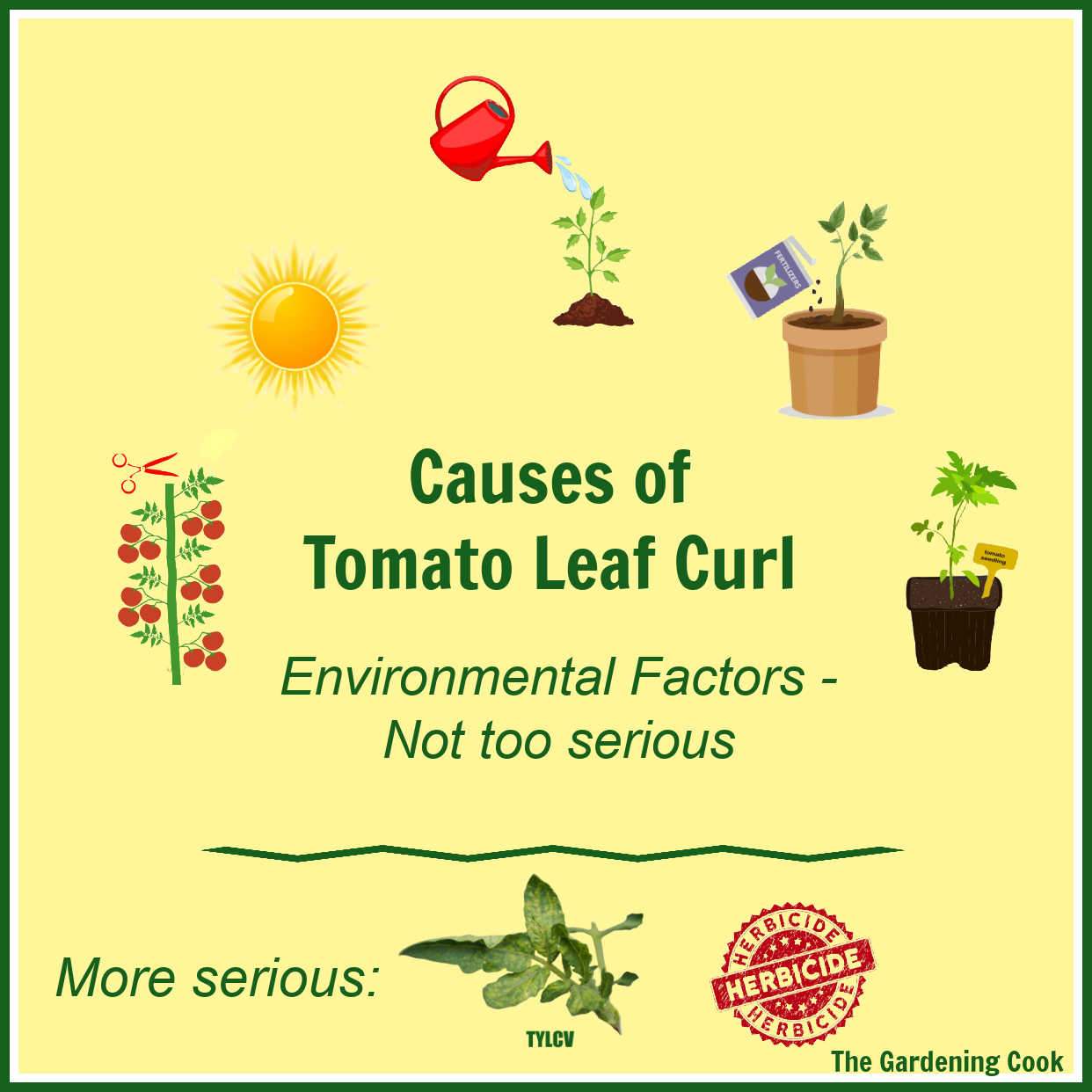
Tomato leaves curl to conserve moisture and to protect themselves from other forms of stress. Extreme heat, heavy wind, or strong sunlight, improper watering, herbicide exposure, or viral infections are common causes.
Tomato leaf curl can appear as leaves curling upward, downward, or inward. Some plants remain green and healthy-looking, while others show yellowing, distortion, or reduced growth. The pattern of curling often gives clues to the underlying cause.
Understanding the reason for leaf curl on your tomato leaves helps you to treat this vegetable garden problem accurately.
Heat stress and temperature extremes

Environmental leaf curl (often called physiological leaf roll) is commonly caused by heat, watering changes, or plant stress.
Leaf curl on tomato plants caused by extreme heat and hot winds is a normal condition. It is the plant’s way of reducing surface area and protecting itself from the hot sun.
- When temperatures consistently stay above 85°F (29.44°C), the plant will face stress
- The lower leaves of your plants may curl upwards and inwards
- As long as the situation does not last for too long, it should not significantly affect your tomatoes
- Affected plants will normally keep their green color
What to do:
- Leaf curl caused by extremes of heat will often right itself when the conditions improve
- Add additional moisture when the temperatures remain hot and dry
- If the conditions persist, consider adding shade cloth over your plants
Watering problems can cause tomato leaf curl
One of the most common causes of tomato leaf curl is incorrect watering.
Both under-watering and over-watering can cause leaf curl. However, the direction of the curl is different for each.
Too little water can make tomato leaves curl upward
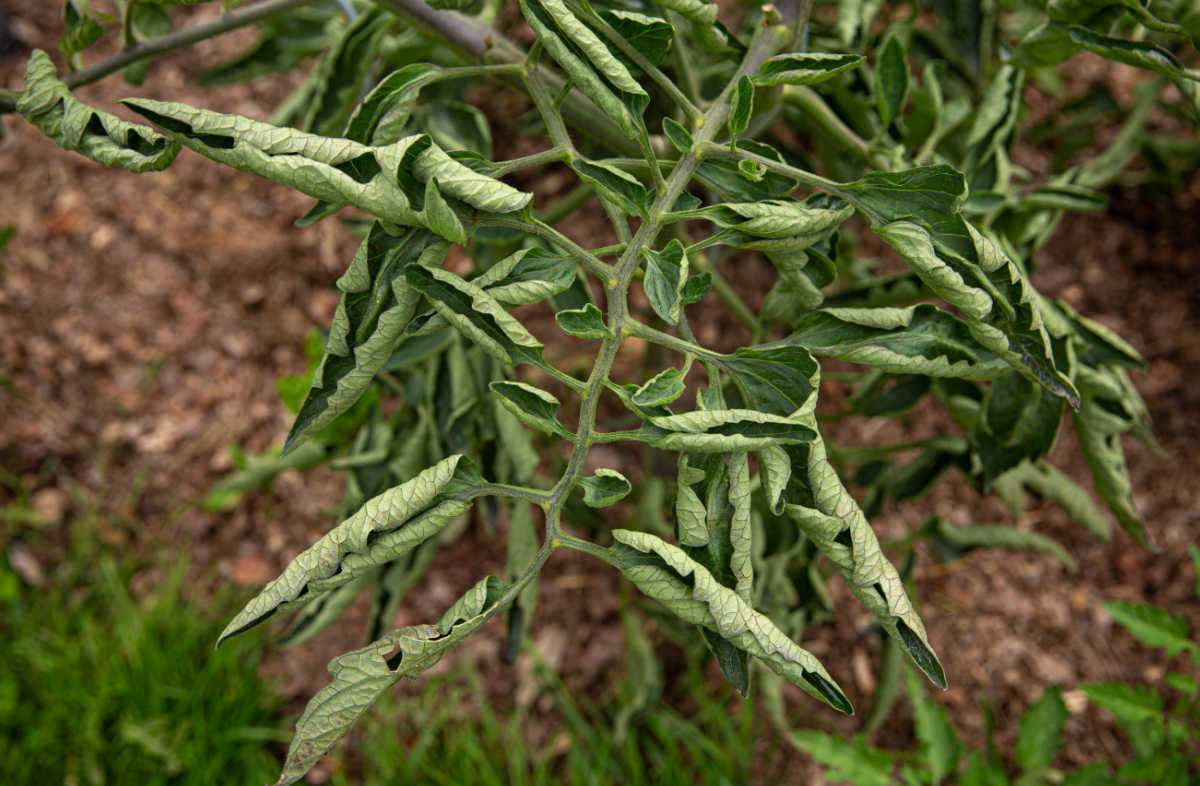
When tomato plants don’t get enough water, their leaves curl to minimize moisture loss and protect the plant from dehydration.
- The leaves curl inward or upward on the margins
- Severe loss of moisture can worsen the problem and lead to more damage
What to do
- Ensure that tomato plants receive 1 inch of water a week
- Water near the root zone with a hose, soaker hose, or drip irrigation rather than overhead
- Add a 2-inch layer of organic leaf mulch around your tomato plants to limit loss of moisture
Overwatering can cause tomato leaves to curl downward
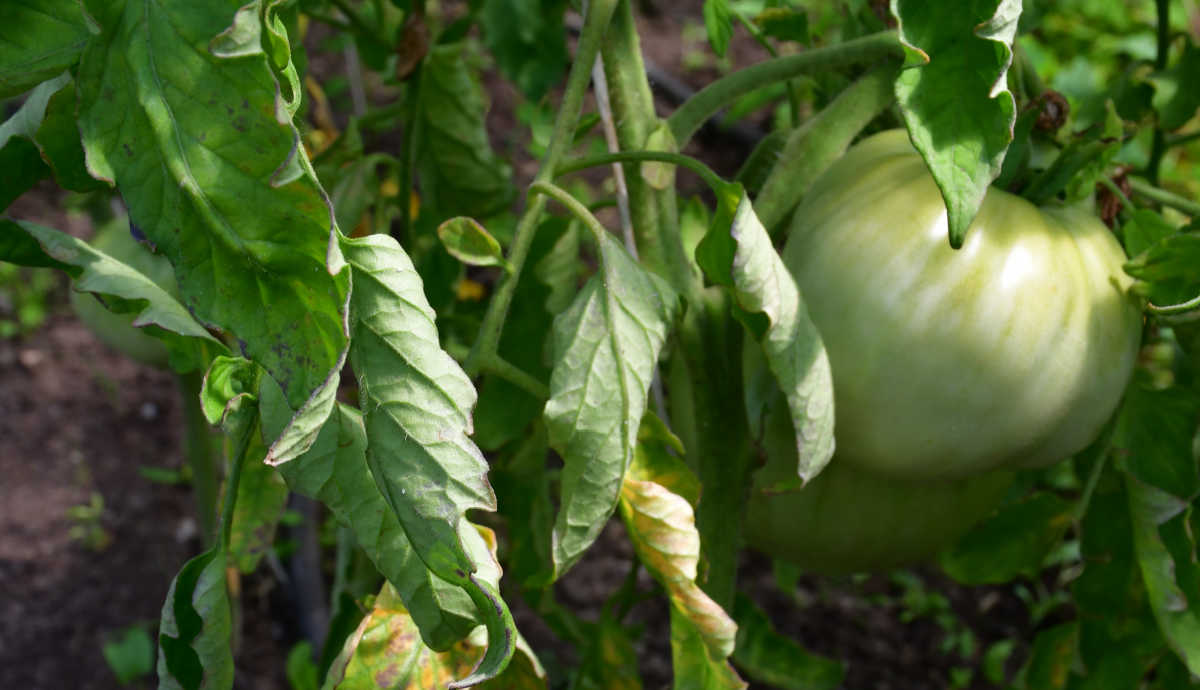
Too much watering can also be a cause of leaf curl on tomato plants. Excess moisture disrupts the way roots function and how water moves through the plant.
- The leaves will droop and curl downward
- They will start to lose their vibrant green color
- If the problem continues, the leaves will drop off
What to do:
- Discontinue watering until the soil dries out
- Ensure that the soil drains well, particularly in tomatoes grown in potss
Protip: Overwatering doesn’t just cause leaf curl, it can also contribute to other tomato problems such as splitting fruit, tomato bottom rot, and blossom drop.
Too much fertilizer can cause curled tomato leaves
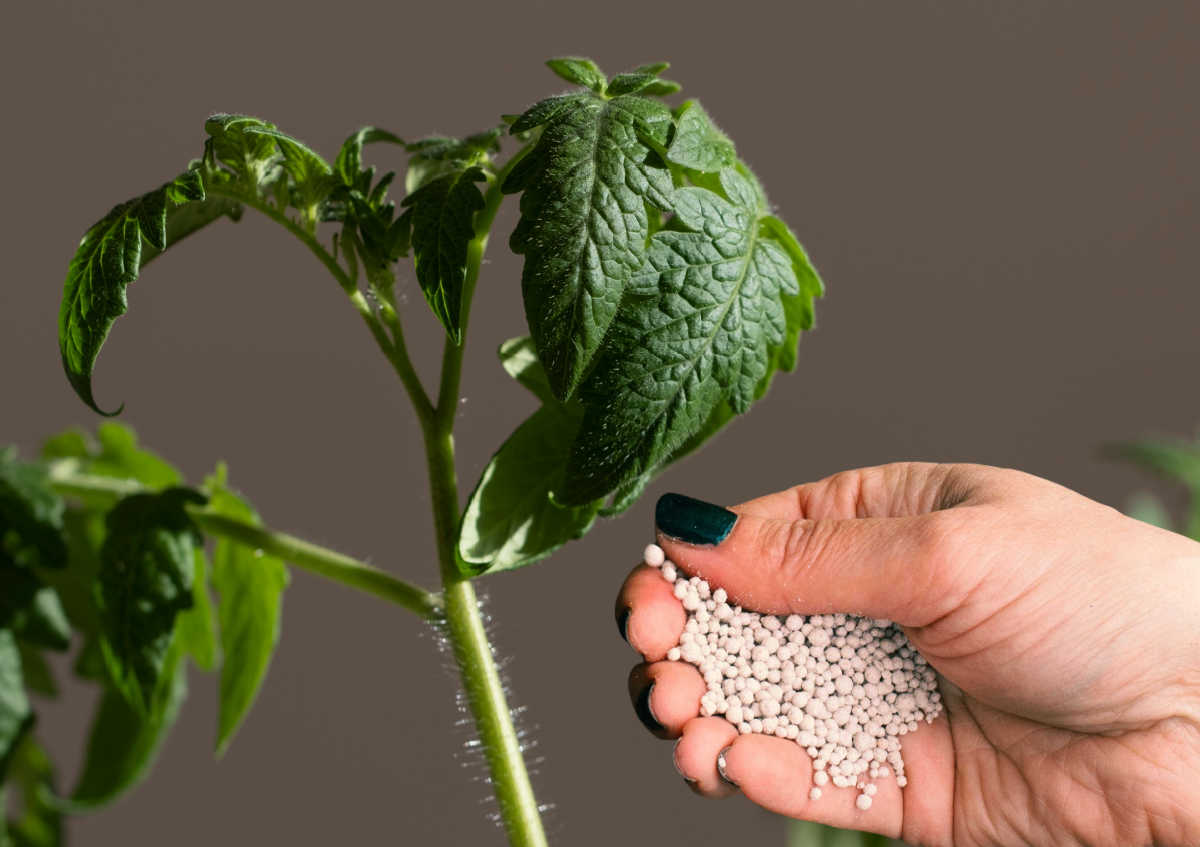
Tomato plants need nutrients in the form of a balanced fertilizer with a good mix of nitrogen, phosphorus, and potassium at initial planting time. However, adding too much fertilizer can also cause tomato leaves to curl.
- Too much nitrogen can cause the leaves to curl downward
- Fruit production can be stunted
- The stems may become unnaturally thick
What to do:
- This problem generally fixes itself in time. Leaf curl of this type has little impact on your harvest or the plant’s health
- The best way to avoid this type of leaf curl is to avoid overfertilizing
- Test your soil with a soil test kit to determine whether extra nitrogen is needed
Transplant shock can cause tomato leaf curling

Tomato plants are often grown from cuttings as well as from seed. When new seedlings are transplanted into your garden, the plants can undergo stress.
- The leaves can curl upward or downward
- They may feel thick or leathery
What to do:
- Harden new plants slowly to let them get used to garden conditions
- Transplant on a cool day
- Using row covers can be a temporary help
Excess pruning can cause tomato leaf curl

Tomato plants often develop suckers at the leaf axils, which are generally pruned away. Leaving them can make the plant unstable and hard to manage.
It is common to remove tomato suckers that grow at leaf axils to keep the plant stable and lower leaves to prevent soil-borne diseases. However, overpruning can shock the plant and cause the leaves to curl.
- The leaves curl inward or upward to protect from moisture loss
- They will remain green but feel firm and leathery
- The curling starts on the bottom leaves and moves up the plant
What to do:
- Instead of pruning all at one time, prune gradually over a few weeks
- Water the plant after pruning
- The problem is usually short-lived
Herbicides and weed killers can cause leaf curl
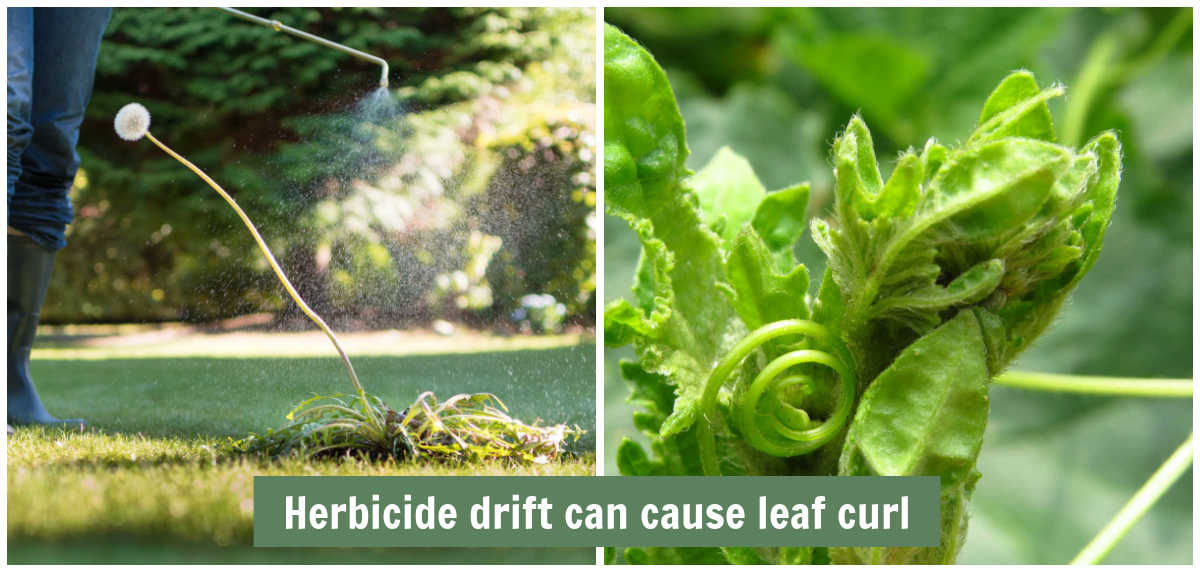
Some weed killers used on lawns near your vegetable garden can cause tomato plant leaves to curl. 2,4-D and dicamba are 2 that are particularly problematic.
Even if herbicides are not used in your yard, their drift is caused by wind. The herbicide drift might even come from a nearby yard!
- Leaves will cup, twist, and curl abnormally
- Can curl either upward or downward
- Often occurs with stunted growth and twisted stems
- Can also be caused by contaminated compost
What to do:
- Avoid using weed killers on lawns near edible plants
- There is no cure for herbicide-caused leaf curl
- Some plants may recover, and others will die
- Make your own compost or purchase from reputable suppliers
Pests feeding on tomato plants can cause curled leaves

Pests such as whiteflies, aphids, and broad mites often feed on tomato plants, and this can cause the plant leaves to curl.
- The leaves can be cupped with yellow margins
- Curling is upward, and growth may be stunted
What to do:
- Inspect plants often for insects and remove them promptly
- Practice crop rotation to help prevent soil-borne pathogens and limit overwintering insects
- Use companion plants to repel tomato pests
Protip: Plant your companions a few weeks ahead of your tomato plants. My favorites are: nasturtiums, oregano, marigolds, and chives.
Tomato viruses that cause leaf curl
Not all leaf curling in tomatoes is caused by environmental stress or garden errors. Several viruses also cause tomato leaves to curl:
- Curly top virus
- Tomato yellow leaf virus
- Tomato mosaic virus
The effects of these viruses are likely to be permanent, so it is important to understand them.
Curly top virus in tomatoes
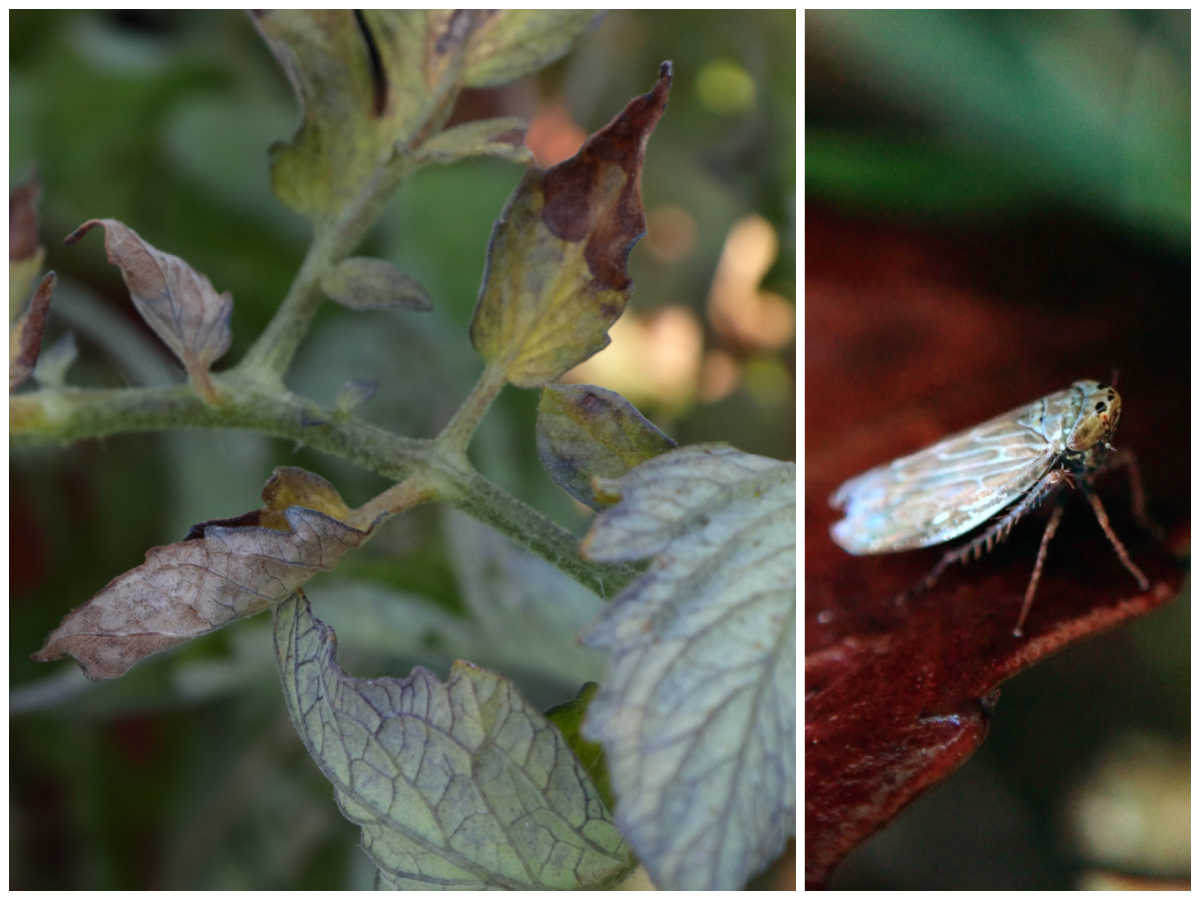
Another cause of tomato leaves curling is the tomato curly top virus. This curly leaf tomato disease virus is transmitted by a beet leafhopper, which feeds on the sap of infected plants and spreads the disease to other plants.
- The smaller leaves at the top of the tomato plant grow in a wiry pattern and curl
- The leaves of infested plants have a purplish discoloration on the undersides
- Leaves are crinkled and cupped upward
- They may also look roughened
What to do:
- Inspect tomato plants for beet leafhoppers before adding them to the garden
- Practice crop rotation
- There is no cure for the virus
- Remove infected plants to keep the virus from spreading
Tomato yellow leaf curl virus
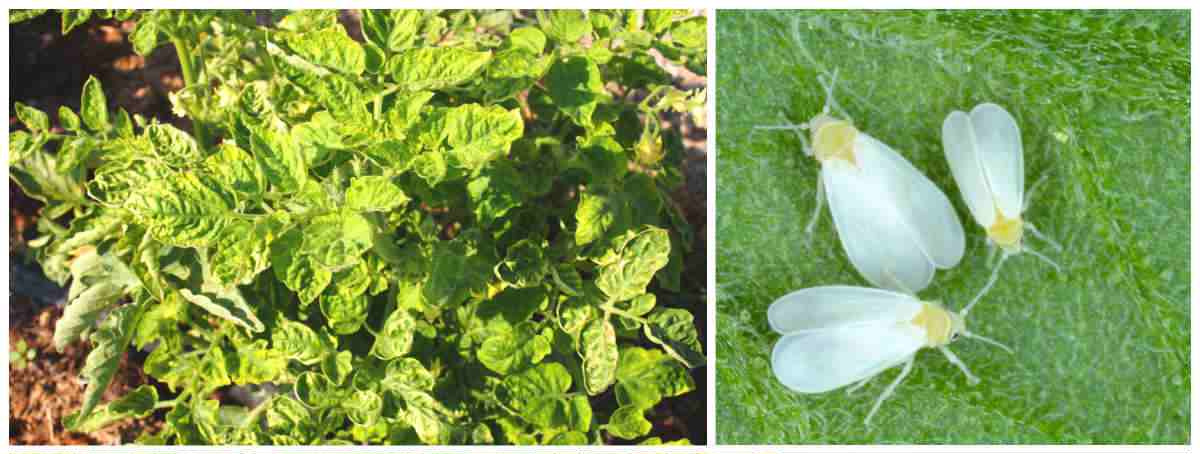
The tomato yellow leaf curl virus (TYLCV) is spread by the sweet potato whitefly. The disease is worse when temperatures are high and humidity is low.
- The leaves are small with yellow between the veins
- They curl upwards and towards the middle of the leaf
- They have shortened shoots
- New growth is affected more than older leaves
- The yield of tomato plants will be greatly impacted
- Easily spreads from one plant to another
What to do:
- Inspect plants often for whiteflies
- There is no cure for the tomato yellow leaf curl virus
- Infected plants should be removed and disposed of
- In the future, choose varieties that offer resistance to viruses
Tomato mosaic virus causes leaf curling
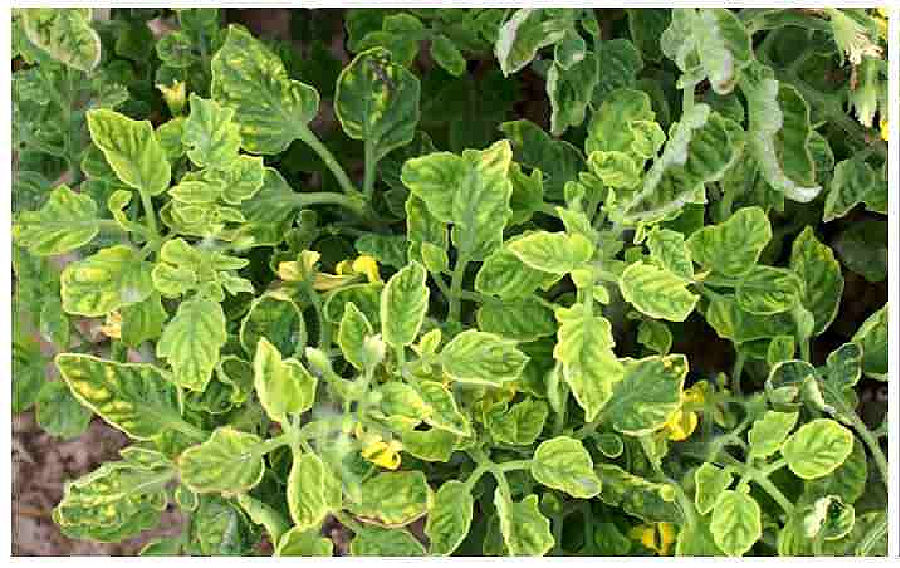
Tomato Mosaic Virus (ToMV) is a highly contagious virus that spreads through mechanical contact, infected seeds, contaminated soil, or plant debris. It can cause leaf curling in tomato plants.
- The leaves curl upward
- They become distorted and crinkled
- Leaf color is light green, with dark green patches
- Accompanied by stunted growth
What to do:
- Wash your hands and disinfect tools often
- Keep the garden free of weeds, which may harbor the virus over the winter months
- There is no cure for tomato mosaic virus
- Dispose of infected plants so the virus does not spread
Protip: Choose seeds labeled with V or TMV resistance. Some disease-resistant varieties are:
Related posts about tomato problems
Do you have other tomato plant problems bothering you this year? These tomato guides will help:
- 30 Tomato Plant Problems: What’s wrong with my tomato plant?
- Say Goodbye to Black Spots on Tomato Leaves: Natural solutions!
- Yellow Leaves on Tomato Plants: Why it happens and how to fix tt

Share this post about tomato plant leaves curling on X
If you enjoyed this post about the causes of tomato leaf curl, be sure to share it with a gardening friend.
🍅 Are your tomato leaves curling up or down? Don’t assume disease right away! Tomato leaf curl is often caused by heat, watering problems, transplant shock, fertilizer, pests, or stress—and the direction of the curl can give clues.… Share on X
Pin this post for tomato plant leaves curling
Would you like a reminder of this post for the causes of curled tomato leaves? Just pin this image to one of your gardening boards on Pinterest so that you can easily find it later.
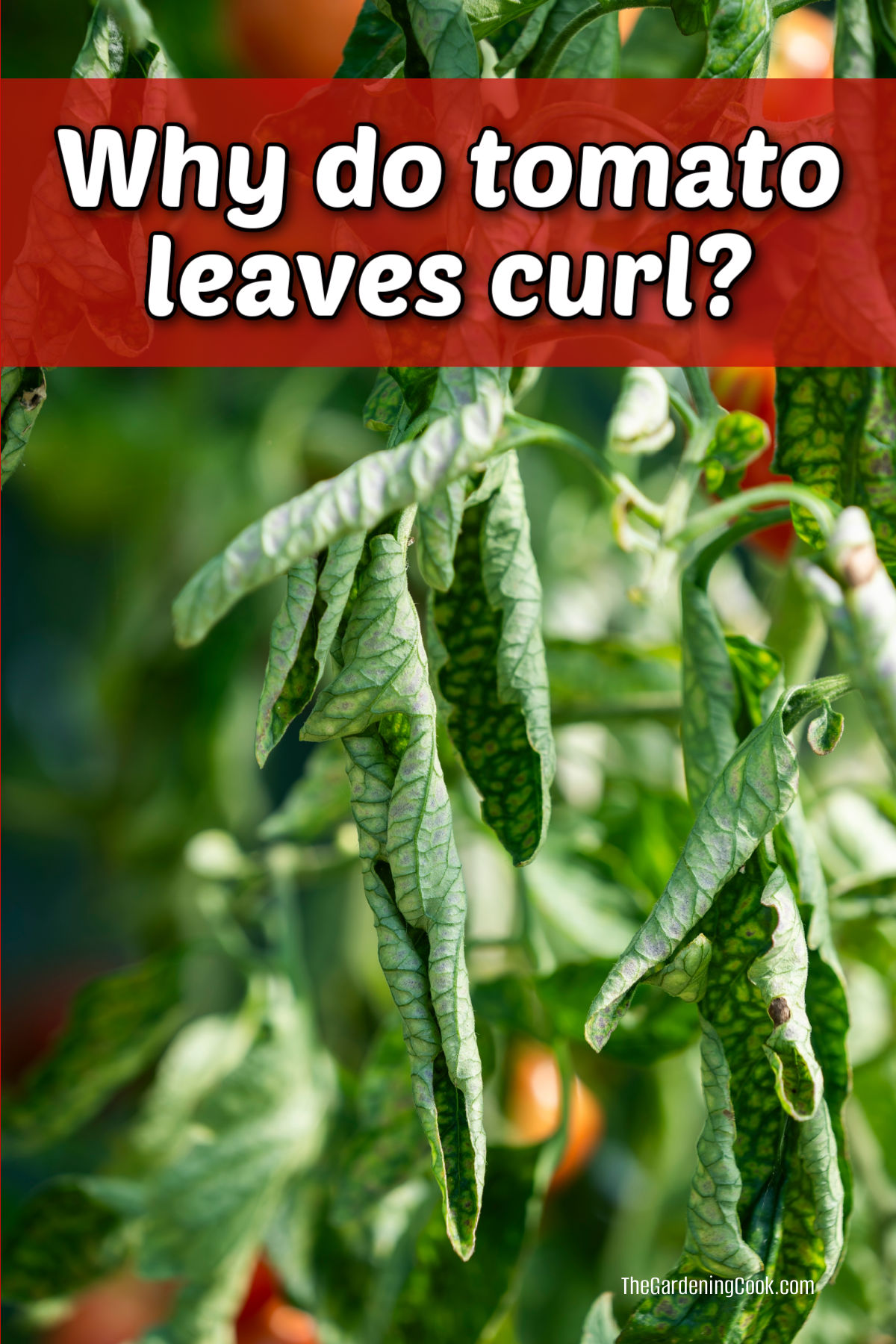
Admin note: This post about tomato plant leaves curling first appeared on the blog in June of 2014. I have updated the post to add more information about leaf curl, a printable, and a video for you to enjoy.
Printable - Causes and Solutions for Tomato Leaf Curl

Leaf curl is a common problem when growing tomato plants. Many of the causes are environmental and the plants will recover with correct treatment.
In other cases, the problems will result in the plant dying.
This printable shows how to fix the problem if possible and when it is time to discard the plant. Print it out and add it to your garden journal as a handy picture reference.
Materials
- Printer paper
Tools
- Computer
- Printer
Instructions
- Load paper into your computer printer.
- Choose portrait layout and, if possible, "fit to page" in your settings.
- Print the tomato leaf curl causes and solutions list and add it to your gardening journal.
Notes

Recommended Products
As an Amazon Associate and member of other affiliate programs, I earn from qualifying purchases.
-
 Burpee 'Celebrity' Hybrid Red Tomato Slicer 35 Non-GMO Seeds for Planting Disease-Resistant and Award-Winning Variety Big Juicy Tomato for Summer Sandwiches
 -
 Purple Zebra F1 Hybrid | AAS Winning Tomato | 10 Seed Packet | Disease Resistant | Great Flavor | Perfect for Home Gardening | Easy-to-Grow Tomato | A.P. Whaley Seed Company |
 -
 Ace 55 VF Tomato Seeds for Planting – Determinate Heirloom Tomatoes with Low Acid – High Yield, Disease Resistant, Non-GMO Open-Pollinated Variety – Survival Garden Seeds (1 Pack)
Pamela @ FlowerPatchFarmhouse.com
Saturday 28th of June 2014
Gorgeous, love the Pina Colada penstemon and that dwarf Black Eyed Susan, my dwarf did not make it thru the winter. They don't seem to be as hardy for me as the others. I have gotten some of my favorite flowers from those bargain tables. My Asiatic lilies were from the Wal-Mart clear out, for $3 and they have reseeded themselves and spread, much to my delight. I have tried to grow Liatris a couple of times and I failed. I will give it another try as I just love them. Thanks for sharing, your garden looks much tidier than mine. :)
admin
Saturday 28th of June 2014
Hi Pamela. It's not always that tidy. I've been weeding like a mad woman lately. It is nice to have it at the stage where I can enjoy it instead of all the hard work though. Hope my black eyed baby makes it through the winter. I'm not so much a fan of the other one but this one is just lovely.
Carol