
Forsythia is one of the first shrubs to bloom in spring. Following the right steps for planting forsythia ensures a healthy, long-lasting shrub with gorgeous yellow flowers to enjoy every year after year.
Because of its spreading growth habit, choosing the right spot is key when deciding where to plant forsythia.
You can start with garden center plants, or take cuttings of a friend’s plant for an established look right away, more inexpensively.
This forsythia planting guide covers topics about when to plant forsythia, how deeply to plant it, and where to place it for best effect. The guide also suggests popular varieties suited to your garden space.
Some of the links below are affiliate links. I earn a small commission, at no additional cost to you, if you purchase through an affiliate link.
When to plant forsythia
Timing is one of the most important factors in how well your forsythia shrub establishes.
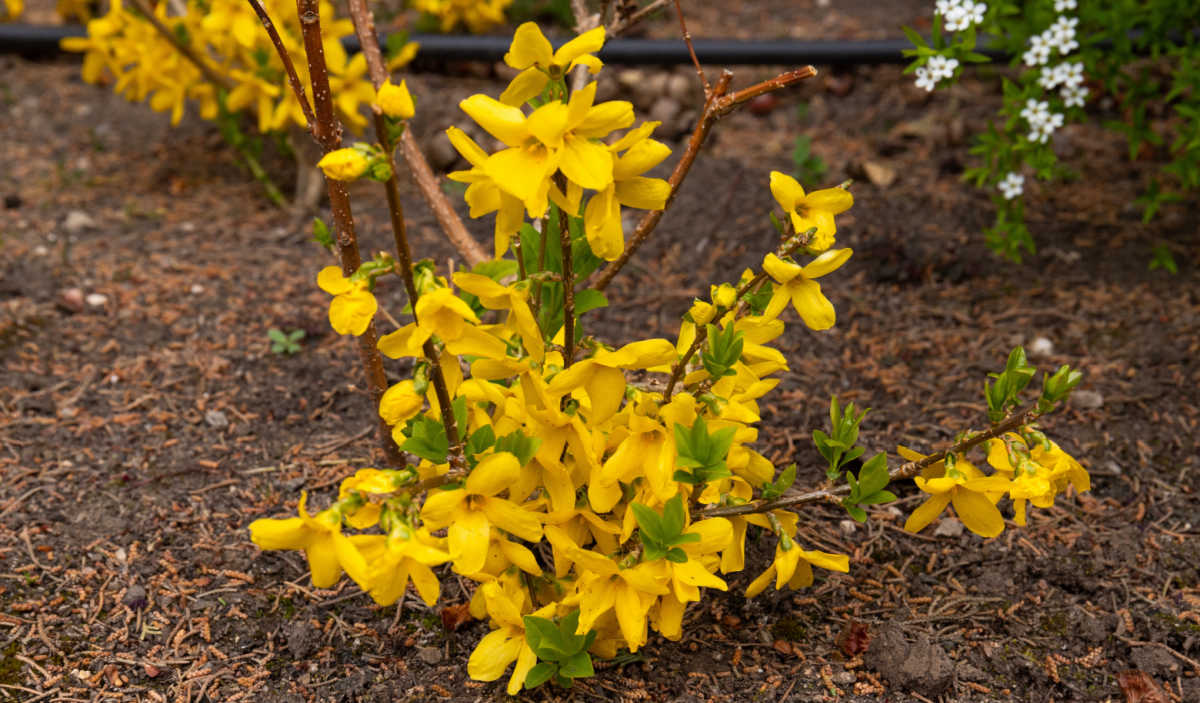
- The best time to plant forsythia is while the plant is dormant in late fall or early spring.
- In colder northern climates, early spring planting is safest. In warmer southern regions, late fall gives roots more time to establish.
- Planting forsythia at this time reduces stress to the plant and encourages strong root development.
- Soil that warmed to about 50-60°F (10-18°C) supports active root growth.
- In warm, frost-free climates, forsythia can be planted in winter.
Note: One big advantage of spring planting is that you will be able to see the color of the blooms if you purchase locally.
Where to plant forsythia
Choosing the right location helps prevent crowding and ensures strong flowering.
- Plant forsythia in a spot that gets 6-8 hours of full sun daily for the best blooms.
- Choose well-draining soil that does not stay soggy.
- Check your soil with a soil testing kit. Forsythia prefers a soil pH between 6.8 and 7.7.
- If your soil is not in this range, sublimed sulfur will help to lower the PH and powdered limestone will help to raise it.

Many local departments of agriculture will test your soil for free.
- Some varieties of forsythia can grow to 20 feet tall, so allow 3-10 feet (90-300 cm) between plants.
- Forsythia looks beautiful along fences and borders, but will need regular pruning to keep its shape.
- It can also be grown as a flowering hedge along a fence line.
- If your forsythia shrub grows too large for the spot you have chosen, you can transplant it to another location in your garden.
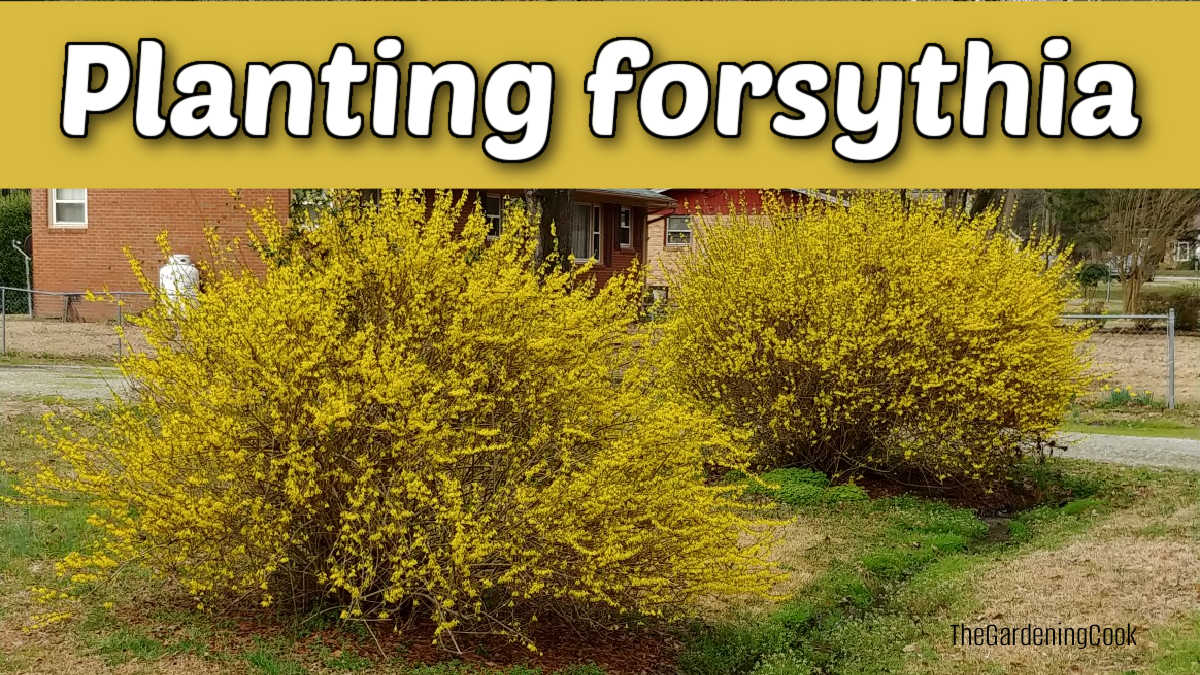
Note: My forsythia shrubs were spaced about 8 feet apart three years aog. The branches now fill in the spaces between each shrub.

How to plant forsythia from garden center pots
This forsythia planting guide will show you how to plant forsythia properly. A properly planted shrub will develop a strong root system and grow vigorously.
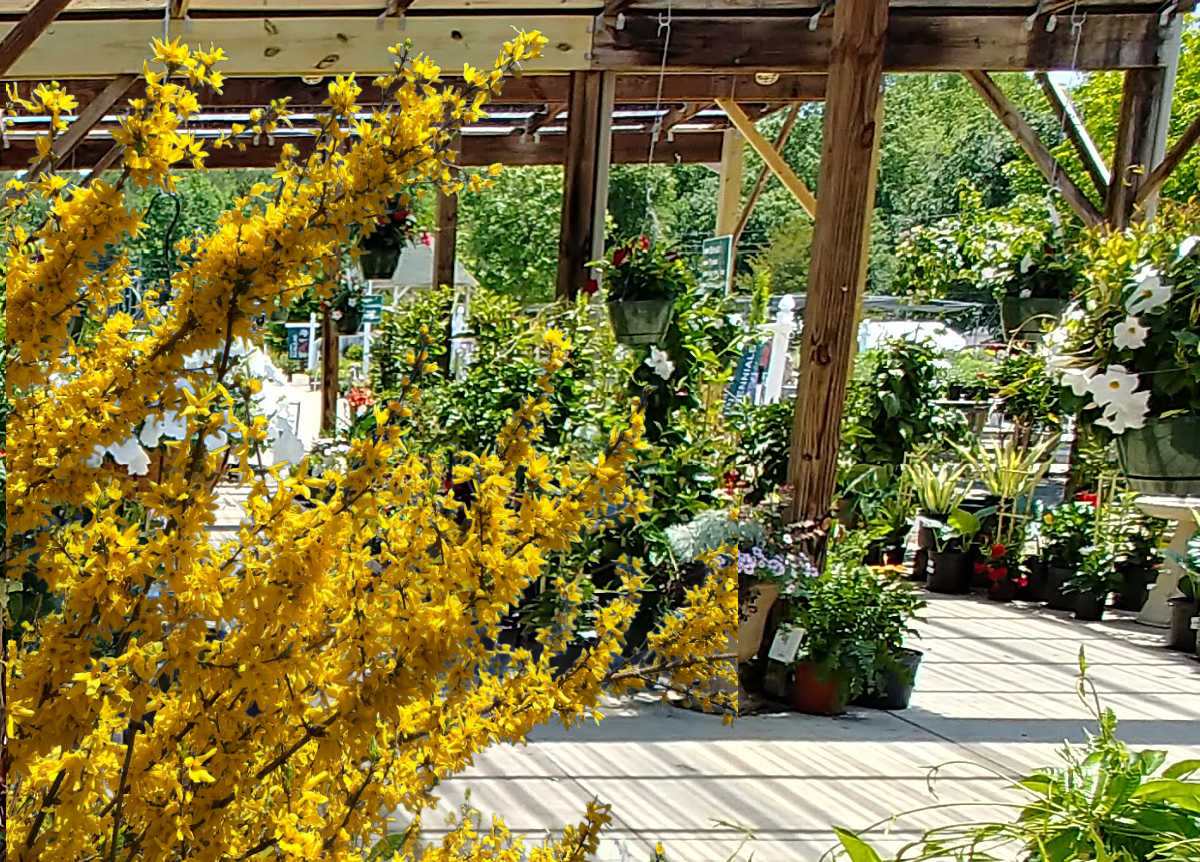
- Check your tag to see how tall and wide your plant will be at maturity. A common mistake is to plant forsythia too closely together.
- Start by digging a hole that is 2 times the width and depth of the root ball.
- Add compost or other organic matter to your hold.
- Backfill the hole with some soil and place your plant in the hole.
- Try to plant forsythia at the same level that the original plant was planted in its pot.
Watering forsythia after planting
Forsythia is quite drought-tolerant once it is established, but newly planted shrubs can suffer. Watering the area helps them to withstand the move with ease.
- Water new forsythia plants right after planting very well.
- Then, water the perennial 1-2 times a week for the first two years to establish the roots.
- You should aim for consistently moist but not waterlogged soil.
- Forsythia needs about 1-2 inches of water each week.
- Water at the base of the plant, not on the foliage, to help prevent disease.
- After watering, the soil level may look lower near the crown of the plant. Just add a bit more soil.
- Fertilizing is not needed until the plant is established.
- Mulching around the plant helps to conserve water and prevent weeds.
Pruning forsythia after planting
Mature forsythia bushes are usually pruned in early spring, after flowering.

- Unless you plan to grow it as a hedge, forsythia doesn’t need pruning after it’s planted.
- If you notice any dead or damaged branches, you should remove them at the base of the plant.
- An exception is if you plan to grow forsythia as a hedge.
- You can use hedge prunings to propagate forsythia to grow new plants.
Planting bare-root forsythia
If you’re working with bare-root forsythia, there are a few extra considerations to keep in mind. While the general planting tips above still apply, these plants arrive without soil around their roots and need a little extra care to get established successfully.
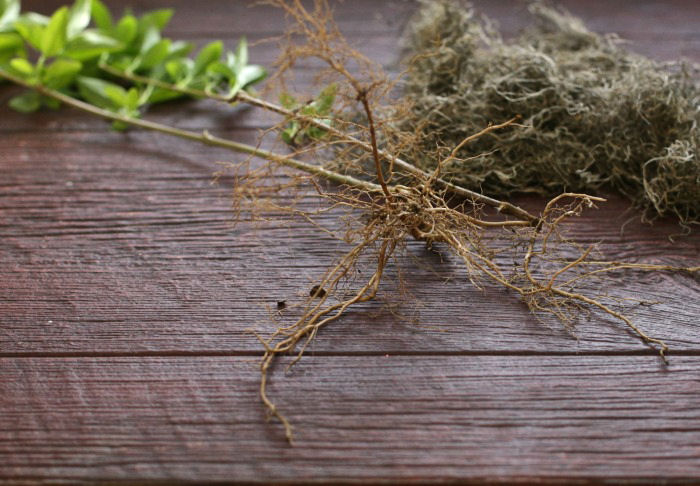
- Bare-rooted forsythia plants are less expensive but also smaller than nursery specimens.
- Since forsythia is a fast grower, a bare-root plant may be perfect for you!
- Bare-root forsythia plants come with sphagnum moss or shredded cedar around the roots.
- They won’t have leaves, but some actively growing plants may show a few leaves.
- Be sure to plant them quickly. They won’t last long in the shipping medium.
- Prepare the soil by adding extra organic matter.
- Place the plant and shipping medium in your hole.
- Water well.
Note: If you get a cold snap and don’t have time to plant the bare root specimens right away, place them in soil in pots as soon as they arrive until you can plant them outdoors.
Forsythia in winter
Forsythia is a deciduous perennial shrub. It will lose its leaves in winter, but they will return in spring.
- Even with no leaves, forsythia has a graceful, arching structure if planted where the branches are unencumbered.

- Proper planting ensures that your shrub will survive the cold temperatures and bloom abundantly in early spring.
- To enjoy forsythia color in winter, you can force the branches into flower indoors even when there is snow on the ground.
Forsythia varieties to plant in your garden
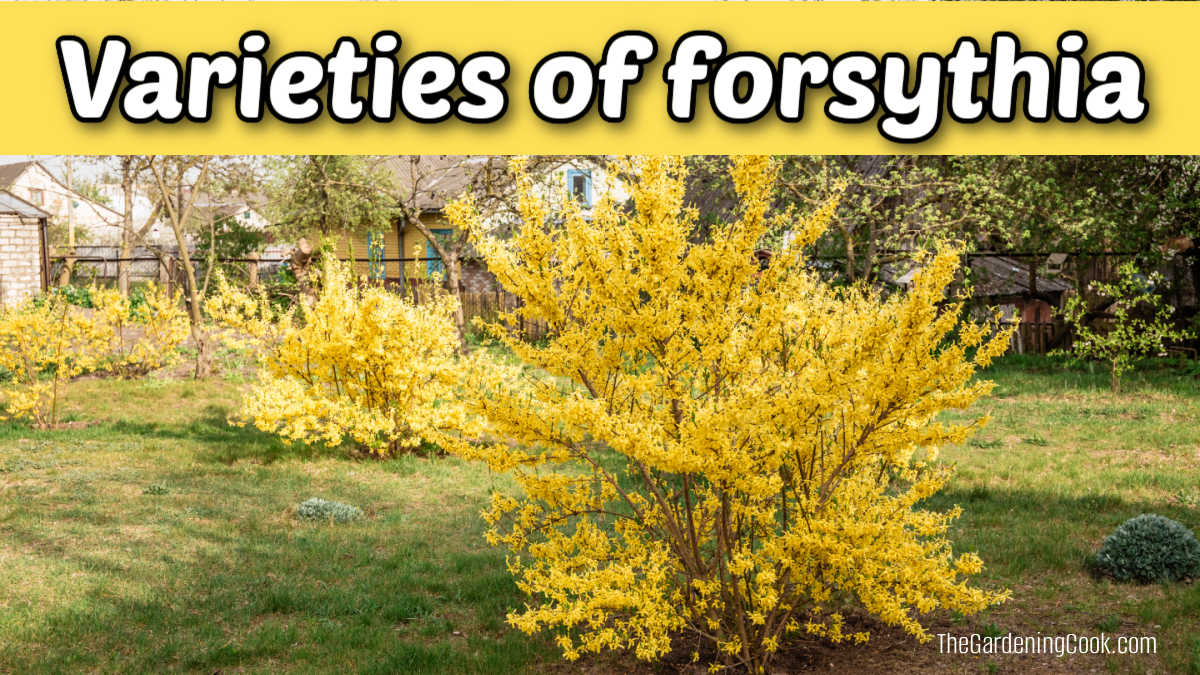
Choosing the right forsythia variety can make all the difference in your garden. Whether you want a large, showy shrub or a compact plant for a smaller space, these popular varieties are garden favorites:
- Lynwood Gold forsythia: A fast-growing, vibrant shrub with golden-yellow flowers that can brighten your garden in early spring. Perfect for hedges, borders, or mass planting.
- Gold Tide forsythia: A compact variety ideal for smaller gardens or low-maintenance borders, making it easy to plant and care for.
- Sugar Baby forsythia: A dwarf variety that grows 2–3 feet tall, great for containers, small garden beds, or as an accent plant.
- Gold Vein forsythia: A stunning shrub with variegated foliage that turns to autumn colors in fall, this variety reaches about five feet tall.
- Showoff forsythia: A new variety that is deer-resistant and will grow to 6 feet tall.
Choosing the right variety for your space:
- Large gardens or hedges: Lynwood Gold or Showoff for fast growth and abundant blooms.
- Small gardens or container planting: Sugar Baby to keep your garden manageable.
- Low-maintenance borders: Gold Vein and Gold Tide provide compact growth and easy care.
All of these varieties can be planted as nursery or bare-root plants, giving you flexibility depending on your garden space and planting preferences. Selecting the right variety ensures a healthy, long-lasting shrub that blooms beautifully year after year.
Frequently asked questions about planting forsythia
These quick answers cover common questions gardeners have after planting forsythia outdoors.
Does forsythia spread?
Yes. Forsythia has a wide, arching growth habit and can spread as much as it grows tall. Give it plenty of room when planting or plan on regular pruning.
How deep are forsythia roots?
Most roots stay in the top 12–18 inches of soil but spread outward beyond the shrub. Avoid tight spaces near foundations or crowded beds.
How fast does forsythia grow?
It’s a fast grower and can add 1–2 feet per year once established.
Can I plant forsythia near a fence or house?
Yes, but allow space for mature size. Large varieties may need frequent pruning if planted too close.
Will forsythia bloom the first year?
Sometimes, but flowering is usually lighter in the first season while roots establish.
More tips for maintaining forsythia in your garden
These related posts will help you prune, propagate, and creatively use your forsythia shrubs throughout the year.
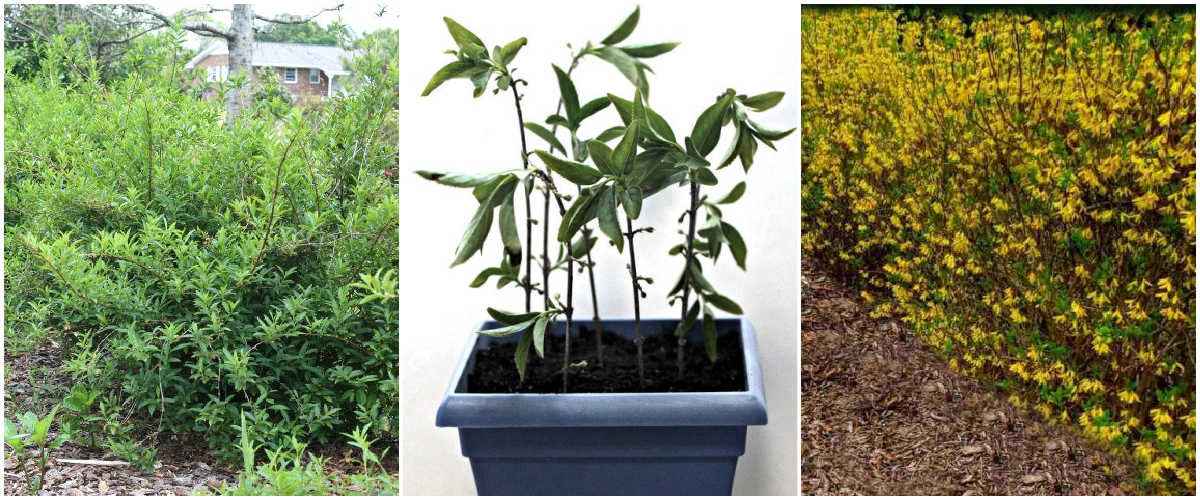
- Renovation pruning for overgrown forsythia – Learn how to bring older or overgrown forsythia shrubs back to life with step-by-step pruning tips.
- Propagating forsythia – Discover easy ways to grow new forsythia plants from cuttings in soil or water, and tip-layering
- Making a hedge with forsythia – Turn your forsythia shrubs into a stunning flowering hedge for borders, privacy, or decorative fencing.
Share this post for planting forsythia on X
If you enjoyed learning how to plant forsythia, why not share this guide with a friend?
Forsythia is one of the first perennials to bloom in the spring, but when should it be planted? Get tipsfor planting, growing and pruning forsythia to take advantage of those cheery spring blooms. Share on XPin these tips for planting forsythia
Would you like a reminder of this post showing how to plant forsythia? Pin this image to one of your gardening boards on Pinterest so that you can easily find it later.
Admin note: This guide to forsythia planting first appeared on the blog in March 2018. This post has been updated with new photos, a how-to plant printable, and a slideshow video.
How to Plant Forsythia for Healthy Spring Blooms
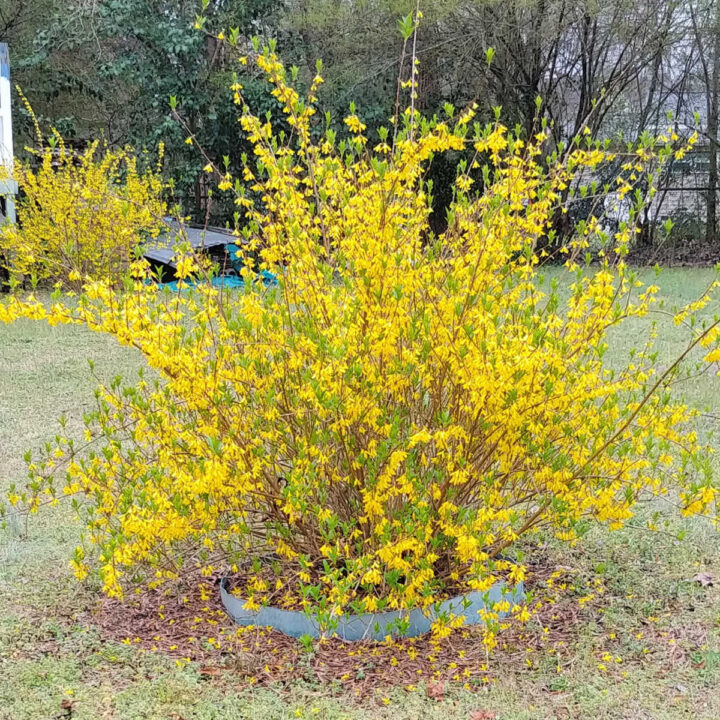
Learn how to plant forsythia the right way for strong roots, healthy growth, and masses of bright yellow spring flowers. Includes tips for choosing the best location, proper planting depth, watering after planting, and special steps for bare root shrubs.
Materials
- 1 forsythia plant in a pot
- 1 forsythia bare-root plant (optional)
Tools
- Shovel
- Compost or other organic matter
- Watering can or hose
- Mulch
- Bucket of water (optional, for bare-root plants)
Instructions
- Choose a location that gets 6-8 hours of sunlight a day.
- The best time to plant forsythia is early spring or late fall, when there is no frost or freeze warning.
- Space plants 8 feet (2.4 meters) apart.
- (Optional) Soak bare-root plants 1-2 hours.
- Choose well-draining soil with a pH of 6.8 to 7.7.
- Dig a hole twice the size and width of your root ball.
- Backfill with little soil, so the plant sits at the same level as it did in the pot.
- (Optional) Spread the roots of bare-root plants outward in the hole.
- Add soil to the hole until it is level with the ground.
- Water deeply and add more soil if needed.
- Mulch to conserve water and suppress weeds.
Notes

Recommended Products
As an Amazon Associate and member of other affiliate programs, I earn from qualifying purchases.


Lizzie
Sunday 29th of August 2021
I planted a forsythia shrub about a foot tall back in March. It is now almost September and it seems hardy but has not grown one inch! I planted three trees and a blackberry bush at the same time and they are all flourishing. I thought maybe an animal was eating it but that does not appear to be the case. Help!
Carol Speake
Monday 30th of August 2021
It is hard to diagnose any plant problems without seeing them in person. My forsythias did not grow much the first year but took off on the second.
Maria M Dios
Saturday 24th of April 2021
Carol, could you let me know? By my email below. Do I plant my new forsythia shrub that I bought at a landscaper's market ....with or without the burlap it is wrapped in? It has no container. Thank you for your wonderful article! Maria
Carol Speake
Saturday 24th of April 2021
I haven't planted a burlap wrapped plant but my understanding is that you leave the burlap0 to hold the roots while you position the plant in the hole, then cut away as much of the burlap as you can before you add soil to the hole.
Pat lubon
Sunday 14th of March 2021
Can forsythia grow successfully in st. Lucia in the caribbean
Carol Speake
Monday 15th of March 2021
That would be a question to ask a local landscaper or garden center. I'm not familiar with conditions for various plants around the world.
Brian of Nazareth
Friday 15th of May 2020
What is a bare toot plant? In fact, what in the blue hell is a bare toot?? Did you mean bare tooth?
Carol Speake
Saturday 16th of May 2020
Unless I have a typo in my post, I referred to bare root plants, not bare toot. Bare root plants are plants that are not actively growing - normally perennial plants that are dug up and stored without any soil around their roots. Many nurseries online sell bare root plants and ship them when it is time to plant them in a garden.
Vanessa Rembert
Wednesday 1st of April 2020
Hi. I just planted 2, store-bought bushes that have about 10 branches coming off of them and a few flowers. They’re young bushes and the branches seem to be wild with a mind of their own. Should I tie them together or insert a post to encourage everything to take well? The long branches are sort of just laying on the ground.
Carol Speake
Wednesday 1st of April 2020
It is the growth habit of the plants that they do that. In fact, where the tips hit the ground, they will root into a new plant if secured to the soil. I just let mine do what they will. The plant will eventually send up new suckers that will grow more upright.