ZZ Plant Care: How to Grow Zamioculcas zamiifolia
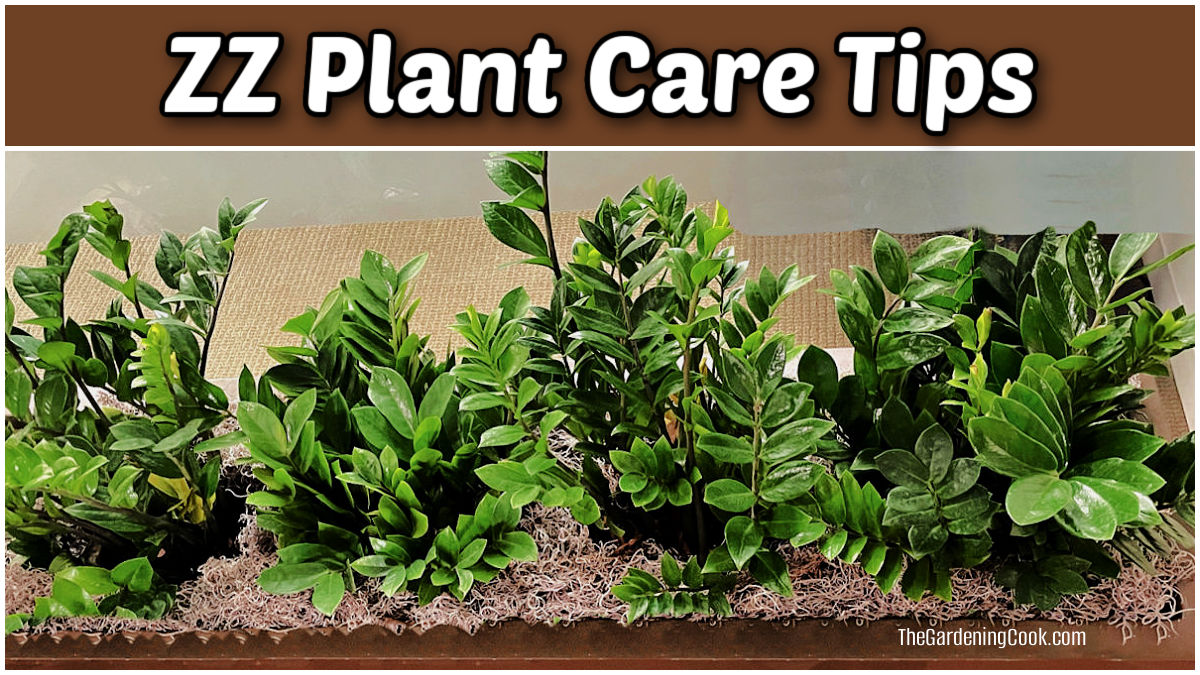
The ZZ plant (Zamioculcas zamiifolia) is one of the easiest houseplants to grow indoors. ZZ plant care is mostly about getting the watering right.
Let the soil dry out well between waterings, give your plant bright, indirect light when possible, and use well-draining soil. With the right growing conditions, a ZZ plant can thrive for years with surprisingly little attention.
With glossy green leaves, a naturally upright growth habit, and thick underground rhizomes that store water, this low-maintenance indoor plant can handle missed waterings and lower-light conditions better than many other houseplants.
In this guide, you’ll learn how to grow and care for a ZZ plant, including the best light, soil, watering, fertilizing, pruning, and repotting practices, plus how to propagate your plant and troubleshoot common problems.
Some of the links below are affiliate links. I earn a small commission, at no additional cost to you, if you purchase through an affiliate link.
ZZ plant care at a glance
Here is a quick guide to ZZ plant growing conditions:
- Botanical name: Zamioculcas zamiifolia
- Common names: ZZ plant, eternity plant
- Family: Araceae
- Plant type: Tropical perennial
- Toxicity: Toxic to dogs and cats
- Maintenance level: Low
- Sunlight needs: Bright, indirect light, and tolerates lower light
- Soil requirements: Loose, well-draining, houseplant soil
- Watering needs: Water when the soil has dried out
- Mature size: 2-4 feet (60-100 cm)
- Bloom time: Rarely flowers indoors
- Fertilizing needs: Light feeding twice a year
- Temperature needs: Warm indoor environments between 60°F and 75°F (15°C to 24°C)
- Humidity requirements: Adapts easily to average home humidity
- Hardiness zones: USDA 9-10
 Is a ZZ plant toxic to cats and dogs?
Yes. ZZ plants are toxic to cats and dogs if eaten. The plant contains insoluble calcium oxalates that can irritate the mouth and digestive tract. If you have pets that like to chew on houseplants, keep your ZZ plant out of their reach.
ZZ plant care
The ZZ plant is easy to grow because it is extremely tough, survives neglect, and can tolerate low light and infrequent watering. They are the perfect plant for those new to growing indoor plants.
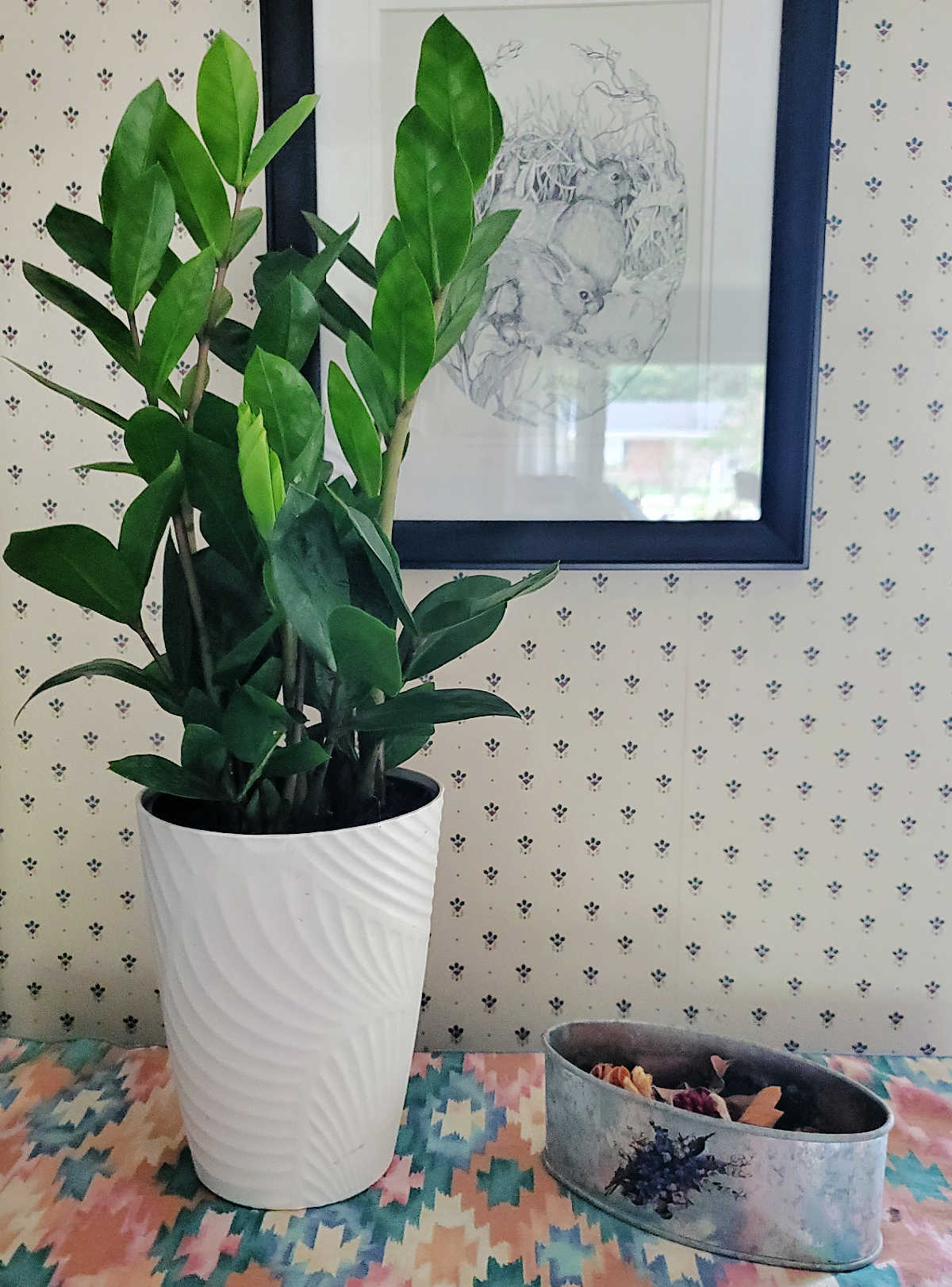
ZZ plant sunlight needs
While ZZ plants are great for low-light conditions, this does not mean that you should put them in the darkest area of your home!
- Bright, indirect light is ideal.
- ZZ plants tolerate surprisingly low light.
- I have even grown my plants on the top of an interior room bookcase!
- Avoid harsh direct afternoon sun.
- Lower light generally means slower growth.
ZZ plant soil requirements
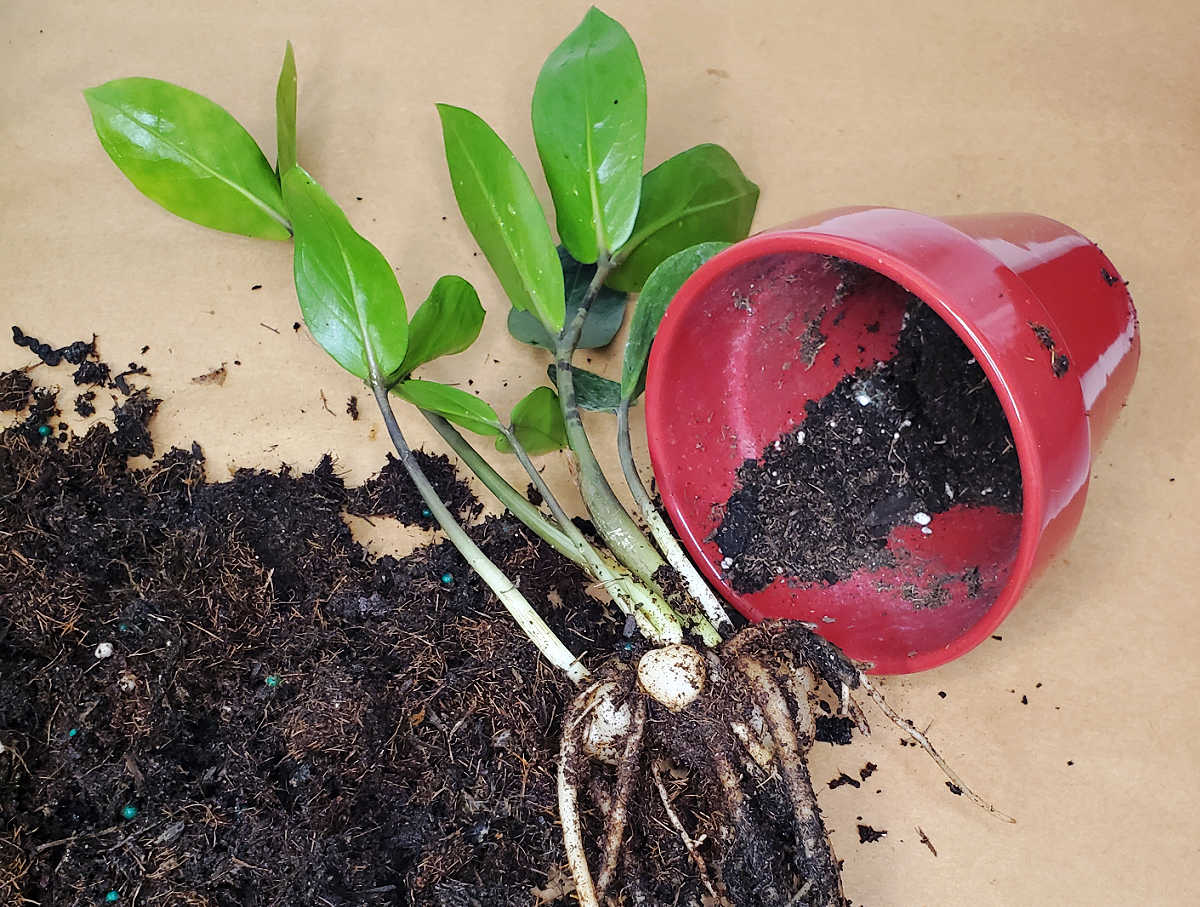
- Use a well-draining houseplant potting mix.
- You can also use a soil formulated for ZZ plants, or a cactus/succulent soil.
- Add perlite if the mix seems to retain too much moisture – ZZ plants should be slightly too dry rather than consistently wet.
- Always use a container with drainage.
Watering ZZ plant
One of the keys to ZZ plant care is watering. It is important not to water on a fixed weekly schedule. Check the soil instead.
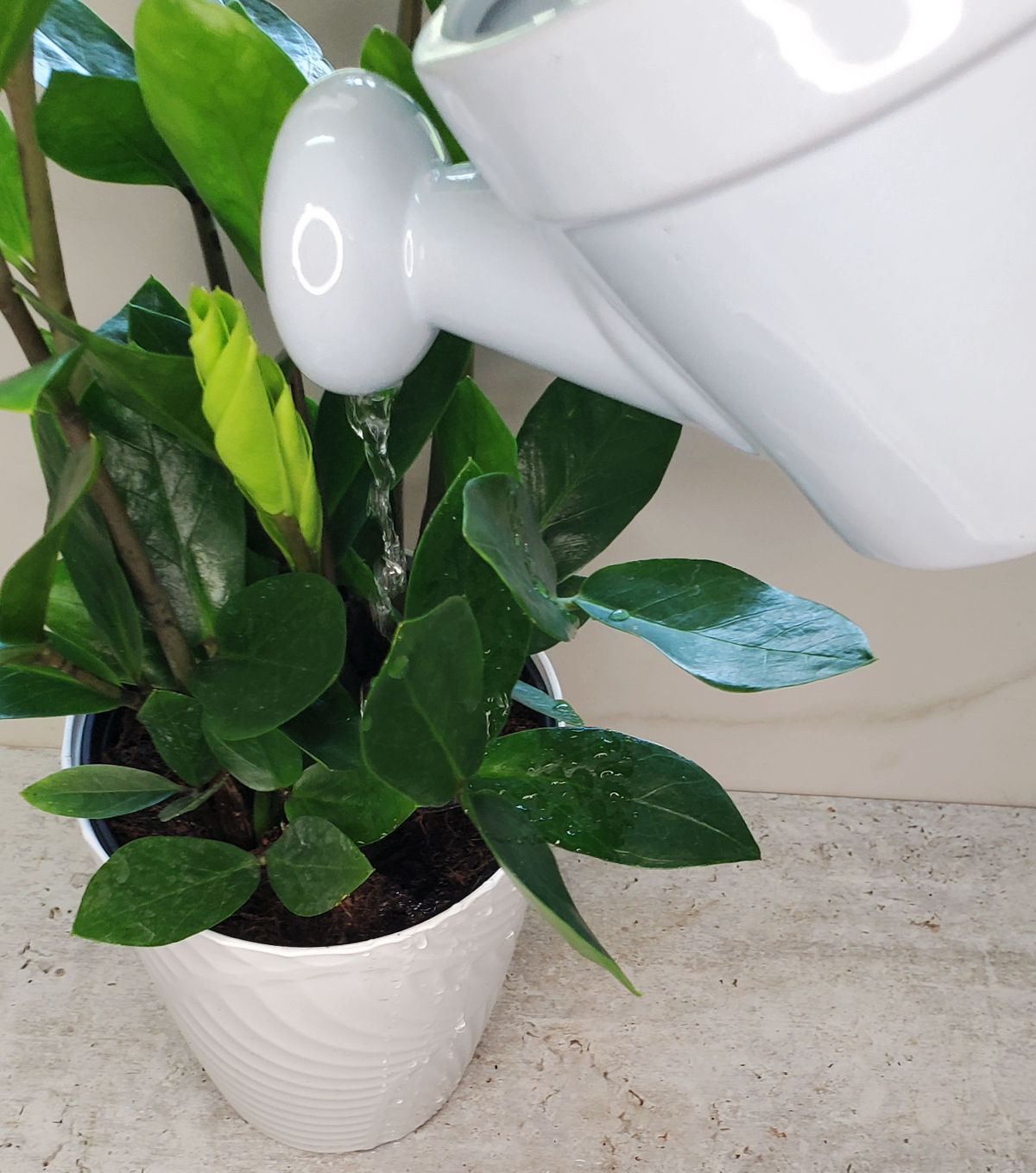
- Allow the potting mix to dry thoroughly.
- Water deeply until the water drains from the bottom.
- Empty the excess water.
- Let the soil dry again before watering – even if this means only 1-2 times a month.
Temperature and humidity for ZZ plant
ZZ plants don’t need special humidity treatment in an average home.
It’s more important to avoid cold temperatures and drafts. Protect ZZ plants from temperatures below 45°F (7°C).
Fertilizing ZZ plant
ZZ plants are slow growers and don’t require heavy feeding.
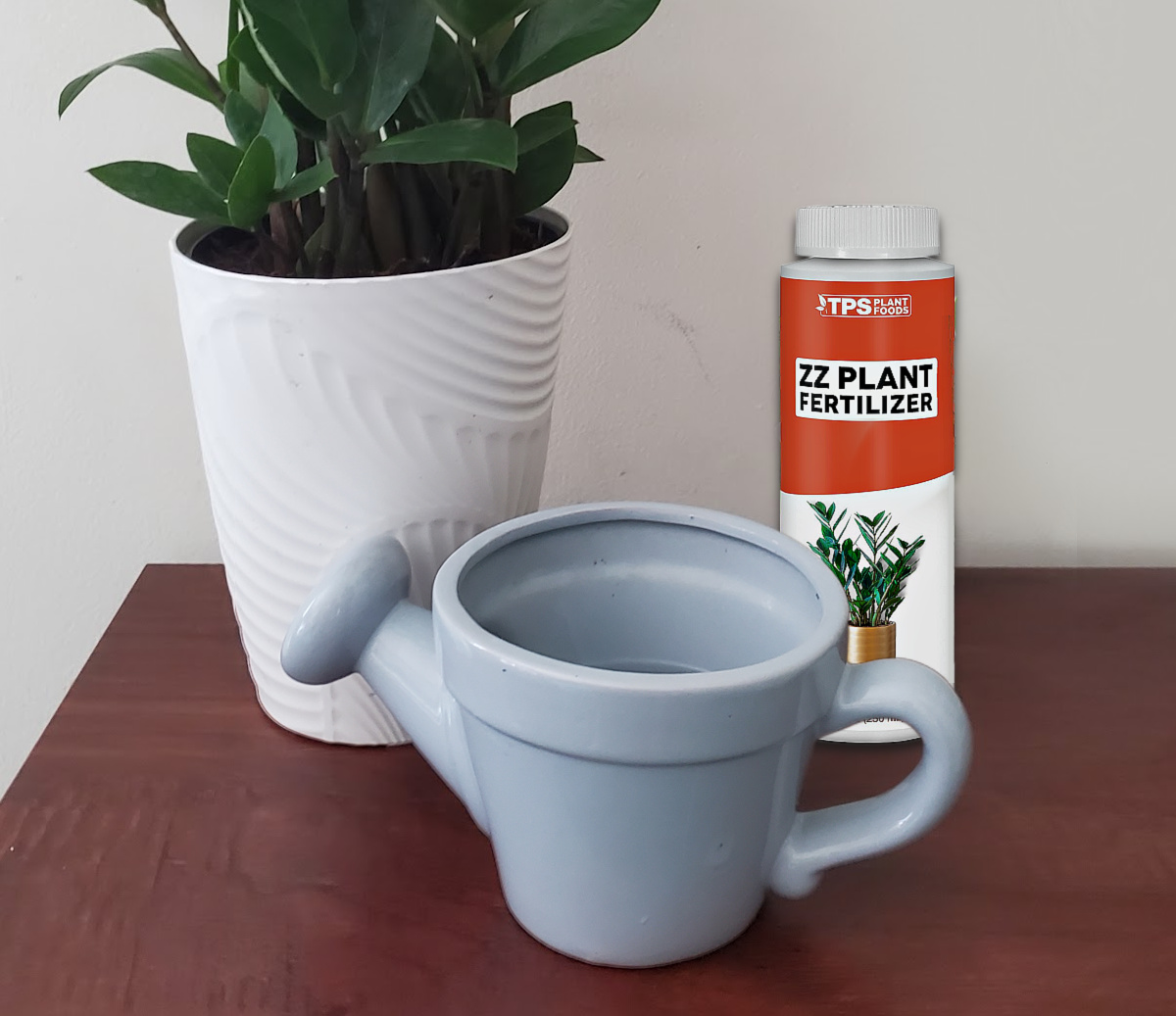
- Fertilize once or twice a year during active growth periods (spring and summer).
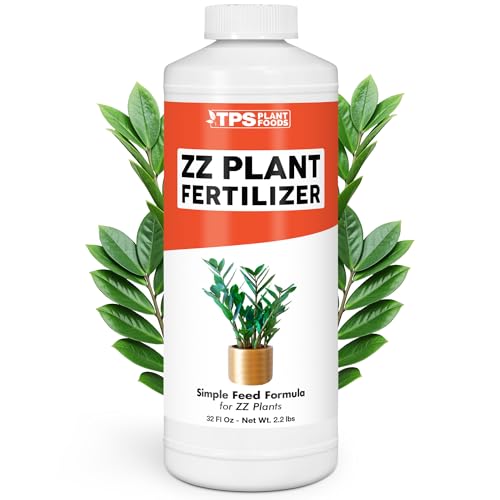
- Use a balanced houseplant fertilizer.
- Dilute according to label directions.
- Don’t overfertilize since this causes salt buildup and root burn.
- Reduce or stop fertilizing during the darker winter months.
Pests and diseases affecting ZZ plants
ZZ plants are quite resistant to most problems, but like any houseplant, they can encounter some pests, diseases, and other issues.
- Be on the lookout for spider mites, mealybugs, aphids, and scale. Treat these if found.
- Root rot from overwatering is a common problem.
- Leaf spot is a fungal disease that sometimes occurs. Avoid water on the leaves and increase air circulation around the plants.
Repotting ZZ plants
The slow growth of ZZ plants is normal, and not a sign for repotting.
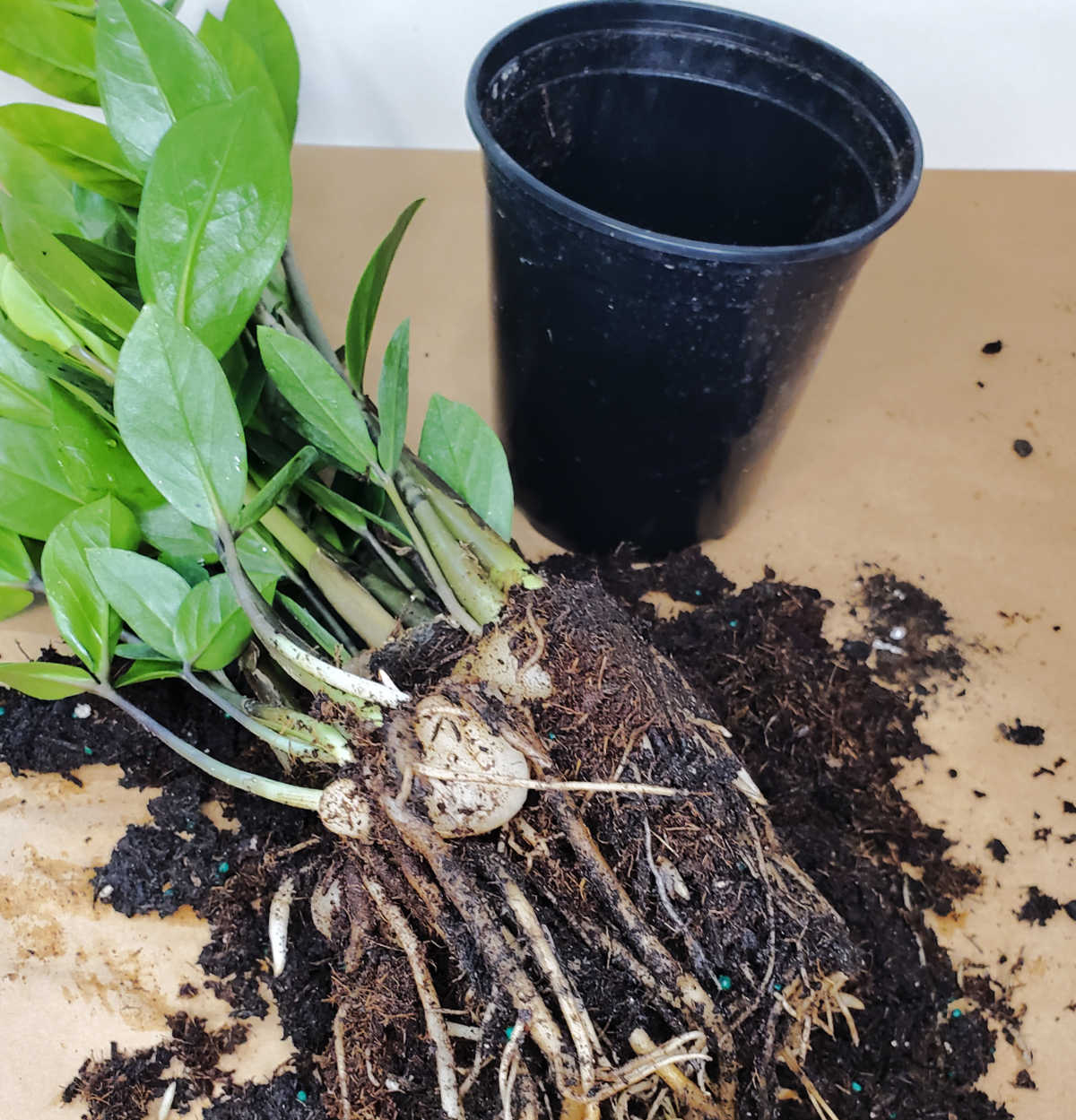
- ZZ plants don’t need frequent repotting.
- Repot when the roots and rhizomes have filled the container.
- Move up only one pot size.
- Make sure the new container has drainage.
- Spring is a convenient time to repot ZZ plants.
Pruning ZZ plants
Occasional pruning can keep your ZZ plant from getting thin and leggy.
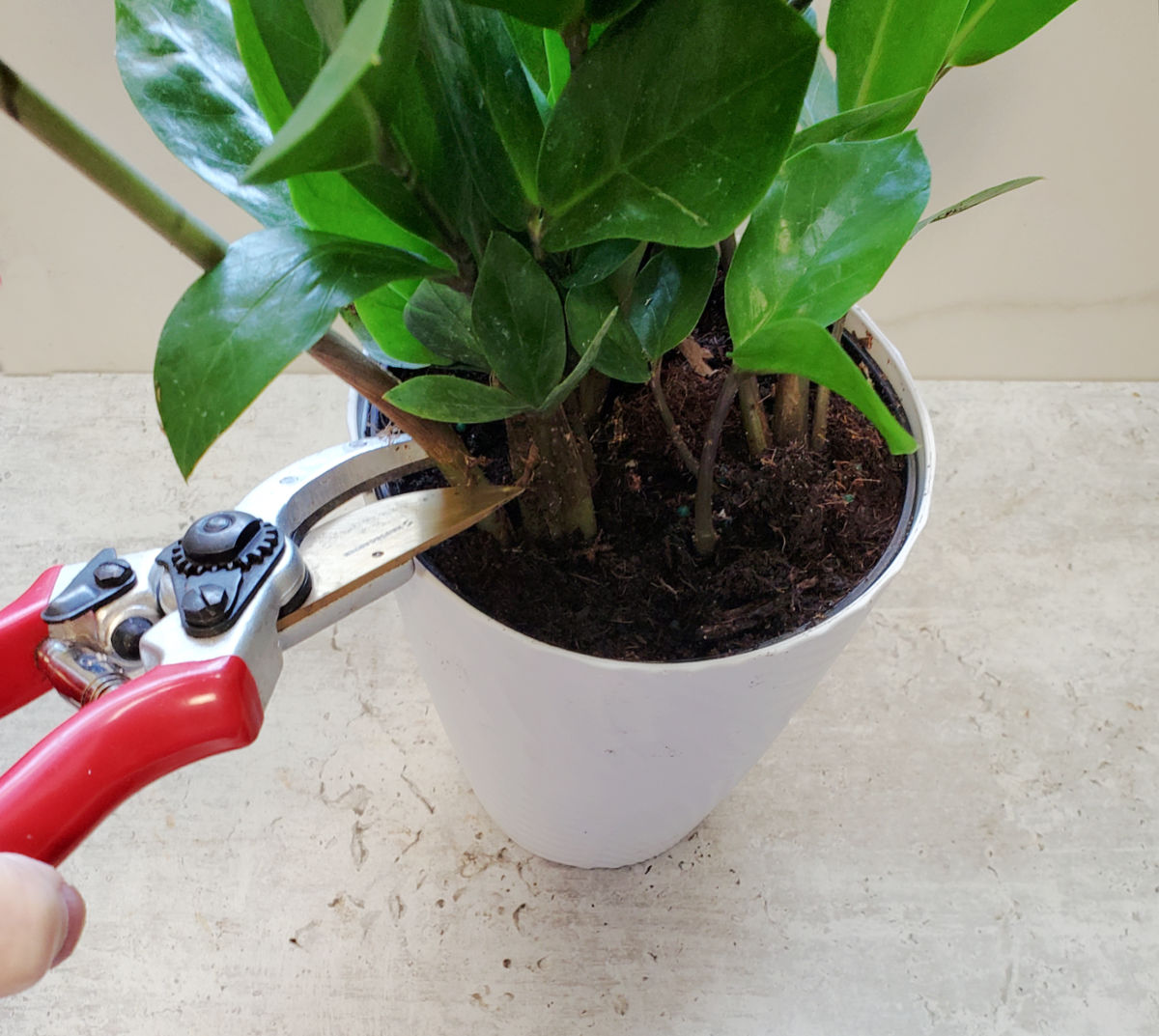
- Remove yellow leaves just above a leaf node.
- Prune to control your plant’s shape.
- Remove any heavily crowded foliage.
- Cut stems close to the soil line with clean, sharp pruners.
- Since new growth appears close to the soil, avoid pruning the center of stems.
How does a ZZ plant grow?
ZZ plants have a slow growth rate and can reach a height of about 3–4 feet (90 cm–1.2 m) indoors over several years. Rather than growing continuously, a ZZ plant typically produces new growth in bursts.
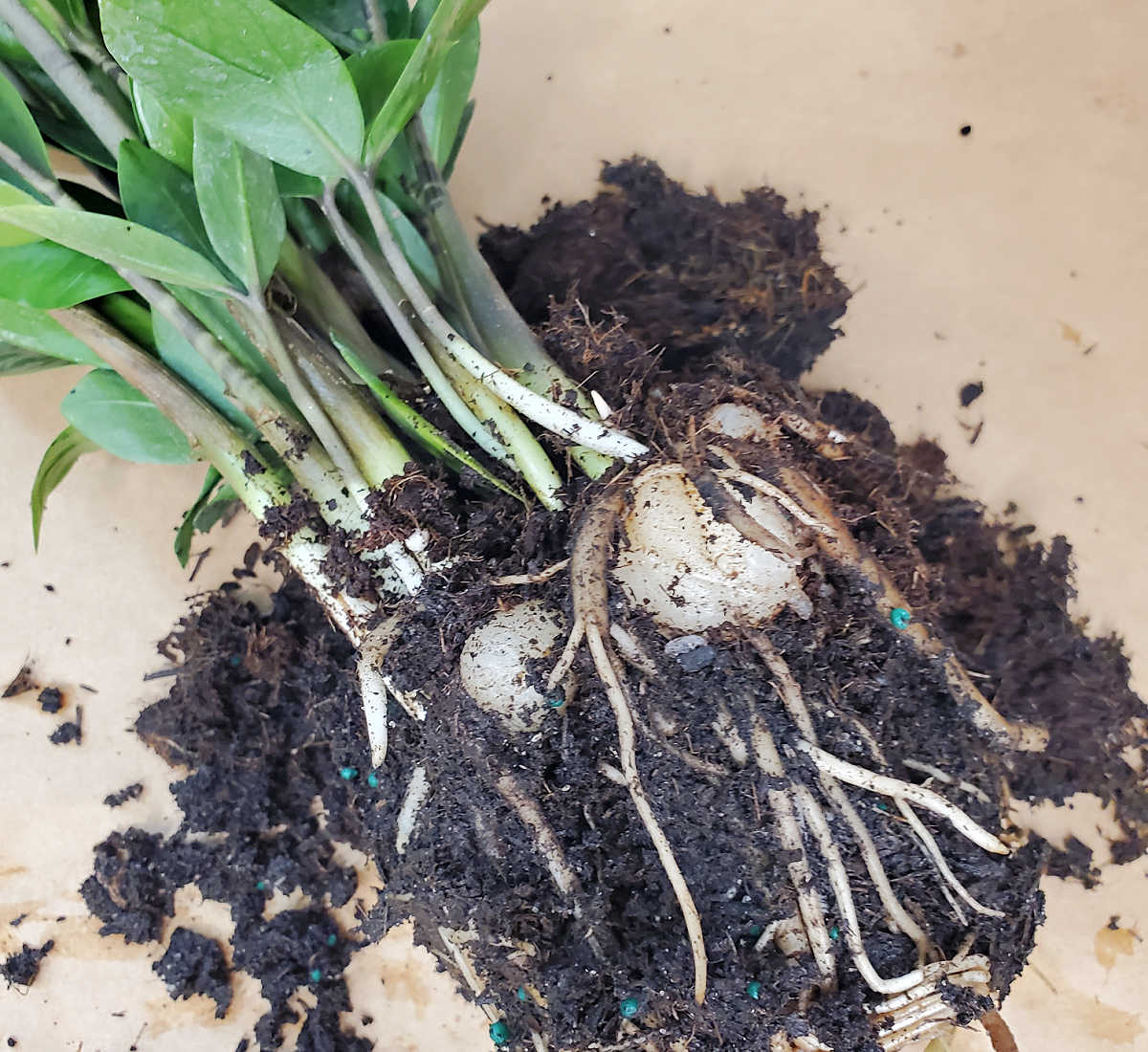
ZZ plants grow from underground rhizomes. These thick, fleshy structures hold water. The rhizomes plump up when the plant is watered and shrink slightly as the water is used.
This allows the plant to go long periods without needing to be watered.
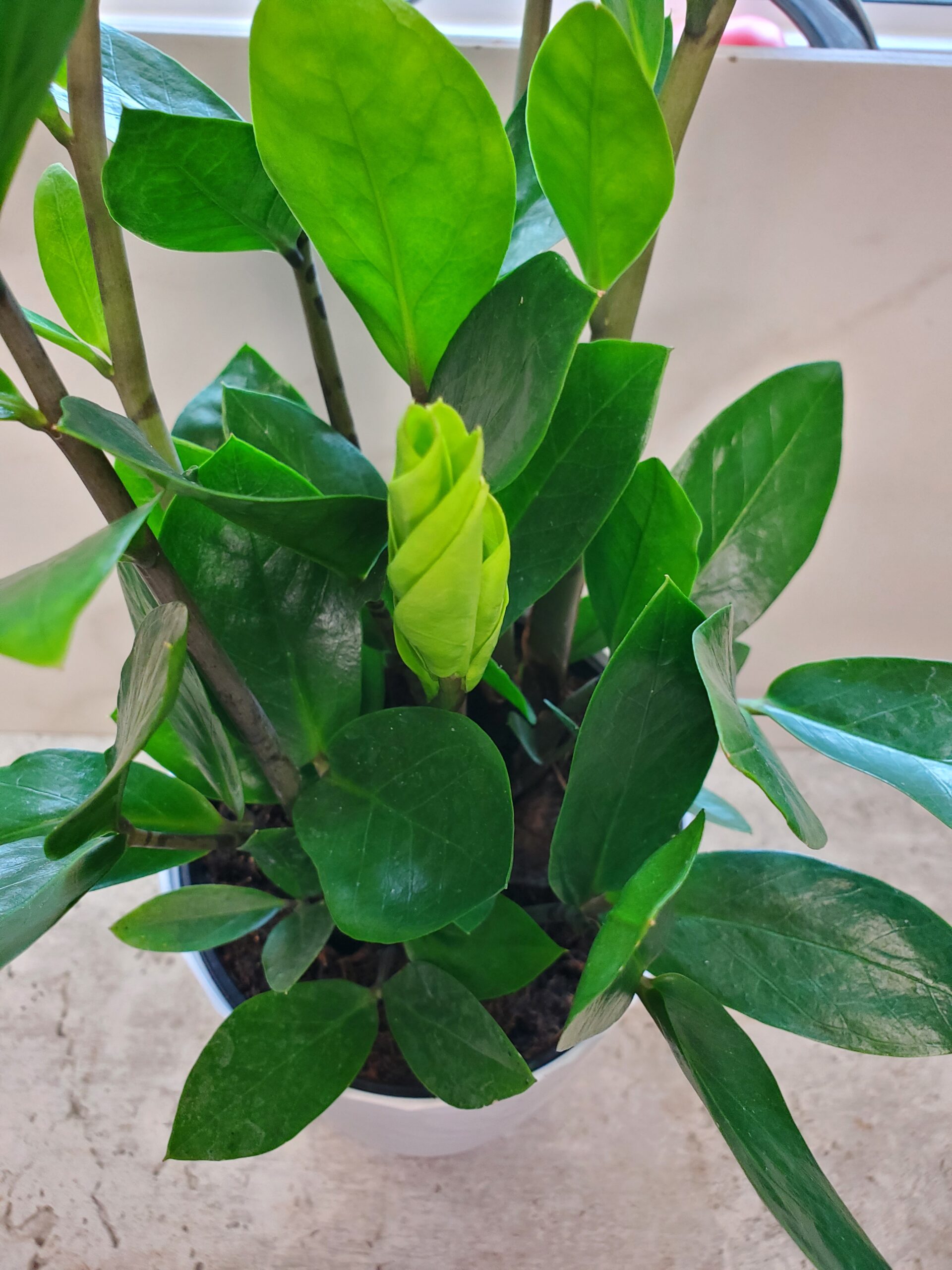
New stems emerge from the soil line. The young shoots uncurl and expand quickly, then growth slows again as the stems mature.
ZZ plant new growth is often a lighter green color and gradually darkens to the deeper green of mature foliage.
Bright, indirect light encourages more vigorous growth. ZZ plants grown in very low light can survive, but they will grow much more slowly.
ZZ plant propagation
Propagating ZZ plants can be done by division or leaf cuttings.
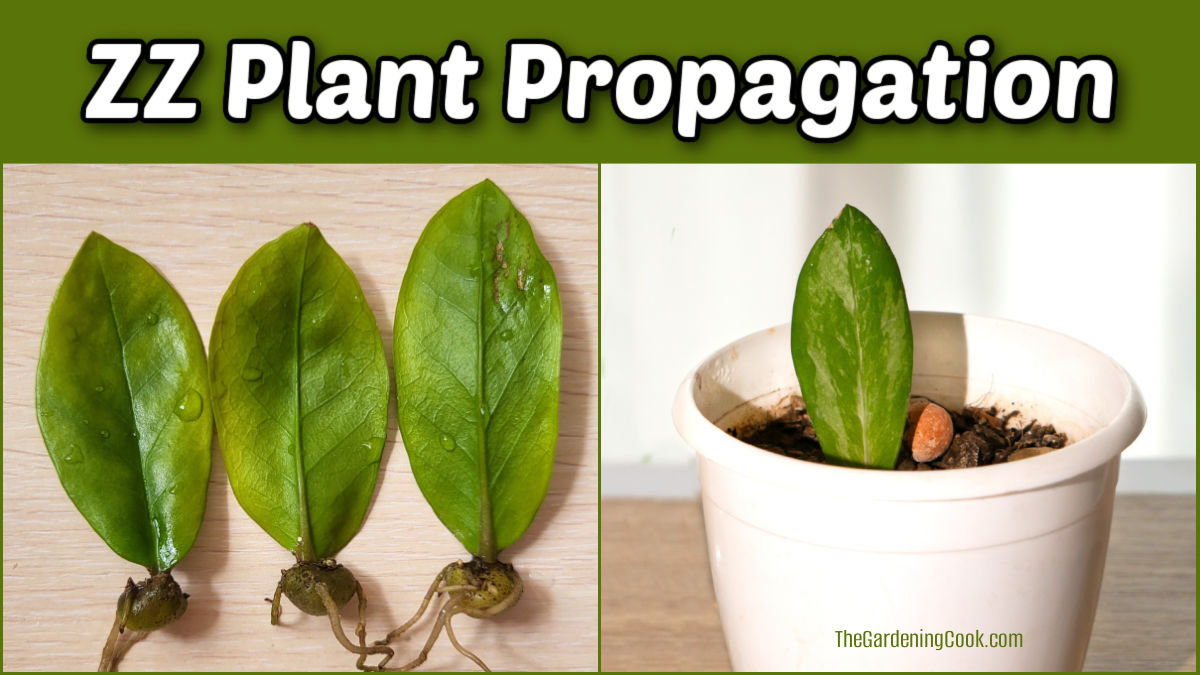
Division is the quickest way to create a new, established plant, while leaf propagation takes much longer because the cutting must develop a new rhizome before producing new growth.
ZZ plant care printable
You can print the ZZ plant care printable as high-resolution JPGs or PDFs by using the links below:
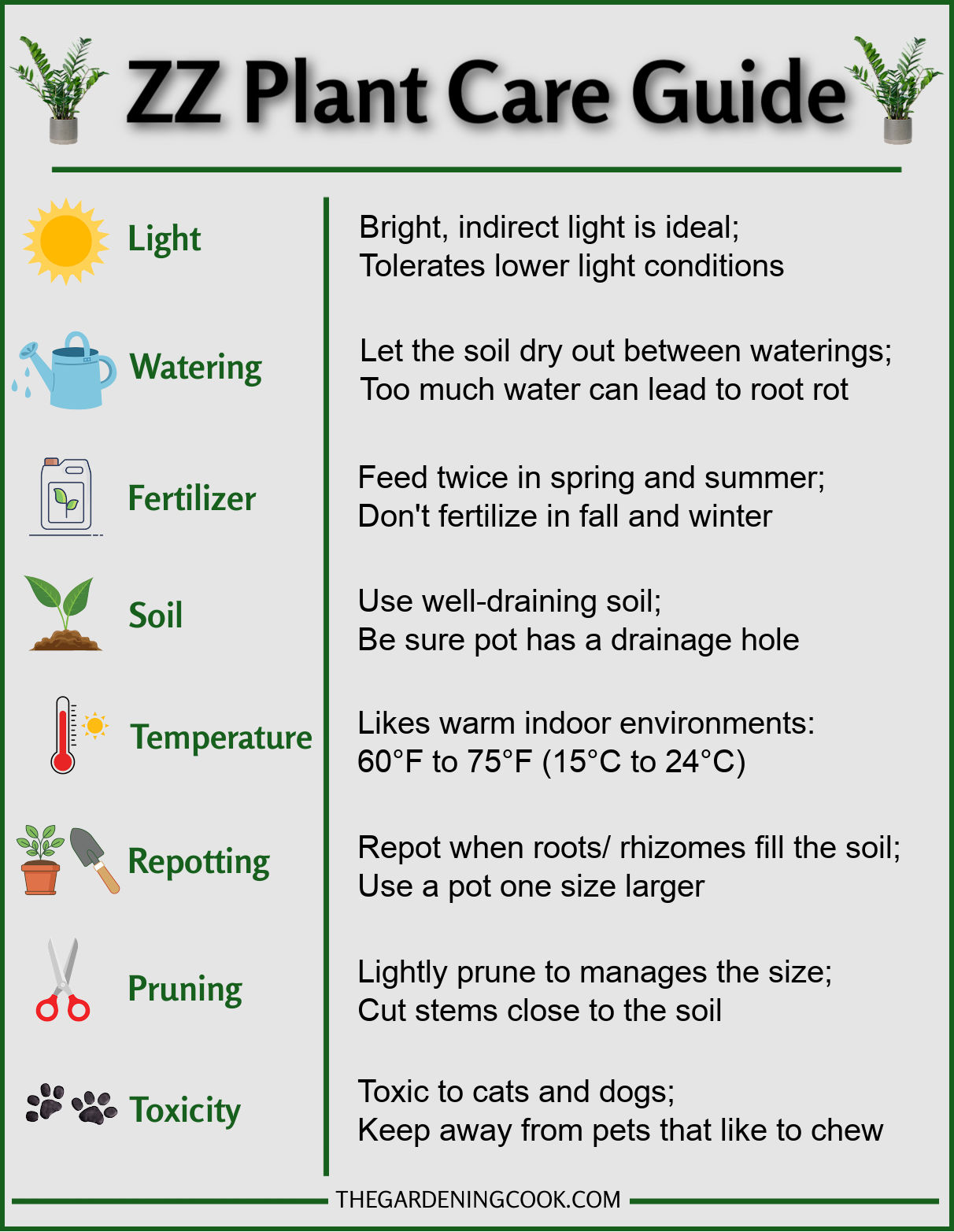
Printing instructions:
- Select portrait orientation and “fit to page” on your printer settings for a full-page printout.
- You can also print out the list of ZZ plant care tips from the project card at the bottom of this page. Scroll down to the card and press “print”.
Common ZZ plant problems
ZZ plant is a very easy plant to grow. Here are some common problems you may encounter.
- ZZ plant leaves turning yellow: Overwatering or soil that stays wet too long is usually the cause.
- Brown leaves on ZZ plants: Excessive sunlight, low humidity, or underwatering can cause this to happen.
- Slow growth: ZZ plants are slow growers. Give the plant a little more light to encourage growth.
- ZZ plant dropping its leaves: Too much or too little water and temperature changes can be the reason. Check the health of the rhizomes, too.
- Stems of ZZ plant yellow and mushy: This is likely caused by overwatering; the stems and roots may be rotting.
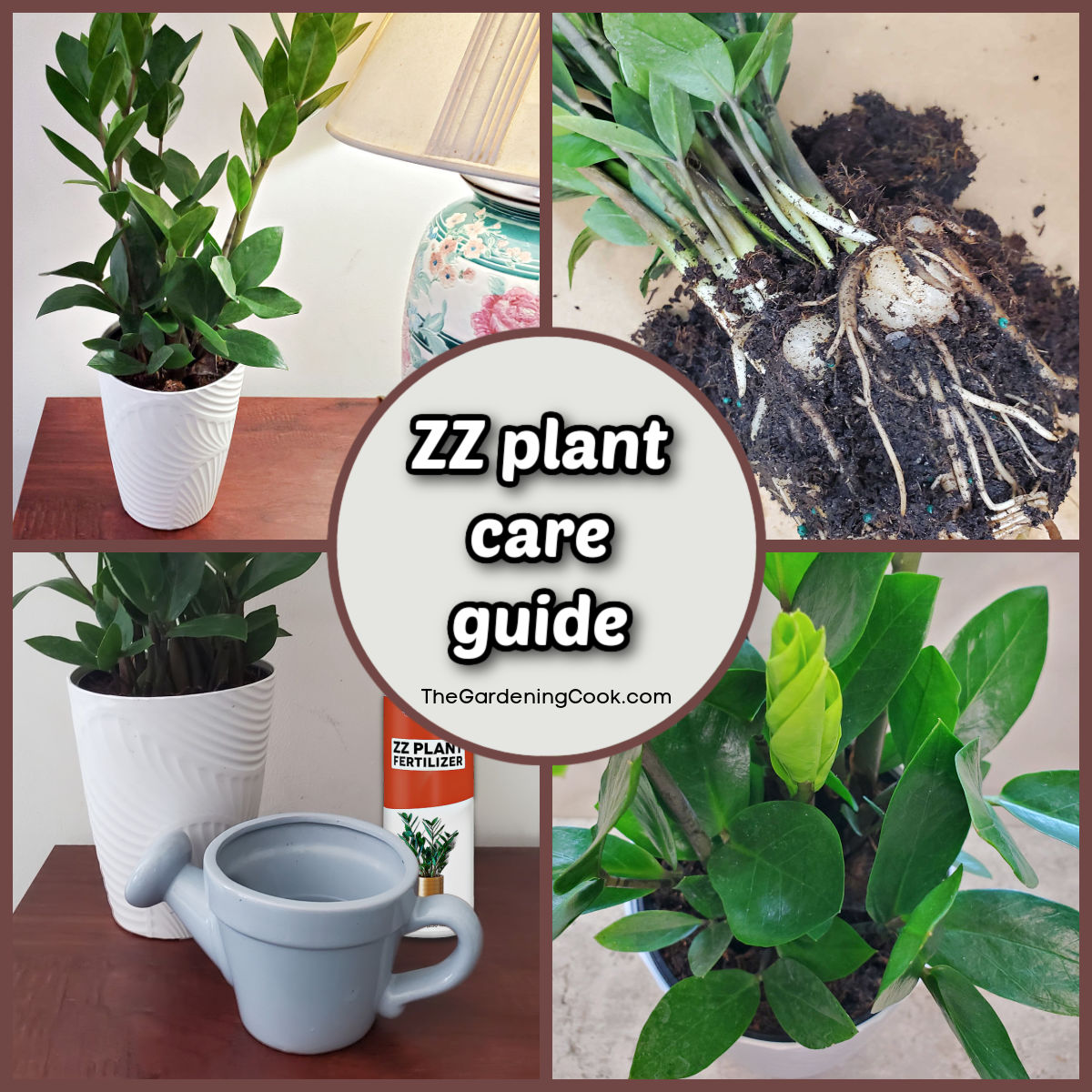
Share this guide to ZZ plant care on X
If you enjoyed learning about the care of ZZ plant, why not share this post with a friend?
🌿 Is a ZZ plant the perfect houseplant for beginners? I think so! 💚 Learn how to grow and care for a ZZ plant, including light, watering, soil, fertilizing, pruning, repotting, propagation & common problems. 🪴#ZZPlant… Share on XPin this post for how to grow ZZ plant in your home
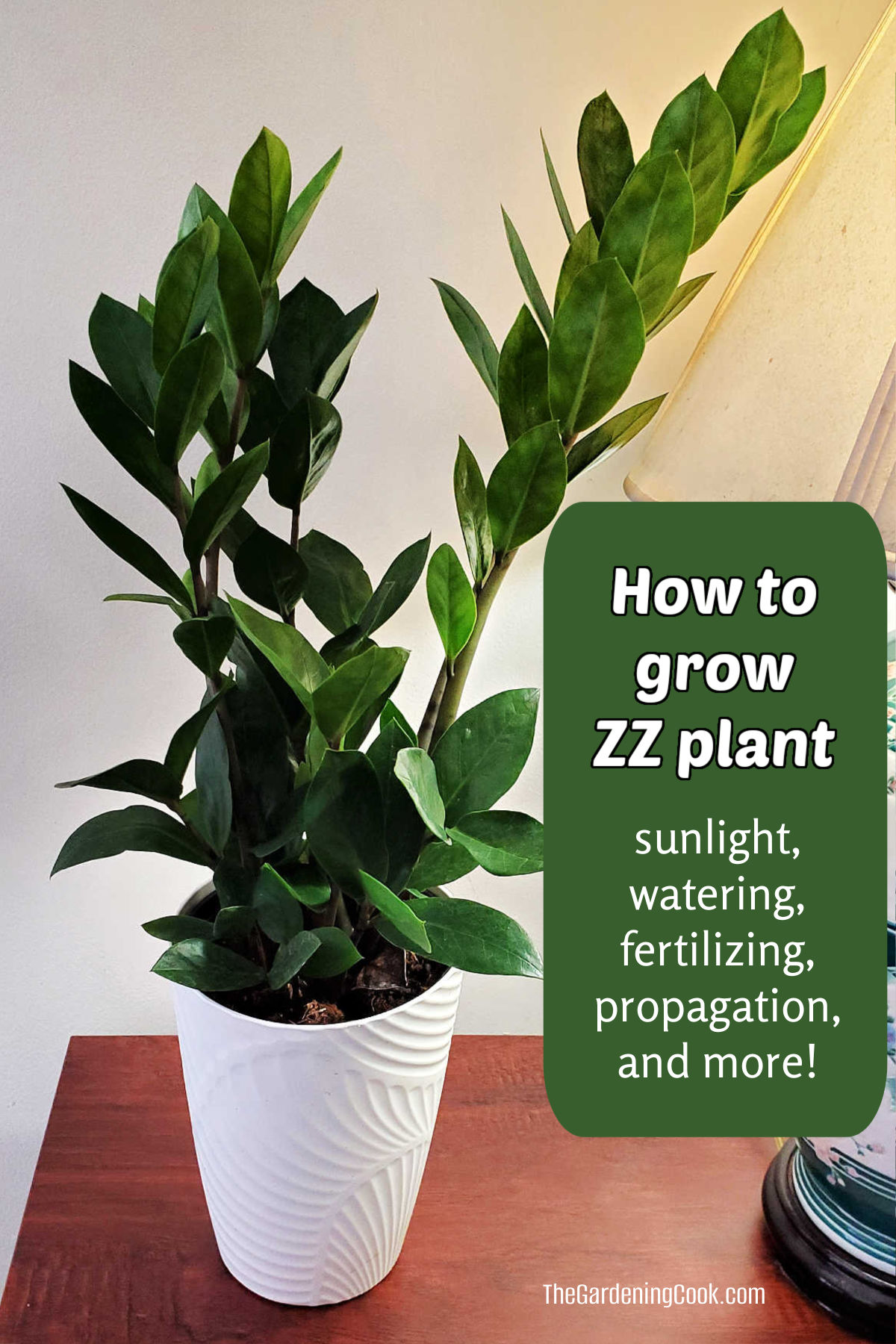
Would you like a reminder of this post for growing ZZ plant indoors? Pin this image to one of your gardening boards on Pinterest so that you can easily find it later.
You can also watch a YouTube slideshow video about caring for ZZ plant in your home!
ZZ Plant Care Guide
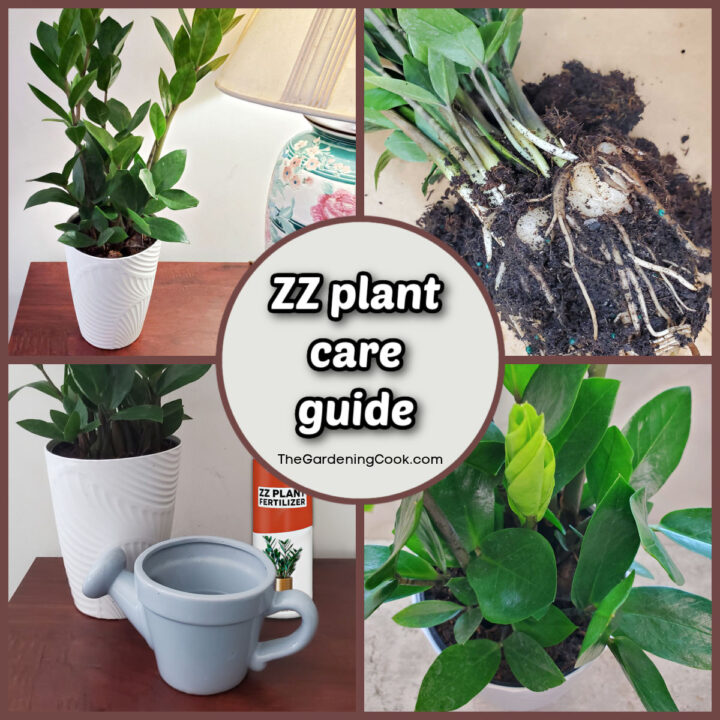
A handy ZZ plant care guide with light, watering, soil, fertilizing, pruning, repotting, and other essential growing tips.
Materials
- Computer paper
Tools
- Computer
- Printer
Instructions
- Load your paper into your printer.
- Using the print function on this card will give you a ZZ plant care printable that fills about ¾ of an 8.5 x 11-inch sheet of paper.
- Choose portrait layout and, if possible, "fit to page" (or 125%) in your settings.
- Prefer full-page printing? You can also print the guide as a high-resolution file using your browser’s print feature: (PDF) | (JPG).
- Please note that creating free printables can be a time-consuming process. This ZZ plant care guide is for personal use only. If you are sharing it (and thank you for that!), please link directly to this post, rather than to the actual image. We appreciate your help in supporting the site.
- This printable may not be used for any retail purpose or for mass distribution.
Notes
Recommended Products
As an Amazon Associate and member of other affiliate programs, I earn from qualifying purchases.