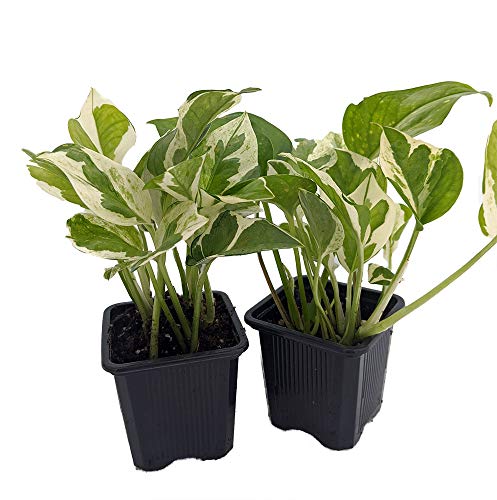
Pothos Plant Care – How to Grow and Care for Pothos
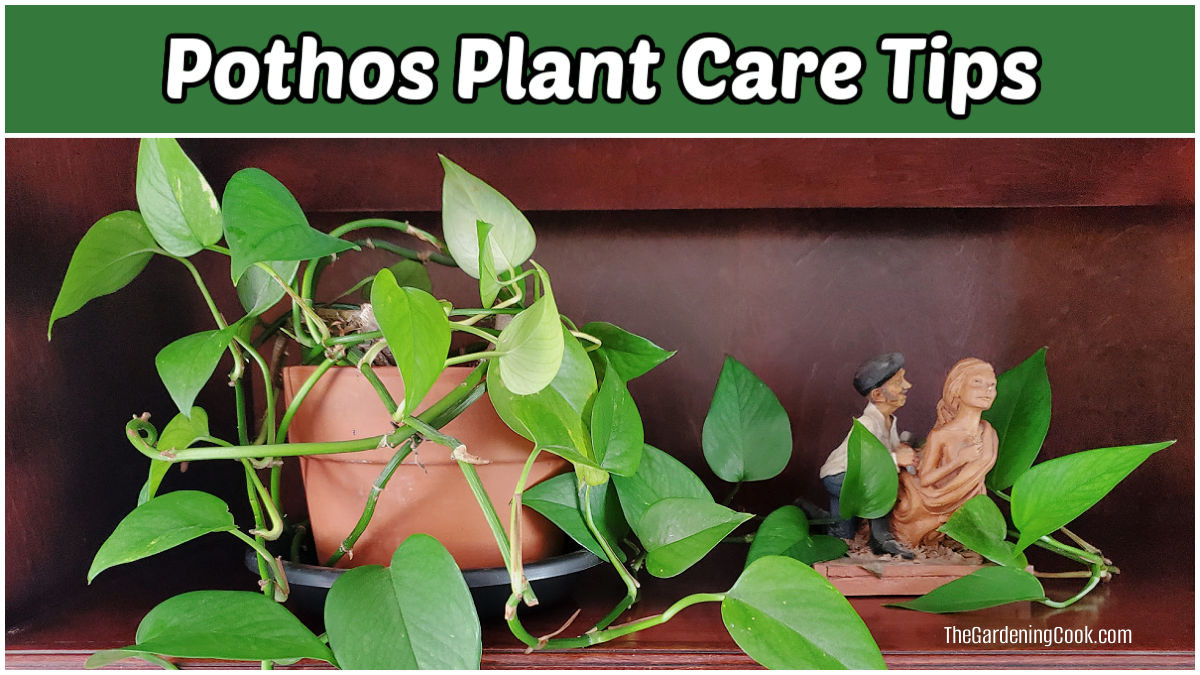
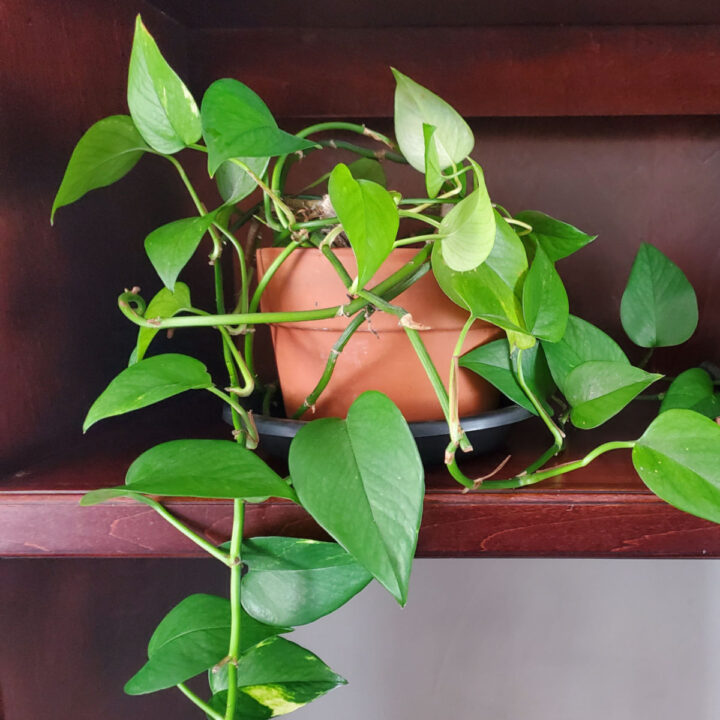
Pothos plant care is about as easy as houseplant care gets. This forgiving plant is adaptable and easy to grow, making it an excellent choice for beginners new to growing houseplants.
Whether you are growing your first houseplant or adding another pothos to your collection, Epipremnum aureum is a great choice. In this guide, I’ll show you how to care for pothos, including the best light, watering, soil, temperature, and fertilizer, along with pruning, propagation, and solutions to common pothos problems.
Some of the links below are affiliate links. I earn a small commission, at no additional cost to you, if you purchase through an affiliate link.
Why is pothos a good beginner houseplant?
Pothos is an excellent beginner plant because it is hardy, forgiving if you miss a few waterings, and adaptable to many indoor light levels. It is often called devil’s ivy, and it roots easily from water cuttings.
The plant is fast-growing and can be used as a trailing or climbing plant because of its sprawling growth habit.
Pothos plant care at a glance
Here is a quick guide to pothos care:
- Common names: Pothos, golden pothos, devil’s ivy
- Botanical name: Epipremnum aureum
- Family: Araceae
- Plant type: Tropical vine
- Toxicity: Toxic to dogs and cats
- Maintenance level: Low
- Sunlight needs: Bright, indirect light, and tolerates lower light
- Soil requirements: Loose, well-draining, nutrient-rich soil
- Watering needs: Water when the top 1-2 inches of soil are dry
- Mature size: 6-10 feet long (180cm to 3m)
- Bloom time: Rarely flowers
- Fertilizing needs: Light feeding during active growth
- Temperature needs: Warm indoor environments between 65°F and 85°F (18°C to 30°C)
- Humidity requirements: Adapts easily to normal household conditions
- Hardiness zones: USDA 10-12

Is pothos toxic to pets?
- Pothos is toxic to dogs and cats if eaten.
- The plant contains calcium oxalate crystals that can irritate the mouth and digestive tract.
- Keep pothos out of reach of pets that like to chew on plants.
- If you have pets, consider choosing from your list of pet-safe houseplants instead.
How to care for pothos
Pothos is easy to care for as long as you understand a few basic growing conditions. The most important factors are light, watering, soil, and temperature.
Sunlight requirements
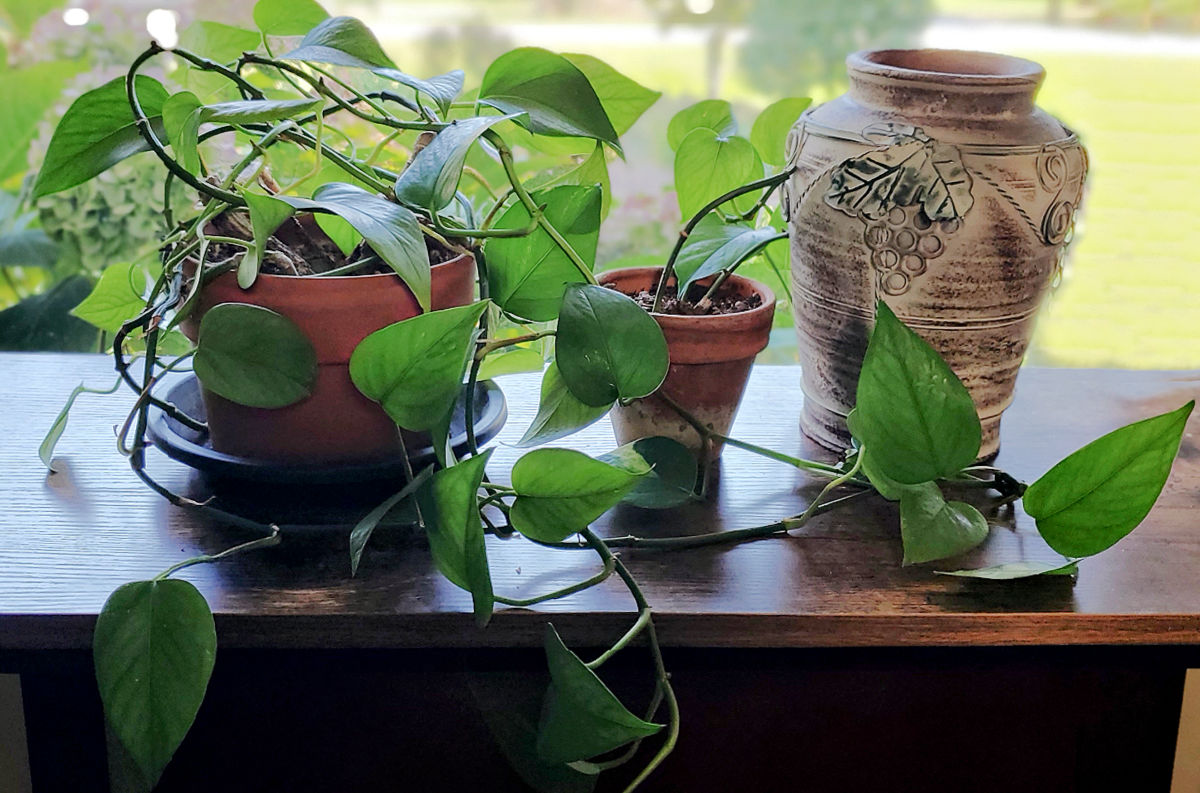
- Pothos prefers bright, indirect light, but it can also adapt to lower light conditions.
- An east or west-facing window can provide ideal light, depending on how close the plant is to the window.
- Too much direct sunlight can scorch or burn the leaves.
- Signs of too much sunlight include washed-out leaves and pale leaves with crispy edges.
- If your pothos has long, leggy stems with large gaps between the leaves, move it closer to a light source.
- Variegated pothos may lose some of their colorful leaf markings when grown in insufficient light.
Best soil for pothos
- Plant pothos in a pot that has a drainage hole.
- Ordinary well-draining potting soil works well.
- If your potting mix holds too much moisture, mix in about one-third perlite to improve drainage and aeration.
- I have a recipe for a soilless potting mix with peat moss, perlite, and vermiculite.
How often should you water pothos?
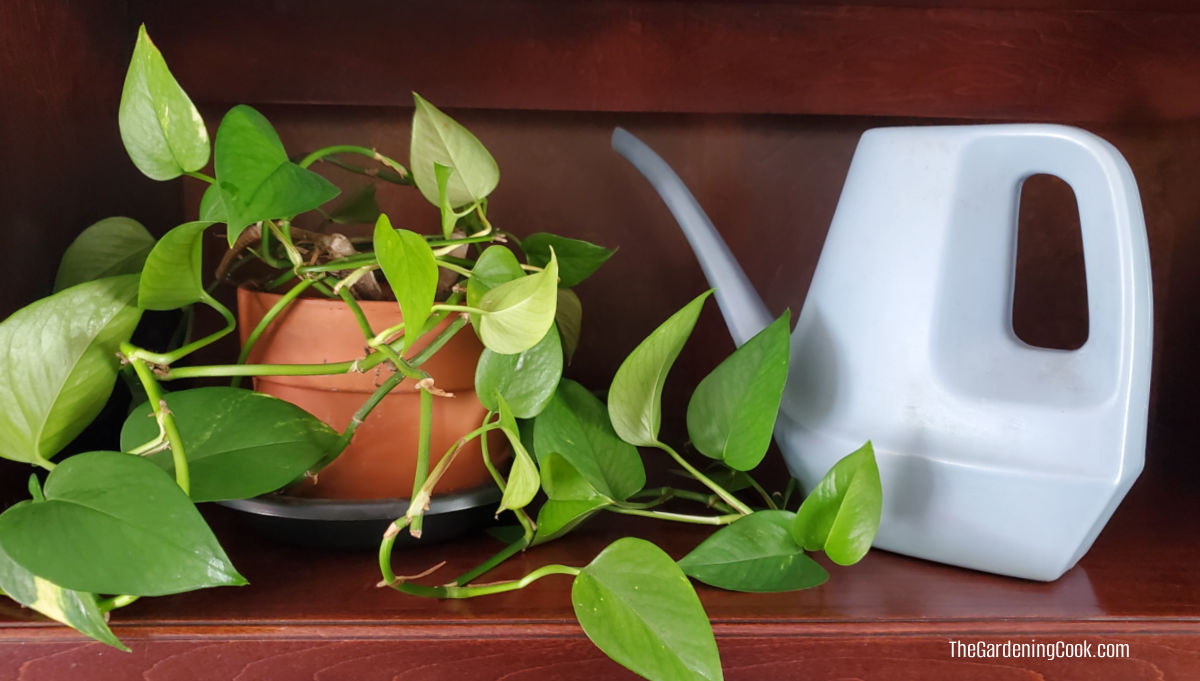
- Allow the top 1–2 inches of soil to dry before watering.
- Water thoroughly until excess water drains from the bottom of the pot.
- In many indoor conditions, pothos require watering every week or two. The timing will vary with light, temperature, pot size, and the season.
- Avoid keeping the soil constantly wet, since soggy soil can lead to root rot.
- If the leaves begin to droop and the soil is very dry, your pothos may need water.
Temperature and humidity needs for pothos
- Pothos grows best in warm indoor conditions and generally does well at normal household humidity levels.
- Temperatures between 65°F and 85°F (18°C to 30°C) are ideal.
- Higher humidity can encourage lush growth, particularly during dry winter months.
- You can increase humidity by using a humidifier or placing the plant near other houseplants.
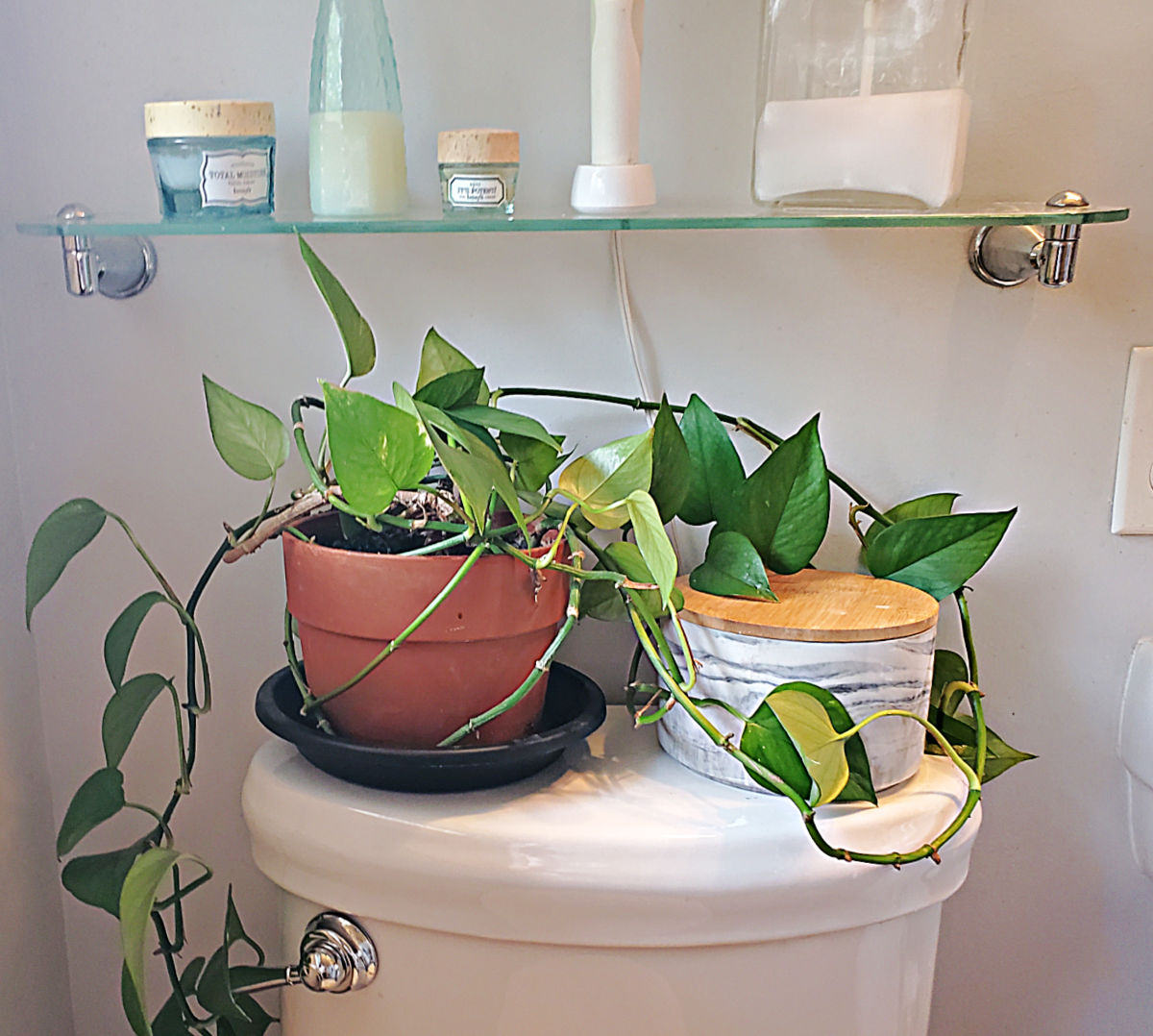
- Pothos is often grown in bathrooms because the naturally higher humidity can suit the plant.
How to fertilize pothos
- Fertilize your pothos plant with a balanced, water-soluble houseplant fertilizer during the growing season (spring and summer).
- Reduce fertilizing during the fall and winter months, unless your plant is still producing new leaves.
- Avoid overfertilizing, since this can cause fertilizer salts to build up in the soil and damage the roots.
When to repot pothos plants
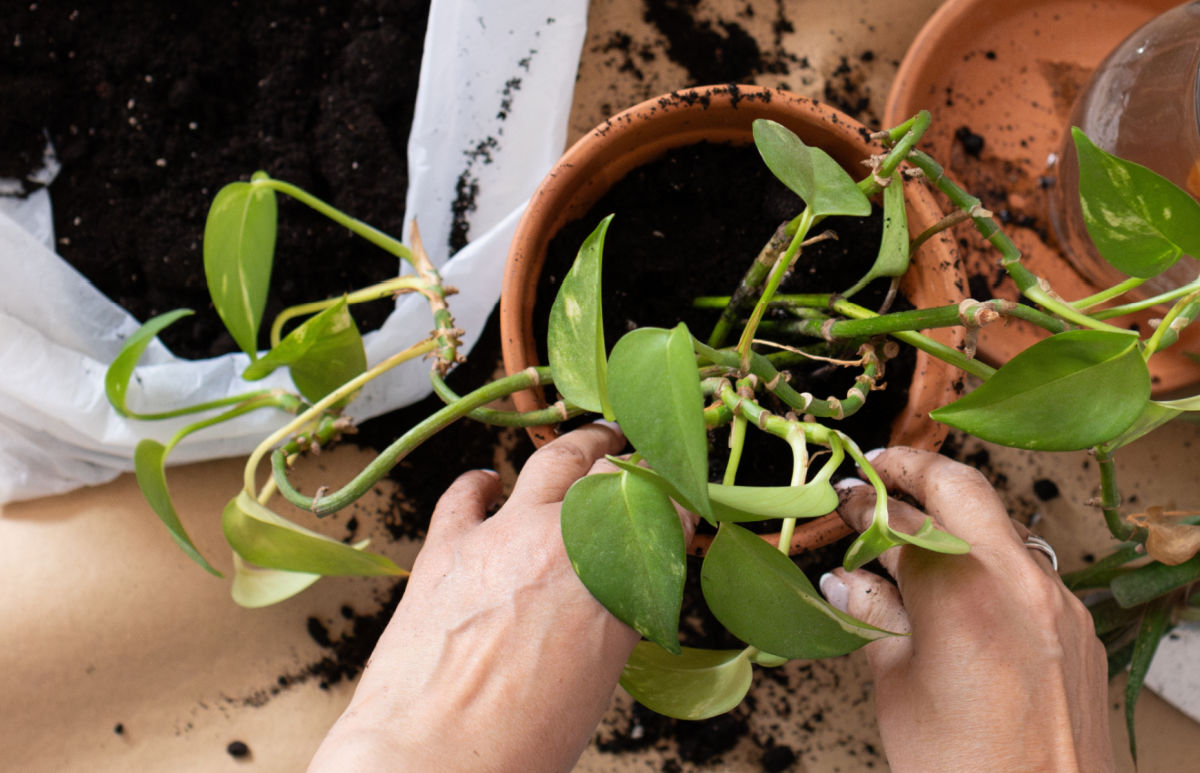
- Repot your pothos when the roots have filled most of the pot or are growing out of the drainage holes.
- Repotting is best done when the plant is actively growing, usually in spring or summer.
- Carefully lift the plant from its pot and examine the root ball. If roots are tightly circling the outside of the soil, the plant may need a larger pot.
- Choose a new pot that is about 1–2 inches larger in diameter than the current pot.
- Use fresh, well-draining potting soil and water the plant thoroughly after repotting.
Repotting tip: If you need to water your pothos much more frequently than usual because the soil dries out very quickly, check the roots and pot size. It may be time to repot it!
How to prune pothos
- Pothos plants are fast-growing and can become leggy as their vines get longer.
- Regular pruning helps keep your pothos bushy and full while maintaining the size and shape you want.
- Pruning pothos can be done any time the plant is actively growing, although light pruning can be done whenever needed.
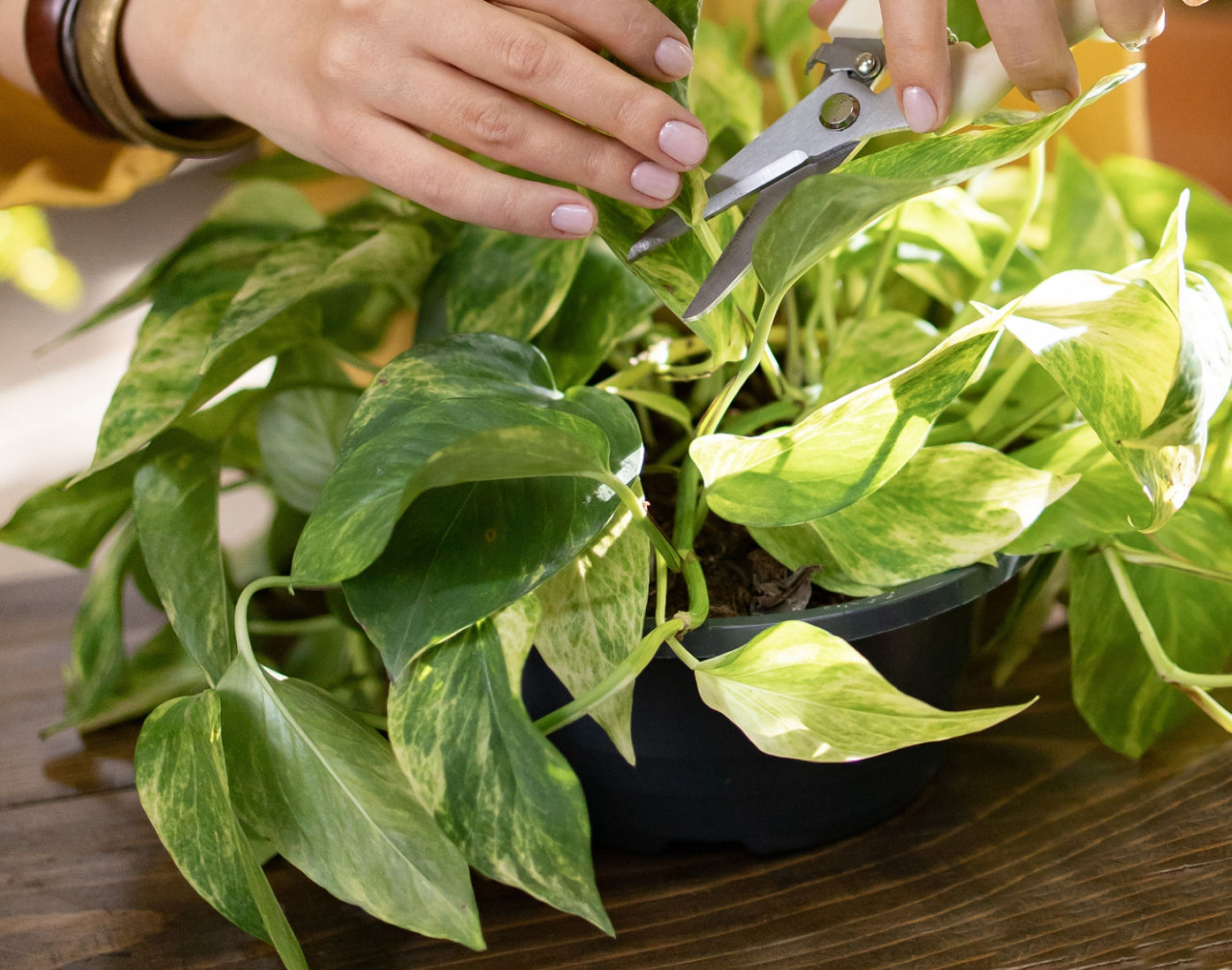
- Use clean, sharp scissors or pruning shears to cut back long or leggy vines.
- To encourage new growth from the base of the plant, make your cut just above a node on the vine.
- You can also shorten individual vines by cutting them back to a shorter length.
- Don’t throw away healthy cuttings – they can be used to propagate new pothos plants.
How to propagate pothos
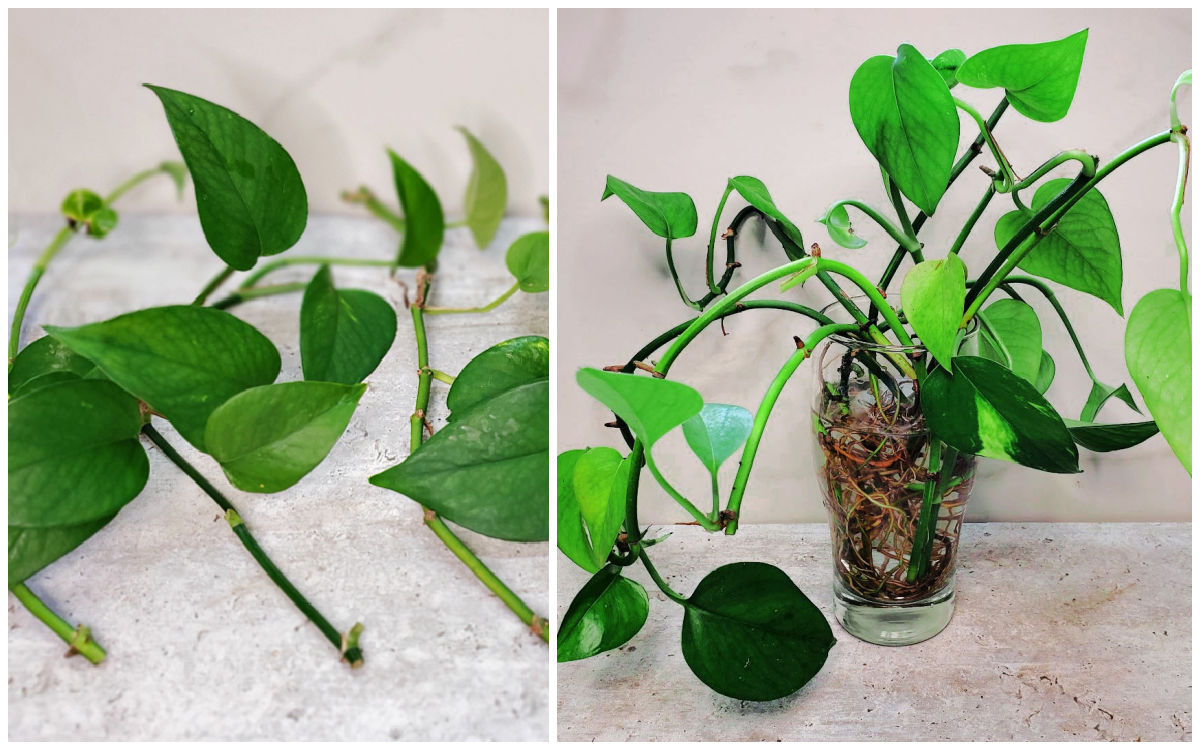
Pothos is one of the easiest houseplants to propagate. Healthy stem cuttings can be rooted in water or soil, making it simple to turn pruned vines into new plants.
- Take a healthy stem cutting that includes at least one node.
- Remove the lower leaves so the node can be placed in water or growing medium.
- Keep the cutting in a warm location with bright, indirect light while it develops roots.
- Once the cutting has a healthy root system, it can be planted in potting soil.
Plant tip: Want to see the complete process of growing pothos from cuttings? See my guide for how to propagate pothos.
Golden pothos: care and variegation
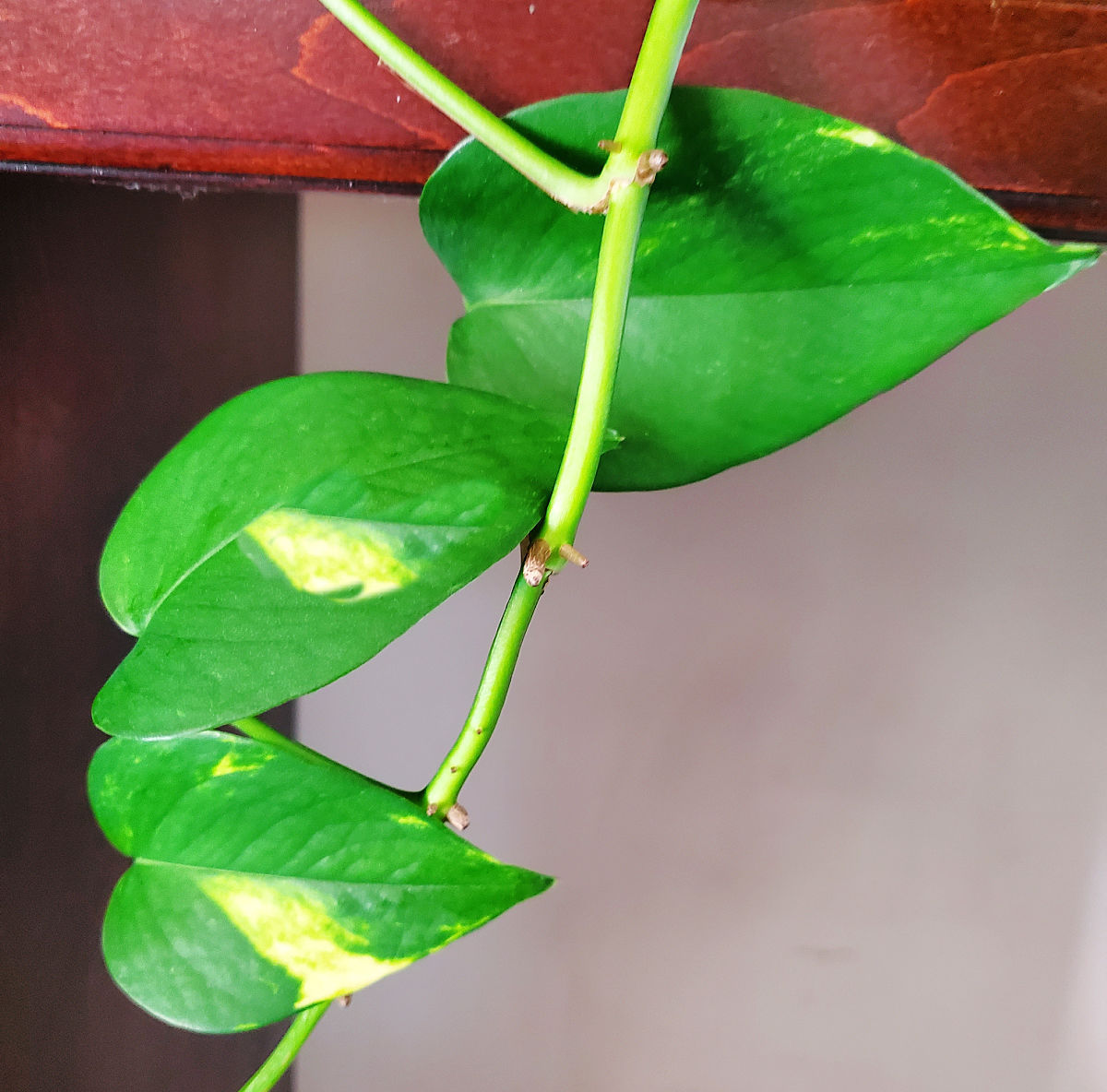
Golden Pothos is the familiar green-and-yellow variegated form of Epipremnum aureum. It is one of the most commonly grown types of pothos, with heart-shaped green leaves marked with yellow or golden variegation.
Maintaining the variegation
- Golden pothos needs adequate light to maintain its yellow variegation.
- In lower light, new leaves may have less variegation and become increasingly green.
- Bright, indirect light is ideal.
- Avoid intense direct sun, which can scorch the leaves.
The care requirements are essentially the same as those of other pothos, but light is particularly important if you want to maintain its variegated coloring.
Common pothos problems
Pothos is one of the easiest plants for beginners to grow, but it occasionally encounters a few problems. Most are related to watering, light, or growing conditions.
- Yellow leaves: Older leaves may naturally turn yellow and drop, but widespread yellowing can be caused by overwatering or poor drainage. Check the soil before watering and make sure excess water can drain freely.
- Brown leaves or tips: Brown, crispy edges can result from underwatering, dry conditions, too much direct sunlight, or inconsistent watering. Check the soil moisture and move the plant away from harsh direct sun if needed.
- Drooping leaves: Drooping can be a sign that the soil is too dry, although plants growing in consistently wet soil can also droop when the roots are stressed. Check the soil before watering.
- Leggy growth: Long stems with large spaces between the leaves usually indicate that the plant needs more light. Move it to a brighter location and prune the long vines to encourage fuller growth.
- Pests: Pothos can occasionally attract spider mites, mealybugs, scale, or fungus gnats. Check the leaves, stems, and soil regularly and treat any infestation promptly.
Pothos plant care printable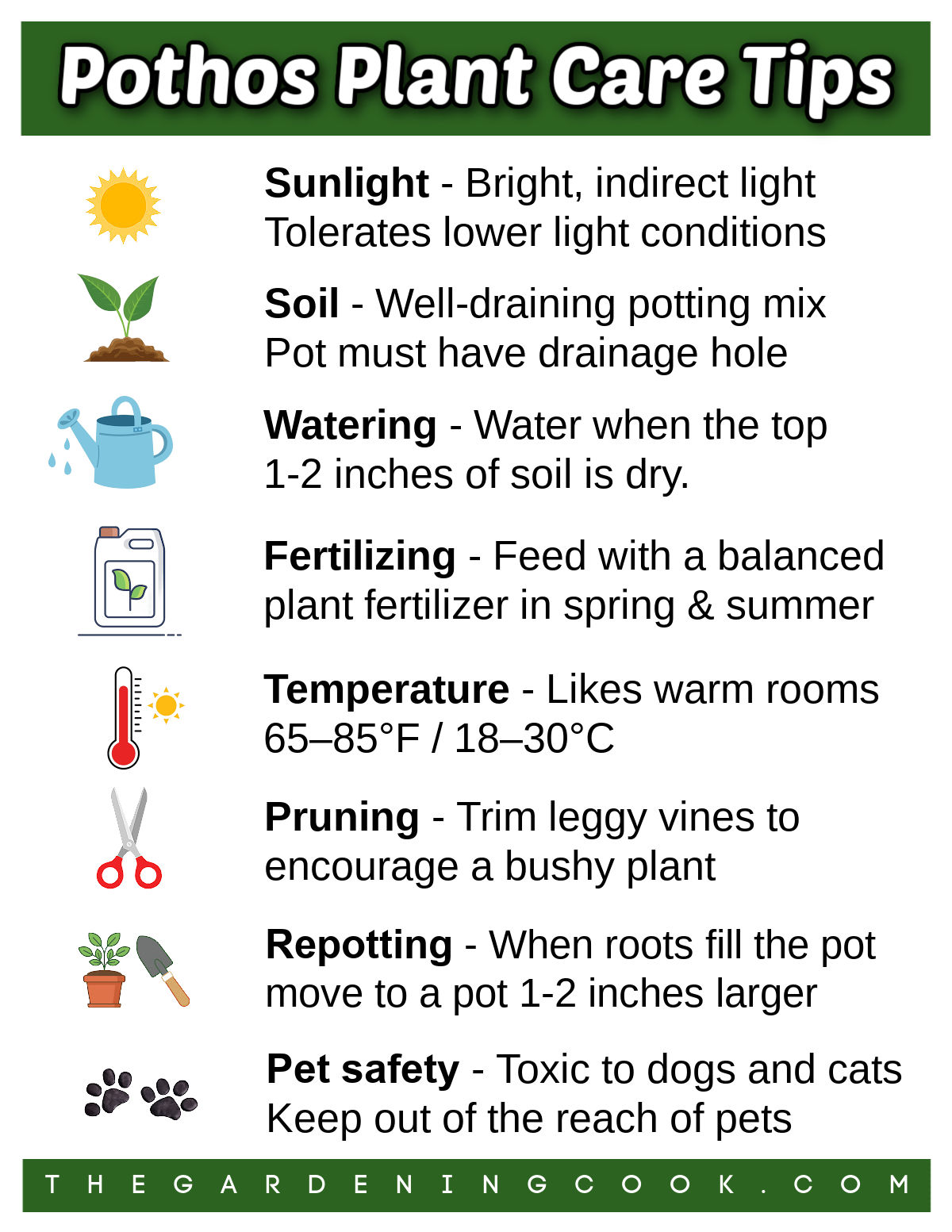
You can print the pothos plant care printable as high-resolution JPGs or PDFs by using the links below:
- Get the high-resolution pothos care tips printable (JPG)↗
- Get the PDF pothos care tips printable (PDF)↗
Printing instructions:
- Select portrait orientation and “fit to page” on your printer settings for a full-page printout.
- You can also print out the pothos plant care printable from the project card at the bottom of this page. Scroll down to the card and press “print”.
Share this pothos plant care guide on X
If you enjoyed learning how to grow and care for a pothos houseplant, why not share this post with a friend?
🌿 New to houseplants? Pothos is one of the easiest plants to grow! Learn how to care for pothos, including light, watering, soil, pruning, propagation, and common problems. 🪴💚 Perfect for beginners! 🌱 #Pothos #Houseplants… Share on XPin this guide to growing pothos indoors
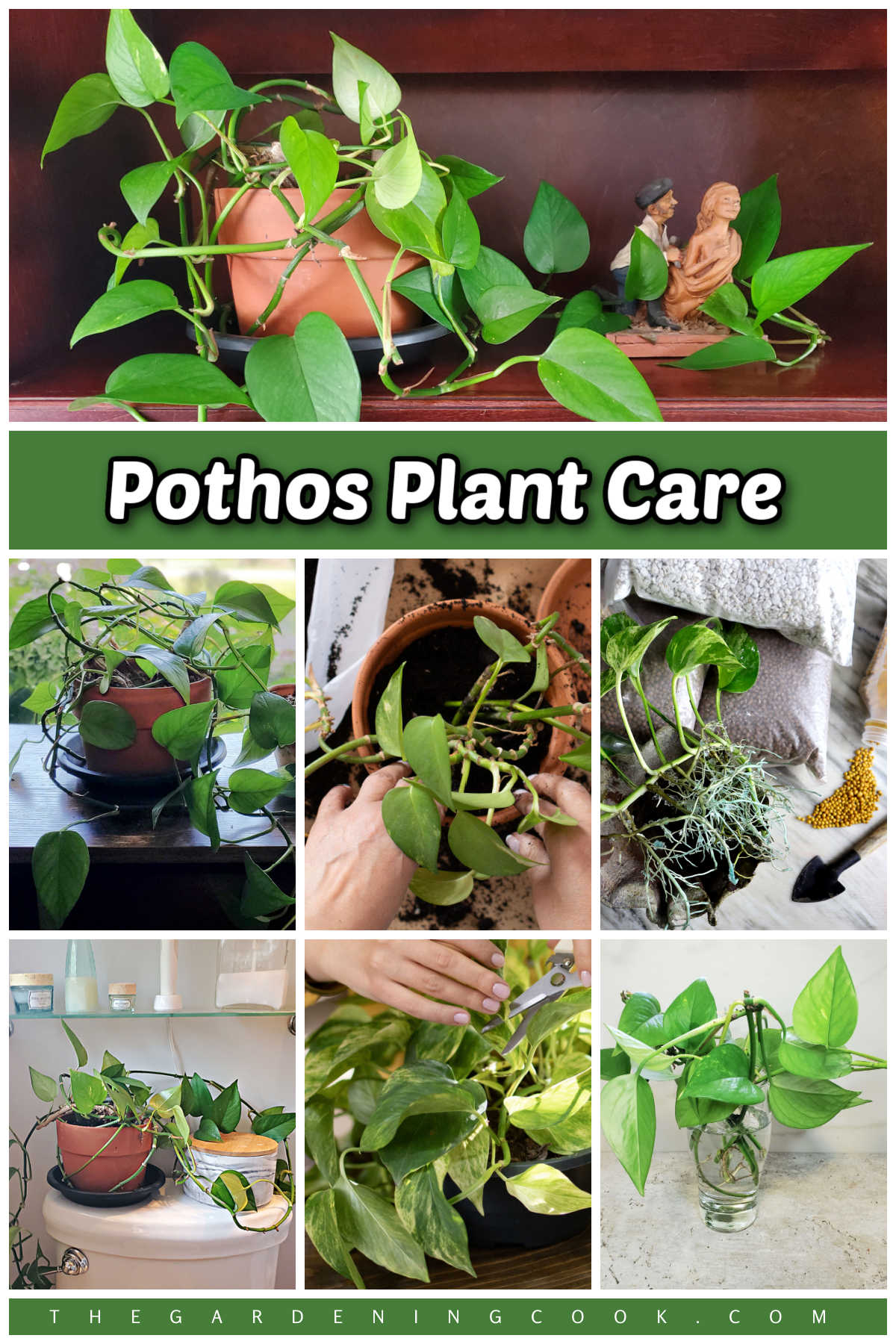
Would you like a reminder of these tips for growing pothos? Pin this image to one of your gardening boards on Pinterest so that you can easily find it later.
You can also watch this YouTube slideshow video about Epipremnum aureum care.
Pothos Plant Care Guide Printable
Print this handy pothos care guide for quick reference on light, watering, soil, temperature, fertilizing, pruning, repotting, and pet safety.
Materials
- Printer paper
Tools
- Computer
- Printer
Instructions
- Load your paper into your printer.
- Using the print function on this card will give you a pothos plant care tips printable that fills about ¾ of an 8.5 x 11-inch sheet of paper.
- Choose portrait layout and, if possible, "fit to page" (or 125%) in your settings.
- Prefer full-page printing? You can also print the guide as a high-resolution file using your browser’s print feature: (PDF) | (JPG).
- Please note that creating free printables can be a time-consuming process. This pothos care tips guide is for personal use only. If you are sharing it (and thank you for that!), please link directly to this post, rather than to the actual image. We appreciate your help in supporting the site.
- This printable may not be used for any retail purpose or for mass distribution.
Notes
Recommended Products
As an Amazon Associate and member of other affiliate programs, I earn from qualifying purchases.