
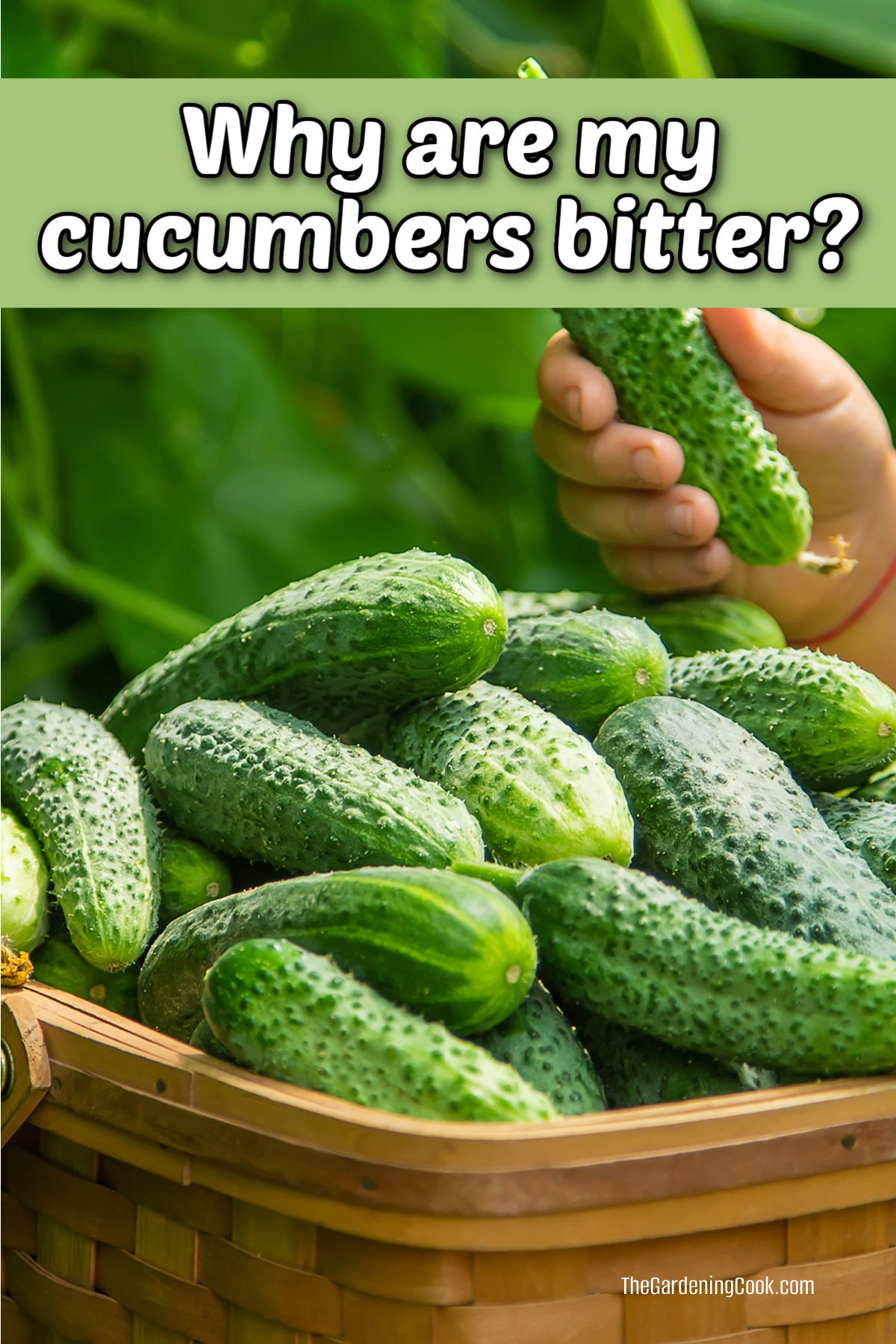
If you bite into a cucumber and it tastes bitter, the first question most gardeners ask is, “Are bitter cucumbers safe to eat?”
In most cases, a bitter cucumber is not dangerous; however, the bitterness can be a sign that the fruit contains higher levels of natural compounds called cucurbitacins, which are influenced by plant variety and growing conditions.
In this article, you’ll learn when bitter cucumbers are safe to eat, when you should avoid them, and what causes cucumbers to develop a bitter taste in the first place.
Some of the links below are affiliate links. I earn a small commission, at no extra cost to you if you purchase through an affiliate link.
Are bitter cucumbers safe to eat?
Most bitter cucumbers are safe to eat, especially when the bitterness is mild. The unpleasant taste is usually caused by natural compounds called cucurbitacins, which can increase when the plant is stressed or due to normal genetic variation.
In most home garden situations, bitter cucumbers are not harmful, but they can taste unpleasant enough that many people choose not to eat them.
Severe bitterness, however, is a sign that cucurbitacins are present in higher amounts, and in that case, the cucumber should be avoided.
- Mild bitterness is usually harmless but unpleasant.
- Strong, intense bitterness likely indicates higher cucurbitacin levels.
- Most cultivated cucumbers are bred for low cucurbitacin content.
- When in doubt, it is best to discard extremely bitter cucumbers.
What is cucurbitacin?
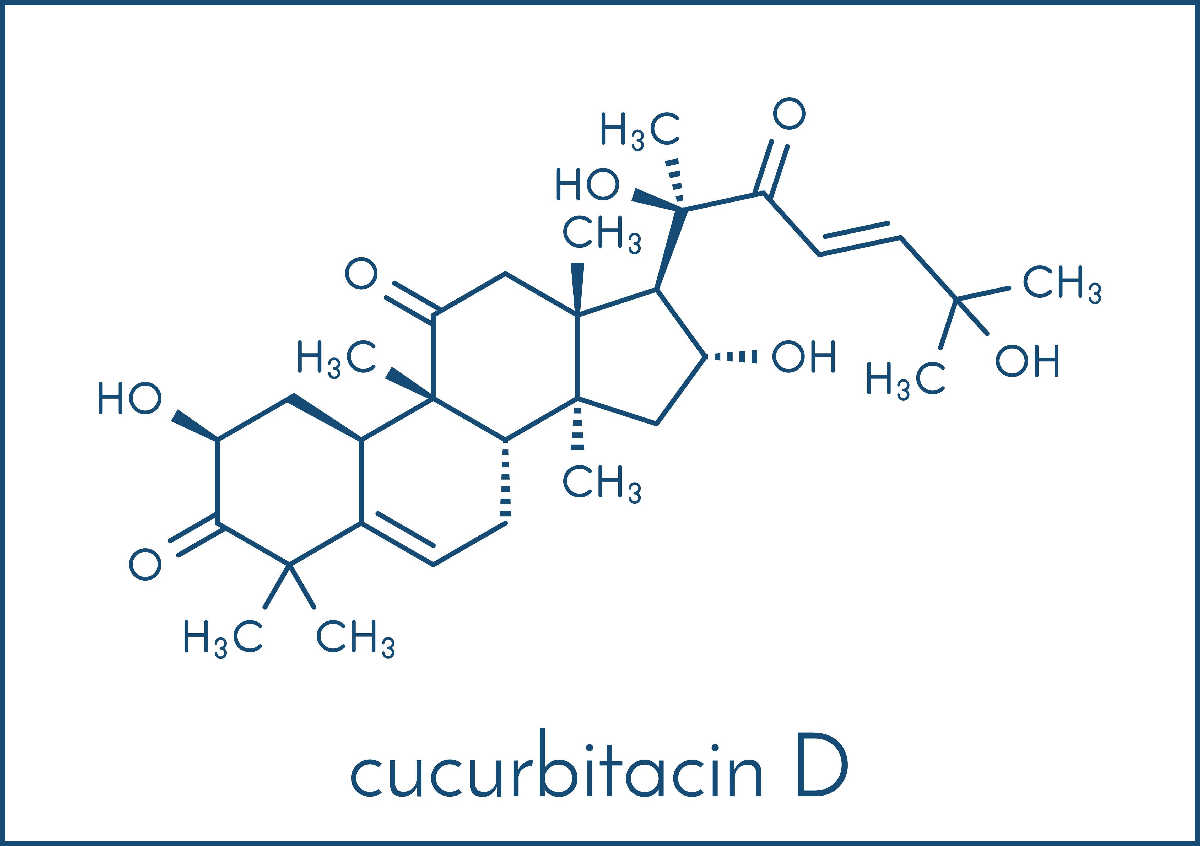
Cucurbitacins are natural compounds produced by cucurbit plants as a defense mechanism against pests and animals. They are responsible for the bitter taste in cucumbers, especially when plants are under stress from:
- lack of water
- extreme heat
- poor growing conditions
These compounds are found in higher concentrations in the leaves, stems, and roots, but they can also affect the fruit.
Normally cultivated cucumbers usually have a very low level of cucurbitacin, which is why most store-bought cucumbers do not taste bitter. However, in high concentrations, they can be toxic, which is why extremely bitter cucumbers should not be eaten.
Cucurbitacin is the main compound responsible for bitterness in cucumbers, but several growing conditions and plant factors can influence the level of this compound in cucumbers.
Environmental stress: heat, drought, and nutrient imbalance
Environmental stress is one of the most common triggers for bitterness in cucumbers. Heat, inconsistent watering, and poor soil nutrition can all increase cucurbitacin levels in cucumbers.

High heat and lack of water
Hot, dry conditions during fruit development can trigger higher cucurbitacin production.
Fix:
- Water deeply so plants receive about 1 inch of water per week (more during heat waves)
- Use drip irrigation if possible and apply leaf mulch so that your soil moisture is consistent.
- Temporary shade cloth during extreme heat can also reduce stress.
Protip: Succession planting – planting cucumber seeds every few weeks instead of all at once, can helps to keep your cucumbers bitter-free. Drought, and excessive heat or cold conditions generally only last a few weeks. By sowing seeds over the course of several weeks, you can escape some of these tough conditions.
Lack of nutrients
Poor or imbalanced soil nutrition can stress plants and lead to bitter fruit.
Fix:
- At planting time, add compost to enrich your soil
- Side dress during the growing season with a balanced fertilizer.
Inconsistent watering
Fluctuating moisture levels (dry → flood cycles) stress cucumber plants and increase the risk of bitterness.
Fix:
- Maintain evenly consistent soil moisture.
- Avoid letting the soil completely dry out between waterings.
Bitter cucumbers can be caused by genetics or seed quality

The genetics of cucumber plants can determine how bitter the fruit will taste. Some heirloom or wild cucumber varieties are known for their higher cucurbitacin levels, resulting in a more pronounced bitter taste.
Fix:
- When you select cucumber seeds, choose varieties that are labeled bitter-free, burpless, mild, and sweet. (See my list in the project card at the bottom of this post).
- Use fresh, high-quality seeds obtained from reputable sources to reduce the likelihood of getting bitter cucumbers.
The timing of your harvest can make your cucumbers bitter
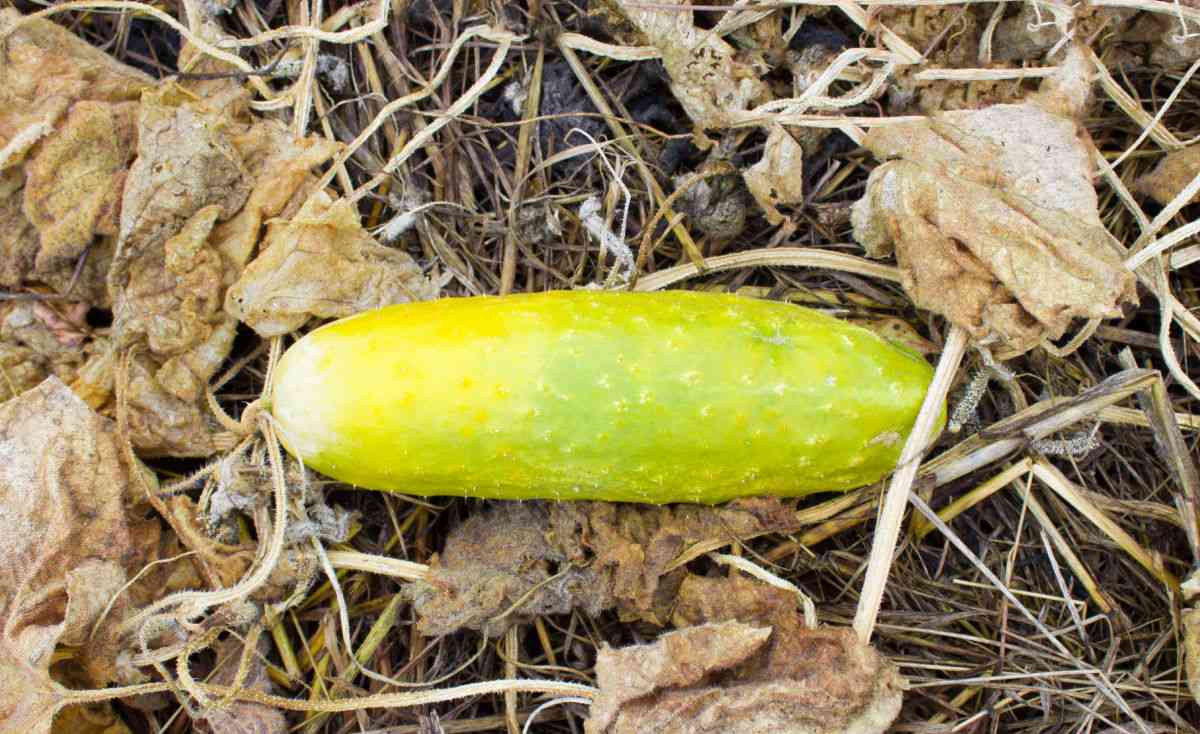
If you wait too long to harvest your cucumbers, you can end up with bitter fruits. Overripe or mature cucumbers tend to be more bitter.
Fix:
- Check seed packages for days to harvest.
- Cucumbers harvested at the correct time generally have a milder flavor.
- Ideally, cucumbers should be firm, evenly colored, and free from yellowing or other signs of over-ripeness.
How to fix bitter cucumbers

Despite following the tips above, you may still encounter a sour-tasting cucumber. If you do end up with cucumbers that aren’t as sweet as you would like, there are a few things you can do to reduce the bitterness.
- Peel the cucumber: The skin and ends contain higher concentrations of cucurbitacin.
- Scoop out the seeds: Seeds in cucumbers are often bitter.
- Soak them: Place the cucumbers in salted water to try to draw out the compound that causes bitterness.
- Adding vinegar or lemon: The acidic properties can help to counteract the bitterness.
- Blending or cooking bitter cucumbers: This can help to reduce the sour taste since the bitter flavor can be masked by adding other ingredients, such as in a soup or stir-fry.
Protip: Before using cucumbers in recipes or serving them, it is a good idea to taste a small piece to ensure they are as sweet as you would like. This way, you can avoid using overly bitter cucumbers in dishes.
Non-bitter cucumber varieties to grow

Starting with cucumbers that are bred to be non-bitter is one way to end up with a sweeter cucumber. Some good choices are:
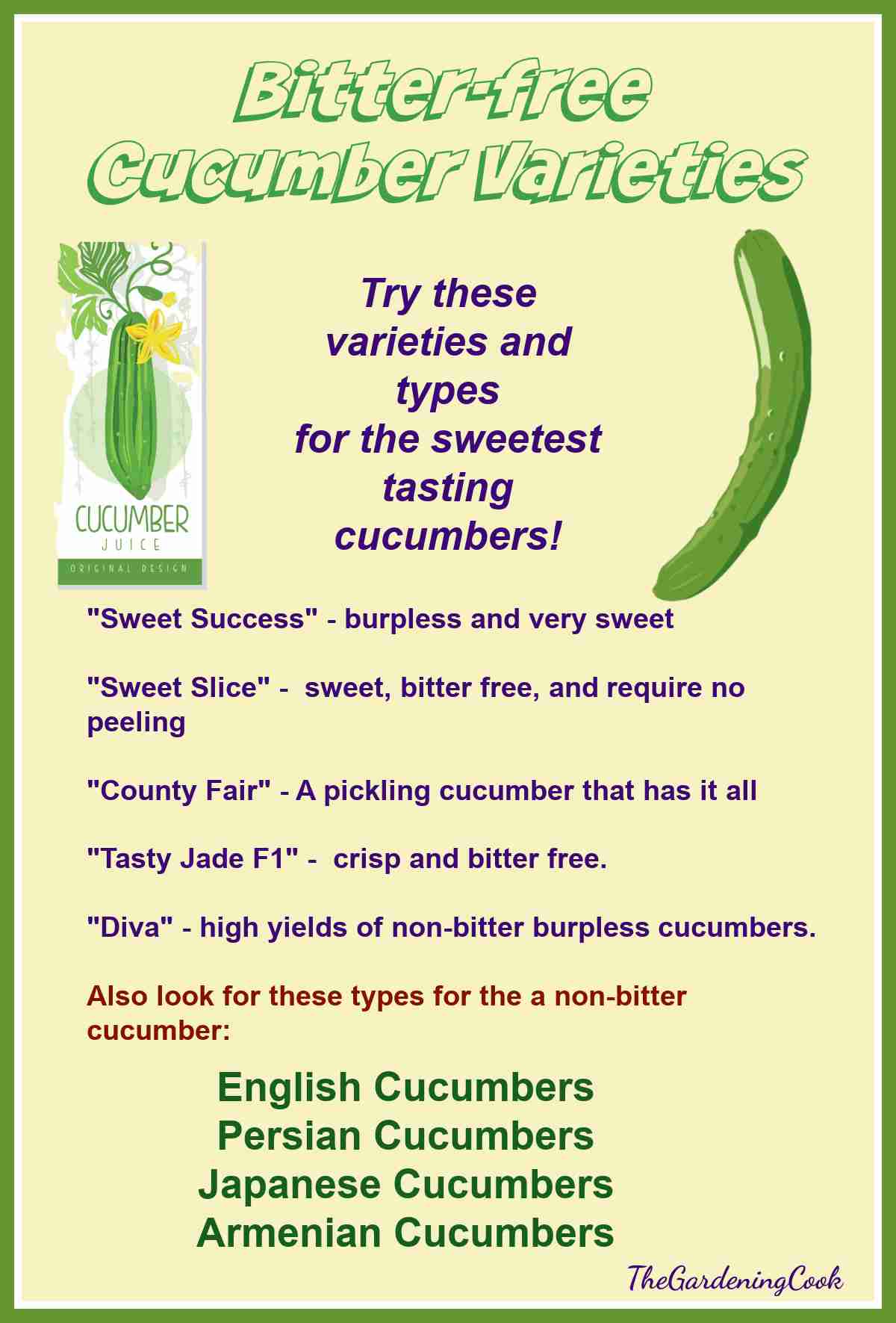
- Sweet Success – A burpless English cucumber with a very sweet flavor.
- Sweet Slice – They are sweet, not bitter, and burpless (won’t make you burp) with thin skin that requires no peeling.
- County Fair – A pickling type of cucumber that has it all – strong production, good disease resistance, and excellent quality burpless fruit.
- Tasty Jade F1 – One of the best Asian cucumbers on the market. They are crisp and do not taste bitter.
- Diva – a 2002 All-America Selections Winner! This variety produces high yields of non-bitter burpless and seedless cucumbers.
- English Cucumbers – They are also known as hothouse or seedless cucumbers, and are typically less bitter compared to other cucumber varieties. They have a mild, sweet flavor.
- Persian Cucumbers – These small, thin-skinned cucumbers have a crisp texture and mild flavor. They are often described as being sweet and almost seedless.
- Japanese Cucumbers – These cucumbers are slender and have dark green, thin skin. They are known for their crisp texture, mild flavor, and low seed count.
- Armenian Cucumbers – These are also called snake cucumbers, and are long and slender with a pale green skin. They have a mild, slightly sweet taste and a crunchy texture.
Share this post about bitter cucumbers on X
If you enjoyed learning what causes your cucumbers to be bitter, be sure to share this article with a gardening friend.
Bitter cucumbers ruining your harvest? 🥒😖It’s not random. There are clear reasons and fixes you can use in your garden right away. From heat stress to watering issues, here’s how to stop bitter cucumbers before they… Share on XPin this post about whether bitter cucumbers are safe to eat
Would you like a reminder of these causes for bitter cucumbers? Pin this image to one of your gardening boards on Pinterest so that you can easily find it later.
Admin note: This article about the reasons why cucumbers are bitter first appeared on the blog in June 2023. This post has been updated with new photos, a printable card, and a slideshow video.
Printable - Varieties of Non-BitterCucumbers

Nothing is worse than biting into a fresh garden cucumber, expecting a sweet taste, only to discover that it is bitter.
This printable lists the varieties and types of cucumbers that have been bred to be bitter-free.
Materials
- Computer paper
Tools
- Computer
- Printer
Instructions
- Load the computer paper into your printer.
- Choose portrait layout and, if possible, "fit to page" in your settings.
- Print the list of non-bitter cucumber varieties to save for reference.
Notes
Recommended Products
As an Amazon Associate and member of other affiliate programs, I earn from qualifying purchases.

CIR
Monday 28th of August 2023
Thank you, I found your article very informative