
Fall Blooming Perennials and Annuals for Bold Color
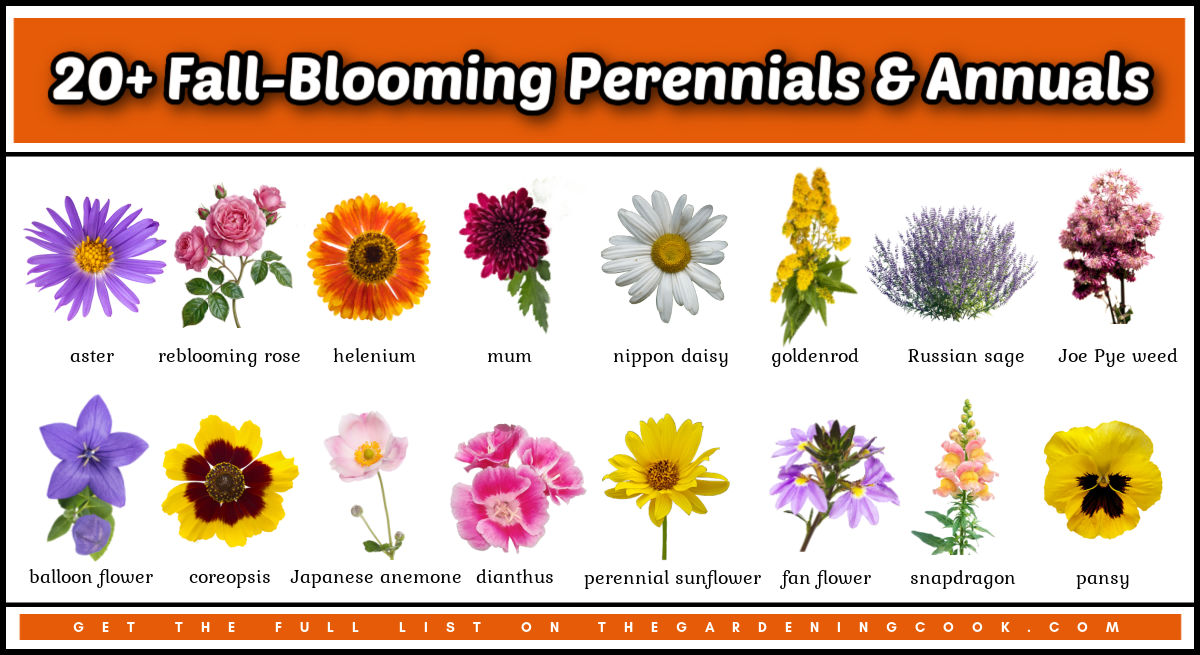
Looking for fall-blooming flowers to keep your garden colorful after the summer flowers begin to fade? These fall-blooming perennials, annuals, and ornamental plants provide beautiful late-season color, with many continuing to flower through September, October, and beyond.
Whether you are filling up containers for your front entry or simply looking for easy ways to add more fall color to your garden, there are plenty of choices. I’ve rounded up 27 of the best late-blooming plants to help you choose the right look for your garden.
Some are plants that flower from summer into fall, while others save their best display for the cooler days of autumn.
In this guide, you’ll find a list of fall flowers, with their names and pictures for a variety of gardens and growing zones. Check the growing information for each plant to find the best choices for your garden.
You’ll also get a free printable listing the types of fall perennials and annuals, so you can take the names and pictures with you when you shop for plants this fall.
Some of the links below are affiliate links. I earn a small commission, at no additional cost to you, if you purchase through an affiliate link.
Names of fall-blooming perennials
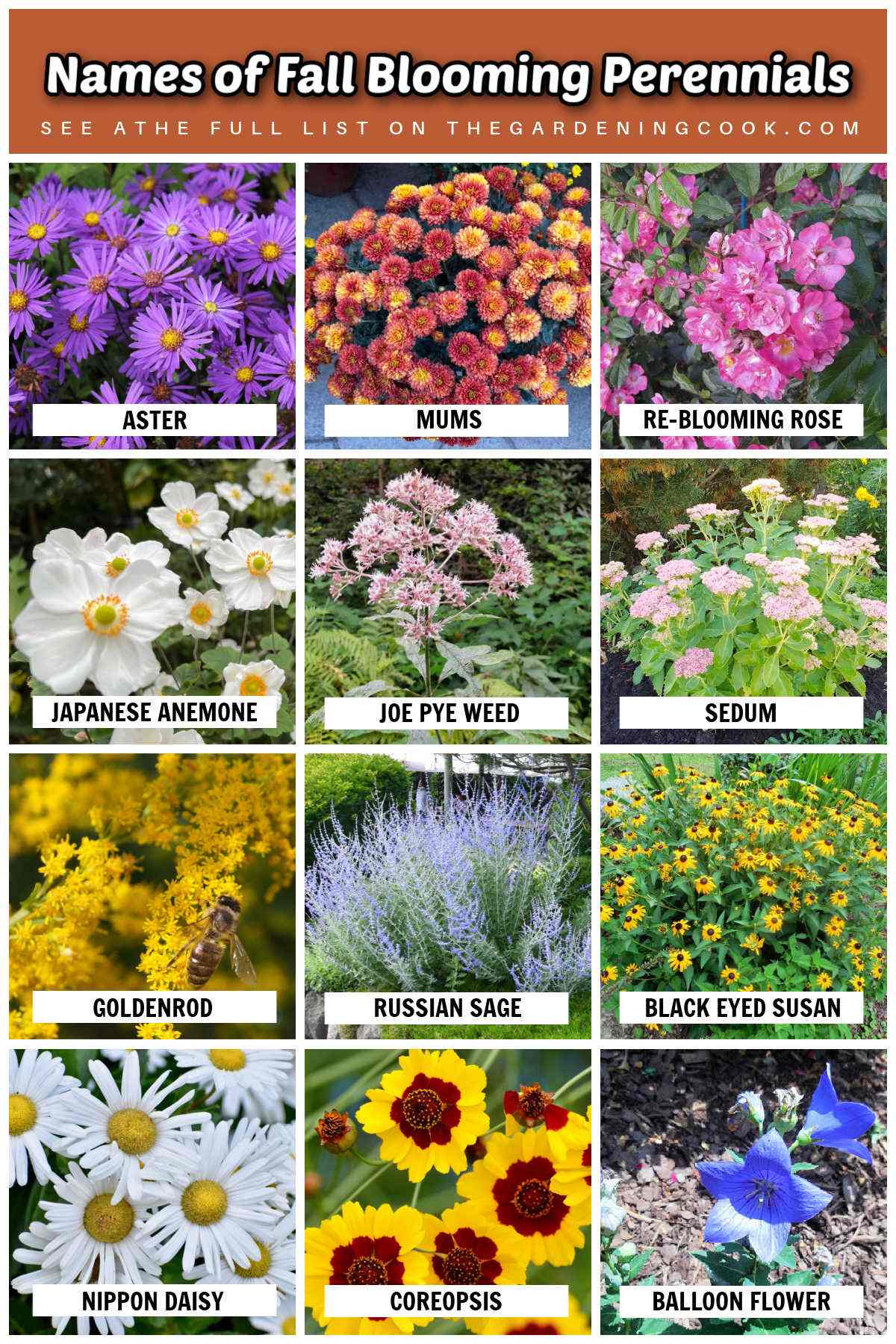
Looking for autumn flower names and pictures for your garden? These fall-blooming perennials offer a wide range of colors, flower shapes, and growing habits. Browse the list to see the names and pictures of fall perennial flowers, along with bloom times, growing zones, and other helpful information.
Note that bloom times can vary by climate, variety, and hemisphere; the months listed below are typical for Northern Hemisphere gardens.
Mums (Chrysanthemum)
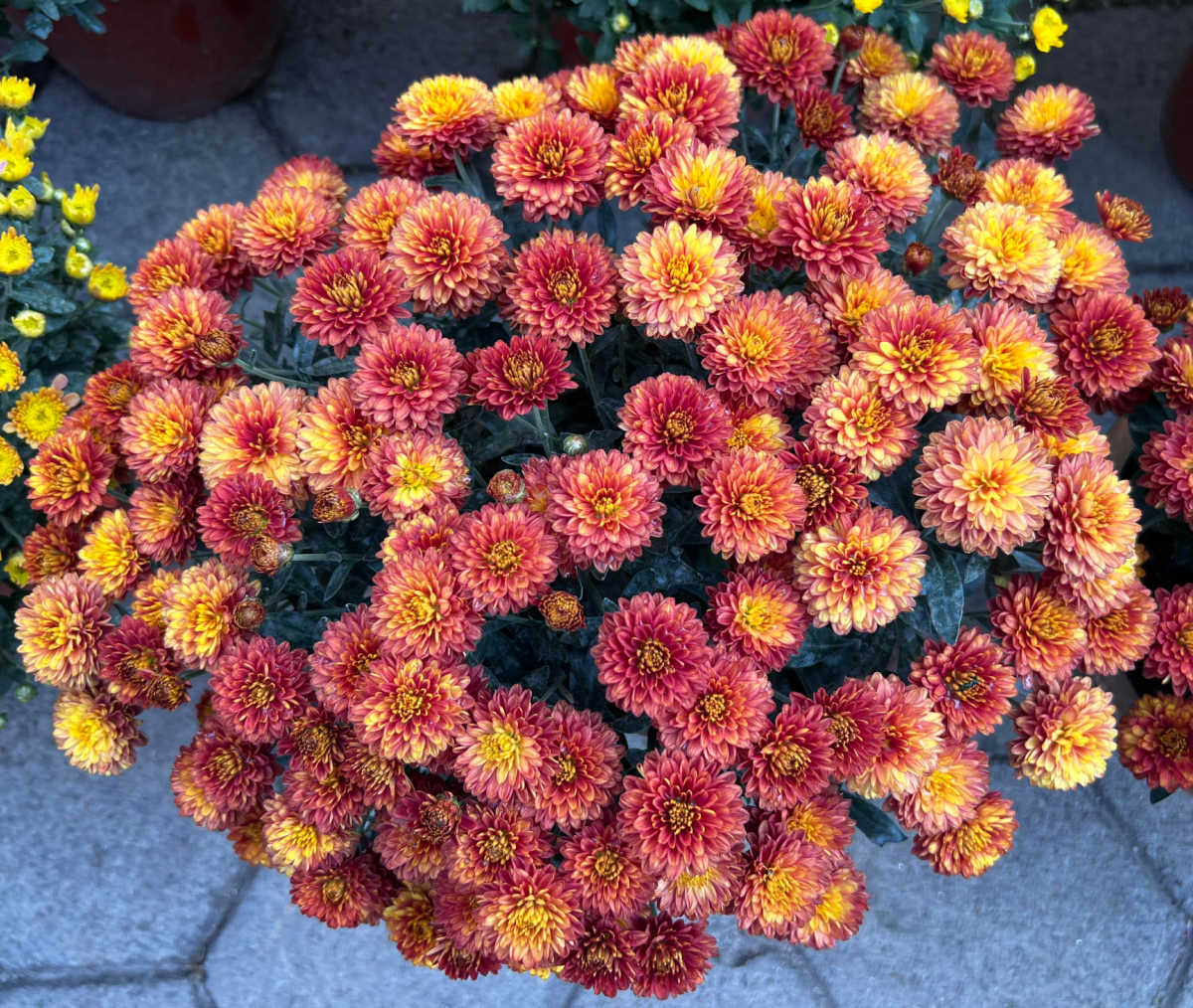
What would fall be without the bold autumn colors of chrysanthemums? These plants really come into their own in autumn, blooming in shades ranging from yellow and orange to red, pink, purple, and white.
Garden mums can provide weeks of color in containers for your entry porch, borders, and flower beds, making them one of the easiest ways to brighten the garden in autumn.
- Bloom time: Late summer through fall, with peak flowering in September and October.
- Light: Full sun to partial shade, with more flowers in full sun.
- Hardiness zones: 5-9 depending on the variety.
- Fall appeal: A huge range of flower colors and forms makes mums an easy way to add instant color.
- Growing tip: Pinch back mums in early summer to encourage bushier plants and more flowers later in the season.
🛒 Buy these common fall-blooming perennials here.
Asters (Symphyotrichum)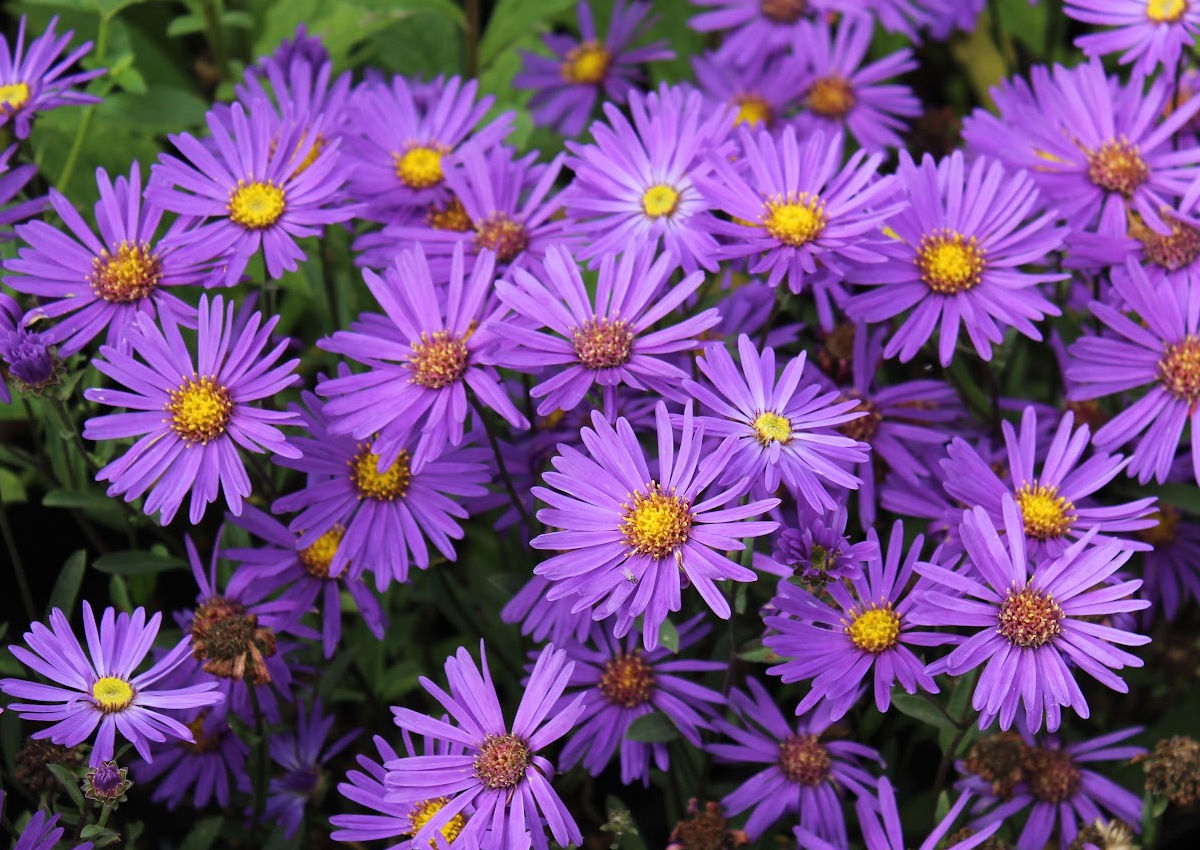
Asters bring daisy-like flowers to the garden just as many summer perennials are fading, with blooms in shades of purple, blue, pink, and white. They are especially valuable in fall gardens for extending the flower season and providing nectar for late-season pollinators.
- Bloom time: Late summer through fall; many varieties flowering from September into October.
- Hardiness zones: 3-8, depending on the species.
- Light: Full sun to partial shade; blooms do best with at least several hours of direct sun.
- Fall appeal: Masses of small, daisy-like flowers for reliable late-season color.
- Growing tip: Cut back tall asters in early summer to encourage bushy and more compact growth.
🛒 Purchase these fall perennials plants here.
Repeat-blooming roses (Rosa hybrids)
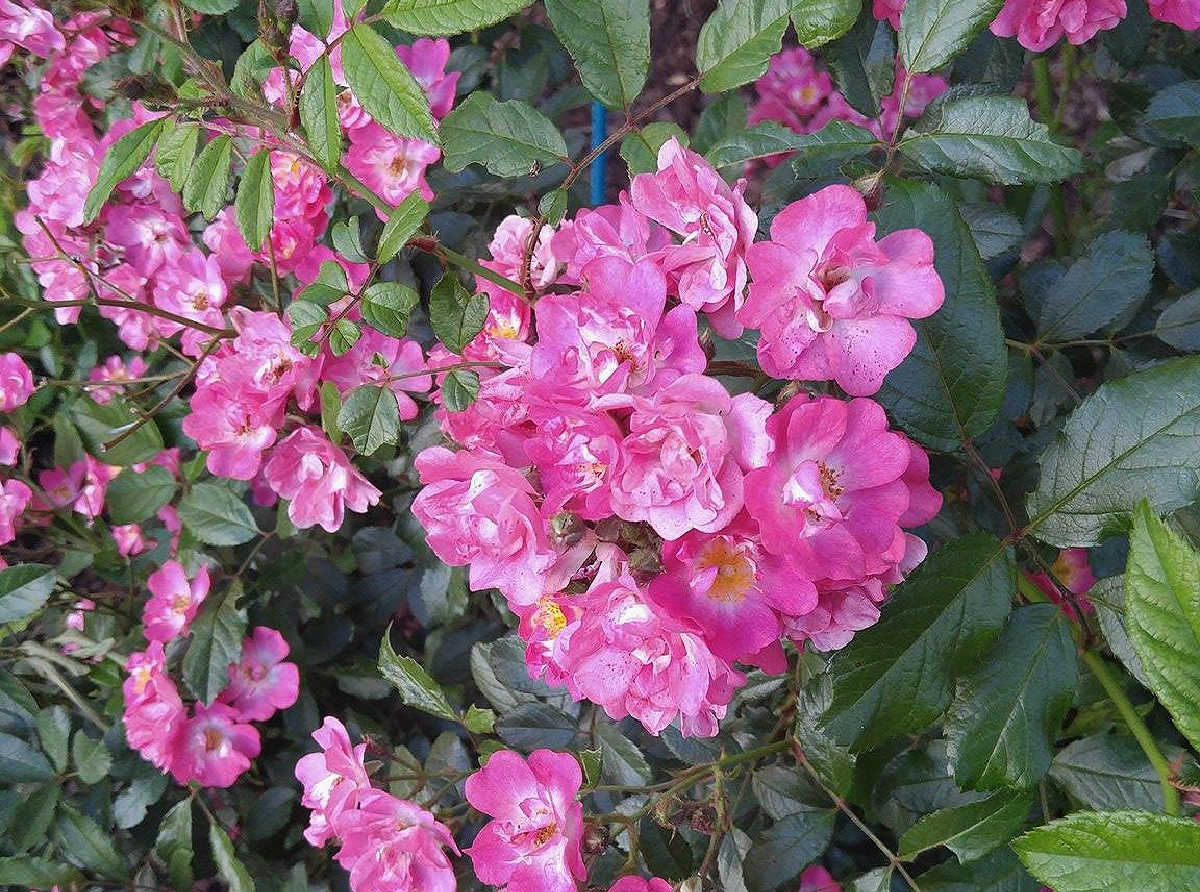
Repeat-blooming roses can keep producing flowers from late spring through fall, making them a great choice when you want fall blooms from a shrub that also provides color earlier in the year.
Modern shrub roses and many floribundas are especially good choices for a long season of flowers.
- Bloom time: Late spring through fall, with flowers produced in repeated bloom times.
- Light: Full sun: at least 6 hours of direct sunlight for the best flowering.
- Hardiness zones: 5-9, depending on the variety
- Fall appeal: Many repeat-blooming roses continue flowering well into September and October, extending your color season.
- Growing tip: Deadhead spent flowers regularly to encourage reblooming.
🛒 Shop for repeat-blooming roses here.
Japanese anemone (Anemone hupehensis and hybrids)
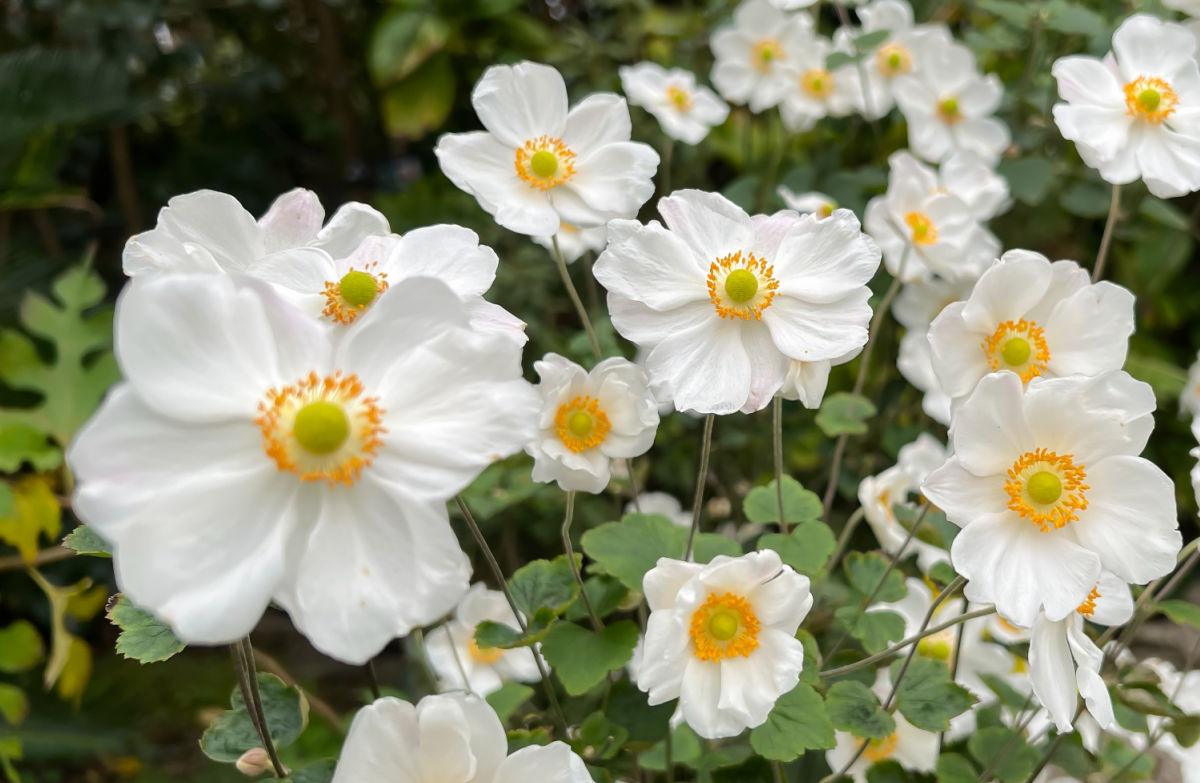
Unlike spring-blooming anemones, Japanese anemones flower in late summer and fall and are typically grown as established plants rather than planted from spring-blooming corms.
Their flowers are delicate and saucer-shaped in shades of pink and white. They look lovely planted in groups at the back of a perennial border.
- Bloom time: Late summer through fall, often flowering from August into October.
- Light: Full sun to partial shade; afternoon shade is helpful in hot climates.
- Hardiness zones: 4-8
- Fall appeal: Tall stems topped with airy pink or white flowers provide elegant color late in the season and are rabbit- and deer-resistant.
- Growing tip: Give Japanese anemones room to spread since they can slowly form large colonies when established.
🛒 See fall-blooming flowers here.
Sedum / Stonecrop (Hylotelephium)
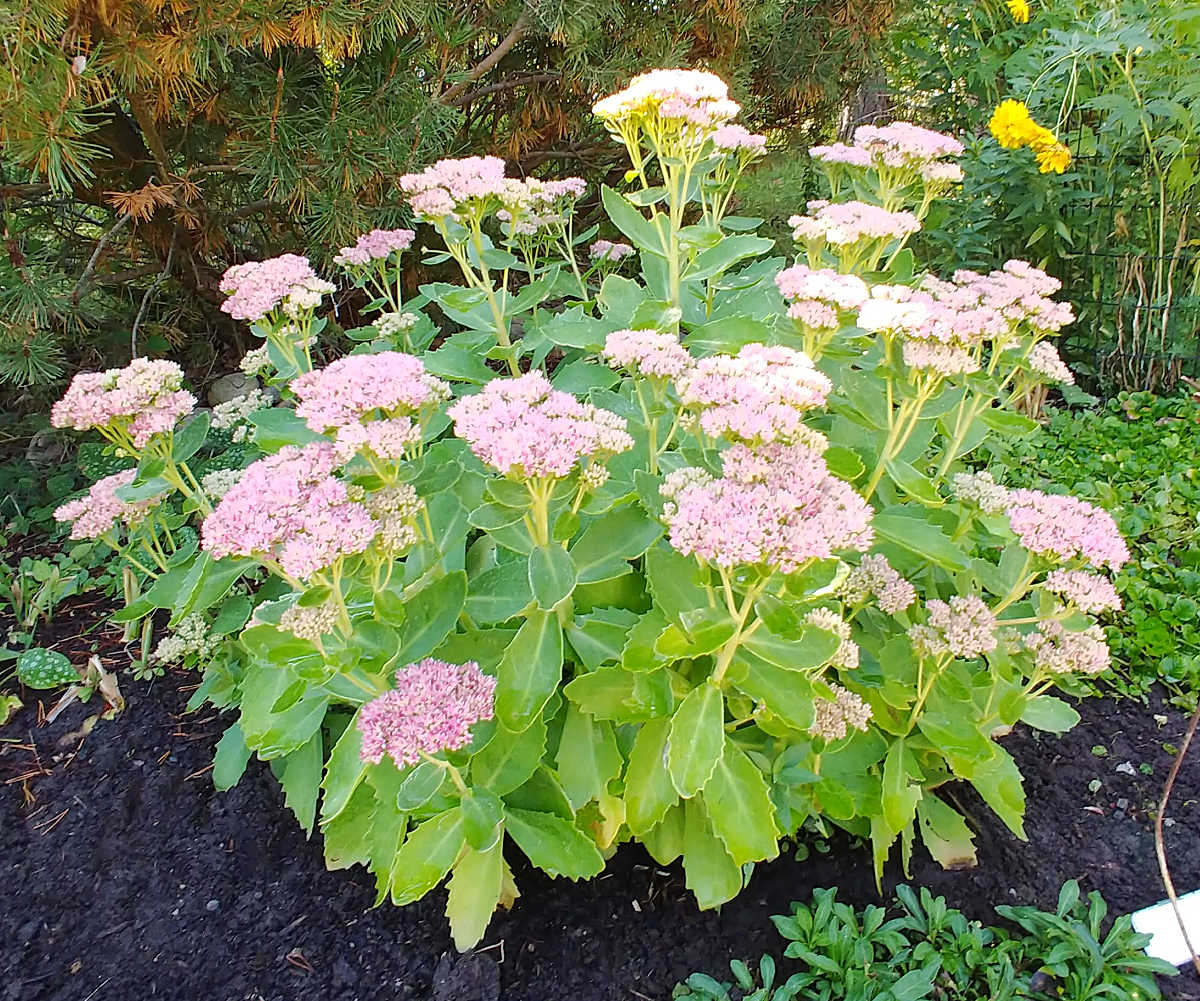
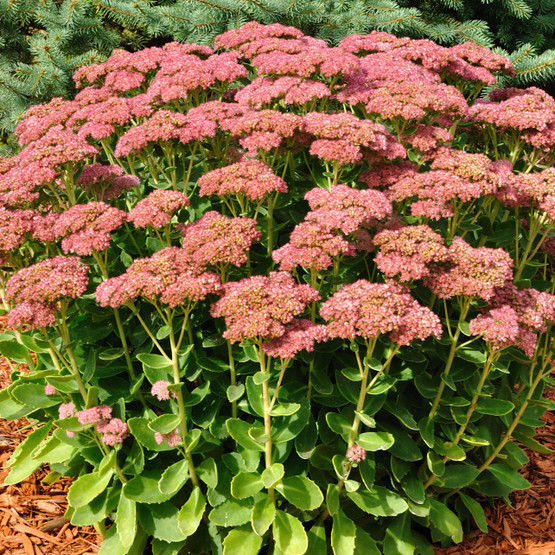
Sedum, especially the popular Autumn Joy type, is a dependable late-season perennial that comes into its own just as many summer flowers are fading. Its flat clusters of tiny flowers start pale pink and deepen to rosy-red and coppery tones as fall progresses, adding long-lasting color and texture to the garden.
This plant roots very easily from cuttings.
- Bloom time: Late summer through fall, often from August into October.
- Light: Full sun; plants are more compact and flower best with plenty of sunlight.
- Hardiness zones: 3-9, depending on the variety.
- Fall appeal: Flower clusters deepen as the season progresses and can remain very attractive well into fall.
- Growing tip: Avoid overwatering sedum; this hardy succulent is quite drought-tolerant.
🛒 Mountain Crest has a nice variety of these hardy fall-blooming succulents.
Joe Pye weed (Eutrochium spp.)
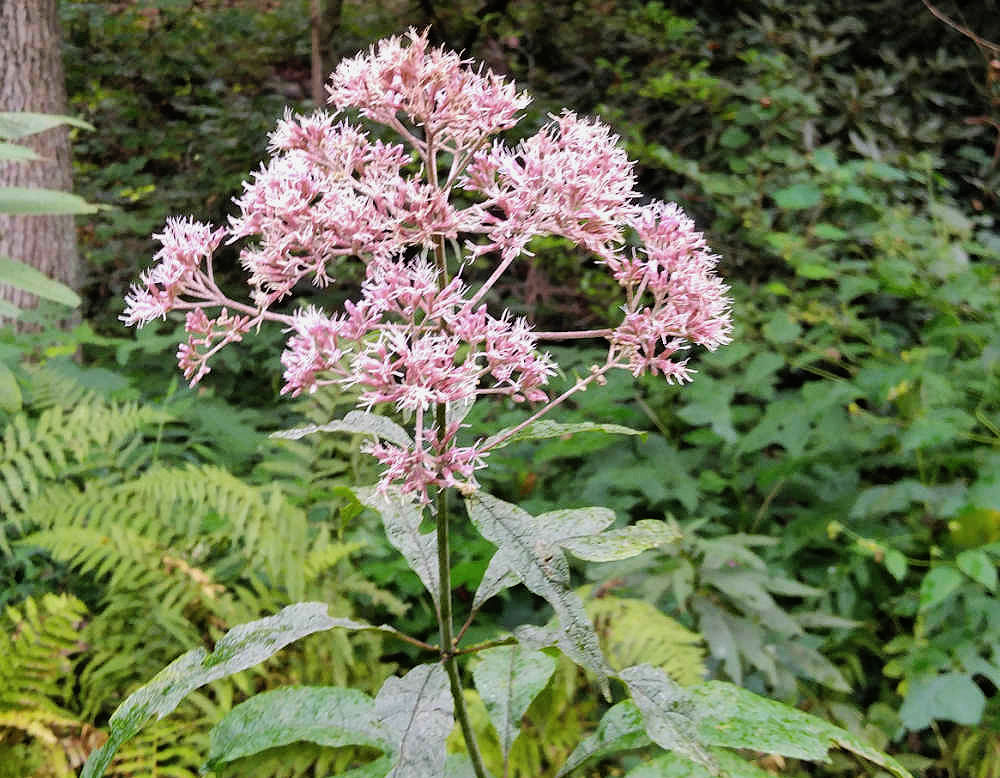
This striking native late-flowering perennial is anything but a weed to me. The butterflies love it! This is a big plant – often getting to 6 feet tall in size, so it needs lots of room to grow!
It puts on quite a show, late in the season, with large, domed clusters of mauve-pink flowers.
- Bloom time: Late summer through fall; generally July through September or October, depending on your climate.
- Light: Full sun to partial shade; more sun produces stronger flowering and sturdier growth.
- Hardiness zones: 3-9, depending on the species.
- Fall appeal: Its tall stems make it perfect as a back-of-the-border plant.
- Growing tip: Give Joy Pye weed consistent moisture, particularly in hot, dry weather.
🛒 Get this unusual fall-blooming perennial here.
Helenium (Helenium autumnale)
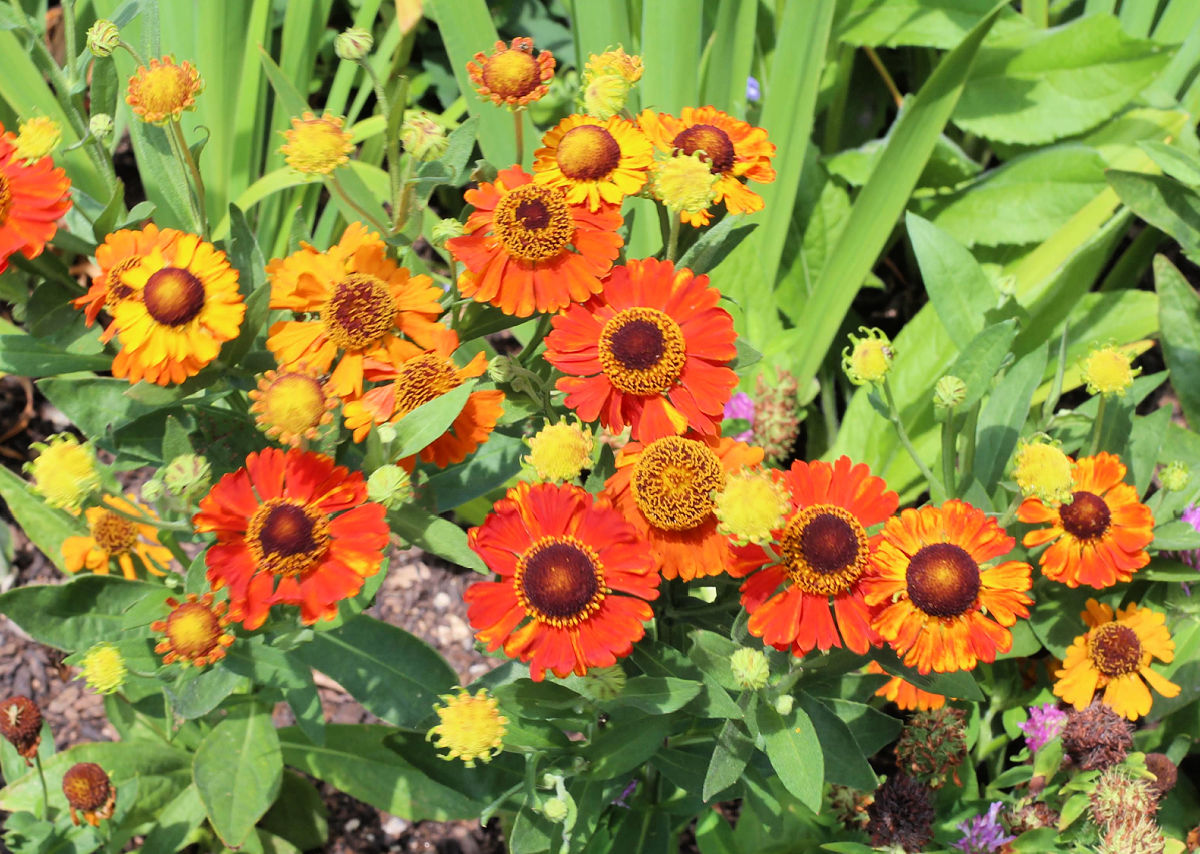
Helenium, also called sneezeweed, is a cheerful late-season perennial with daisy-like flowers in warm shades of yellow, gold, orange, and red.
It is an excellent choice for bringing strong fall color to sunny borders and attracts butterflies and other pollinators when many other plants are finishing their bloom season.
- Bloom time: Mid-summer through fall; several varieties flower from August into October.
- Light: Full sun.
- Hardiness zones: 3-8, depending on the cultivar.
- Fall appeal: Their warm yellow, orange, and red flowers provide some of the strongest autumn colors in a perennial garden.
- Growing tip: Keep the soil consistently moist in hot, dry weather, and deadhead spent flowers to encourage more blooms.
🛒 You can buy these colorful perennials that bloom in the fall here.
Goldenrod (Solidago spp.)
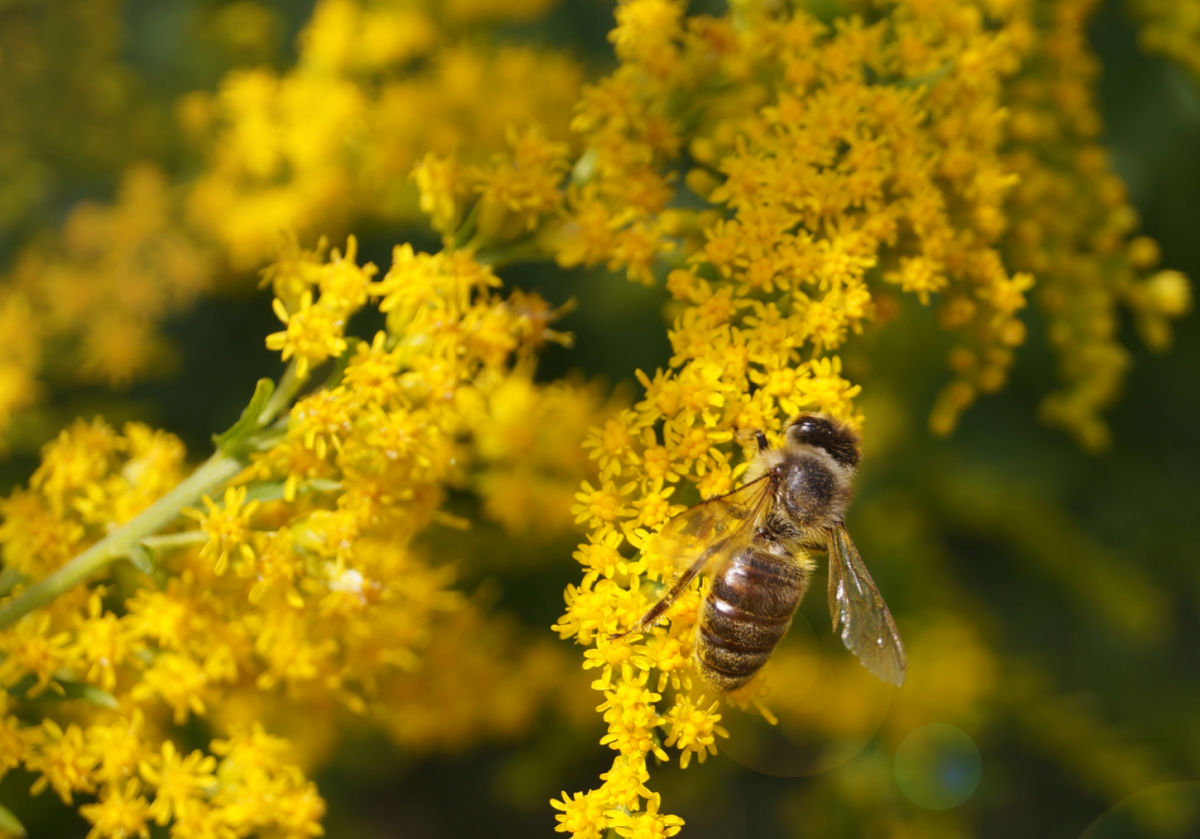
Goldenrod is a native perennial that lights up the garden with airy sprays of bright yellow flowers in late summer and fall. It is an especially valuable late-season plant for pollinators and works well in naturalistic gardens, borders, and wildlife-friendly plantings.
An added benefit is that bees love goldenrod flowers.
- Bloom time: Late summer through fall, typically August through October.
- Light: Full sun to partial shade.
- Hardiness zones: 3-9, depending on the variety.
- Fall appeal: Their bright yellow flower clusters give a strong burst of late-season color when many other perennials are fading.
- Growing tip: Choose a clumping variety for a more controlled plant; some goldenrods can spread aggressively.
🛒 See these cheerful fall-blooming plants on Etsy.
Black-eyed Susan (Rudbeckia spp.)
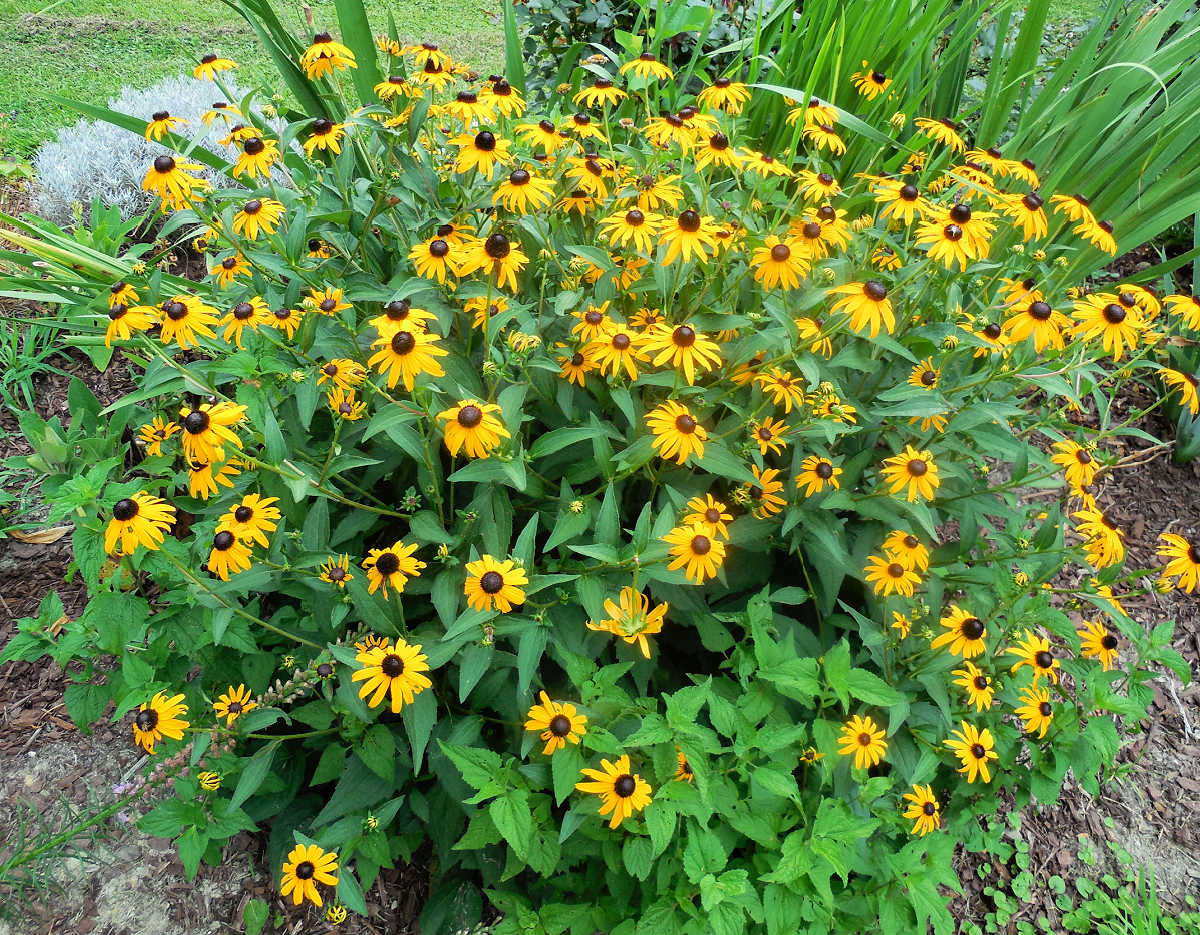
Black-eyed Susans are cheerful, daisy-like perennials with golden-yellow petals surrounding a dark brown center. Although they begin blooming in summer, many varieties continue flowering into fall, making them a dependable choice for extending color in sunny gardens.
They are also excellent flowers for attracting butterflies and bees.
- Bloom time: Summer through fall; often June through October.
- Light: Full sun; they can tolerate some light shade but flower best with direct sunlight.
- Hardiness zones: 3-9 depending on the variety.
- Fall appeal: Their golden-yellow flowers continue providing warm color as the garden transitions into autumn.
- Growing tip: Deadhead regularly to encourage additional blooms. You can also leave some spent flowers to provide seeds for birds.
🛒 Check out this common autumn perennial here.
Russian sage (Salvia yangii)
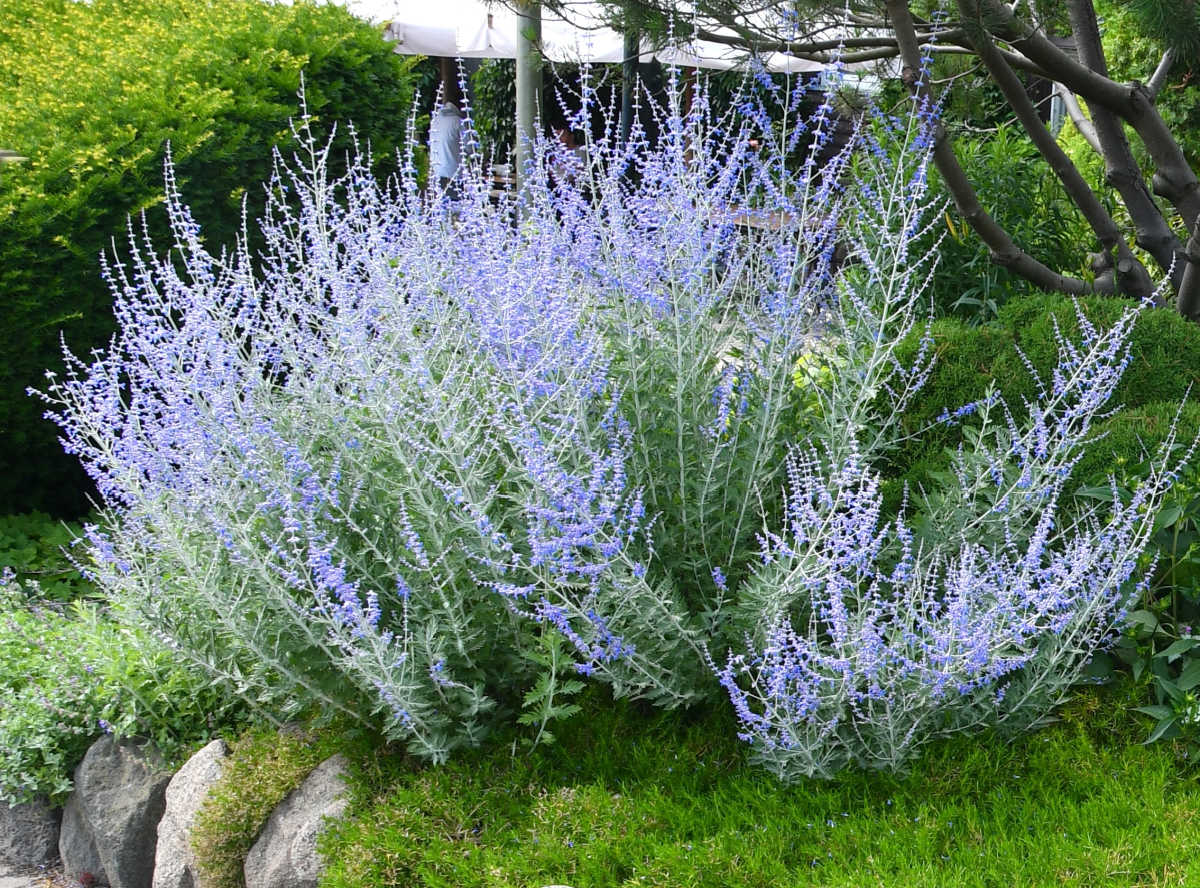
Russian sage is a hardy, drought-tolerant perennial with airy spires of lavender-blue flowers and fragrant, silvery foliage. It can begin flowering in summer and continue into fall, making it useful for adding cool-toned color and texture as the garden moves into autumn.
Despite its common name, it isn’t a true sage (Salvia).
- Bloom time: Mid-summer through fall, often July through October.
- Light: Full sun; Russian sage needs plenty of sunlight for the best flowering and strongest growth.
- Hardiness zones: 4-9.
- Fall appeal: The lavender-blue flowers and silvery foliage provide a soft contrast to the warmer yellow, orange, and red flowers common in fall gardens.
- Growing tip: Avoid overly rich or wet conditions, which can lead to floppy growth.
🛒 Etsy has this pretty fall flowering plant for sale.
Nippon daisy (Nipponanthemum nipponicum)
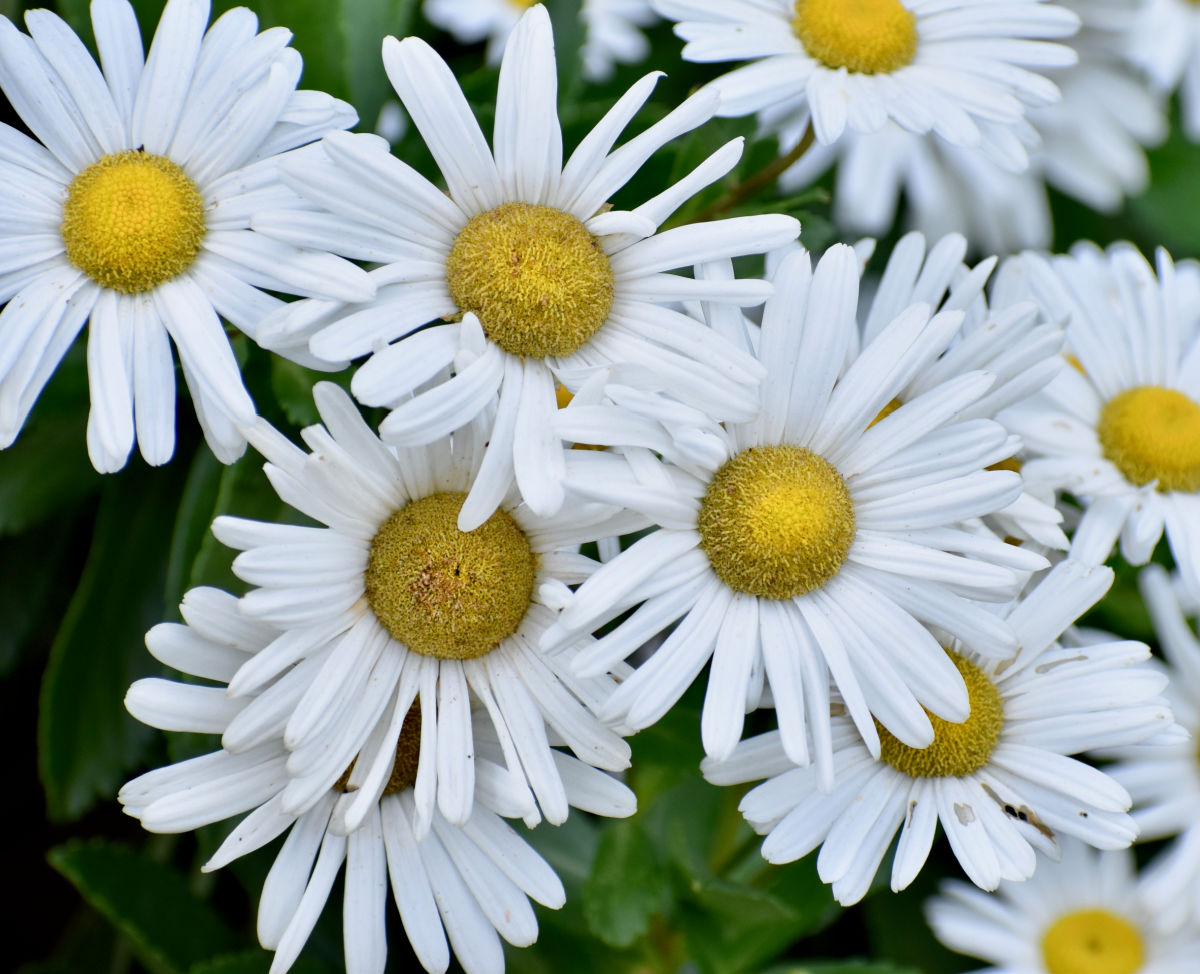
Nippon daisies are compact, shrub-like perennials with masses of crisp white, daisy-like flowers and yellow centers. They bloom later than many traditional daisies, making them a useful choice for adding fresh white color to the fall garden.
They are sometimes called Montauk daisies, although the names can be used somewhat interchangeably in gardening references.
- Bloom time: Late summer through fall, often September into October.
- Light: Full sun to partial shade; several hours of direct sun is best for flowering.
- Hardiness zones: 5-9.
- Fall appeal: Abundant white flowers brighten the garden late in the season and contrast beautifully with fall foliage and warmer fall colors.
- Growing tip: Cut plants back by about half in early summer to encourage compact, bushy growth and more flowers later in the season.
🛒 Buy these beautiful fall flowers here.
Japanese toad lily (Tricyrtis hirta)
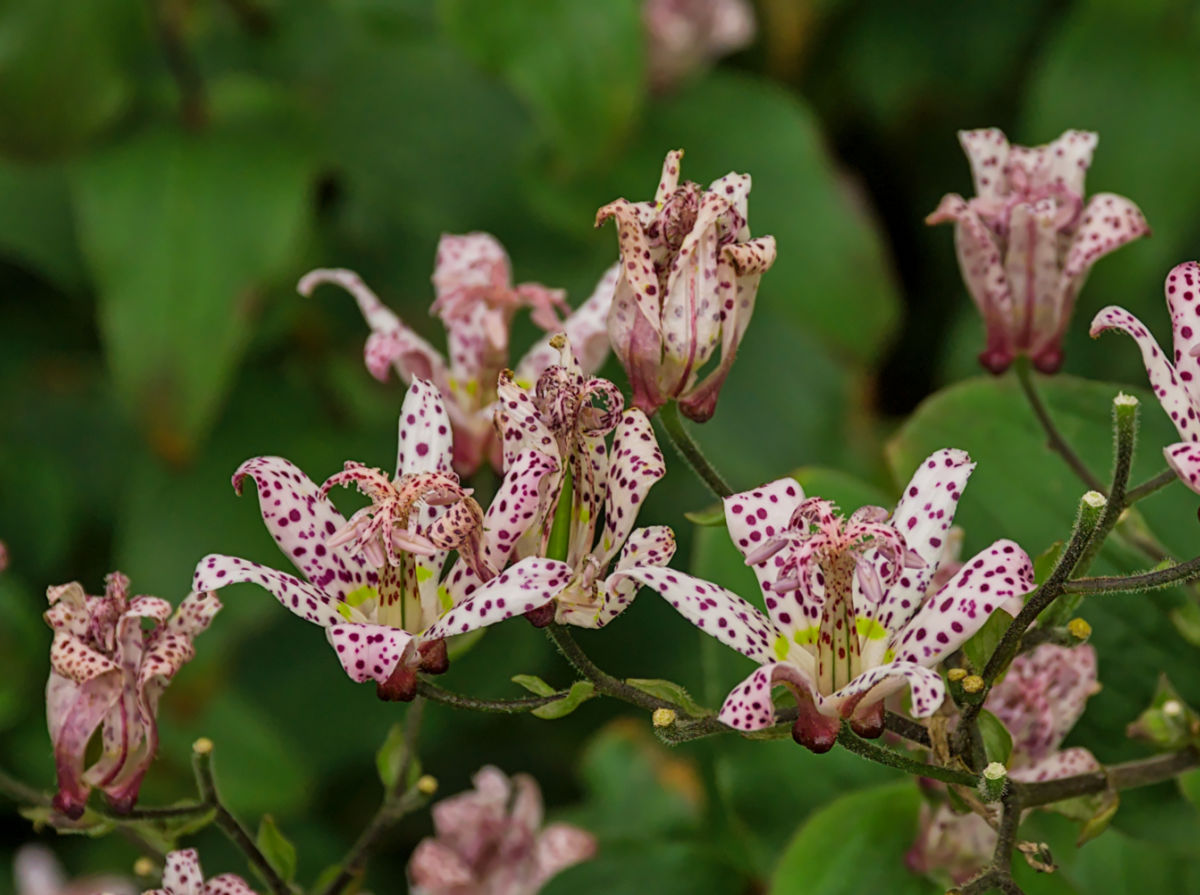
Japanese toad lilies are unusual fall-blooming perennials with small, orchid-like flowers covered in purple spots. The intricate blooms appear along the stems and bring a welcome touch of late-season color to shady garden spots.
They are a particularly good choice when you want fall flower types for shade, where many other late-season bloomers struggle.
- Bloom time: Late summer through fall, often flowering from September into October.
- Light: Partial to full shade; morning sun or dappled light is ideal.
- Hardiness zones: 4-8.
- Fall appeal: Intricately spotted flowers provide late-season color in shady areas.
- Growing tip: Protect plants from drying out in hot weather conditions.
🛒 Purchase these fall-blooming flowers here.
Perennial sunflower (Helianthus spp.)
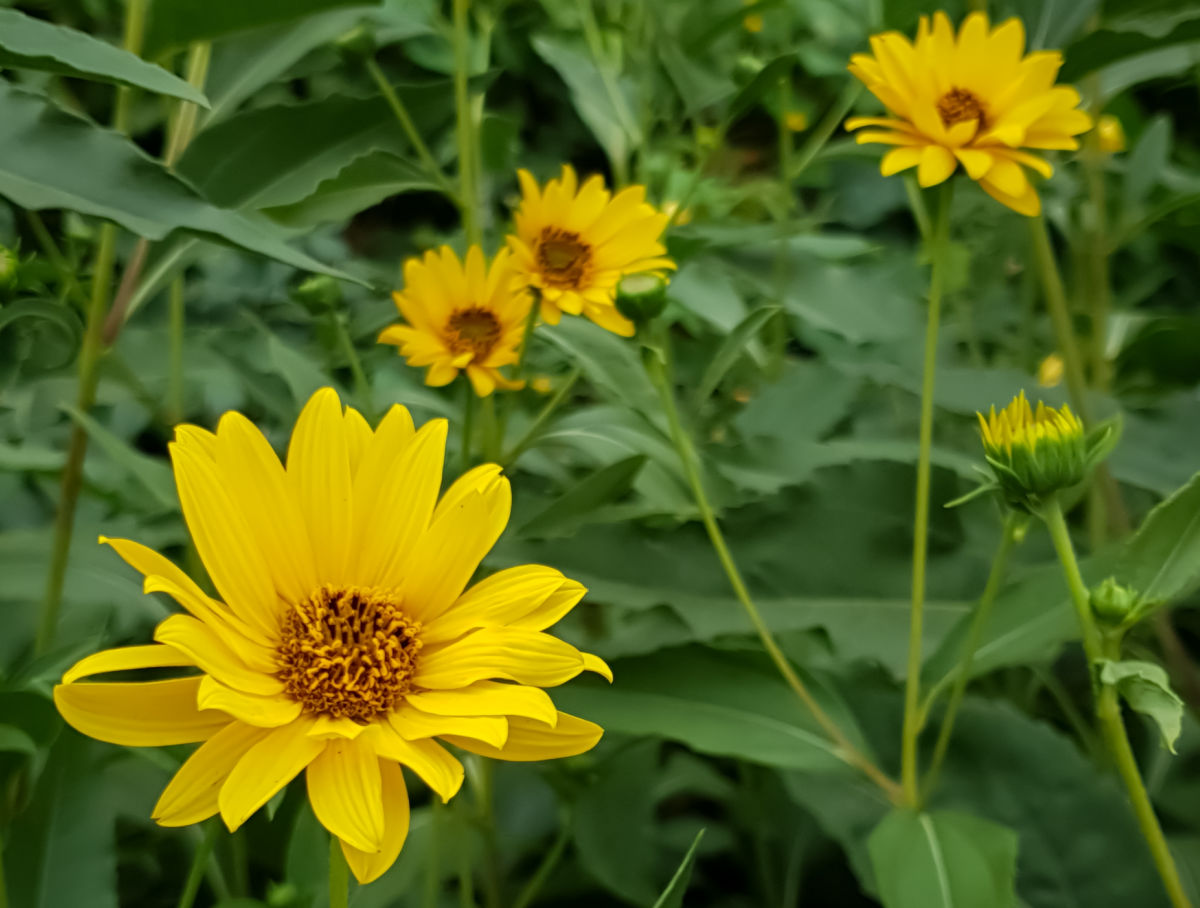
Perennial sunflowers bring the cheerful look of classic sunflowers to the garden year after year.
Unlike the familiar annual sunflowers, these long-lived perennials produce clusters of smaller yellow, daisy-like flowers and can bloom from late summer into fall, making them a useful choice for extending the flower season.
- Bloom time: Late summer through fall, typically August into October.
- Light: Full sun; flowering is best with at least 6 hours of direct sunlight.
- Hardiness zones: 4-9, depending on species.
- Fall appeal: Bright yellow flowers add a cheerful burst of color late in the season and pair beautifully with other autumn bloomers.
- Growing tip: Give perennial sunflowers plenty of room. They can form substantial clumps over time.
🛒 Get seeds for perennial sunflowers on Etsy.
Dianthus (Dianthus)
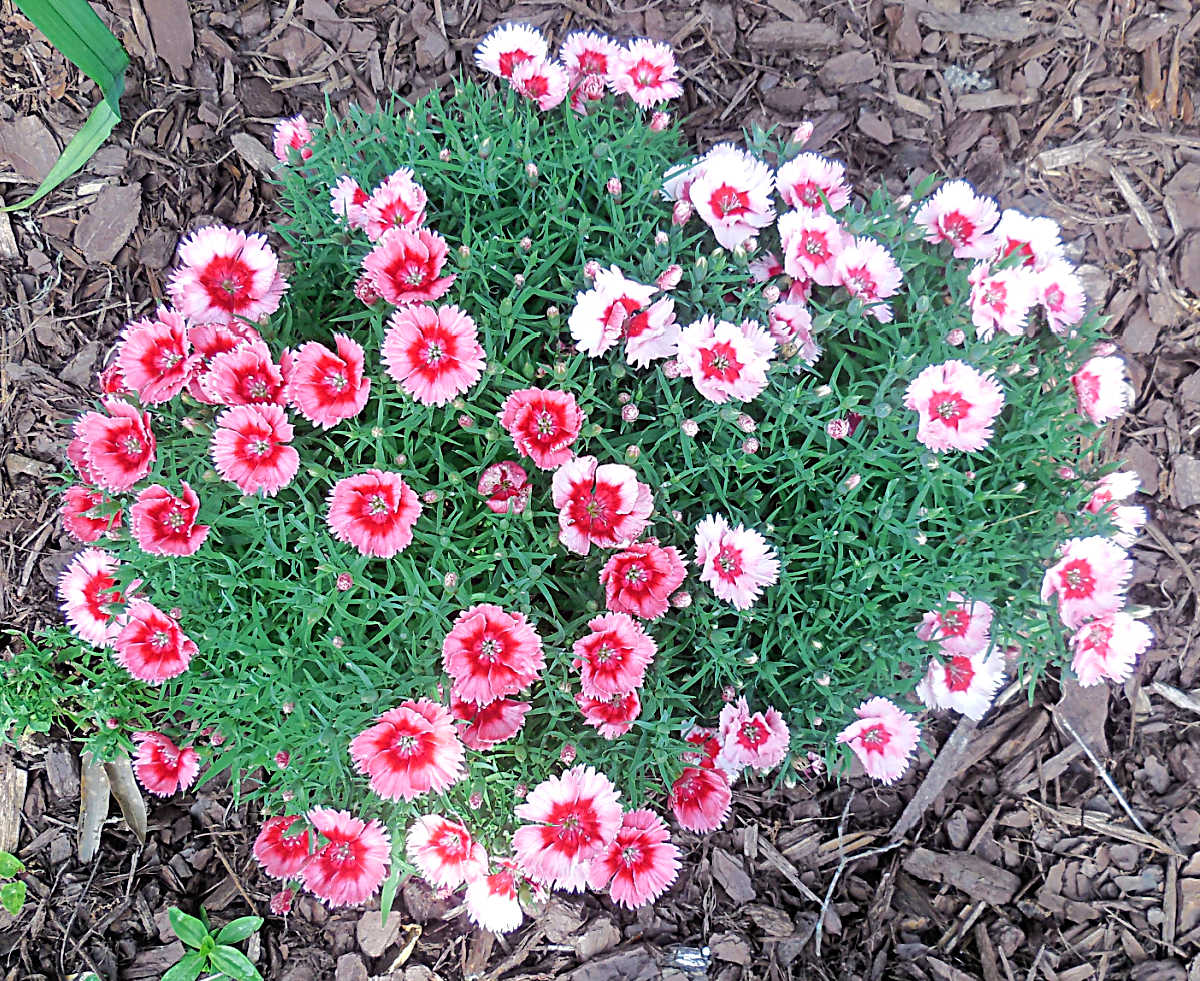
Dianthus is also called pinks or Sweet William. It has a spicy fragrance and comes in a wide variety of colors and can be grown as a perennial, biennial, or annual, depending on your climate.
Most modern varieties of Dianthus will bloom from May until October, especially if spent blooms are removed. See my guide to growing dianthus here.
- Bloom time: Spring through fall, depending on the species and variety.
- Light: Full sun.
- Hardiness zones: 3-9
- Fall appeal: Fringed flowers in shades of pink, red, white, and purple can provide color late in the season.
- Growing tip: Deadhead regularly to encourage additional blooms, and avoid overly wet soil.
🛒 Etsy has a nice variety of this plant that blooms well into fall.
Tickseed (Coreopsis spp.)
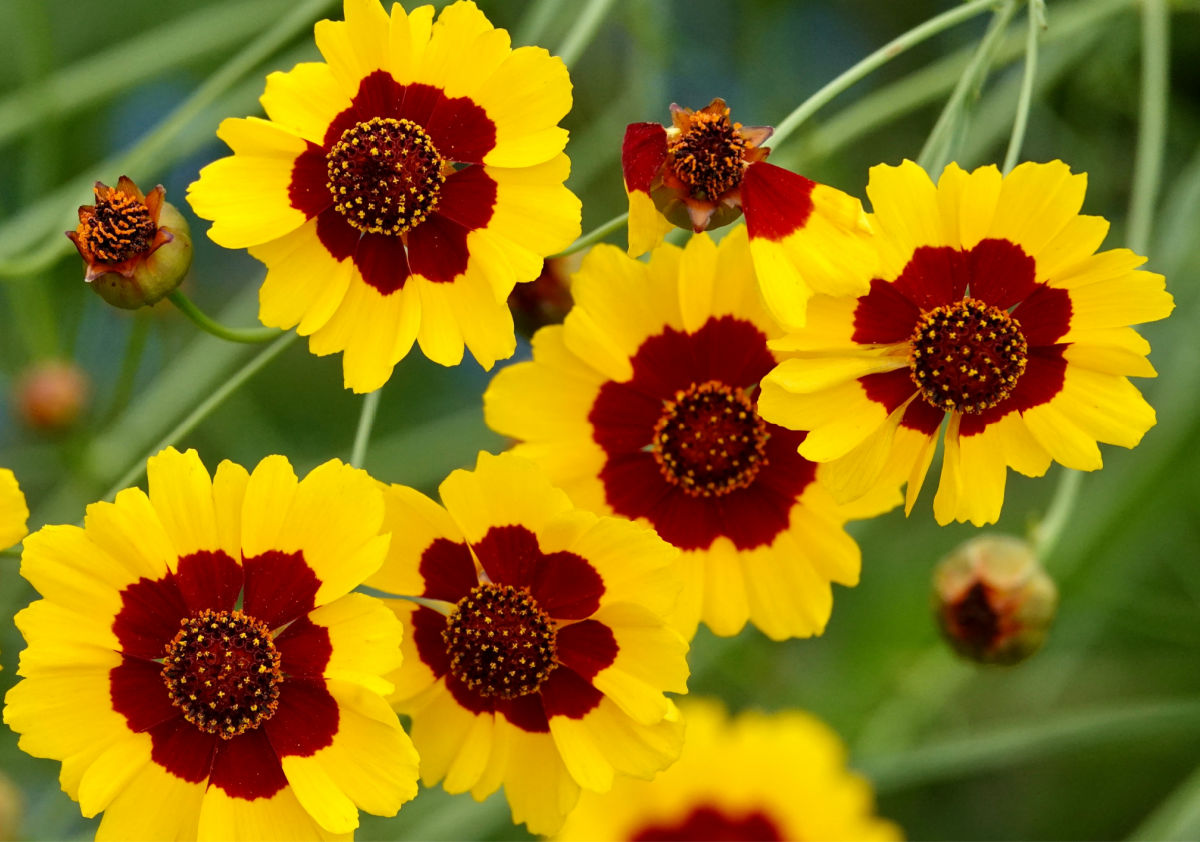
Tickseed is a cheerful, easy-to-grow perennial that can keep the garden filled with daisy-like flowers well into fall. Most varieties have yellow blooms, although some cultivars offer shades of red, orange, or pink.
Their long flowering season also makes tickseed a valuable source of nectar for pollinators.
- Bloom time: Summer through fall, often June through September or October, depending on the variety.
- Light: Full sun.
- Hardiness zones: 3-9, depending on the species and cultivar.
- Fall appeal: Daisy-like flowers provide cheerful late-season color and complement other fall-blooming perennials.
- Growing tip: Deadhead spent flowers regularly to encourage continued blooming.
🛒 See this fall-blooming flower on New Garden Plants.
Balloon flower (Platycodon grandiflorus)
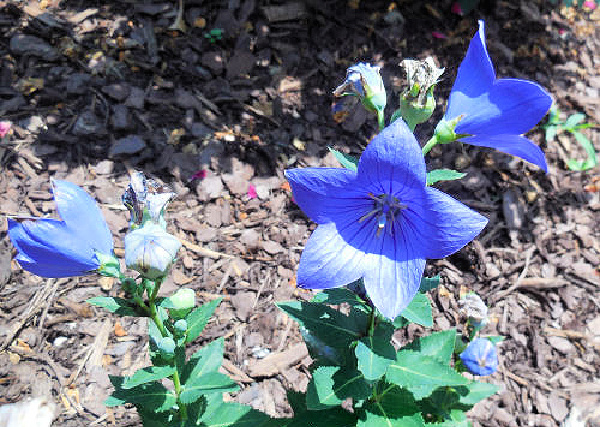
Balloon flowers, also known as Chinese bell flowers, are named for their distinctive round flower buds, which swell like little balloons before opening into star-shaped blooms.
Although they begin flowering in summer, they can continue into early fall, with blue, pink, or white flowers adding a cooler color note to the late-season garden. See my guide to growing balloon flowers here.
- Bloom time: Summer through early fall, often July through September.
- Light: Full sun to partial shade.
- Hardiness zones: 3-8.
- Fall appeal: The star-shaped flowers add a fresh, cool-toned contrast to the warmer colors of the autumn garden.
- Growing tip: Choose the spot carefully, since balloon flowers have a long taproot and don’t like to be transplanted.
🛒 Get these autumn blooming perennials here.
Autumn crocus (Colchicum autumnale)
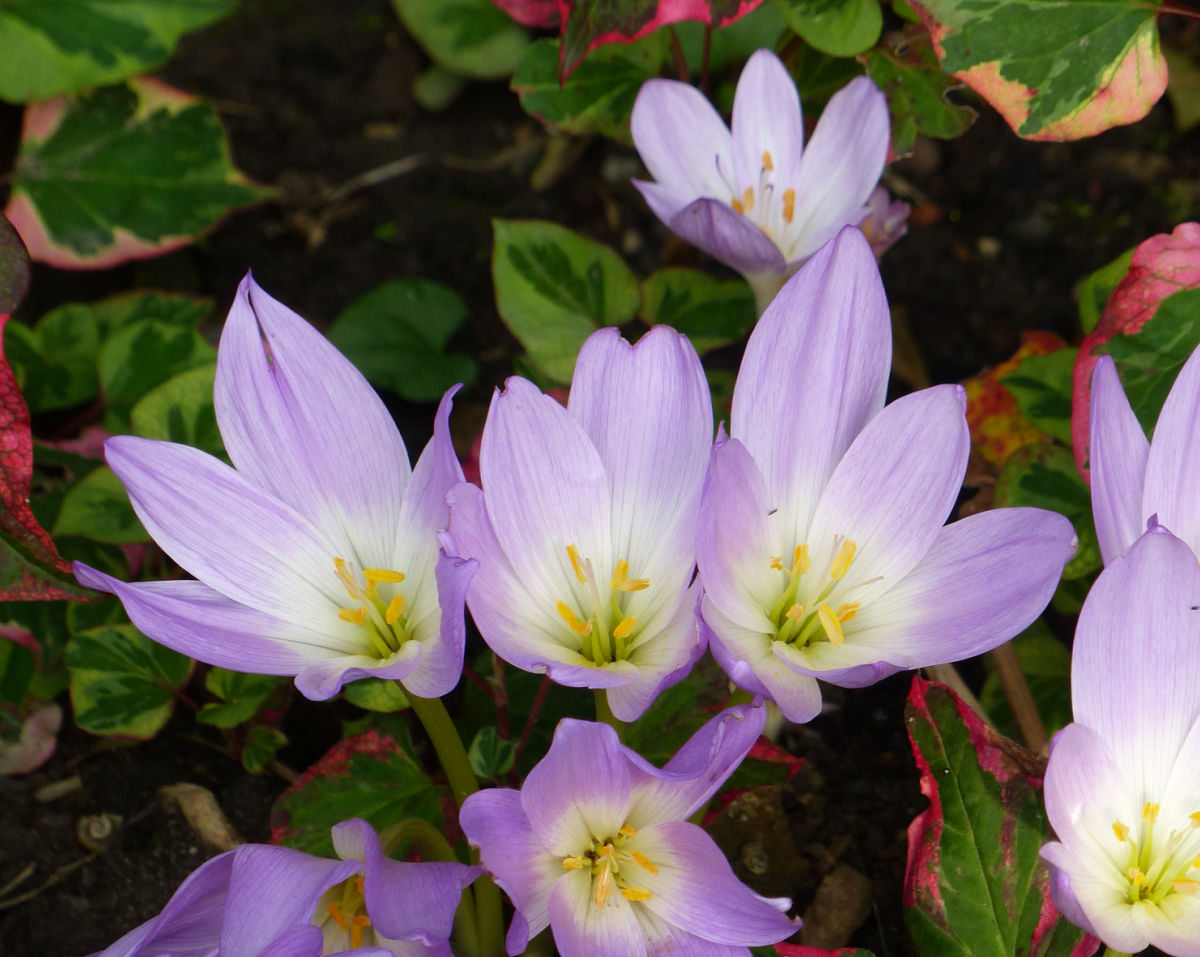
Autumn crocus produces its delicate, crocus-like flowers in fall, often appearing almost magically before the foliage emerges. Despite its common name and crocus-like appearance, it isn’t a true crocus.
The bulbs (technically corms) are planted in late summer or fall for flowers that appear in autumn.
- Bloom time: Late summer through fall, often September into October.
- Light: Full sun to partial shade.
- Hardiness zones: 4-8
- Fall appeal: Its cup-shaped flowers appear when many other bulbs and perennials have finished blooming.
- Growing tip: Plant the corms in well-draining soil and don’t disturb them once established.
- Toxicity: Autumn crocus is highly toxic if eaten.
🛒 You can buy Autumn crocus corms here.
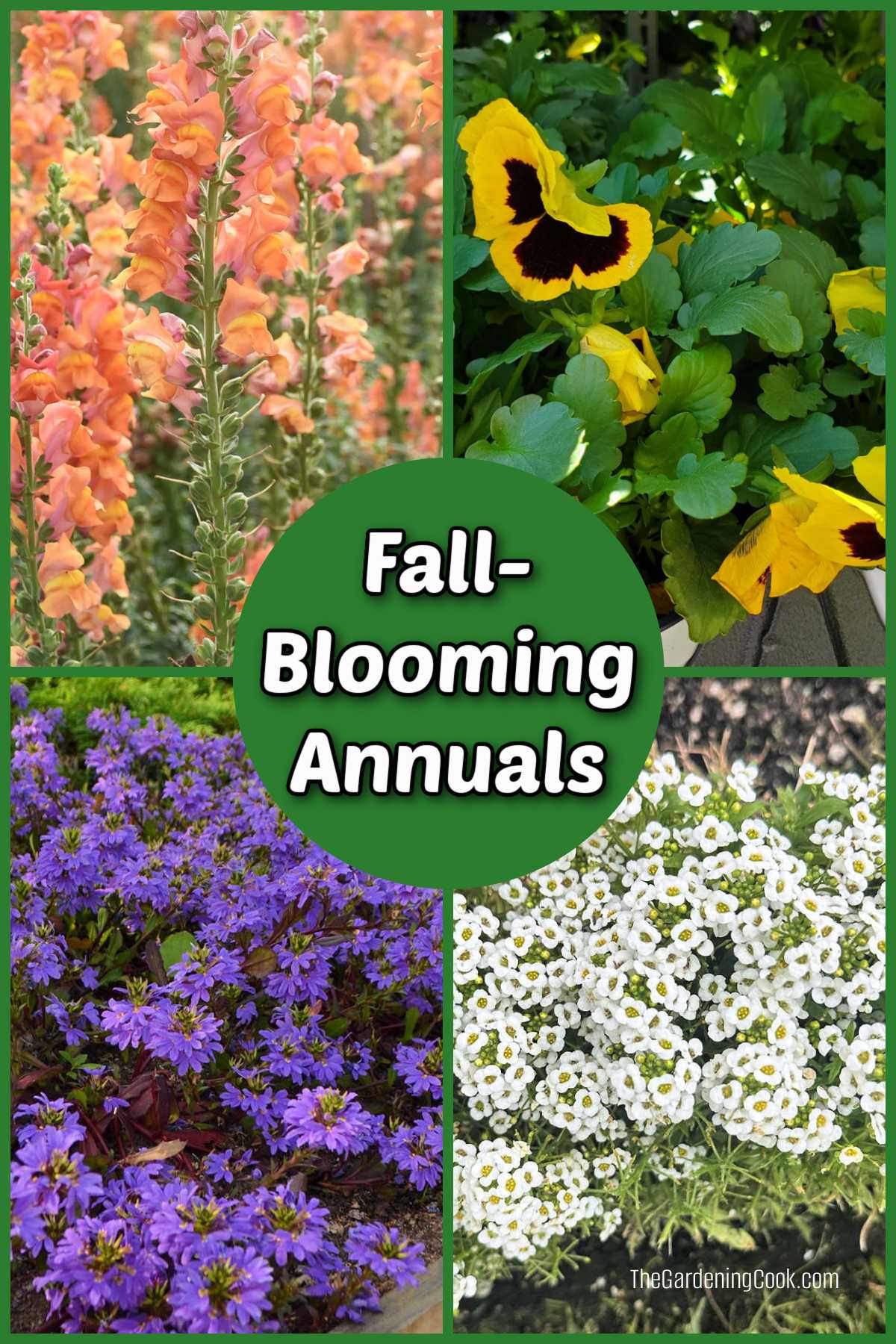
Types of fall-blooming annuals
These types of fall-blooming annuals add color late in the growing season, with flowers in a wide range of colors, shapes, and sizes.
Below, you’ll find the names and pictures of autumn flowering annuals along with growing information to help you choose the best ones for your garden.
Snapdragons (Antirrhinum majus)
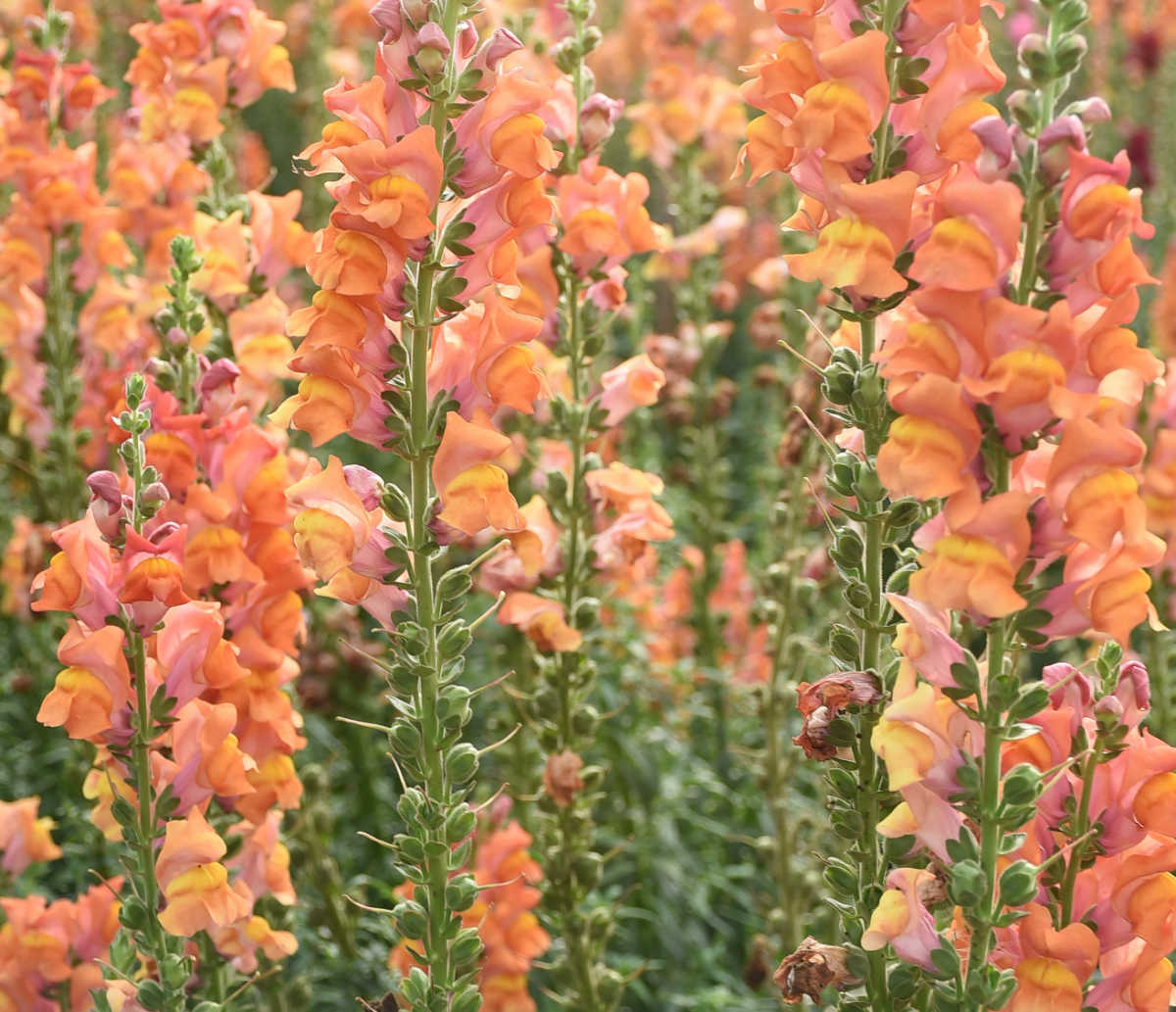
Snapdragons are colorful cool-season annuals that can bring flowers to the garden when many summer annuals are fading. They come in almost every color except true blue, with tall flower spikes that work beautifully in beds, containers, and cutting gardens.
In mild climates, snapdragons can bloom through much of the cooler season.
- Bloom time: Spring and fall, with a break in flowering during the hottest part of the summer.
- Light: Full sun to partial shade; afternoon shade can help extend flowering in hot climates.
- Hardiness zones: 7-10 as short-lived perennials; grown as annuals in colder zones.
- Fall appeal: Their colorful flower spikes provide reliable cool-season color and can continue blooming well into fall.
- Growing tip: Remove spent flower spikes regularly to encourage more blooms and keep the plants tidy.
🛒 See these beautiful autumn flowers here.
Pansies (Viola × wittrockiana)
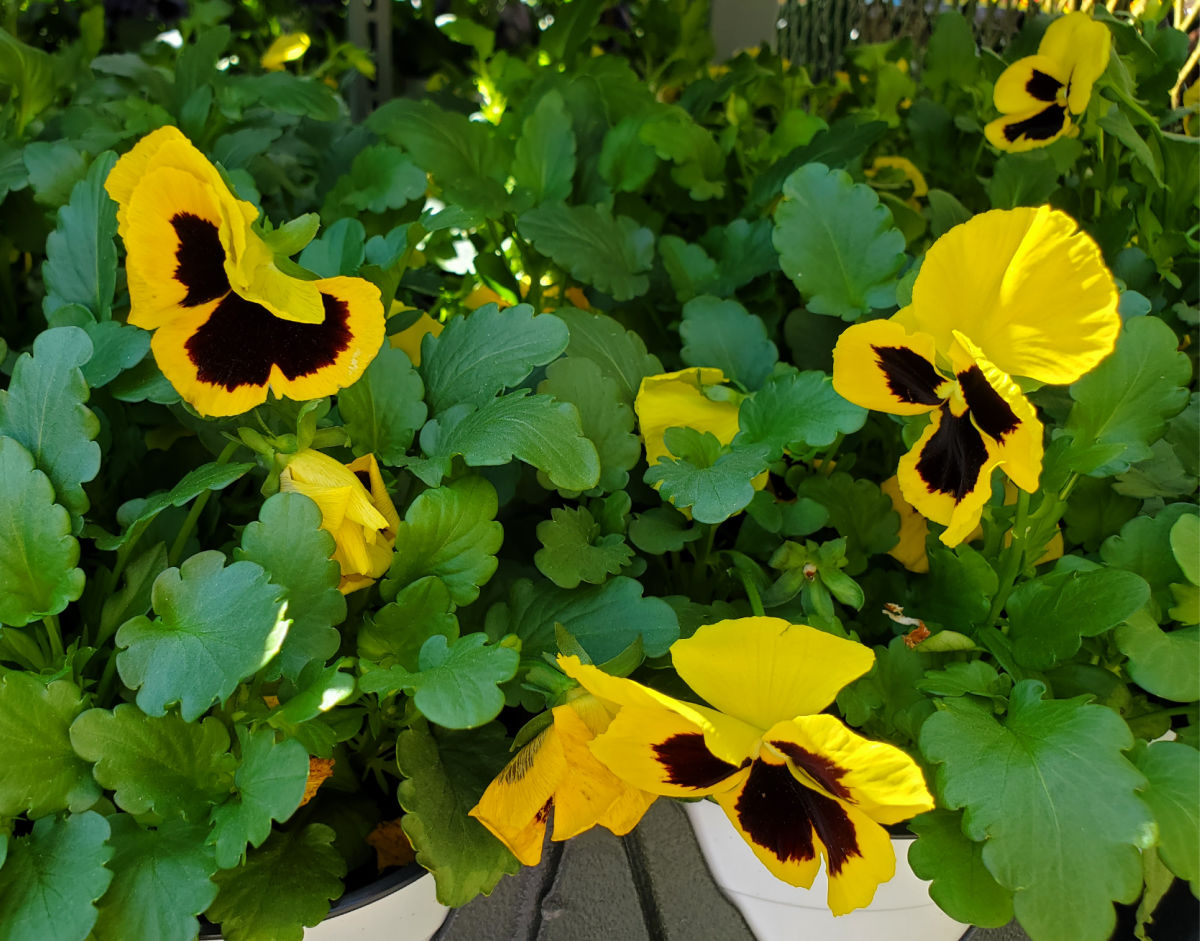
No list of fall flower names would be complete without pansies. These cold-hardy annuals can withstand temperatures down to about 20°F (-6°C) and are often seen in gardens both in fall and early spring. Pansies will bloom right through the winter if you live in a warmer climate. It is easy to see why they are so popular.
See my tips for growing pansies and get some landscaping ideas for this pretty fall flower.
- Bloom time: Fall through spring, with flowering often slowing down during periods of extreme heat or cold.
- Light: Full sun to partial shade; afternoon shade is helpful in warmer climates.
- Hardiness zones: 6-10; often grown as cool-season annuals outside this range.
- Fall appeal: Bright, colorful flowers provide late-season color in beds and containers.
- Growing tip: Water consistently until they are established.
🛒 Check out the variety of seeds for these common autumn flowers.
Fan flower (Scaevola aemula)
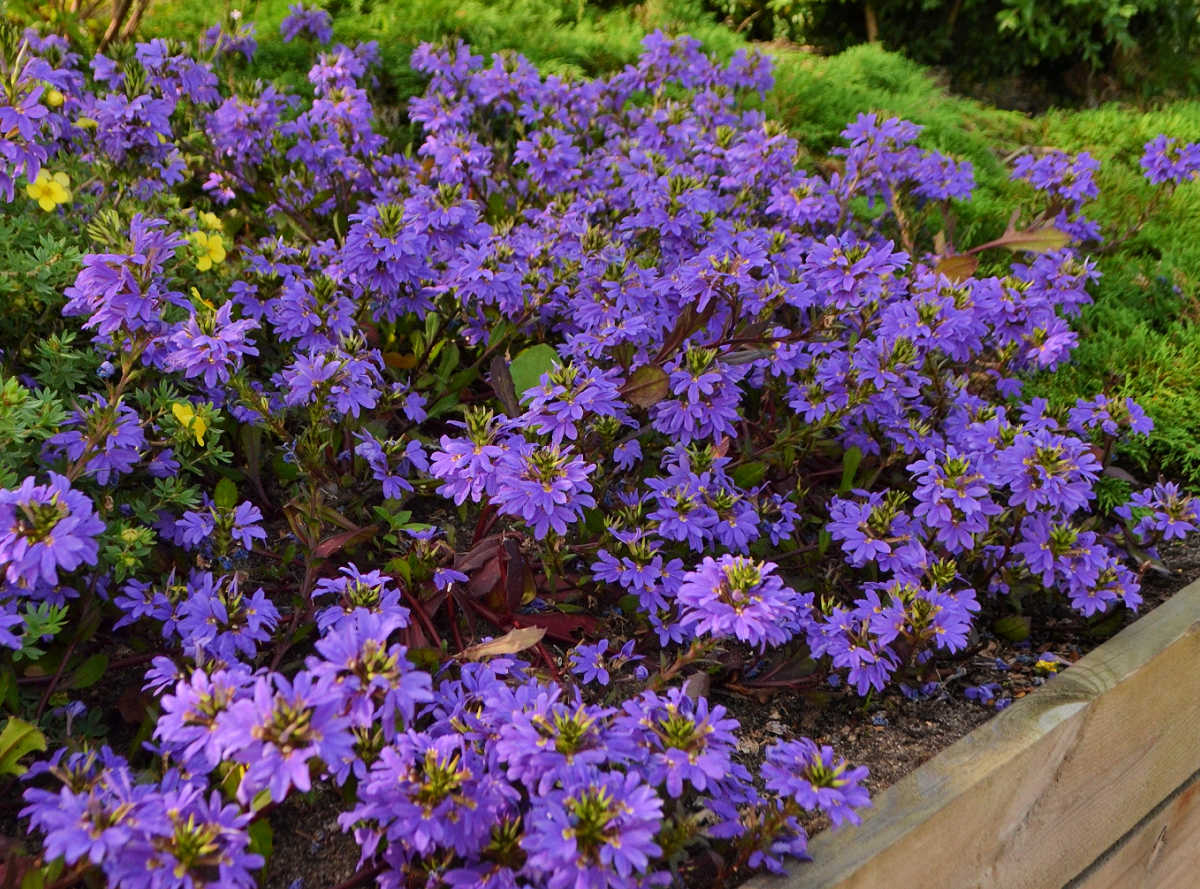
Fan flower is a heat-tolerant annual with unusual, fan-shaped flowers in shades of blue, purple, pink, and white. Its trailing growth habit makes it especially useful for hanging baskets, window boxes, and containers, where the flowers spill over the edges.
Although it thrives in summer heat, fan flowers can continue blooming into fall until temperatures become too cold. Find out how to grow fan flowers here.
- Bloom time: Late spring through fall, often continuing until the first frost.
- Light: Full sun to partial shade; afternoon sun is beneficial in hot climates.
- Hardiness zones: 10-11 as a perennial; grown as an annual in cooler zones.
- Fall appeal: Abundant blue, purple, pink, or white flowers provide long-lasting color.
- Growing tip: Water when the soil begins to dry and avoid overwatering.
🛒 Buy these annuals that bloom in fall on Etsy.
Sweet alyssum (Lobularia maritima)
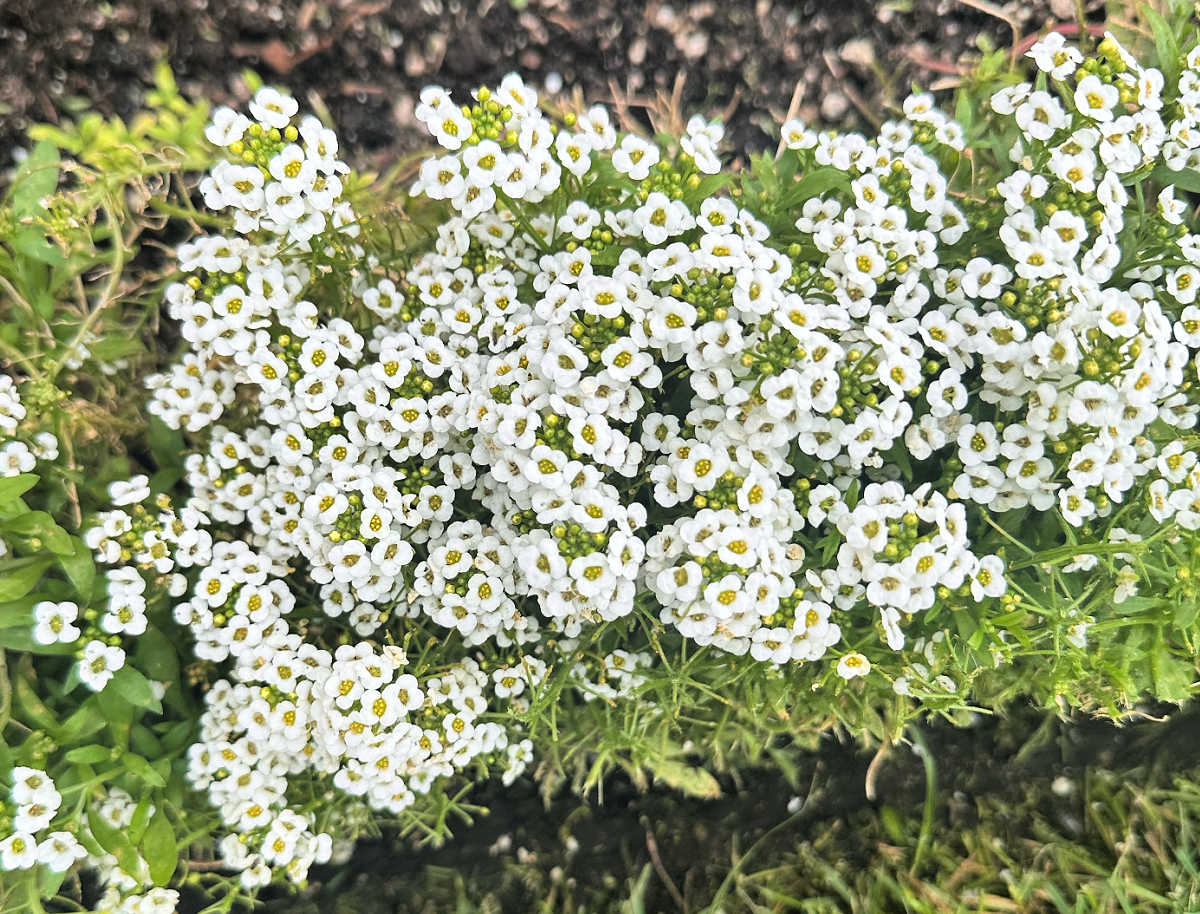
Sweet alyssum is a low-growing annual with clusters of tiny, fragrant flowers, usually in white, pink, or purple. It is a lovely choice for edging flower beds, filling gaps between taller plants, and spilling over the edges of containers.
Sweet alyssum prefers cooler weather and can bloom again as temperatures drop in fall, making it a useful addition to late-season gardens.
- Bloom time: Spring through fall, often flowering heavily in cooler weather.
- Light: Full sun to partial shade; afternoon shade can help extend flowering in hot climates.
- Hardiness zones: 5-9 as a short-lived perennial; commonly grown as an annual.
- Fall appeal: The tiny flowers add a delicate color and sweet fragrance around fall borders and in containers.
- Growing tip: Cut the plants back slightly in summer if flowering slows down.
🛒 Purchase seeds for these annual flowers for fall here.
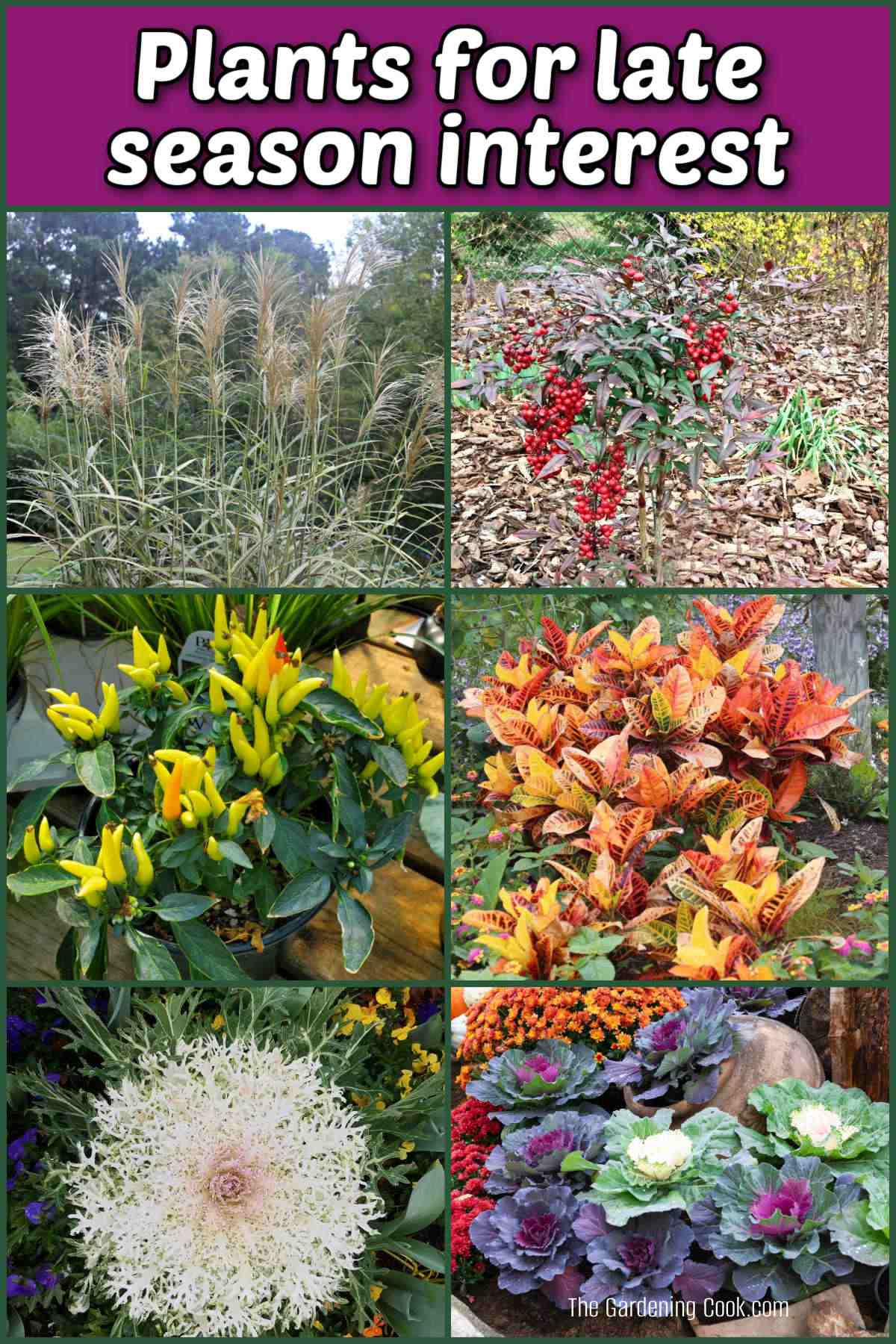
Names of fall plants for late-season garden interest
Not all fall color comes from flowers. These plants add late-season garden interest with colorful foliage, ornamental berries, or graceful textures.
Browse the names and pictures of these fall plants to find ideas for adding color and interest to your garden well into autumn.
Ornamental grasses (various genera)

Ornamental grasses bring movement, texture, and beautiful seasonal color to the fall garden. Their foliage can turn shades of gold, bronze, red, or copper as the temperatures cool.
Japanese silver grass is a particularly striking choice for adding height and graceful plumes to late-season borders, and it also does a great job of covering chain-link fences naturally.
Many ornamental grasses develop feathery plumes or attractive seed heads in late summer and fall, which can be brought indoors for decorating.

- Seasonal interest: Late summer through fall, with many varieties producing plumes or seed heads in autumn.
- Light: Full sun for most varieties; some grasses can tolerate partial shade.
- Hardiness zones: 3-9, depending on the species and cultivar.
- Fall appeal: Airy plumes, warm foliage colors, and graceful movement provide interest after many flowers have faded on other plants.
- Growing tip: Choose a grass suited to your space; mature sizes can vary greatly. Leave the attractive seed heads standing in winter for added texture and wildlife interest.
🛒 Shop for ornamental grasses here.
Nandina (Nandina domestica)

Nandina, also called heavenly bamboo, is an evergreen to semi-evergreen shrub known for its colorful foliage and clusters of bright red berries that will brighten up any fall and winter garden.
Despite its common name, nandina isn’t a true bamboo. Many varieties develop striking red, burgundy, or bronze foliage in fall and winter, adding color to the garden after many flowers have faded.
- Seasonal interest: Fall and winter, with foliage color and berries becoming more prominent as the temperatures cool.
- Light: Full sun to partial shade; foliage colors are the strongest with more sunlight.
- Hardiness zones: 6-9
- Fall appeal: Red-tinted foliage and bright berries provide lasting color and contrast with other types of fall flowers and ornamental grasses.
- Growing tip: Some state conservation agencies warn that nandina is invasive. It can spread by seed, and its berries can be toxic to birds and other animals. If you choose to grow it, consider a sterile, fruitless cultivar and prevent it from spreading into natural areas.
Ornamental peppers (Capsicum annum)
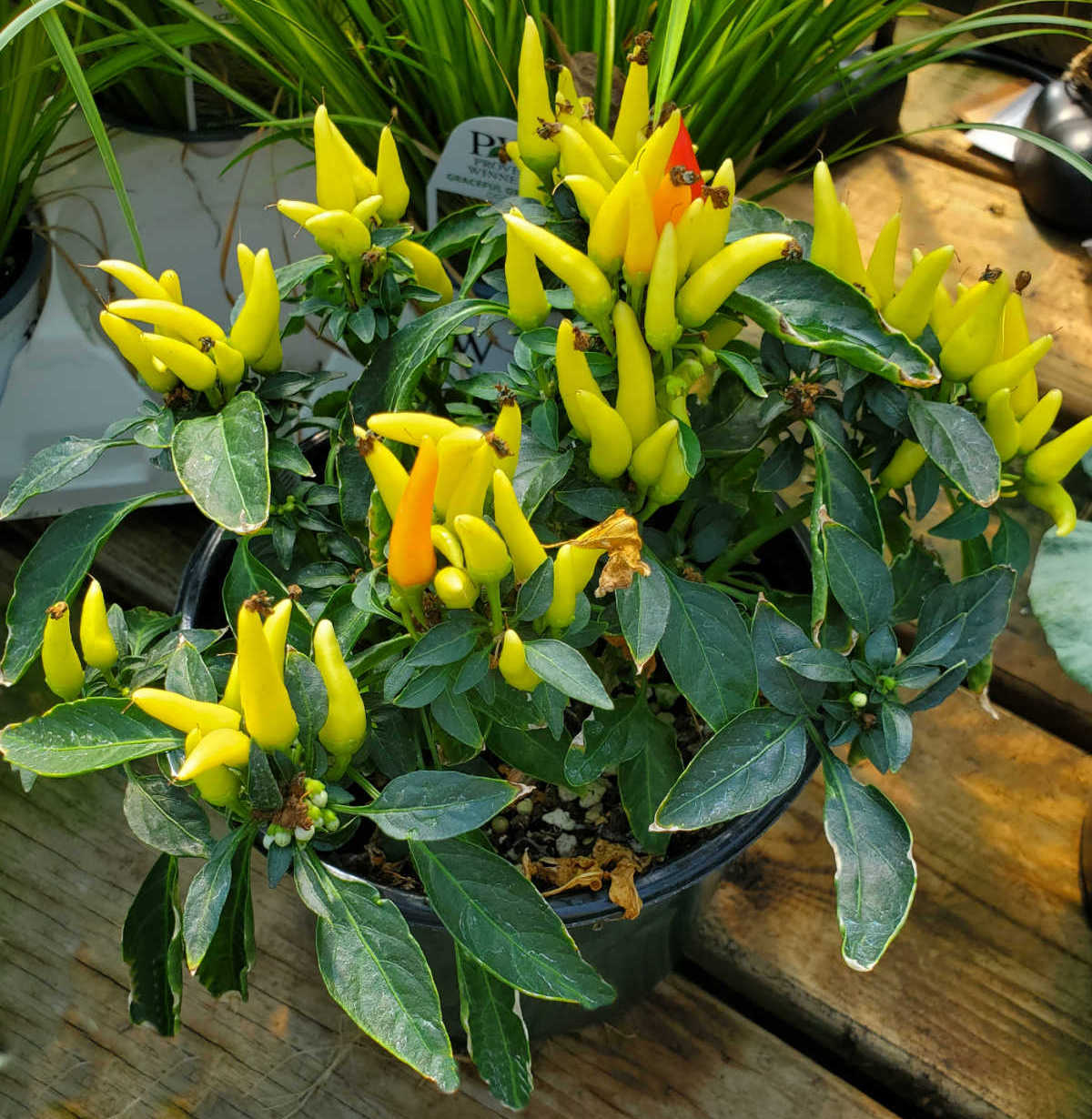
Ornamental peppers are grown for their colorful fruits, which can add a bright splash of red, orange, yellow, purple, or cream to the fall garden. The small peppers often stand upright above the foliage, creating a striking display in containers, window boxes, and garden beds.
Although they are usually grown as annuals, the fruits can keep their color well into autumn.
- Bloom time: Late summer through fall, with colorful fruits often lasting until the first frost.
- Light: Full sun; at least 6 hours of direct sun helps produce the best fruit display.
- Hardiness zones: 9-11 as tender perennials; grown as annuals in cooler zones.
- Fall appeal: Brightly colored peppers provide long-lasting fall color.
- Growing tip: Protect the plants from frost to extend their display. Ornamental peppers are generally grown for looks rather than flavor, and some varieties are very hot. Keep them away from children and pets who might try to eat the fruits.
🛒 Get ornamental pepper plants for fall on Etsy.
Croton (Codiaeum variegatum)
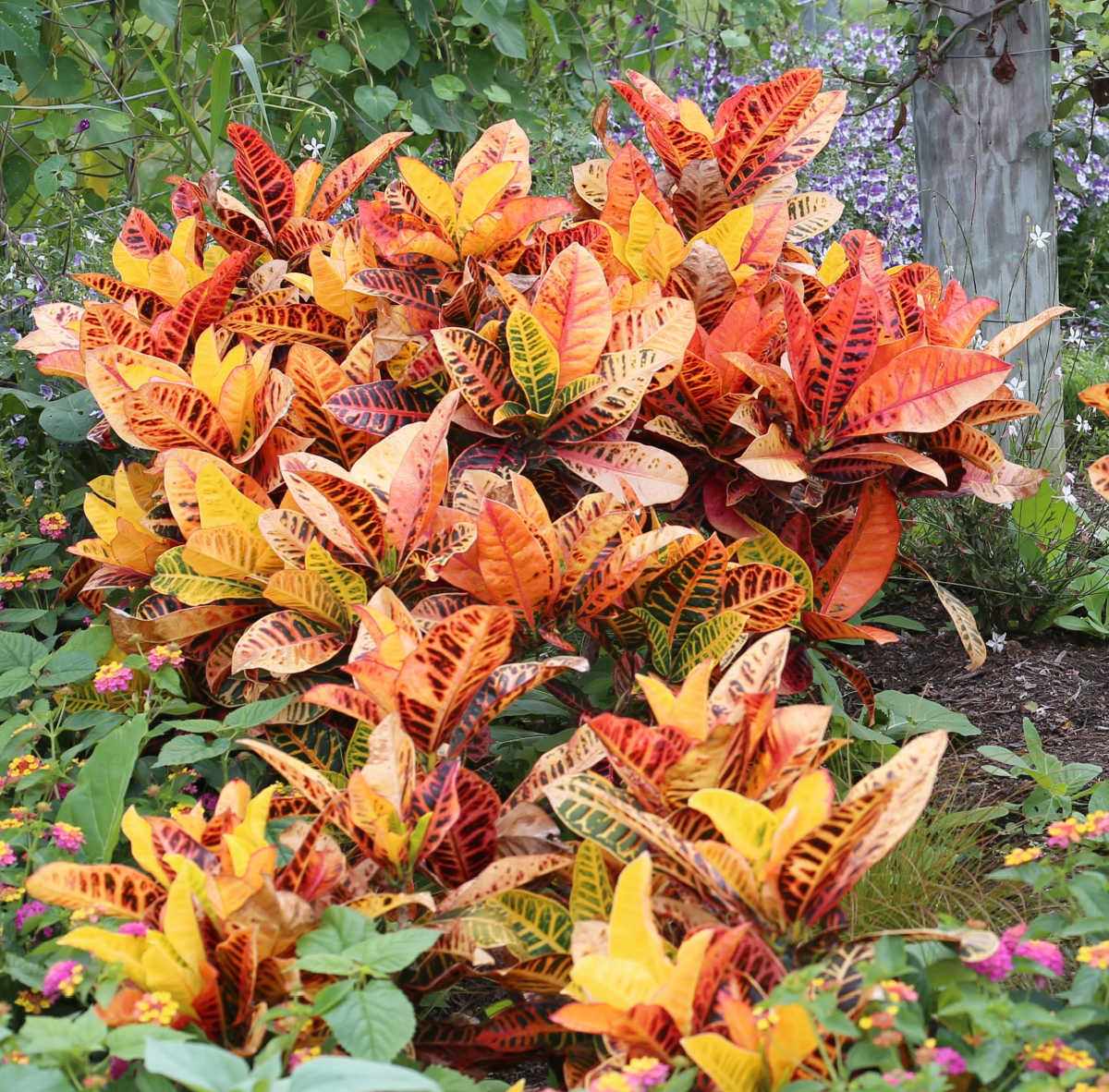
If you love the look of fall leaves, growing a pot or two of crotons will bring that color to your yard. Croton is a tropical evergreen shrub prized for its bold, multicolored foliage in shades of red, orange, yellow, green, and burgundy.
Although it is grown primarily for its leaves rather than its flowers, croton adds brilliant autumn-like color to containers and garden beds.
- Seasonal interest: Year-round in tropical climates, with colorful foliage through autumn.
- Light: Bright light to full sun.
- Hardiness zones: 11-12 as a landscape perennial; often grown as a container plant in cooler climates.
- Fall appeal: Fiery red, orange, and yellow foliage for patios, entryways and containers.
- Growing tip: Bring crotons indoors before temperatures fall below about 50°F (10°C). Avoid sudden changes in light and temperature, which can cause leaf drop.
🛒 You can buy croton plants here.
Flowering kale (Brassica oleracea var. acephala)
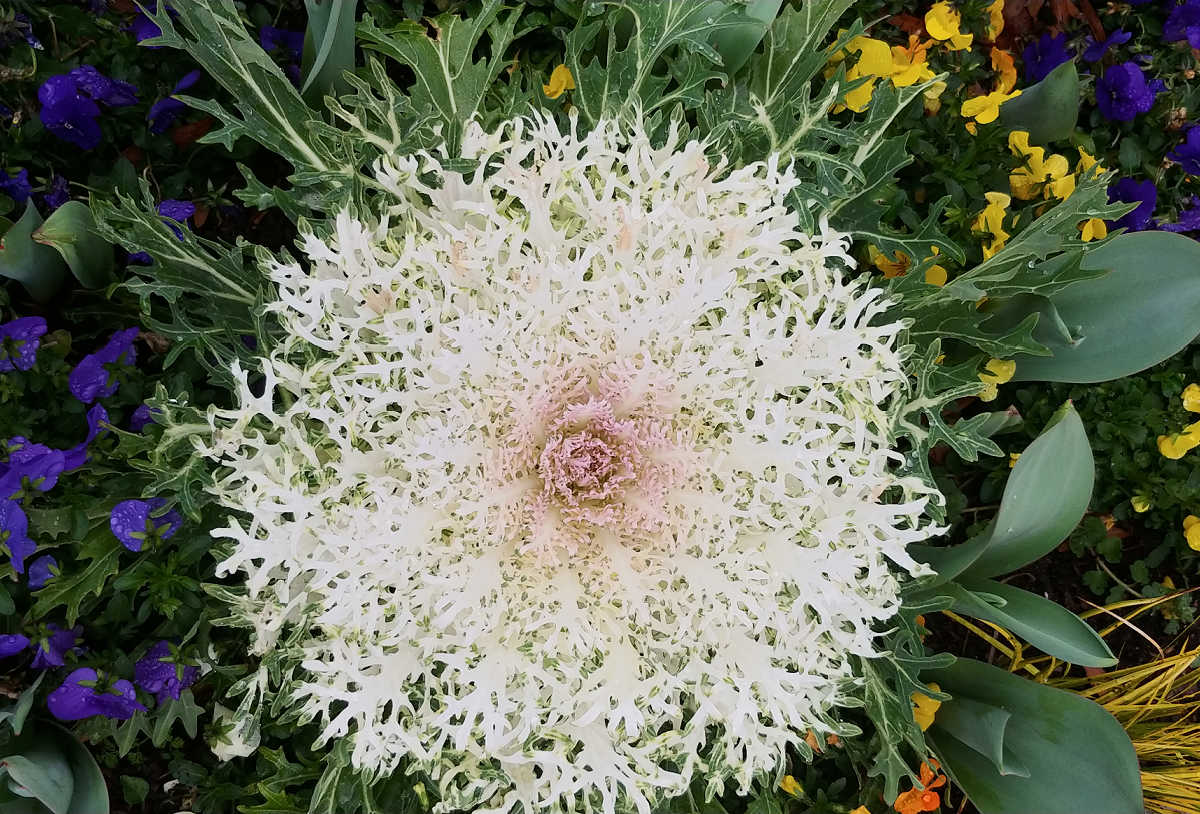
This gorgeous but inedible annual is one of the toughest plants that you can feature in a fall garden. It will hold up to frosty temperatures and may even look good all winter long if you have a mild winter.
Although they resemble large flowers, the colorful parts are leaves rather than petals.
- Seasonal interest: Fall through winter, with the best foliage color developing in cool weather.
- Light: Full sun to partial shade; full sun produces the strongest color.
- Hardiness zones: 2-11 as a cool-season annual.
- Fall appeal: Colorful, flower-like rosettes provide striking texture and color in fall gardens.
- Growing tip: Plant it in cooler weather and keep the soil consistently moist and well-draining. Flowering kale tolerates frost, but prolonged hard freezes can damage it.
🛒 See seeds for this ornamental fall interest plant here.
Ornamental cabbage (Brassica 0leracea var. capitata)
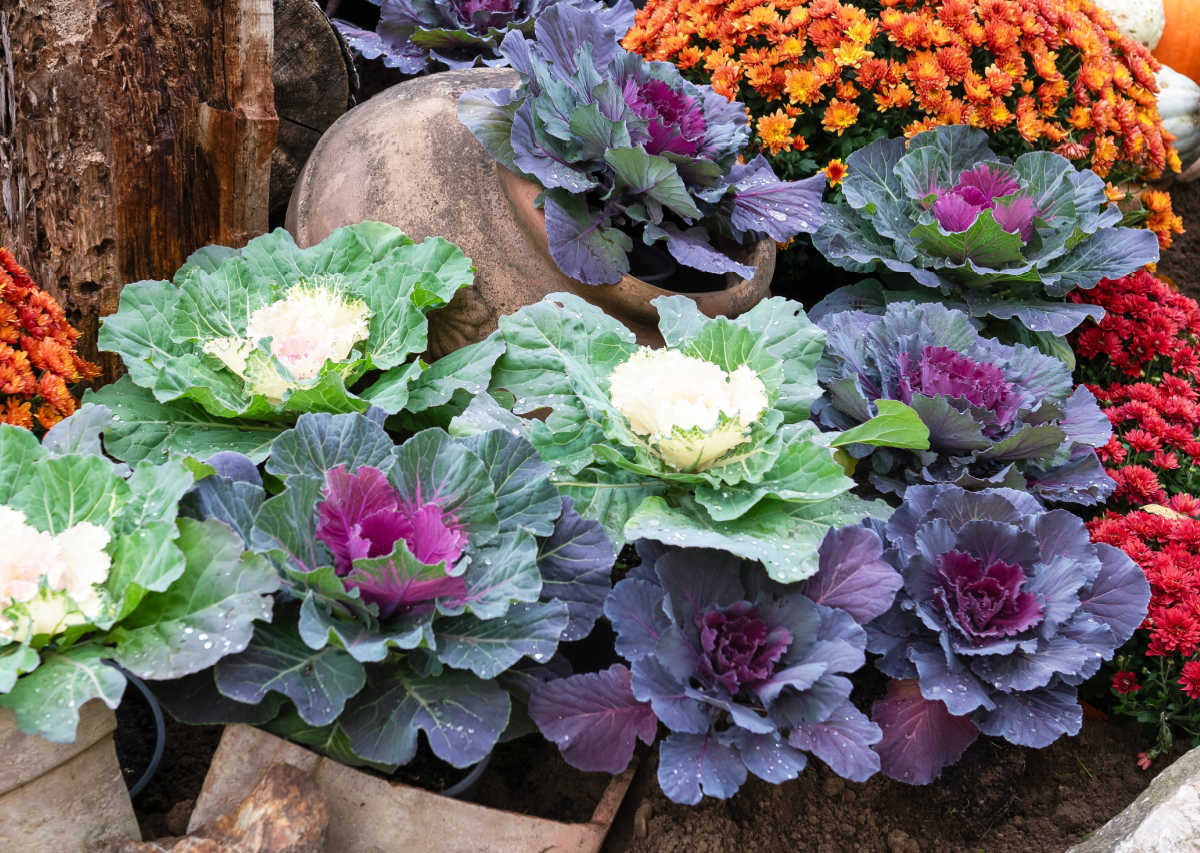
Ornamental cabbage is another cool-season plant grown for its colorful, flower-like rosettes of foliage in shades of white, pink, purple, and green. Its broad, smooth leaves form tightly packed centers that become more vivid as temperatures cool.
Ornamental cabbage is especially popular in fall containers, window boxes, and garden borders, where it provides color long after many summer flowers have faded.
- Seasonal interest: Fall through winter, with the best foliage color in cool weather.
- Light: Full sun to partial shade; stronger colors develop with more sun.
- Hardiness zones: 2-11 as a cool-season annual.
- Fall appeal: Colorful, cabbage-like rosettes provide bold texture and lasting color in autumn displays.
- Growing tip: Ornamental cabbage may have been treated with products not approved for food crops. Check your plant tags to see if your version is edible.
🛒 You can buy seeds for ornamental cabbage here.
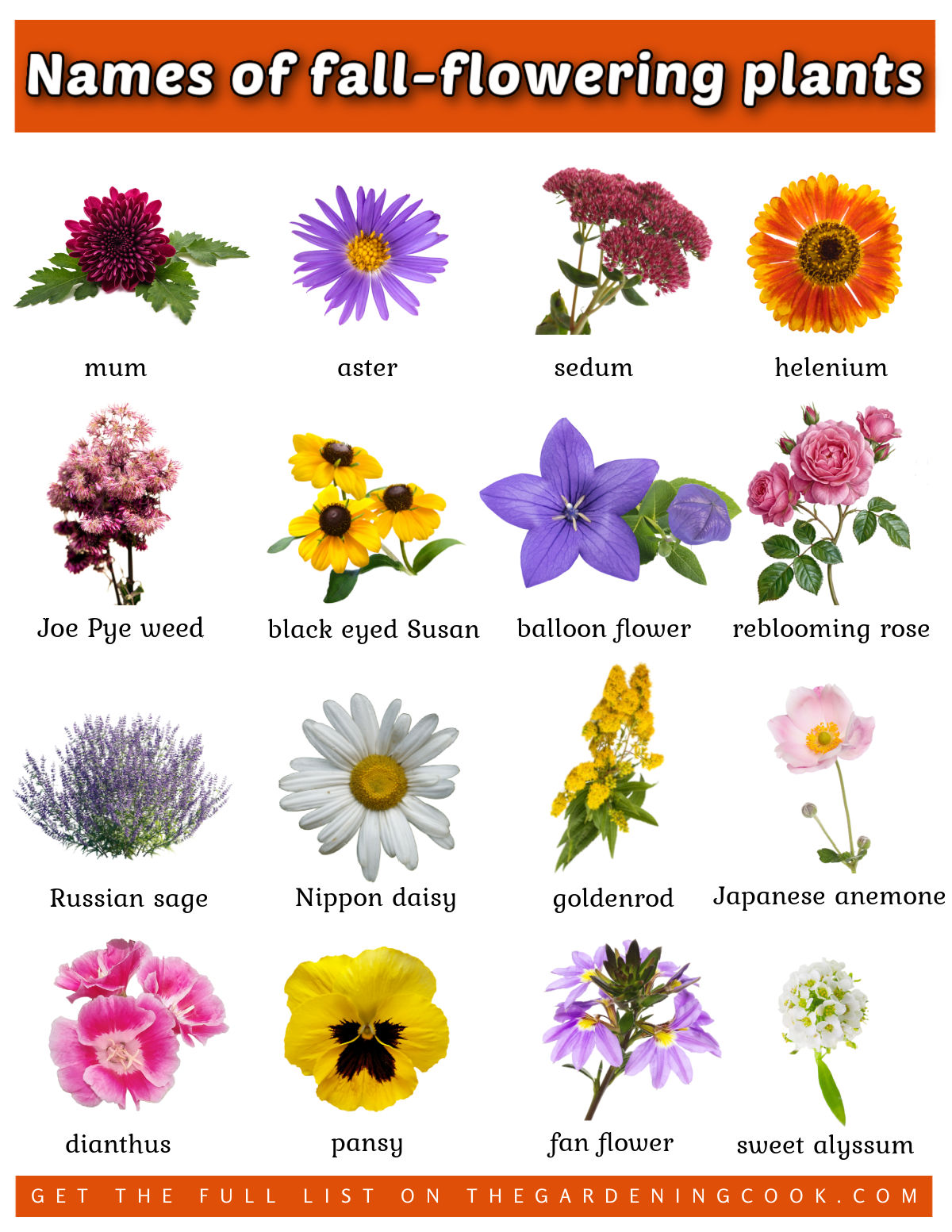
Pictures and names of fall flowers printable
You can print the types of fall-flowering plants printable as high-resolution JPGs or PDFs by using the links below:
- Get the high-resolution types of fall flowers printable (JPG)↗
- Get the PDF types of fall flowers printable (PDF)↗
Printing instructions:
- Select portrait orientation and “fit to page” in your printer settings for a full-page printout.
- You can also print out the list of the types of fall-flowering plants from the project card at the bottom of this page. Scroll down to the card and press “print”.
Share this list of the best fall flowers on X
If you enjoyed learning about the best fall-blooming plants, why not share this list of fall flower pictures with a friend?
🍂 Keep your garden colorful well into autumn! 🌸 Discover 27 beautiful fall-blooming flowers, including perennials and annuals that bring late-season color to your garden. Plus, get a FREE printable with flower names & pictures!… Share on XPin this list of the names of fall-blooming flowers
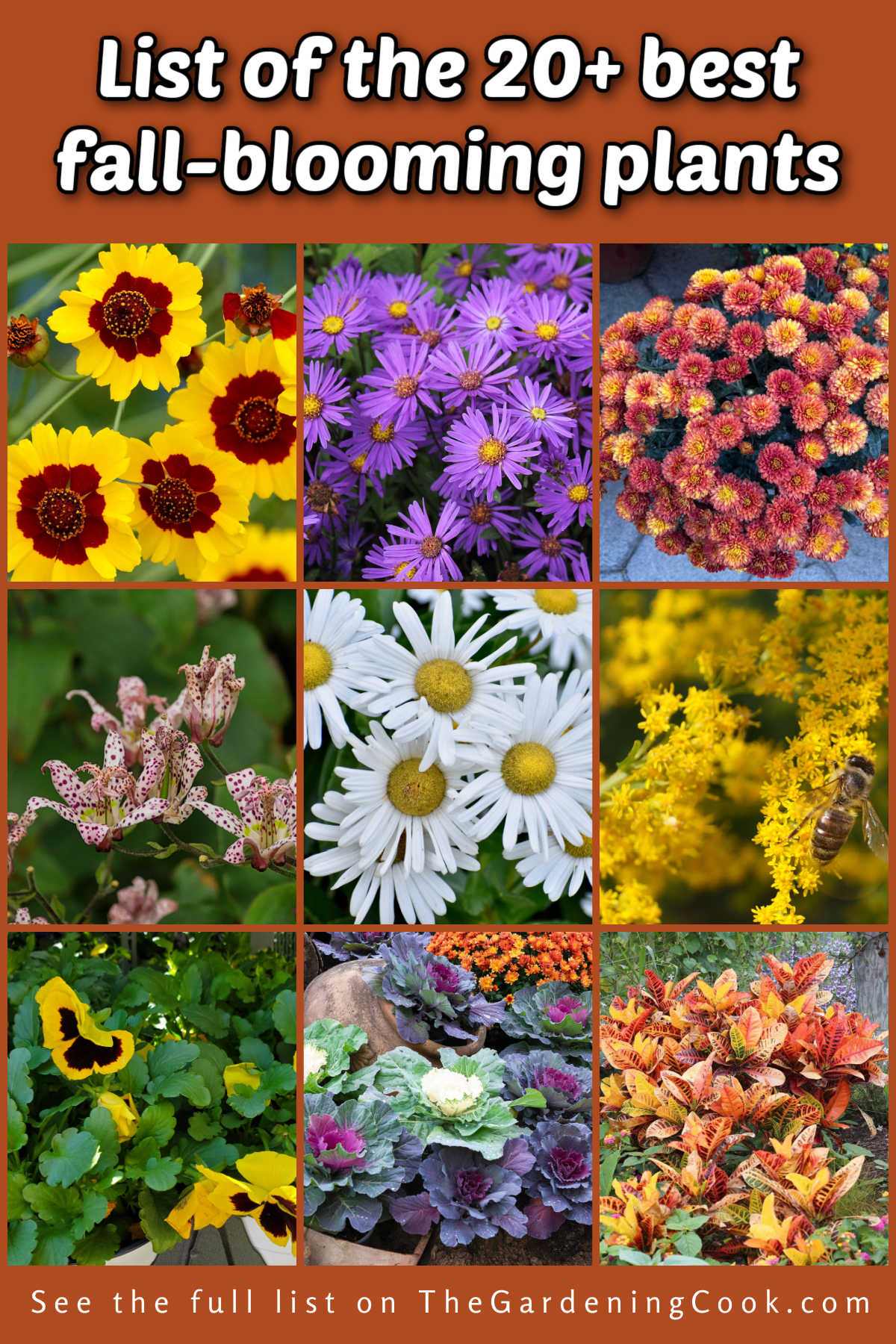
Would you like a reminder of this list for the types of fall plants? Pin this image to one of your boards on Pinterest so that you can easily find it later.
Admin note: This list of the names and pictures of fall flowers first appeared on the blog in October 2018. This post has been updated with new photos, a printable list of names of fall-flowering plants, and a slideshow video about plants that bloom in fall.
Types of Fall Blooming Plants Printable - Perennials and Annuals
Keep this handy list of names and photos of fall-blooming flowers to choose perennials and annuals that add color to your garden in late summer and fall. Take it with you when you go plant shopping.
Materials
- Computer paper
Tools
- Computer
- Printer
Instructions
- Load your paper into your printer.
- Using the print function on this card will give you a fall-blooming plants printable that fills about ¾ of an 8.5 x 11-inch sheet of paper.
- Choose portrait layout and, if possible, "fit to page" (or 125%) in your settings.
- Prefer full-page printing? You can also print the fall-flowering plant guide as a high-resolution file using your browser’s print feature: (PDF) | (JPG).
- Please note that creating free printables can be a time-consuming process. This list of plants that bloom in fall is for personal use only. If you are sharing it (and thank you for that!), please link directly to this post, rather than to the actual image. We appreciate your help in supporting the site.
- This fall flower list printable may not be used for any retail purpose or for mass distribution.
Notes
Recommended Products
As an Amazon Associate and member of other affiliate programs, I earn from qualifying purchases.




Beautiful photos! As you said, ,,fall is a time for putting the garden to bed and tending to those last few gardening chores before the winter hits”. Unfortunately, in my zone there are not many plants that survive till winter. I have a greenhouse in my garden and sometimes it is even hard to keep good conditions here.\\
Great article, very helpful insights here.
This is exactly the list I needed — my summer borders always look tired by September, so the helenium and goldenrod are going in this weekend while the soil is still warm. The tip about choosing a clumping goldenrod variety is an important one; I learned the hard way how aggressive the wild type can be. I also like planning the garden in seasons like this. Thanks for keeping the fall garden interesting!
Seeing the early-summer cut-back tip repeated for both mums and tall asters is a useful pattern, since that step is easy to miss until the stems are already flopping. The note that Autumn Joy sedum roots so easily from cuttings stood out too. For Japanese anemones, which can take a while to settle in before they start spreading, is spring or fall the better time to plant them?
Hi Henry. Spring is the best time to plant. Carol
This is such a helpful roundup for keeping color going after summer fades. I especially liked the notes on mums and asters, including the tip to pinch back mums in early summer for bushier plants. The distinction between perennials, annuals, and foliage plants for late-season interest makes it easy to plan a balanced fall garden.